

Finerenone Demonstrates 16% Reduction in Cardiovascular Death Risk in FINE-HEART Pooled Analysis, Bayer Announces

Bayer
Pharmaceutical Product R&D Developer

Welcome to follow Asymchem Pharma News

On September 1, 2024, Bayer presented at the 2024 European Society of Cardiology Congress (ESC),The pooled analysis of finerenone in the Phase III FINE-HEART study was published, along withFINEARTS-HF TrialLatest Data; Display finerenoneSignificantly reduces all-cause mortality, cardiovascular and renal outcomes, the research findings were simultaneously published in *Nature Medicine*.
About FINE-HEART
FINE-HEART is a patient-level analysis of pooled trial data, incorporating the FINEARTS-HF, FIDELIO, and FIGARO studies; this analysis aims to explore the impact of finerenone (brand name: Kerendia/Firialta) on cardiovascular and renal outcomes in approximately 19,000 patients with heart failure (HF) and/or chronic kidney disease (CKD) and type 2 diabetes (T2D), including those with a high burden of comorbidities — a primary characteristic of HF patients with left ventricular ejection fraction (LVEF) ≥40%.
Among them, the FIDELIO-DKD and FIGARO-DKD trials randomized approximately 13,000 patients with CKD and T2D who had albuminuria (UACR≥30mg/g) across 48 countries. The FINEARTS-HF trial enrolled about 6,000 patients from 37 countries with symptomatic HF, LVEF ≥40%, elevated natriuretic peptides, and evidence of structural heart disease; the results showed:
For the primary endpoint,
Compared with the placebo group, the cardiovascular (CV) death in patients treated with finerenone was numerically lower but barely reached statistical significance (11% relative risk reduction, HR 0.89 [95% CI, 0.78-1.01; p=0.076]).
IncludingIn a pre-specified sensitivity analysis of the primary endpoint, including cardiovascular death and undetermined death, the relative risk was reduced by 12% with finerenone.(HR 0.88 [95% CI, 0.79-0.98; p=0.025])。
In the 6 subgroups, the effect of finerenone on cardiovascular (CV) death was generally consistent.
Compared with placebo, finerenone significantly reduced all-cause mortality as well as cardiovascular and renal outcomes.
In terms of secondary endpoints,
Finerenone reduced all-cause mortality by 9% (HR 0.91 [95% CI, 0.84-0.99; p=0.027]);
After using finerenone, the composite renal endpoint of time to first occurrence of kidney failure, sustained ≥50% reduction in eGFR from baseline (≥4 weeks), or renal death was reduced by 20% (HR 0.80 [95% CI, 0.72-0.90; p<0.001]), and the incidence of HF hospitalization was reduced by 17% (HR 0.83 [95% CI, 0.75-0.92; p<0.001]).
About Finerenone
Finerenone (BAY948862) is an investigational non-steroidal selective mineralocorticoid receptor antagonist that blocks the overactivation of the mineralocorticoid receptor (MR). Overactivation of MR may lead to fibrosis and inflammation, which are among the factors contributing to permanent structural kidney damage. In July 2021, the U.S. FDA approved finerenone for use in patients with type 2 diabetes and chronic kidney disease to reduce the risk of kidney failure, slow the decline in estimated glomerular filtration rate, lower the risk of cardiovascular death, non-fatal myocardial infarction, and hospitalization due to heart failure.
FINEARTS-HF:A randomized, double-blind, placebo-controlled, multi-center, event-driven Phase III clinical trial, applicable to patients diagnosed with symptomatic heart failure (New York Heart Association Class II-IV) and with a left ventricular ejection fraction (LVEF) ≥40% measured in any manner within the past 12 months, as well as patients who have received at least 30 days of diuretic treatment prior to randomization; according to the latest data disclosed by the 2024 ESC, over a duration of 32 months, finerenone...Significantly reduced the risk of the composite primary endpoint of cardiovascular death and total HF events (defined as HF hospitalization or urgent HF visits) by 16%.(Relative risk reduction, ratio (RR) 0.84 [95% CI, 0.74-0.95; p=0.0072]). According to data disclosed in August, approximately half of the HF patients had mildly reduced or preserved LVEF.
Finerenone is the first MR antagonist to demonstrate clear cardiovascular benefits in Phase III studies for patients with this common type of heart failure.Based on the above positive results,The company plans to discuss with the U.S. FDA the submission of regulatory applications for expansion.finerenoneIndications.
FIGARO-DKD:In August 2021, Bayer announced that finerenone had met the primary endpoint in the Phase III clinical trial FIGARO-DKD conducted in Type 2 diabetes patients with chronic kidney disease (CKD). Unlike previous Phase III clinical trials, the main patient population in FIGARO-DKD consisted of individuals with milder Stage 1-2 CKD. In this study, under the condition of already receiving the maximum tolerated dose of angiotensin-converting enzyme inhibitors (ACEi) or angiotensin receptor blockers (ARB), the use of finerenone reduced the risk of cardiovascular death or non-fatal cardiovascular events for the first time by 13% in Type 2 diabetes patients with CKD.
FIDELIO-DKD:FIDELIO-DKD is a randomized, double-blind, placebo-controlled, parallel-group, multicenter, event-driven Phase III clinical trial. It randomly assigned T2DM patients with CKD (372 Chinese patients) in a 1:1 ratio to receive either finerenone or placebo, administered orally once daily. According toData重磅公布 at the 2020 American Nephrology Annual Meeting Renal Week,Results showed that, compared with placebo, finerenone significantly reduced the risk of the primary renal composite endpoint by 18% (HR=0.82, 95%CI 0.73~0.93, P=0.001) and significantly reduced the risk of the primary cardiovascular composite endpoint by 14% (HR=0.86, 95%CI 0.75~0.99, P=0.03). After four months of treatment with finerenone, the urine albumin-to-creatinine ratio decreased by 31% from baseline and remained at a lower level, significantly reducing the secondary renal composite endpoint (HR=0.76; 95%CI 0.65~0.90).
In addition, finerenone is used forMultiple studies involving a broader range of heart failure and chronic kidney disease patients are also underway., including the MOONRAKER project and the FIND-CKD study, among others. The MOONRAKER project includes four studies: the FINEARTS-HF study, the REDEFINE-HF study, the CONFIRMATION-HF study, and the FINALITY-HF study, enrolling over 15,000 patients. It is one of the largest heart failure research projects to date, aiming to evaluate the efficacy and safety of finerenone in a broad range of heart failure patients [including HFrEF, HFmrEF, HFpEF, and hospitalized heart failure patients (regardless of left ventricular ejection fraction)]. The FIND-CKD study is a multicenter, randomized, double-blind, placebo-controlled Phase III clinical trial that will enroll non-diabetic CKD patients from 270 centers across 19 countries, including China. The aim of the study is to explore the efficacy and safety of adding finerenone to guideline-recommended therapies for the treatment of non-diabetic chronic kidney disease.
About Mineralocorticoid Receptor Antagonists
Mineralocorticoids are a class of steroid hormones secreted by the zona glomerulosa cells of the adrenal cortex, among which aldosterone is the most common. The secretion of aldosterone is regulated by various factors, mainly including the renin-angiotensin-aldosterone system (RAAS), as well as adrenocorticotropic hormone, Na+, and K+ levels, among other influences. When the concentration of Na+ in the tubular fluid decreases, blood pressure drops, or renal blood flow reduces, these factors stimulate the release of renin into the blood, activating angiotensin II, which in turn stimulates the synthesis and secretion of aldosterone. Aldosterone promotes the reabsorption of Na+ by renal tubules through pathways such as enhancing Na+-K+ exchange and increasing membrane permeability to Na+, while also increasing water reabsorption, thereby maintaining water and salt balance. However, excessive release of aldosterone can cause metabolic disorders, including hypokalemia and sodium-water retention, and also promote the production of inflammatory factors, leading to inflammation and fibrosis of target organs. Additionally, excessive aldosterone overactivates MR and mediates pathological damage to target organs.
Aldosterone exerts its effects by binding to MR.MR is widely distributed in various tissues, participating in the regulation of local metabolism and pathological injury, with the most significant expression in the kidneys and cardiovascular system. Overactivation of MR promotes the production of reactive oxygen species and triggers the activation of pro-inflammatory transcription factors such as activator protein-1 and nuclear factor κB, inducing inflammatory responses. Additionally, overactivation of MR is involved in the expression of pro-fibrotic molecules, including transforming growth factor-β1 and plasminogen activator inhibitor-1, which collectively promote the occurrence of tissue fibrosis. Besides triggering inflammatory and fibrotic responses, overactivation of MR can also activate the immune system, leading to leukocyte infiltration.
In the kidneys, excessive activation of MR promotes further oxidative stress, inflammation, and fibrosis, induces podocyte injury, constricts glomerular vessels, and leads to a gradual decline in renal function, eventually progressing to ESRD. In the heart, aldosterone-mediated overactivation of MR can also trigger similar inflammatory, fibrotic, and oxidative stress responses, ultimately resulting in adverse outcomes such as heart failure, malignant arrhythmias, and myocardial infarction.
Therefore, mineralocorticoid receptor antagonists (MRA) act as diuretics to regulate water and electrolyte balance.Can be used to treat primary aldosteronism, hypertension, heart failure (HF), chronic kidney disease (CKD), etc.Currently, the most commonly used MRA in clinical practice is spironolactone, which belongs to the class of steroidal compounds. Due to its low selectivity for MR, its concentration in the kidneys is 6 times that in the heart, leading to a high incidence of hyperkalemia after administration. Eplerenone is a second-generation MRA and also a steroidal compound.Structure, but with high selectivity for MR, stronger anti-aldosterone activity than spironolactone, and lower side effects.The third-generation MRA, represented by finerenone, has a non-steroidal structure, high selectivity for MR, balanced distribution in the heart and kidneys, and is less likely to cause hyperkalemia.
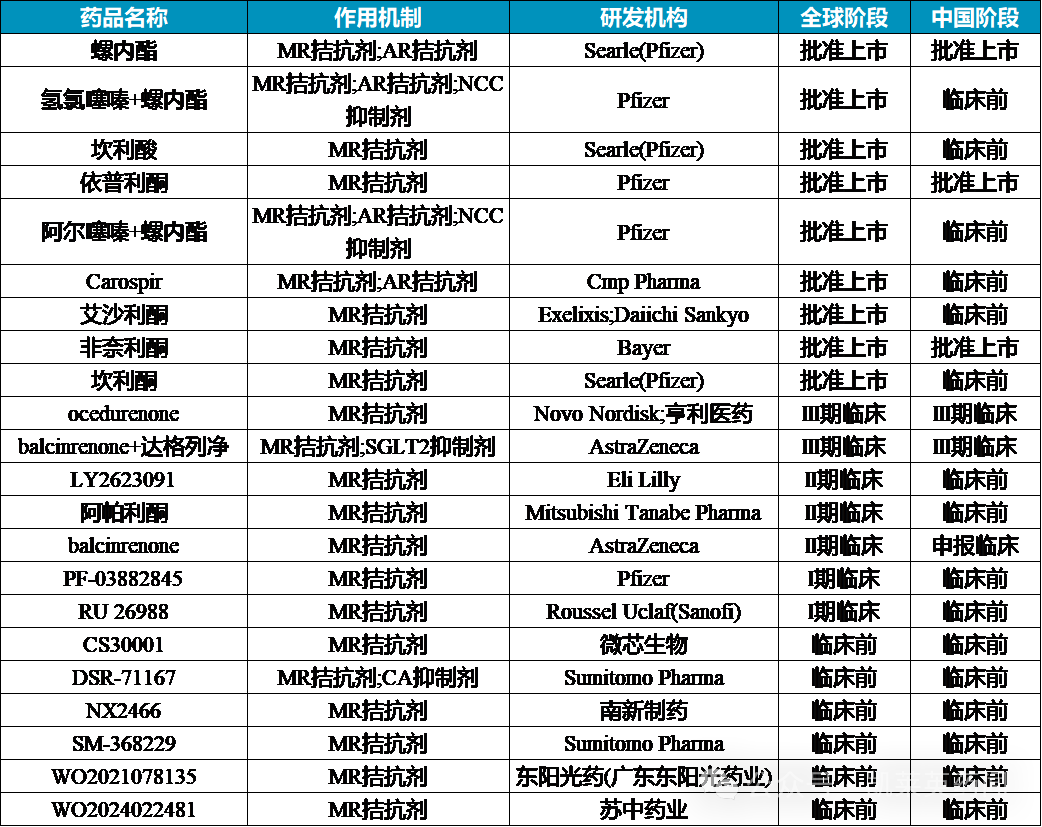
Latest Research Progress on MRA Drugs
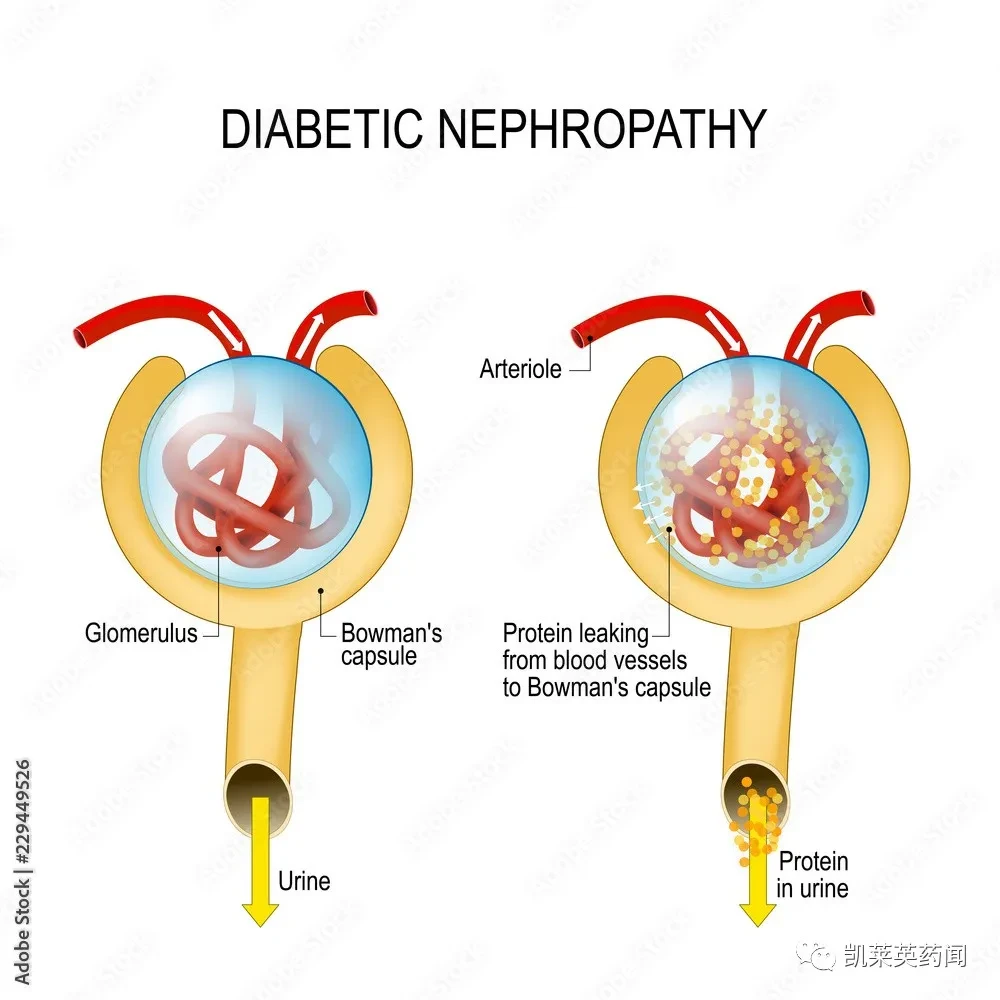
About Diabetic Nephropathy
References
1. Lingzhi Fu, Jianfeng Xu, Yanzhuo Ma, et al. Research Progress of Mineralocorticoid Receptor Antagonists[J]. International Journal of Cardiovascular Diseases, 2024, 51(02): 69-73.
2. Wen Yuejia, Zhou Xiaochun, Wang Jianqin. Advances in the Application of Mineralocorticoid Receptor Antagonists in the Treatment of Diabetic Nephropathy[J]. Chemistry of Life, 2023, 43(12): 1914-1921. DOI: 10.13488/j.smhx.20230673.
3. Heart Focus




"Viewing"Click once