

GSK's Mepolizumab Achieves Positive Phase III Results in COPD with MATINEE Study

GSK
Pharmaceutical R&D Manufacturer

On September 6, GlaxoSmithKline (GSK) announcedNucala(Mepolizumab) TreatmentChronic Obstructive Pulmonary Disease(abbreviated as COPD,Phase III of COPDMATINEE Study Yields Positive Results.
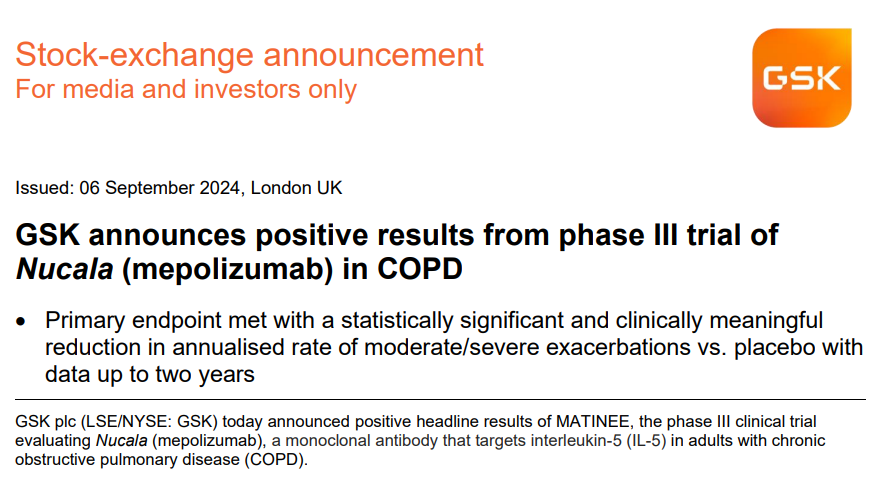
This study was a multicenter, randomized, double-blind, placebo-controlled clinical trial (n=806) lasting 52-104 weeks, which evaluatedEfficacy and Safety of Mepolizumab (100mg, Once Every 4 Weeks, Subcutaneous Injection) versus Placebo as an Add-on Treatment to Maintenance Therapy in Patients with Moderate to Severe COPD and Frequent Exacerbations with Elevated Blood Eosinophil Levels. The primary endpoint of the study wasAnnual exacerbation rate of moderate to severe COPD.
The results showed,After 104 weeks of treatment,The annual exacerbation rate of patients in the Mepolizumab group was lower than that in the placebo group, dataStatistically significant and clinically meaningful. In addition,MepolizumabPreliminary Safety Results and Previous StudiesConsistent. GSK is further analyzing the obtained data.。
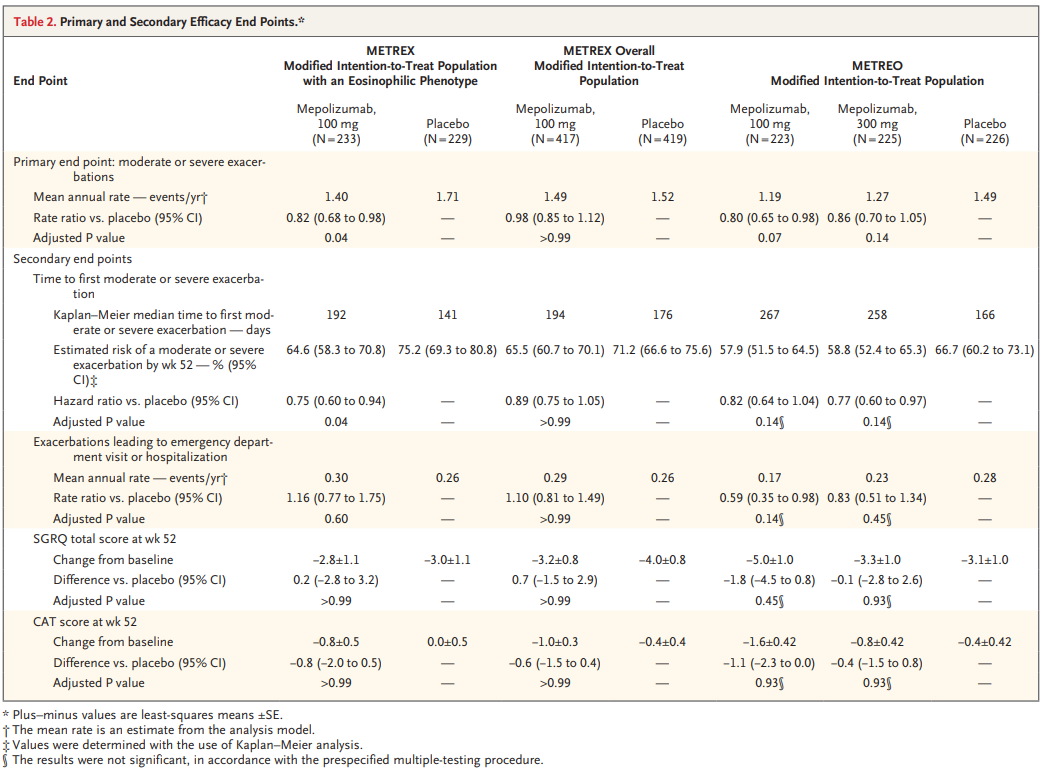
As of now,MepolizumabThree Phase III COPD studies have been initiated for Zhu Monoclonal Antibody, the other two areMETREO andMETREX, the results are not very satisfactory.
InMETREO StudyIn China, 100mg and 300mgMepolizumabZhu Monoclonal AntibodyThe annual exacerbation rate of COPD in the dose group was not significantly different compared to the placebo group (1.19 vs. 1.49, p=0.07; 1.27 vs. 1.49, p=0.14). InMETREXResearchIn China, for the general population, 100mgMepolizumabZhu Monoclonal Antibody GroupThe annual exacerbation rate of COPD in patients showed no significant difference compared to the placebo group (1.49 vs. 1.52, p>0.99);EosinophilElevated levelsFor the subpopulation,100mgMepolizumabZhu Monoclonal Antibody GroupThe annual exacerbation rate of COPD in patients was significantly lower than that in the placebo group (1.40 vs. 1.71, p=0.04).
Mepolizumab is an IL-5 monoclonal antibody developed by GSK, which was first launched in 2015.In the United StatesApproved for marketing in China as an add-on maintenance treatment for severe asthma with elevated eosinophil levels. Later, the drug's indications were expanded toAllergic Granulomatous Vasculitis,Eosinophilia Syndrome andChronic Rhinosinusitis with Nasal Polyps.
Research shows,IL-5It is the main protein responsible for the growth, maturation, activation, and survival of eosinophils.AlsoYes2Type Inflammatory PathwayThe core cytokines. In addition,There is evidence that IL-5To Non-Eosinophils can also produceImpact, including certainCausing inflammation, Lung Remodeling and Disease Progression Cells。Currently, globally there is noIL-5 DrugApproved for the treatment of COPD.
COPD is the third leading cause of death globally.Globally exceeding3Hundreds of millions of people are affected by it.COPD patients have chronic inflammation in their bodies, which can lead to persistentDyspnea and expectoration cough, etc.Respiratory symptoms.About 40% of COPD patients have2Type inflammation, characterized by elevated levels of eosinophils in the blood, can lead to worsening of the patient's condition.Currently, the treatment for COPD patients mainly focuses on symptomatic therapy, including regimens such as glucocorticoids and bronchodilators. However, the condition of many patients continues to deteriorate. Dupilumab, which was approved in the EU this year, isCOPD FieldCurrently the only biotargeted agent.

Copyright © 2024 PHARMCUBE. All Rights Reserved.
Welcome to forward, share, and reasonably cite. When citing, please clearly indicate the source of the article in a prominent position;For reprint, please leave a message or send a message to the WeChat Official Account backend, and indicate the name and ID of the official account.
Disclaimer: The information in this WeChat article is for general reference only and should not be directly used as decision-making content. PharmaCube assumes no responsibility for any loss incurred by any party due to the use of the content herein.