Breakthrough in Lab-Grown Transplantable Human Hematopoietic Stem Cells and Unexpected Discovery of Salt's Role in Enhancing T Cell Anti-Cancer Activity

Johnson & Johnson
Medical Device R&D and Manufacturer

Industry Trends
Once a Month, Patients Can Self-Administer! Roche's New Generation Antibody Therapy Receives EU Approval
Paroxysmal Nocturnal Hemoglobinuria (PNH) is a rare and fatal disease, in which patients experience elevated levels of lactate dehydrogenase (LDH), increasing the risk of thrombosis. Currently,Inhibition of Complement Protein C5It is the standard treatment for PNH patients with obvious clinical symptoms, but due to the need for continuous complement inhibition and high C5 concentration,Patients often can only receive intravenous injections., which poses challenges for drug development.
On August 27, 2024, Roche announced that the European Commission had approved its next-generation C5 cyclic antibody.Piasky (crovalimab, Corvalimab)For the treatment of adult and adolescent patients with PNH, regardless of whether they have previously received C5 inhibitor therapy. It is reported that Piasky is in the European Union.The First Approved Once-a-Month Subcutaneous Injection Therapy for PNH, and patients can self-inject after training.
PiaSky is a recyclable humanized monoclonal antibody targeting complement protein C5, designed to block the complement system in the immune system. Modified through monoclonal antibody recycling technology, PiaSky induces the degradation of the C5 protein after binding to it, and then is re-released extracellularly by binding to the FcRn receptor, allowing it to bind to other C5 proteins again. Therefore,PiaSky can achieve rapid and sustained complement pathway inhibition at a lower dose.。
Image Source: Roche
Reduced by More Than 75%, Impressive Clinical Data! Johnson & Johnson Submits New Drug Application for Myasthenia Gravis
Myasthenia Gravis (gMG)It is a rare chronic autoimmune disease that affects approximately 700,000 people worldwide. The pathogenesis of the disease involves immunoglobulin G (IgG) antibodies disrupting synaptic transmission between nerves and muscles, leading to muscle weakness, which can be life-threatening in severe cases. More than 85% of patients progress to generalized myasthenia gravis within two years of onset.
On August 29, 2024, Johnson & Johnson announced that it had submitted a Biologics License Application (BLA) to the U.S. FDA, seeking the world's first approval for its neonatal Fc receptor (FcRn)-targeted antibody therapy.Nipocalimab, used to treat generalized gMG. It is reported that when this therapy is combined with standard treatment in antibody-positive gMG patients, it significantly improved the patients' daily living activity scores, showing better effects than placebo.
Nipocalimab is a potential "best-in-class" antibody therapy targeting the neonatal Fc receptor. By binding to FcRn, it prevents autoantibodies from being re-released into the bloodstream in monocytes and endothelial cells, instead promoting their degradation within the cells. Studies show,This therapy can reduce IgG levels in the blood, including pathogenic autoantibodies, by more than 75%., which is expected to be used for the treatment of various autoimmune antibody-mediated immune diseases.

Image Source: Johnson & Johnson
Novartis' Major siRNA Therapy Phase 3 Trial Positive Data Released Twice a Year
Cardiovascular disease (CVD) affects hundreds of millions of people worldwide, among whichAtherosclerotic Cardiovascular Disease (ASCVD)Accounting for 85% of cardiovascular deaths. ASCVD is caused by plaque formation inside arteries, with these plaques primarily composed ofLow-Density Lipoprotein Cholesterol (LDL-C)Composition. Long-term high LDL-C levels increase the risk of heart attack or stroke. Many patients with high LDL-C also suffer from hypertension, obesity, or diabetes, further increasing the risk of ASCVD and cardiovascular events.
On August 28, 2024, Novartis announced that its V-MONO Phase 3 clinical trial had met the primary endpoint.Leqvio (inclisiran), an siRNA therapy administered twice yearlyAs a monotherapy, it significantly reduced LDL-C levels in patients with moderate- to low-risk ASCVD who had not previously received lipid-lowering treatment.These positive data support the expanded indication application of Leqvio in cardiovascular disease prevention.
Leqvio is a new type of lipid-lowering drug that utilizes RNA interference technology to target and inhibit the production of PCSK9 protein. PCSK9 protein inhibits the recycling and reuse of LDL receptors.Leqvio reduces the level of PCSK9, allowing more LDL receptors to return to the surface of liver cells, bind with more LDL, and remove them from the bloodstream., reducing the risk of cardiovascular disease.

Image Source: Novartis
Developing Potential "First-in-Class" Small Molecule Cancer Therapies! Bayer Reaches Nearly $550 Million Collaboration
NextRNA Therapeutics is an innovative biotechnology company dedicated to targetingLong non-coding RNA (lncRNA)To develop new drugs for treating cancer and neurological diseases, the company's proprietary technology can interfere with the interaction between lncRNA and proteins, thereby inhibiting disease progression.
On August 24, 2024, Bayer and NextRNA announced that they had reached a total amountNearly US$550 millionThe collaboration and licensing agreement will jointly develop two potential "first-in-class" small molecule therapies targeting lncRNA, further enhancing Bayer's precision oncology R&D pipeline.
Bayer and NextRNA to Collaborate on Advancing Two Cancer TherapiesThe first project is small molecule therapy targeting lncRNA., currently in the early preclinical development stage.In the second project, NextRNA will continue to research the lncRNA targets identified by its platform, and Bayer will select one target for co-development.According to the agreement, NextRNA will receive up to $547 million in funding from these two projects.
Image Source: BAYER, NextRNA
Paper Express
Nature Biotechnology: For the first time, transplantable human hematopoietic stem cells have been created in the laboratory, with human trials expected within 5 years.
Human pluripotent stem cells, especiallyInduced Pluripotent Stem Cells (iPSC), providing entirely new possibilities for the treatment of hematopoietic system diseases. By gene-editing iPSCs and differentiating them intoHematopoietic Stem Cells (HSC), which can repair genetic defects and treat various blood diseases. However, how to effectively induce the differentiation of iPSCs into functionally mature HSCs remains a major challenge in this field.
On September 2, 2024, a research team from the Royal Children's Hospital of Australia and the University of MelbourneNature BiotechnologyCooperatively published a research paper titled: Long-term engrafting multilineage hematopoietic cells differentiated from human induced pluripotent stem cells.
Research Team Successfully Creates iPS Cell-Derived Hematopoietic Stem Cells (iHSCs) Closely Resembling Human Blood Stem Cells in Laboratory for the First Time, Capable of Generating Red Blood Cells, White Blood Cells, and Platelets.Studies show that these stem cells exhibited good hematopoietic function in mice and can be successfully transplanted after cryopreservation. This progress lays the foundation for future clinical applications, with phase 1 clinical trials expected to begin in five years.
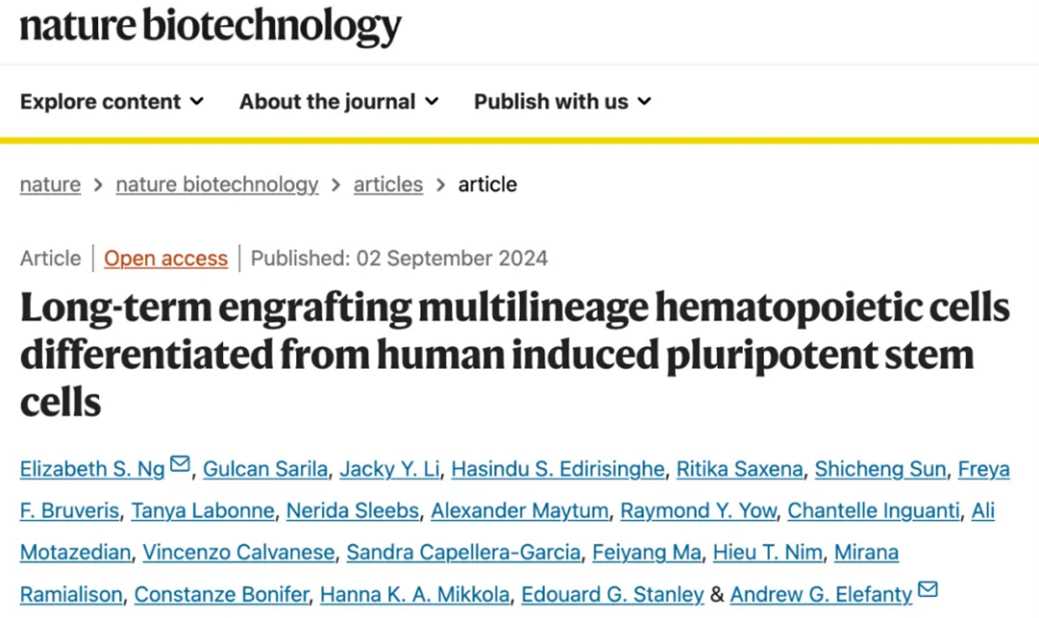
Image Source:Nature Biotechnology
Paper link:
https://doi.org/10.1038/s41587-024-02360-7
Cell Chemical Biology: Deciphering the "code" of ion channels, Yan Ning's team proposes a universal residue numbering scheme for sodium and potassium ion channels
Voltage-Gated Sodium (Nav)ChannelAndVoltage-Gated Calcium (Cav) ChannelsThese are very important proteins on the cell membrane, controlling the movement of sodium and calcium ions in and out of cells. Since these channels vary across different organisms, we need a unified numbering system to compare their structures, which can aid in the development of new drugs.
On August 15, 2024, the research team led by Professor Yan NingCell Chemical BiologyPublished an opinion article titled: A versatile residue numbering scheme for Nav and Cav channels.
The research team introduced a new residue numbering scheme. This scheme is structure-based and uses the most conserved amino acid residue in the functional segment as a reference to unify the residue numbering of Nav and Cav channels. Through this scheme,Researchers can more clearly compare drug binding sites and mutation effects across different channel subtypes, aiding in the identification of hotspots for pathogenic mutations and drug targets.. This system is expected to accelerate drug development based on ion channel targets, bringing new hope for the treatment of various diseases.
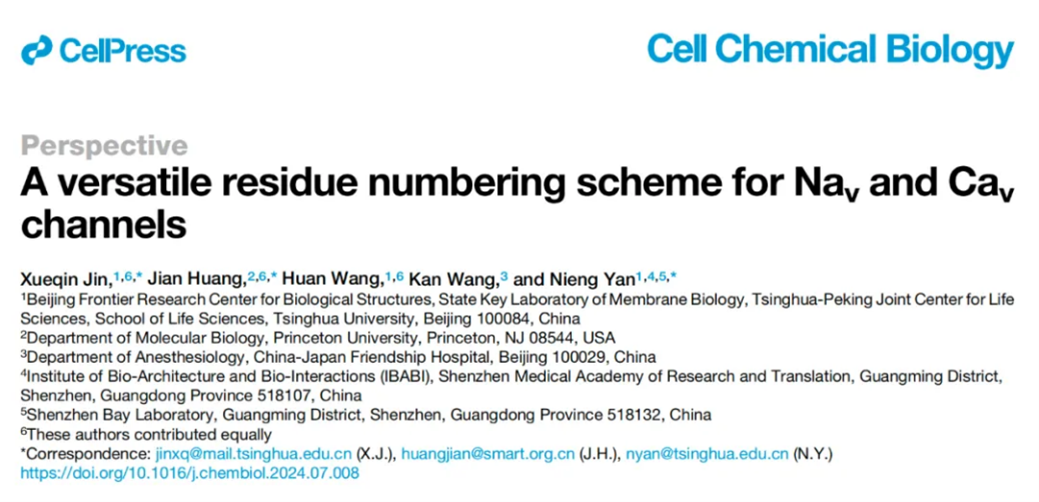
Image Source:Cell Chemical Biology
Paper link:
https://doi.org/10.1016/j.chembiol.2024.07.008
Nature Immunology: Unexpected Discovery! Salt May Become a New Weapon in Immunotherapy by Enhancing T-Cell Anti-Cancer Abilities
Sodium Chloride (NaCl), commonly known as table salt, may play an important role in anti-tumor immunity besides maintaining the osmotic pressure balance in the human body. August 28, 2024,Nature ImmunologyTwo research papers published in the same issue of the journal found that,Sodium chloride can reverse the state of T cell exhaustion and enhance CD8+The activity and killing ability of T cells, enhancing their tumor-killing capability。
The title of the first paper is: "Sodium chloride in the tumor microenvironment enhances T cell metabolic fitness and cytotoxicity," and the research team is from the Technical University of Munich, Germany.
The research team found that high concentrations of NaCl in the tumor microenvironment can enhance the metabolic adaptability and cytotoxicity of T cells, thereby improving the body's immune response to tumors. Mechanistically, NaCl upregulates Na.+/K+-ATPase activity, leading to membrane hyperpolarization, amplifies T-cell receptor-mediated calcium ion influx, thereby enhancing the TCR signaling pathway. This finding suggests that,NaCl may serve as a modulator to enhance the efficacy of therapeutic T cells.。
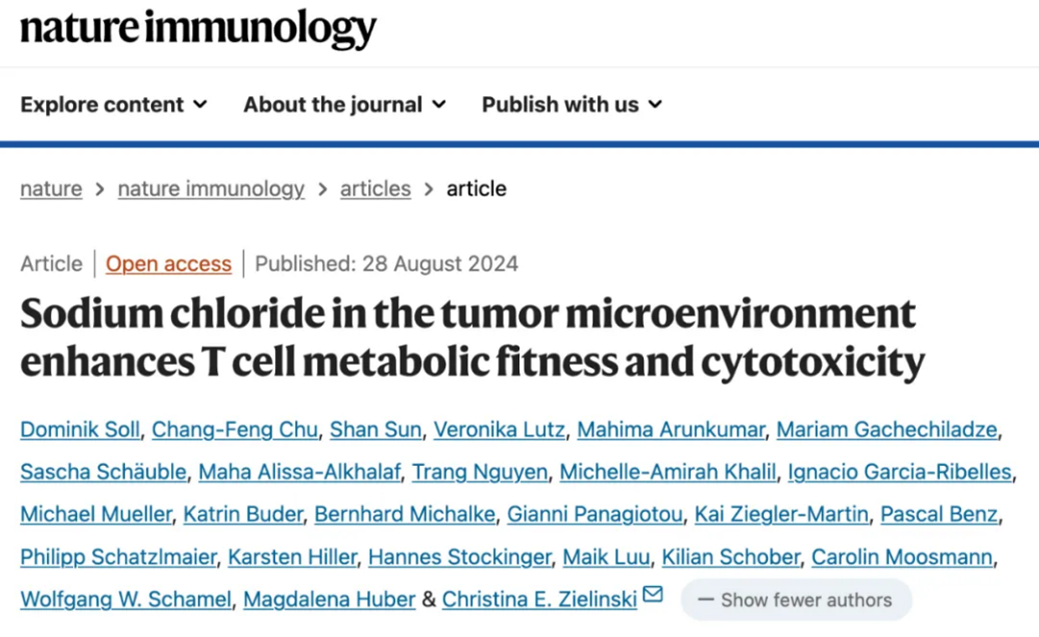
Image Source:Nature Immunology
The second paper is titled: NaCl enhances CD8+T cell effector functions in cancer immunotherapy, the research team is from IRCCS Humanitas Research Hospital, Italy.
The research team found that NaCl can enhance CD8+The Effector Functions of T Cells in Tumor Immunotherapy.NaCl Promotes T Cell Differentiation and Cytotoxicity by Enhancing Glutamine Uptake, Improving Immune Response.This discovery reveals the potential of NaCl in regulating immune cell function and enhancing the effectiveness of cancer immunotherapy.
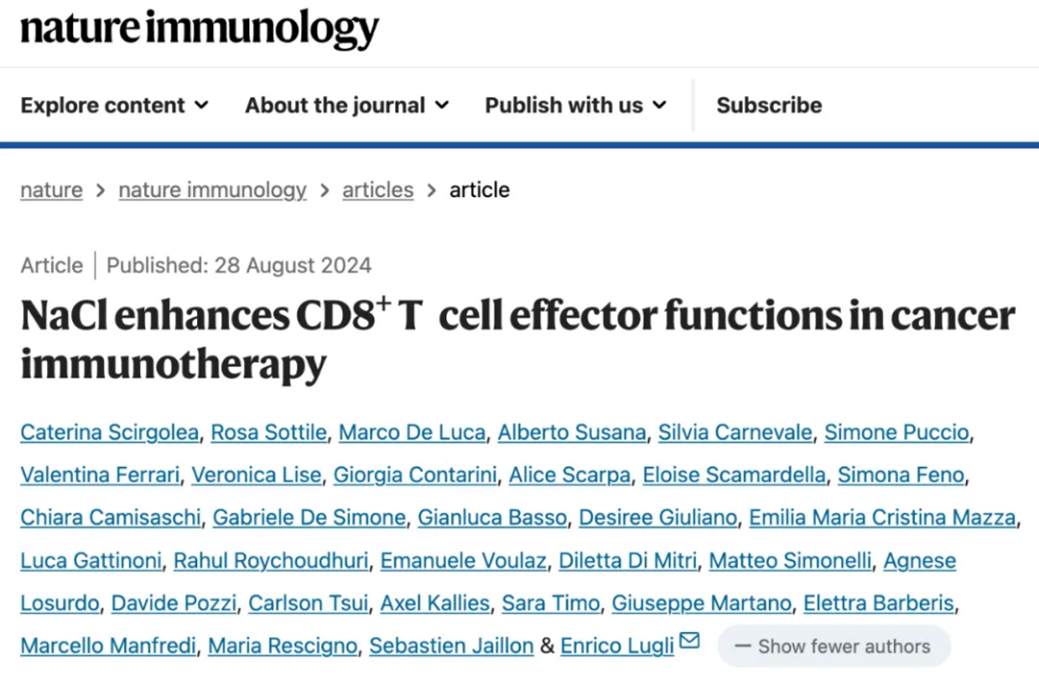
Image Source: Nature Immunology
Paper link:
https://doi.org/10.1038/s41590-024-01918-6
https://doi.org/10.1038/s41590-024-01923-9
CellModerna Releases Latest Data on Mpox mRNA Vaccine
MonkeypoxMonkeypox is a zoonotic virus spread through contact, with symptoms similar to smallpox. In 2022, a global outbreak of the Type 2 monkeypox virus occurred, infecting over 95,000 people. The Type 1 virus is more lethal, and recently, the 1b variant strain has been spreading rapidly in Central Africa, particularly affecting children and households. Developing an effective vaccine to address this threat has become urgent.
On September 4, 2024, the research team from ModernaCellPublished a research paper titled "Comparison of protection against mpox following mRNA or modified vaccinia Ankara vaccination in nonhuman primates," releasing itsmRNA Candidate Vaccine mRNA-1769The latest research results.
Moderna's mRNA-1769 candidate vaccine contains mRNA molecules encoding four key proteins on the surface of the monkeypox virus, effectively guiding the immune system to recognize and combat the virus. Data shows that mRNA-1769 prevents severe disease in monkeys after infection and reduces viral levels in the body.Shows significantly superior performance compared to currently approved monkeypox vaccines.。
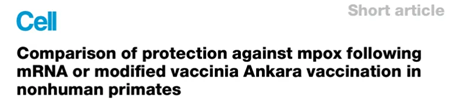
Image Source:Cell
Paper link:
DOI: 10.1016/j.cell.2024.08.043
References