

Global First! Dupilumab Phase III ADEPT Trial in Bullous Pemphigoid Meets Primary and All Key Secondary Endpoints

Regeneron
Biopharmaceutical Manufacturer

Welcome to follow Asymchem Pharma News

On September 11, 2024, Sanofi and Regeneron jointly announced that a pivotal study (ADEPT) conducted by the company on dupilumab (trade name: Dupixent) for the treatment of moderate to severe adult patients with bullous pemphigoid (BP) met the primary and all key secondary endpoints. The study showed,Compared to patients taking a placebo, five times as many patients taking Dupilumab achieved sustained disease remission.
DupilumabThe first and only biologic to achieve disease remission and significant symptom improvement in a pivotal study for bullous pemphigoid.; If approved, the drug would become the first and only targeted treatment for BP in the U.S. and EU.
About ADEPT
ADEPT is a randomized, Phase 2/3, double-blind, placebo-controlled study evaluating the efficacy and safety of Dupixent in 106 adults with moderate to severe BP over a 52-week treatment period. After randomization, patients received Dupixent or placebo every two weeks along with OCS therapy.
During the treatment period, patients began OCS tapering after experiencing two weeks of sustained disease activity control. OCS tapering could start four to six weeks after randomization, continuing as long as the disease was controlled, with the goal of completion within 16 weeks. After OCS tapering, unless rescue treatment was required, patients received only Dupixent or placebo treatment for at least 20 weeks.
Primary EndpointThe proportion of patients who achieved sustained disease remission at 36 weeks was evaluated; sustained disease remission was defined as complete clinical remission, completion of oral corticosteroid (OCS) tapering by week 16, no relapse, and no use of rescue therapy during the 36-week treatment period. Relapse was defined as the appearance of ≥3 new lesions per month or ≥1 large lesion (diameter >10 cm) that did not heal within one week. The study showed:
20% of Dupixent patients experienced sustained disease remission at 36 weeks, compared to 4% in the placebo group (p=0.0114).
Patients had no disease recurrence after completing OCS tapering: 59% vs. 16% (p=0.0023);
No rescue treatment required during treatment: 42% vs. 12% (p=0.0004);
Complete remission and OCS discontinuation at Week 16: 38% vs. 27%.
Secondary endpoints:
Patients with ≥90% reduction in disease severity: 41%vs. 10% (p=0.0003);
Patients achieved a clinically meaningful reduction in itching: 40% vs. 11% (p=0.0006);
Reduction in OCS use and reduction in rescue medication use: p=0.0220 and p=0.0016, respectively;
Reduction in disease severity compared to baseline: 77% vs. 51% (p=0.0021);
Reduction in itching compared to baseline: 52% vs. 27% (p=0.0021);
Number of days to complete resolution after discontinuation of OCS: 40vs. 13 (p=0.0072).
In the elderly population, the overall incidence of adverse events (AE) for Dupixent was 96% (n=51), and the overall incidence of adverse events (AE) for placebo was 96% (n=51). Compared with the placebo group, AEs occurring in more than 3 patients and more common in the Dupixent group included peripheral edema, arthralgia, back pain, blurred vision, hypertension, asthma, conjunctivitis, constipation, upper respiratory tract infection, limb injury, and insomnia. There were no AEs leading to death in the Dupixent group, while there were 2 AEs leading to death in the placebo group.
About Dupilumab
Dupilumab is a fully humanized monoclonal antibody that inhibits signaling in the interleukin-4 (IL-4) and interleukin-13 (IL-13) pathways. IL-4 and IL-13 are structurally and functionally related cytokines that not only participate in immune functions but also play roles in pregnancy, fetal development, mammary gland development and lactation, as well as brain functions including memory and learning. Additionally, both cytokines have significant regulatory effects in diseases such as allergies, asthma, pulmonary fibrosis, and cancer.
Currently, Dupixent has been approved for the treatment of type 2 chronic inflammatory conditions, including asthma, atopic dermatitis, chronic rhinosinusitis with nasal polyps (CRSwNP), and eosinophilic esophagitis. In July 2024, the European Medicines Agency (EMA) approved Dupixent as an add-on maintenance treatment for adult patients with chronic obstructive pulmonary disease (COPD) characterized by blood eosinophilia and inadequate control; this marks the first new treatment for COPD approved in the EU in over a decade and the first targeted therapy authorized for COPD patients.
Besides bullous pemphigoid, the drug is currently also inDevelopment for Chronic Pruritus of Unknown Origin (CPUO Phase 3 Study)The study showed that the primary pruritus endpoint did not reach statistical significance (although there was numerical improvement), but all other pruritus endpoints demonstrated nominally significant improvements, including changes from baseline, the percentage of patients achieving no/mild pruritus, and changes in pruritus-related quality of life compared to baseline; safety outcomes were generally consistent with the known safety profile of Dupixent in its approved dermatological indications.

About Bullous Skin Diseases
Bullous skin diseases result from the immune system erroneously attacking cell adhesion factors in the skin, causing skin cells to lose connection and form blisters. These are rare but very serious conditions. Pemphigus causes acantholysis between epidermal cells, while pemphigoid leads to separation between the epidermis and dermis. The most common types include: pemphigus vulgaris, pemphigus foliaceus, and bullous pemphigoid (BP).
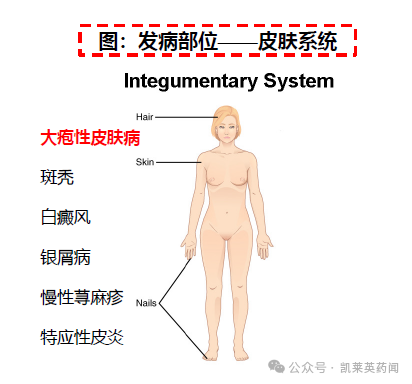
Among them, BP is a chronic recurrent disease characterized by severe itching, blisters, skin redness, and painful chronic lesions. Blisters and rashes can form in most areas of the body, leading to skin bleeding and crusting, making patients more susceptible to infections and affecting their daily functioning.
The incidence of bullous skin diseases varies significantly depending on geographic regions and populations. Currently, bullous pemphigoid (BP) remains the most common bullous disease in Germany and Central Europe, with its incidence continuously increasing over recent decades. Possible contributing factors include an aging population, rising prevalence of neurological disorders, and certain medications. Additionally, increased awareness of the disease and improved diagnosis and treatment of many atypical cases may also play a role.
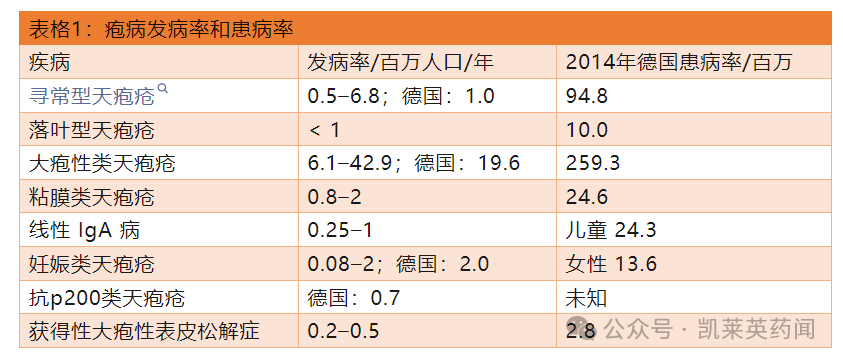
(Source: Dermatology News)
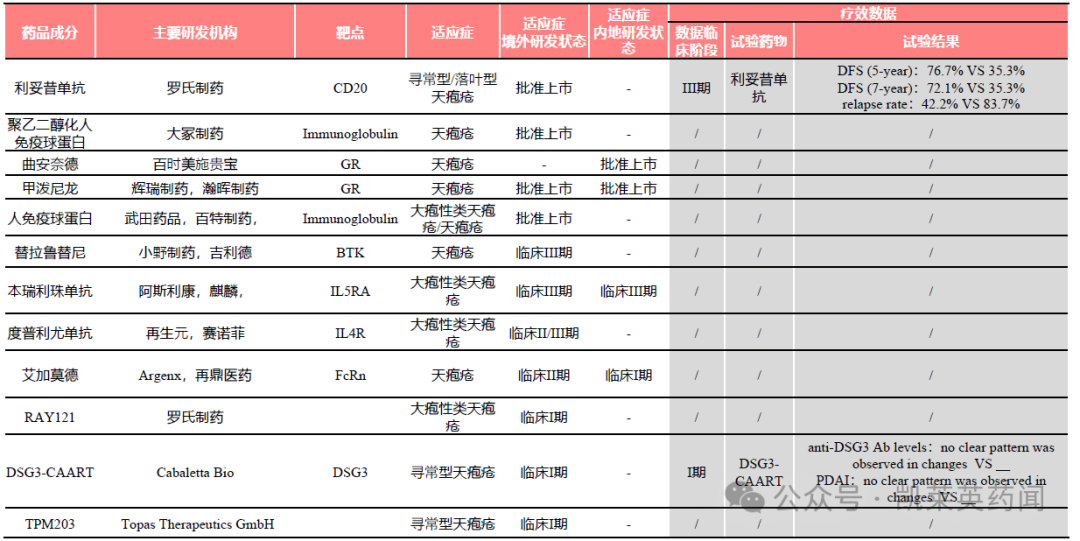
In 2018, Roche's CD20 monoclonal antibody Rituximab (MabThera) was approved by the FDA as a first-line treatment for moderate to severe pemphigus and is also commonly used.LargeThe Only Biologic Agent in the Treatment of Vesicular Skin DiseasesIn China, rituximab was launched in 2003, with indications for various types of hematological tumors, excluding bullous skin diseases. According to statistics, the sales of rituximab reached as high as 1.817 billion US dollars in 2023.
According to incomplete statistics, there are currently few commercial products for bullous skin diseases under development, and the main products in development are monoclonal antibodies.
Research Progress on Some Bullous Skin Diseases (Phase I and Above)
References
1. Company Official Website
2. CITIC Securities, Dermatology Information




"Views"Click once