

ORR Over 60%! GSK's TIGIT + PD-1 Combination Therapy Brings New Hope in NSCLC

GSK
Pharmaceutical R&D Manufacturer



As the largest multidisciplinary conference in the European oncology field, the 2024 European Society for Medical Oncology (ESMO) Annual Meeting will be held from September 13 to 17 in Barcelona, Spain.At this conference, the researchers announcedGSK'sPD-1 AntibodyDostarlimab+TIGIT AntibodyBelrestotugThe Progress of Combination Therapy in the Phase II Clinical Trial GALAXIES Lung-201 for First-Line Non-Small Cell Lung Cancer with High PD-L1 Expression (TPS≥50%):
Compared with the 28.1% response rate of PD-1 antibody dostarlimab monotherapy, the objective response rate (ORR) of the belrestotug/dostarlimab combination in first-line non-small cell lung cancer patients with high PD-L1 expression reached60%The above. In terms of safety, there was no significant change in the combination group, which has become one of the few hopes for TIGIT at present.
01
TIGIT+PD-1 Combination Response Rate Doubles
Belrestotug is an Fc-competent human immunoglobulin G1, or IgG1, monoclonal antibody (mAb) targeting T-cell immunoglobulin and immunoreceptor tyrosine-based inhibitory motif domain (TIGIT), a key inhibitory receptor contributing to the suppression of innate immune responses against cancer. As an optimized, high-affinity, potent anti-TIGIT mAb, belrestotug is designed to enhance anti-tumor responses through multifaceted immune modulation mechanisms involving interactions with both TIGIT and FcγR, a critical regulator of immune responses that induces cytokine release and antibody-dependent cellular cytotoxicity (ADCC).
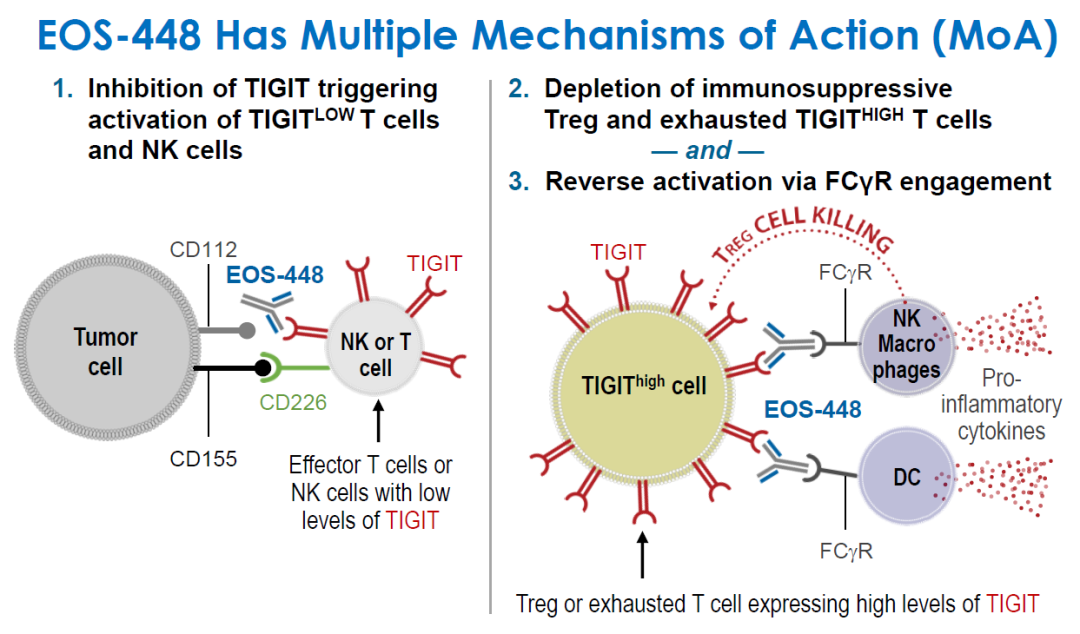
In June 2021, GSK announced a collaboration with iTeos to develop and promote the TIGIT antibody Belrestotug for an upfront payment of $625 million and up to $1.45 billion in total milestone payments. They will jointly bear the global development costs of Belrestotug and co-commercialize it in the United States, sharing profits equally.

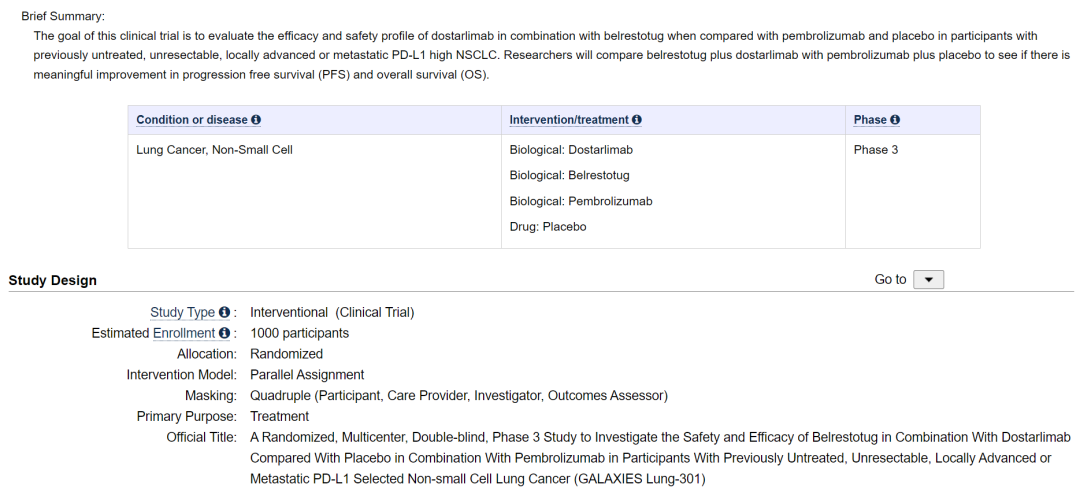
In May 2024, iTeos Therapeutics announced in its first-quarter earnings report that the interim analysis of the Phase 2 clinical trial GALAXIES Lung-201 showed that its investigational anti-TIGIT antibody therapy belrestotug, in combination with GSK's PD-1 inhibitor dostarlimab,As a first-line therapyTreatment of non-small cell lung cancer (NSCLC) reached the predetermined efficacy criteria, demonstrating clinically significant tumor reduction across all doses.In June 2024, iTeos announced the launch of the Phase III clinical trial GALAXIES Lung-301 for Belrestotug in the treatment of NSCLC, with a planned enrollment of 1,000 patients.
At this year's ESMO conference, researchers announced the detailed data of GALAXIES Lung-201.
Research Background
In patients with unresectable locally advanced/metastatic (LA/M) PD-L1 high-expression NSCLC, less than 50% respond to first-line immunotherapy (IO), highlighting the need for new treatment options. GALAXIES Lung-201 (NCT05565378) is a Phase 2, open-label, randomized platform study evaluating novel IO combinations, including belrestotug (anti-TIGIT) + dostarlimab (anti-PD-1), in previously untreated LA/M PD-L1 high-expression NSCLC patients.
Treatment Method
Previously untreated, unresectable, PD-L1 high (tumor proportion score [TPS] ≥50%), locally or via DAKO 22C3 [local only] or VENTANA SP263, LA/M NSCLC patients with no actionable mutations were randomized to receive dostarlimab 500mg alone or in combination with belrestotug (Sub-study 1) at doses of 100mg (A), 400mg (B), or 1000mg (C) every 3 weeks until disease progression, intolerable toxicity, or death. The primary endpoint was the objective response rate (ORR) assessed by investigators per RECIST 1.1.
Research Results
As of the data cutoff date (June 7, 2024),dostarlimabA, B, and C groups included 32, 30, 32, and 30 patients, respectively, in this interim analysis (IA) of preliminary efficacy and safety follow-up (FU) (modified intention-to-treat population defined as >/=5.6 months of FU). The median total follow-up time was 7.3 months, with 65% of patients still on treatment.Compared with the dostarlimab group, the ORR was higher in groups A, B, and C; the incidence of grade 3 or higher treatment-related adverse events (TRAEs) was higher, but these adverse events were considered manageable.

Conclusion
In the current clinical trial, belrestotug + dostarlimab demonstrated clinically meaningful antitumor activity across all doses, with manageable safety, supporting its use in previously untreated, unresectable LA/M PD-L1.High expressionFurther evaluation for NSCLC patients.
02
Over the past decade, immune checkpoint inhibitors (ICIs) have emerged as a revolutionary cancer treatment approach. However, response rates to ICIs vary significantly among different individuals and cancer types. Therefore, combination therapy with dual ICIs has been proposed as a potential strategy to address these challenges.
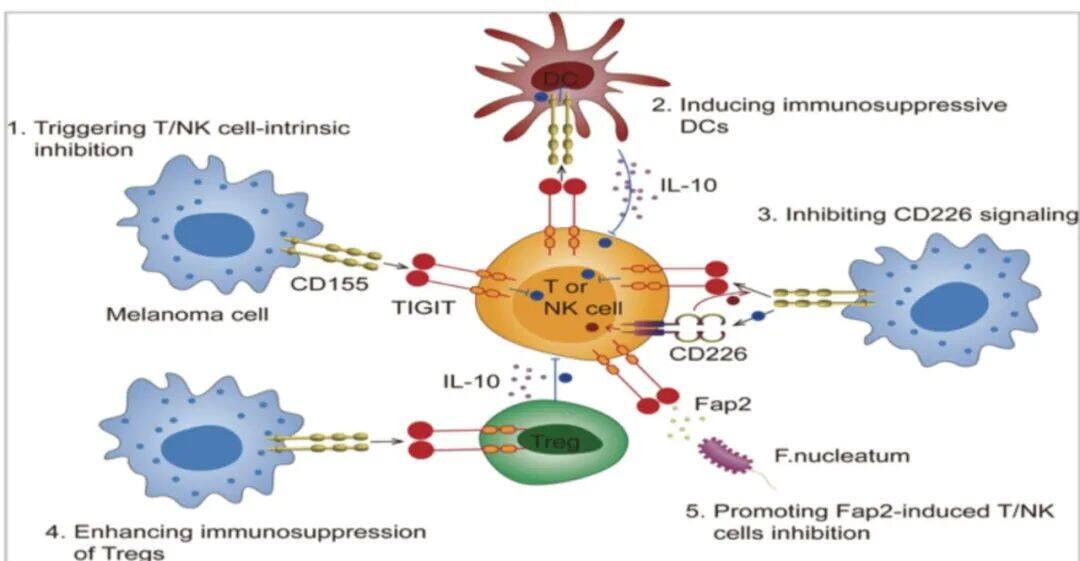
TIGIT is a co-inhibitory receptor highly expressed in tumor-infiltrating lymphocytes. Through various mechanisms such as triggering intrinsic T/NK cell inhibition, inducing immunosuppressive dendritic cells (DCs), suppressing CD226 signaling, enhancing Treg-mediated immunosuppression, and promoting FAP2-induced T/NK cell suppression, TIGIT is overexpressed in the cellular microenvironment of several cancers, including breast cancer, lung adenocarcinoma, renal cell carcinoma, hepatocellular carcinoma, gastric cancer, and hematological malignancies. Additionally, TIGIT expression correlates with PD-1, and it can synergistically enhance tumor rejection when combined with PD-1/PD-L1 blockade. This makes the combination of TIGIT with PD-1/PD-L1 a popular area of research for cancer treatment.
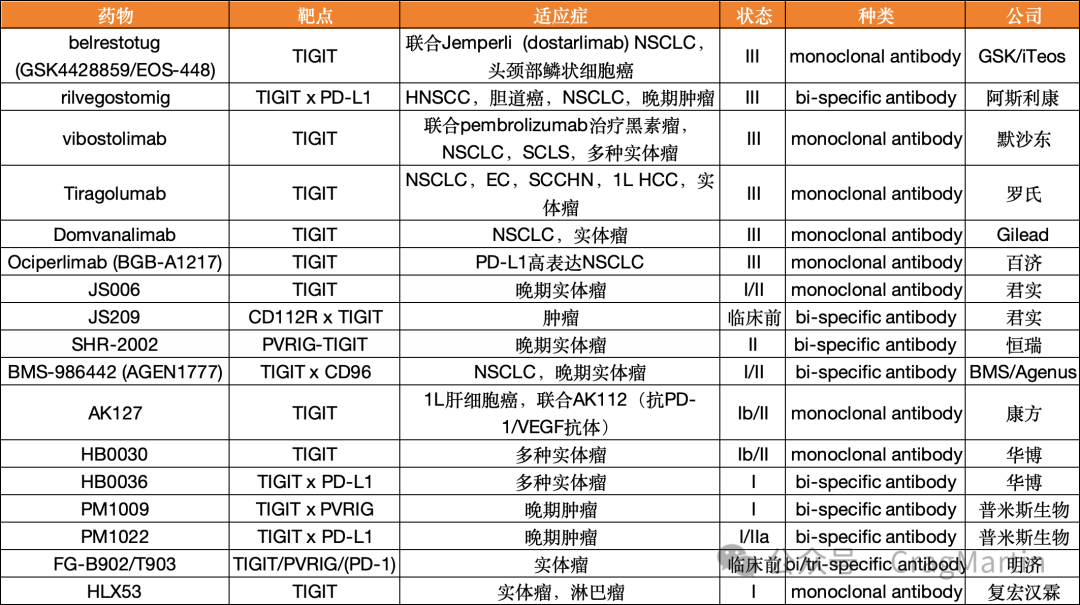
Currently, there are no TIGIT antibodies approved for marketing globally, with only a dozen TIGIT antibodies entering clinical trials.International pharmaceutical giants such as Roche, Bristol-Myers Squibb (BMS), and Merck (MSD) have pipeline layouts in this target area. However, the development progress of this target has had a tumultuous journey and remains a somewhat controversial target.
Among them, Roche was the first MNC to develop the TIGIT target into an antibody drug, once launching up to 13 clinical trials. The primary focus was on combating the most challenging small cell lung cancer and non-small cell lung cancer. However, the failure of two Phase III clinical trials of PD-L1+TIGIT combination therapy undoubtedly added significant uncertainty to the future of TIGIT.
But despite the trial failing to meet its expected endpoint, Roche and many pharmaceutical companies still place high hopes on TIGIT.Roche is still seeking breakthroughs in other therapies for liver cancer, while GSK is making another push in non-small cell lung cancer, with expectations of progress in the treatment of other tumors sensitive to immunotherapy.GSK and iTeos believe that, through appropriate drug combinations and precise patient selection, anti-TIGIT therapy could still play a significant role in the treatment of refractory cancers such as NSCLC.
In addition to the collaboration between iTeos and GSK, several pharmaceutical giants are also actively exploring combination therapies involving TIGIT and other immune checkpoint inhibitors (such as CTLA-4), aiming for better outcomes.The therapeutic effects. Chinese pharmaceutical companies include BeiGene, Junshi Biosciences, Innovent Biologics, Hengrui Medicine, and Bio-Thera. Whether TIGIT-targeted products can play a more significant role in cancer treatment remains to be seen.
References:
1、https://cslide.ctimeetingtech.com/esmo2024/attendee/confcal/show/session/322. UmabsDB: Response Rate Doubled: GSK's TIGIT+PD-1 Combination Therapy Achieves Breakthrough in Non-Small Cell Lung Cancer
3. CM's RecordMemory Bread: Uncertain Future: TIGIT Progress Review
Disclaimer
1. All information provided by the "Drug Hunter Club" is for reference only and should not be used as a basis for any commercial transactions or medical services. If any deviation occurs from the self-use of the content provided by the "Drug Hunter Club," our company assumes no responsibility, including but not limited to legal and compensatory liabilities.
2. "Hunter Drug Club" is committed to providing reasonable, accurate, and complete information, but does not guarantee the reasonableness, accuracy, or completeness of the information, and shall not be liable for any loss or damage caused by unreasonable, inaccurate, or omitted information.
3. Some article information in the "Drug Hunter Club" is sourced from online reprints with the purpose of conveying more information, and does not imply endorsement of the views or confirmation of the authenticity of the content. If you have any questions about the content, please contact our company in a timely manner.
4. For issues not covered in this statement, please refer to relevant national laws and regulations. In case of any conflict between this statement and national laws and regulations, the latter shall prevail.


"Viewing"Click once