

Hansoh Pharma Announces New Clinical Progress of Novel Selective OX2R Antagonist HS-10506 for Insomnia, Potentially Benefiting 500 Million People in China
Hansoh Pharma
Pharmaceutical Research, Production, and Sales

Welcome to follow Asymchem Pharma News

Recently, Hansoh Pharma announced the latest research findings on HS-10506 at the 37th European College of Neuropsychopharmacology (ECNP) Congress.HS-10506 is a novel, high-affinity selective orexin 2 receptor (OX2R) antagonist currently in Phase I/II clinical trials.。
About the Latest Research Results
A randomized, double-blind, placebo-controlled, single ascending dose study conducted in Chinese healthy subjects to evaluate the safety, tolerability, and pharmacokinetic profile of HS-10506 was disclosed. Fifty-two healthy subjects were assigned to five dose groups (2.5mg, 7.5mg, 20mg, 40mg, and 60mg) and received a single morning dose of HS-10506 or placebo.Results:
HS-10506 is rapidly absorbed, with a median Tmax ranging from 0.5 to 1.0 hours and a terminal half-life of approximately 2 to 5 hours. After a single dose of HS-10506, plasma exposure increases with dose, and the increase in exposure is slightly less than the increase in dose.
No deaths, serious adverse events, or adverse events leading to early withdrawal from the study occurred due to safety issues.
Among 39 subjects treated with HS-10506, 33 (84.6%) and among 13 subjects treated with placebo, 5 (38.5%) experienced at least one AE. The most common AEs (>2 cases) were drowsiness, somnolence, and dizziness. No clinically significant abnormalities were observed in vital signs (e.g., heart rate, blood pressure), laboratory tests, or C-SSRS suicide scale assessments.
In the HS-10506 2.5mg, 7.5mg, 20mg, 40mg, and 60mg dose groups, the incidence rates of somnolence were 0% (0/6), 50.0% (3/6), 88.9% (8/9), 88.9% (8/9), and 100.0% (9/9), respectively, while the rate in the placebo group was 38.5% (5/13). The severity of all other AEs, except for drowsiness and somnolence, was mild.
About OX2R Antagonists
Orexin is a neuropeptide naturally produced by the hypothalamus and primarily functions in the central nervous system. It plays a broad role in regulating feeding, energy metabolism balance, sleep-wake cycles, blood pressure, and more. It includes two types: orexin-A (hypocretin-1) and orexin-B (hypocretin-2). Both are generated from the same precursor peptide, prepro-orexin. Orexin peptides are ligands for the G-protein-coupled orexin type 1 receptors (OX1Rs) and OX2Rs. Orexin-A can activate both OX1R and OX2R, while orexin-B preferentially activates OX2R.
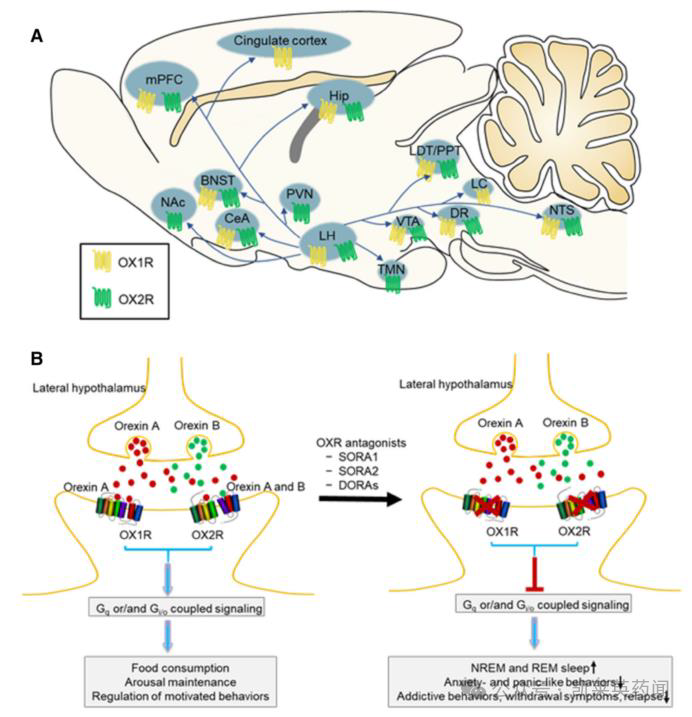
Orexin antagonists mainly include OX1R antagonists (SORA1s), selective OX2R antagonists (SORA2s), and dual OX1/2R antagonists (DORAs). SORA2 and DORA have more significant efficacy in treating sleep disorders, while SORA1 may be used for treating anxiety and drug addiction.
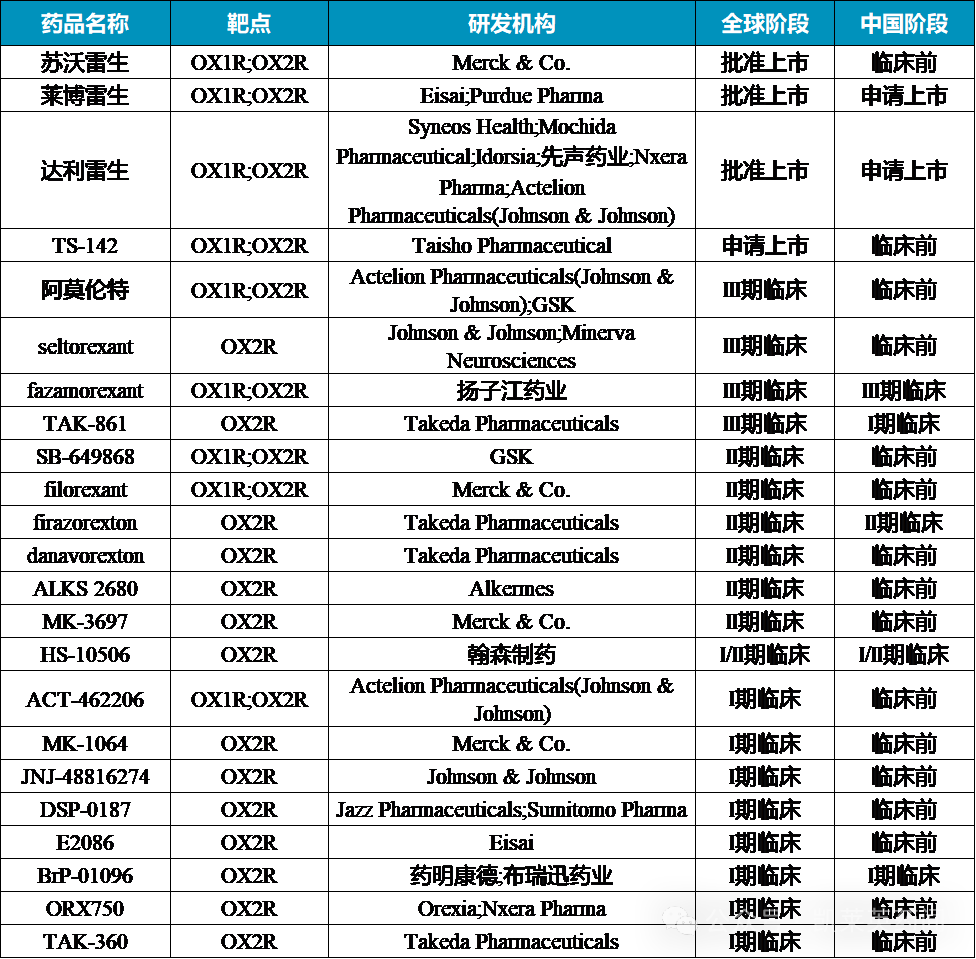
According to incomplete statistics, currentlyThere are about 41 OX2R drugs (mainly SORA2s and DORAs) currently under research.; among whichMerck's Suvorexant, Eisai's Lemborexant, and IDORSIA's Daridorexant have been approved globally, but no products have been approved for marketing in China.。
The clinical data of the three approved drugs are summarized as follows:
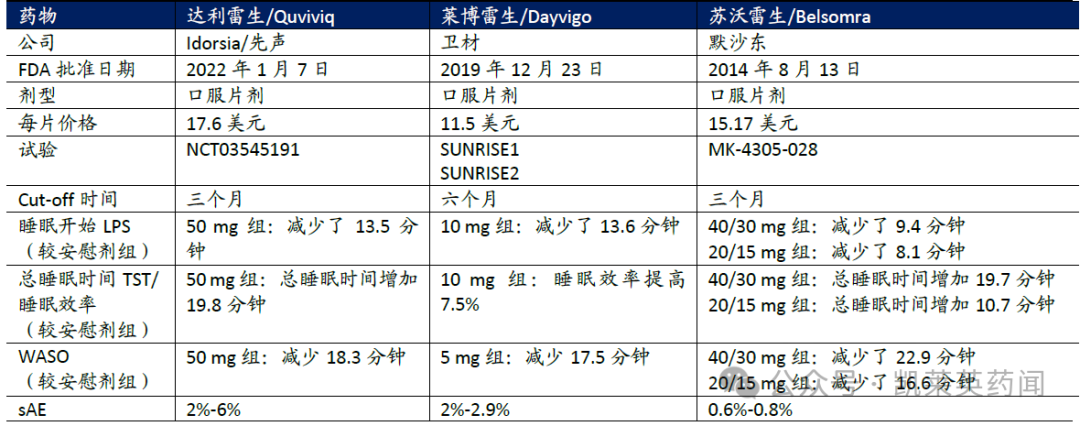
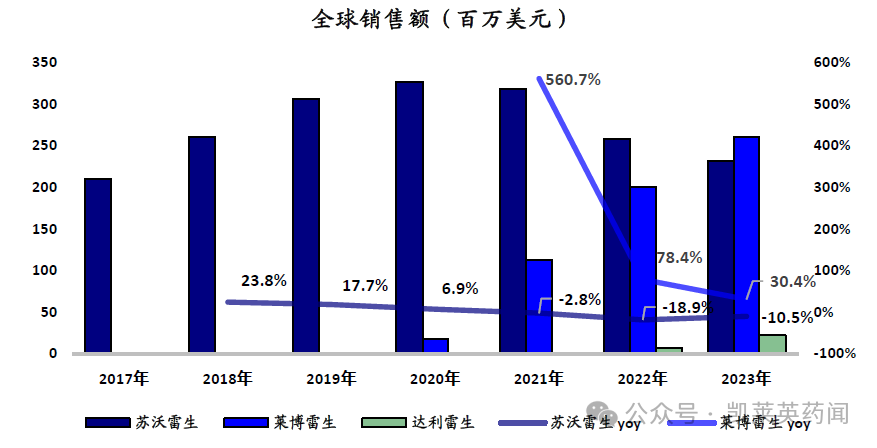
According to statistics, the sales of Lemborexant reached 386 yen (approximately 2.6 USD) in 2023; the sales of Suvorexant are currently on a downward trend, with sales of 230 million USD in 2023; another drug, Daridorexant, had sales of 22 million USD in 2023.
About Insomnia
Insomnia refers to a subjective experience of dissatisfaction with sleep duration and/or quality despite having appropriate sleep opportunities and environment, which affects daytime social functioning. The main symptoms include difficulty falling asleep (sleep latency exceeding 30 minutes), sleep maintenance disorders (waking up ≥2 times during the night), early waking, decreased sleep quality, and reduced total sleep time (usually less than 6.5 hours), accompanied by daytime dysfunction.
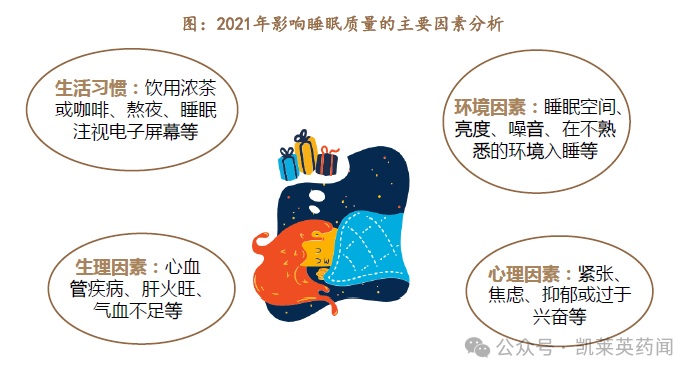
According to WHO survey statistics, the global sleep disorder rate is approximately 27%, and the sleep survey results published by the China Sleep Association in 2016 showed that,The insomnia rate among Chinese adults is as high as 38.2%, with an estimated over 500 million people suffering from sleep disorders.According to the Chinese Guidelines for the Diagnosis and Treatment of Insomnia, in follow-up studies ranging from 1 to 10 years, the persistence rate of insomnia in adults is 30% to 60%, indicating that the course of insomnia has a persistent characteristic. On the other hand, insomnia has a certain degree of (natural) remission, and its course shows fluctuation. The persistence rate of insomnia varies with age: the persistence rate of insomnia in children and adolescents is about 15.0%, while in middle-aged women and men, it is as high as 42.7% and 28.2%, respectively.
Currently, the main interventions for insomnia include psychological treatment, medication, physical therapy, and traditional Chinese medicine. In terms of choosing a medication strategy: (1) Non-benzodiazepine drugs are preferred, such as zolpidem and eszopiclone; (2) If the first-choice medication is ineffective or intolerable, switch to another short- to intermediate-acting benzodiazepine receptor agonist, melatonin receptor agonist, or orexin receptor antagonist; (3) Add antidepressant drugs with sedative-hypnotic effects (e.g., doxepin, trazodone), especially suitable for insomnia patients with accompanying anxiety and depressive symptoms. (4) Chronic insomnia patients on long-term benzodiazepine receptor agonists should undergo clinical evaluation at least once every 4 weeks.
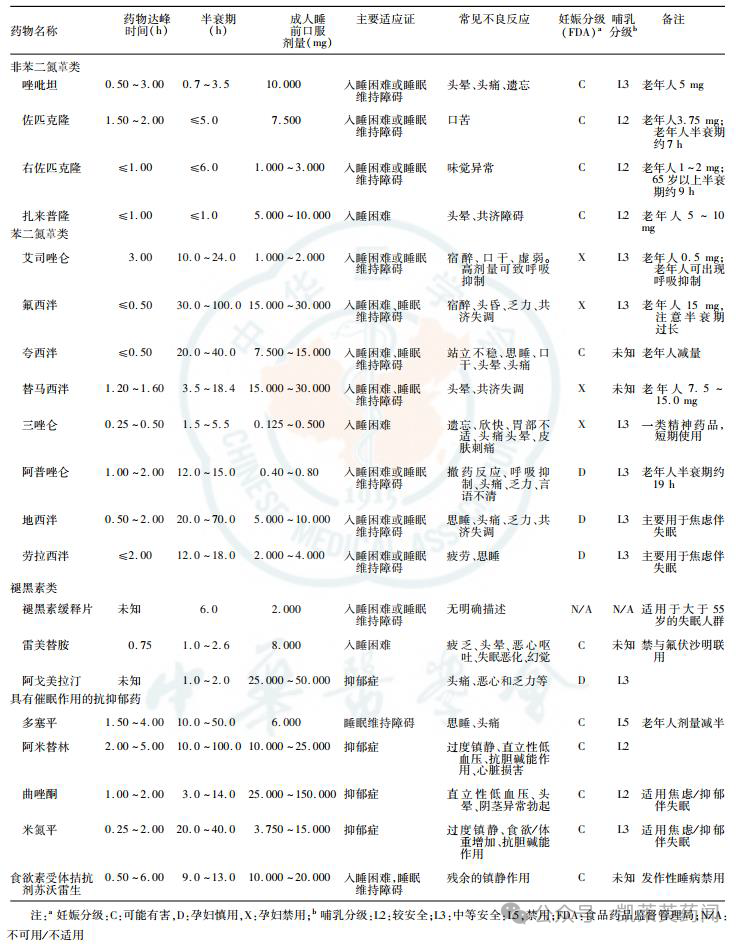
Source: "Guidelines for the Diagnosis and Treatment of Insomnia in Chinese Adults (2017 Edition)"
According to statistics, the市场规模 of insomnia-related chemical drugs in China reached 4.2 billion yuan in 2022, representing a year-on-year increase of 18.9%. Among these, benzodiazepines accounted for the highest sales revenue at 1.48 billion yuan. Additionally, the new insomnia drug agomelatine (marketed by Servier and Hansoh Pharma) experienced the fastest growth, with sales reaching 640 million yuan in 2022, marking a year-on-year increase of 29.6%.
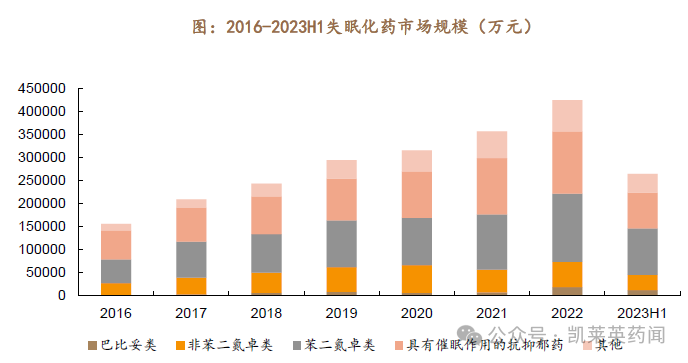
However, some single products of traditional Chinese medicine and health supplements have broken through 500 million yuan. Overall, insomnia-related chemical drugs still have strong growth potential.
About Hansoh Pharma
Hansoh Pharma is a leading innovation-driven pharmaceutical company in China, with subsidiaries including Hansoh Pharmaceutical, Changzhou Hengbang Pharmaceutical, and Hansoh Biologics. The company focuses on major disease treatment areas such as oncology, anti-infectives, central nervous system, metabolism, and autoimmune diseases. After years of accumulation, the company has developed efficient capabilities in discovering innovative large and small molecule drugs, with a research and development layout covering monoclonal antibodies, ADC drugs, siRNA, bispecific antibodies, and fusion protein products. To date, the company has received approval for seven innovative drugs to be marketed.
In the first half of 2024, the company's revenue was RMB 6.506 billion, representing a year-on-year increase of 44.2%. Of this, cooperative revenue amounted to RMB 1.402 billion. Excluding the impact of cooperative revenue, the company’s revenue in the first half of 2024 was RMB 5.032 billion, marking an 80.6% year-on-year increase. The company's profit in the first half of 2024 was RMB 2.726 billion, reflecting a year-on-year growth of 111.4%.
References
1. Company Official Website
2. Haitong International, Deutsche Bank Securities, Zhongtai International, China Merchants Securities


"Under observation"Click once