Durvalumab Scores Two Late-Stage Trial Wins, Bolstering AstraZeneca's Immuno-Oncology Portfolio

AstraZeneca
Biopharmaceutical Manufacturer

Imfinzi(Imfinzi,Durvalumab,DurvalumabIt is a key immunotherapy from AstraZeneca, which has been approved in multiple countries for the treatment of various types of lung cancer.It is the global standard therapy for patients with stage III unresectable NSCLC who have no disease progression after chemoradiotherapy.
Imfinzi is the first and only immunotherapy to demonstrate a survival benefit in a global Phase III clinical trial for limited-stage small cell lung cancer, reducing the risk of death by 27% compared to placebo.
Recently, Imfinzi has achieved positive results in two Phase III trials, which is expected to provide new growth momentum and contribute to AstraZeneca's ambition to capture over 50% of the lung cancer market by 2030.
PART.
01
Positive Results from Two New Indication Trials
Imfinzi Approaches $5 Billion Milestone
Imfinzi is a humanized PD-L1 monoclonal antibody developed by AstraZeneca, which can block the binding of PD-L1 to PD-1 and CD80, thereby blockingTumorImmune escape and release of suppressed immune responses.
As of now, Imfinzi has been approved for marketing in multiple countries around the world, for the treatment of non-small cell lung cancer (NSCLC) and locally advanced or metastatic urothelial carcinoma.Epithelial Carcinoma(Bladder cancer), and AstraZeneca is also actively expanding new indications for Imfinzi. Recently, Imfinzi has achieved positive results in two Phase III trials for new indications.
On September 15, AstraZeneca announced positive results from the NIAGARA III trial of Imfinzi: compared with neoadjuvant chemotherapy in patients with muscle-invasive bladder cancer (MIBC),Imfinzi in combination with chemotherapy demonstrated statistically significant and clinically meaningful improvements in the primary endpoint of event-free survival (EFS) and the key secondary endpoint of overall survival (OS).(Figure 1)[1]。
The primary endpoint showed that patients treated with the Imfinzi perioperative regimen had a 32% reduction in the risk of disease progression, recurrence, non-surgery, or death compared to the control group. The estimated median EFS for the Imfinzi group has not yet been reached, while it was 46.1 months for the control group.
Results for the key secondary endpoint OS showed that, compared with neoadjuvant chemotherapy for radical cystectomy, the Imfinzi perioperative regimen reduced the risk of death by 25%. The median survival was not reached in either group. It was estimated that 82.2% of patients treated with the Imfinzi regimen survived within two years, compared to 75.2% in the control group.
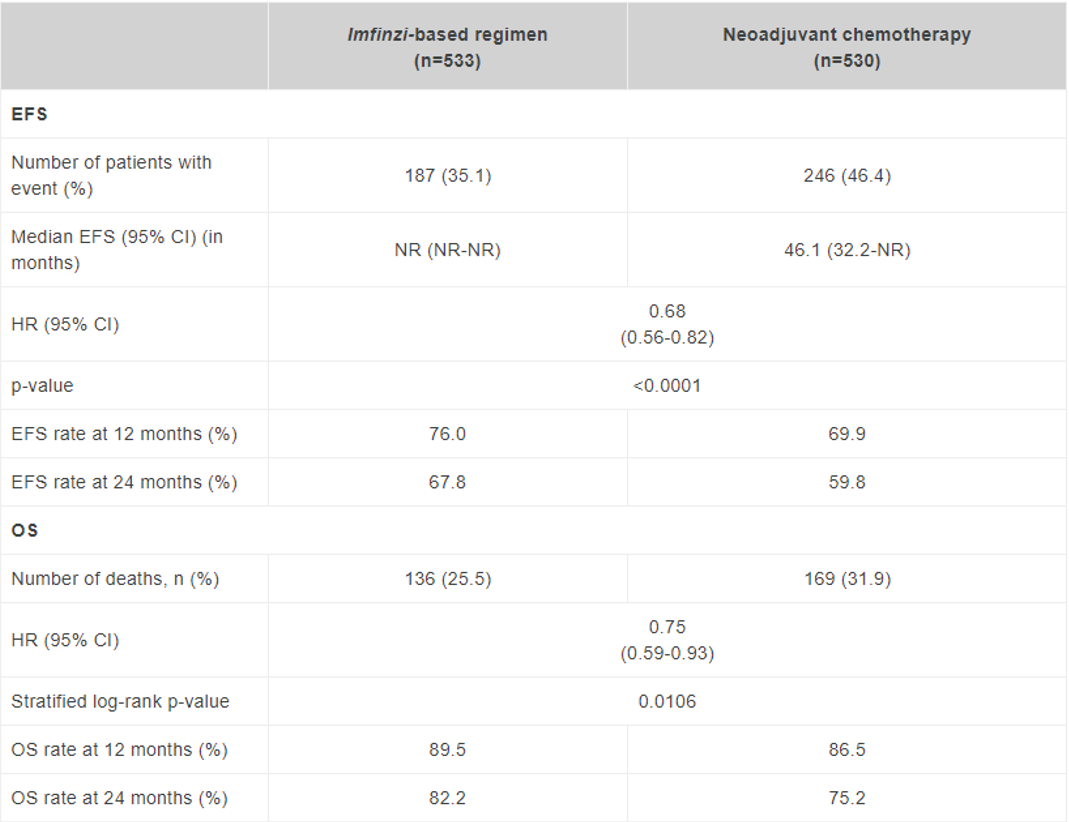
Figure 1. Results of the NIAGARA III Trial for Imfinzi
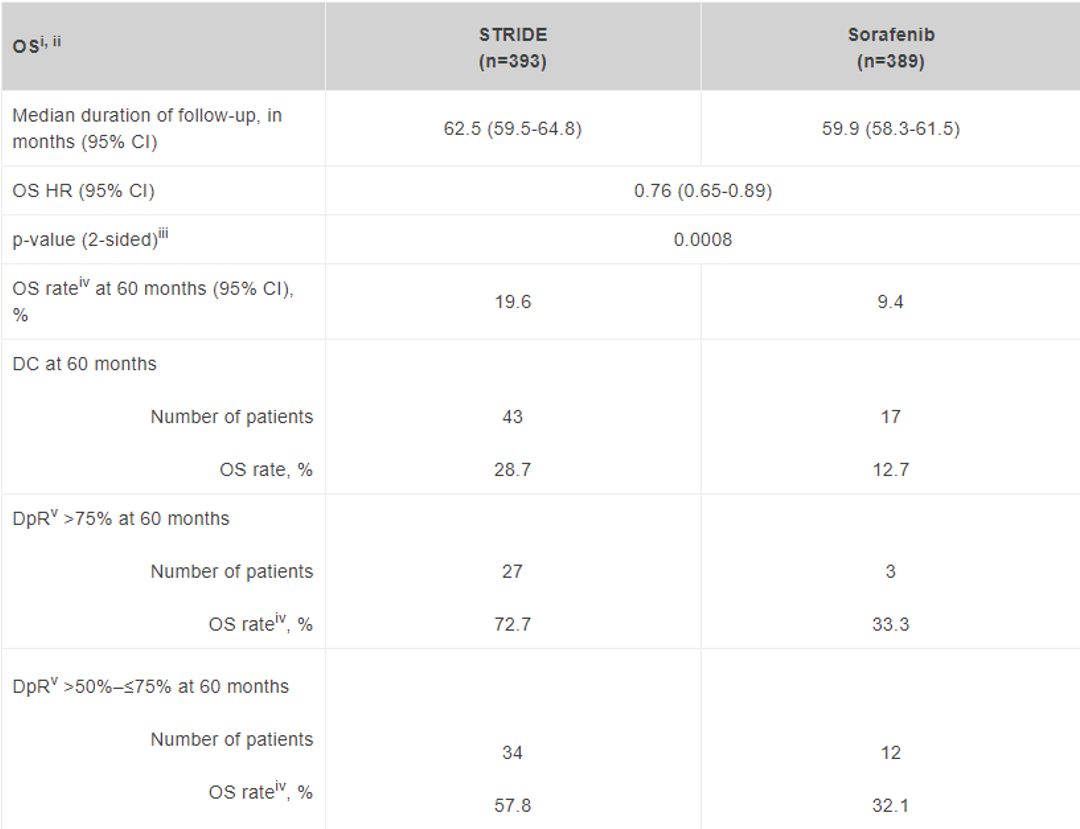
On September 16, AstraZeneca announced the positive results of the HIMALAYA Phase III trial for Imfinzi:Imfinzi in combination with Imjudo shows sustained, clinically meaningful OS benefit at five years in patients with unresectable hepatocellular carcinoma (HCC) who have not received prior systemic therapy and are ineligible for locoregional therapy.(Figure 2)[2]。
In a five-year follow-up, this latest exploratory analysis shows that compared with sorafenib, adding a single priming dose of Imjudo to Imfinzi, known as the STRIDE regimen, reduced the risk of death by 24%. It was estimated that 19.6% of patients treated with the STRIDE regimen survived at 5 years, compared with 9.4% of those treated with sorafenib.
In a subgroup analysis of patients who achieved disease control (defined as complete or partial response or stable disease) in the trial, 28.7% of patients treated with the STRIDE regimen were alive at 5 years, compared to 12.7% of those treated with sorafenib. Additionally, an exploratory analysis of depth of response (DpR) indicated that a greater proportion of patients treated with the STRIDE regimen experienced deep responses compared to sorafenib, leading to prolonged survival.
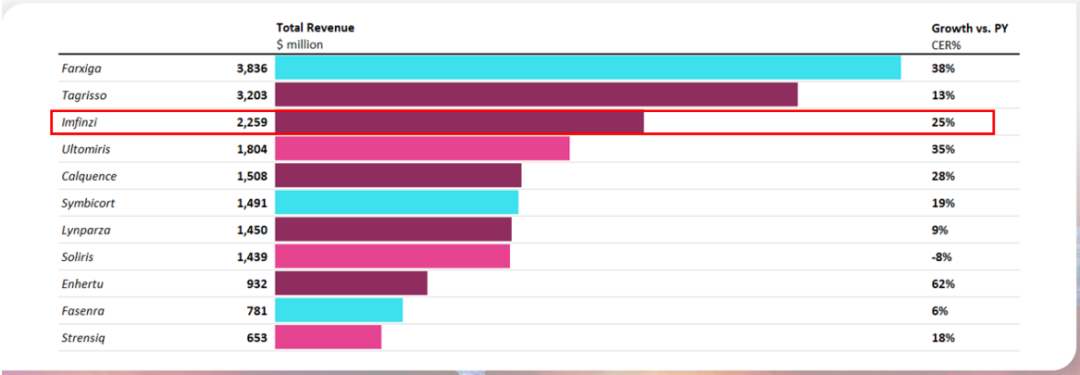
Since its launch, Imfinzi's sales have been increasing year by year, with full-year sales of $4.237 billion in 2023.Sales in the first half of 2024 reached $2.259 billion(Figure 3)[3], a year-on-year increase of 25%, thanks to its excellent clinical efficacy and the expansion of indications,Imfinzi's sales this year are expected to exceed $5 billion.
PART.
02
AstraZeneca's Lung Cancer Portfolio Layout
Aiming for 50% Market Share
In addition to Imfinzi, AstraZeneca has several leading lung cancer drugs and next-generation innovative therapies in the lung cancer field, including Tagrisso, Iressa, tremelimumab, Enhertu, and Dato-DXd, among others (Figure 4).
TagrissoDeveloped by AstraZeneca, it is the third generationEGFRSmall molecule inhibitors, alsoThe only targeted therapy that can simultaneously improve early-stage disease survival rates in patients with early EGFR-mutated lung cancer (ADAURA Phase III trial) and late-stage disease survival rates in first-line treatment (FLAURA Phase III trial).
Tagrisso is currently the best-selling EGFR small molecule inhibitor, with sales reaching $5.799 billion in 2023. In the first half of this year, sales have already reached $3.203 billion, making it AstraZeneca's most important oncology drug.
EnhertuIt is a HER2-targeted ADC product originally developed by Daiichi Sankyo and co-developed with AstraZeneca. It was approved by the FDA in December 2019 for the treatment of patients with unresectable or metastatic HER2-positive breast cancer, followed byApproved for a new indication in non-small cell lung cancer in August 2022, becoming the first HER2-targeted drug for the treatment of non-small cell lung cancer.
AstraZeneca is a founding member of the global Lung Ambition Alliance, which is committed to accelerating innovation and bringing meaningful improvements in treatment and beyond for patients with lung cancer. AstraZeneca aims to capture more than 50% of the lung cancer market by 2030 (Figure 4).
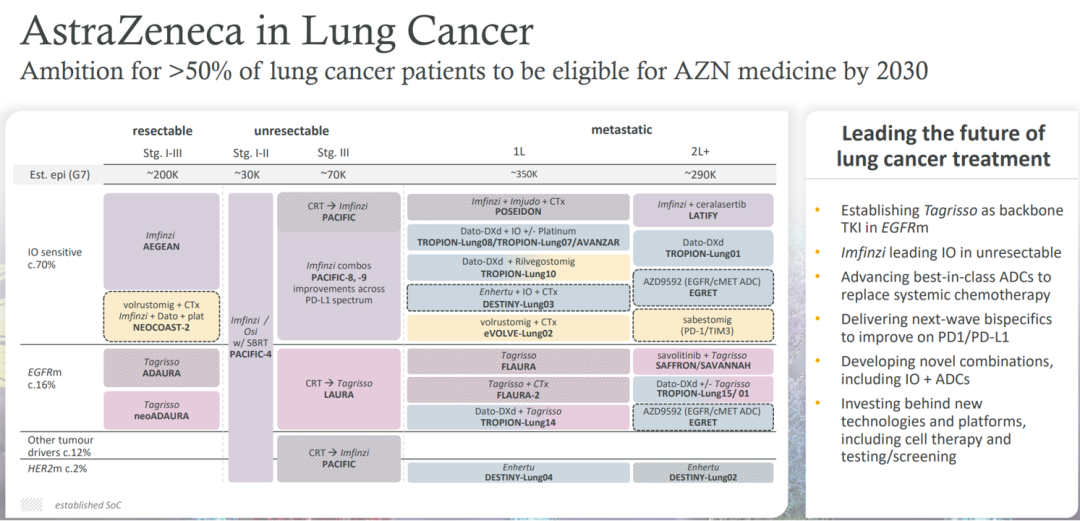
Figure 4. AstraZeneca's Layout in the Lung Cancer Field
Recently, AstraZeneca reported several advancements in shifting lung cancer treatment to earlier stages of the disease at two major conferences, WCLC and ESMO. These include:
1. At the WCLC conference, results from the NeoCOAST-2 Phase II trial evaluating various novel combinations of Imfinzi in patients with resectable early-stage NSCLC before and after surgery showed: In the intention-to-treat population, Group 1 patients (n=60) had a pathological complete response (pCR) rate of 20.0% and a major pathological response (mPR) rate of 45.0%. Group 2 patients (n=60) had a pCR rate of 26.7% and an mPR rate of 53.3%. Group 4 patients (n=44) had a pCR rate of 34.1% and an mPR rate of 65.9%.
2. Following the first interim analysis of the ADRIATIC study, it was reported that Imfinzi significantly improved overall survival (OS) and progression-free survival (PFS) compared to placebo as consolidation therapy in patients with limited-stage small cell lung cancer (LS-SCLC) who did not progress after concurrent chemoradiotherapy. At the 2024 ESMO Annual Meeting, a subgroup analysis of patients receiving Imfinzi showed that the median OS in the Imfinzi group was not reached, while the median OS in the placebo group was 42.5 months. For those not receiving Imfinzi, the median OS was 37.3 months versus 24.1 months (HR 0.71).[4]。
3. At this year's ESMO conference, AstraZeneca presented the efficacy and safety data of Tagrisso in the Chinese cohort from the LAURA Phase III clinical trial: Compared with placebo after radical radiotherapy and chemotherapy, Tagrisso demonstrated consistent clinical benefits and safety in treating Chinese patients with EGFR-mutated Stage III unresectable non-small cell lung cancer (NSCLC) as observed in the global patient population.
Results from the blinded independent central review (BICR) showed that the 12-month and 24-month PFS rates for the Tagrisso treatment group were 80% and 71%, respectively, compared to only 17% and 8% for the placebo group. The OS data is not yet mature. Support for the use of osimertinib as maintenance therapy following definitive chemoradiation in patients with EGFR-mutated stage III unresectable NSCLC is expected to become the new standard treatment regimen for patients globally, including those in China.
Various positive data results support AstraZeneca's ambitions in the lung cancer sector.
PART.
03
AstraZeneca's Heavyweight Lung Cancer Pipeline Under Research
In addition to approved lung cancer drugs such as Imfinzi and Tagrisso, AstraZeneca also has several重磅 lung cancer drugs in development, including Dato-DXd and AZD9592.
Dato-DXd is an ADC drug targeting Trop-2 discovered by Daiichi Sankyo and jointly developed with AstraZeneca.On February 20 this year, the BLA for Dato-DXd was accepted by the FDA for the treatment of adult patients with NSCLC. The PDUFA date is in the fourth quarter of 2024. If approved, this therapy will be the first Trop2-targeted ADC therapy approved for the treatment of lung cancer patients.
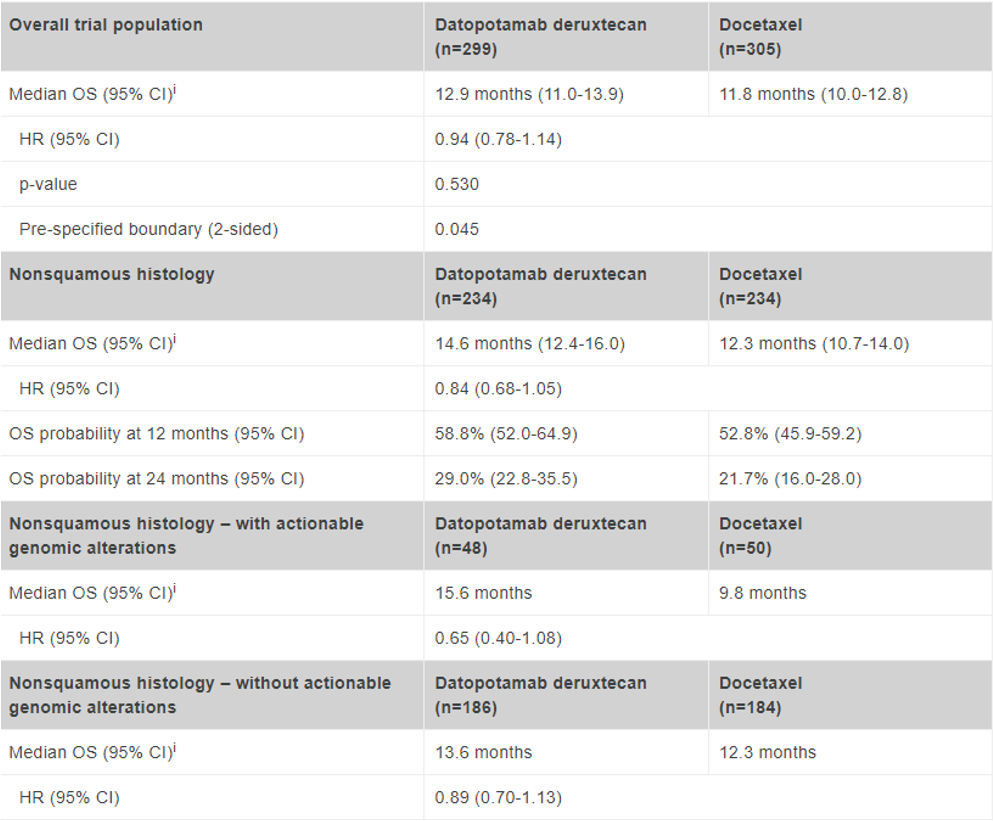
Recently, AstraZeneca announced the detailed results of the TROPION-Lung01 Phase III trial for Dato-DXd: Compared with docetaxel (the current standard chemotherapy treatment), Dato-DXd showed a trend toward clinically meaningful improvement in OS in adult patients with locally advanced or metastatic non-squamous NSCLC who have received at least one prior treatment (Figure 5).[5]。
Specifically, in the overall trial population, the OS results for Dato-DXd were numerically more favorable compared to docetaxel (12.9 months vs. 11.8 months), but did not reach statistical significance. In the pre-specified subgroup of patients with non-squamous NSCLC, Dato-DXd improved OS by 2.3 months compared to docetaxel (14.6 months vs. 12.3 months). OS improvement was observed in non-squamous NSCLC patients regardless of the presence of actionable genomic alterations. In squamous NSCLC patients, consistent with previous analyses, Dato-DXd did not show OS improvement.
AZD9592 is a bispecific ADC targeting EGFR and c-Met developed by AstraZeneca based on its proprietary ADC platform. It conjugates the antibody with the TOP1i payload AZ14170132 (AZ0132) through a cleavable linker, with a DAR value of 6, primarily addressing the issue of osimertinib resistance.
AZD9592 is currently undergoing the EGRET Phase I trial. EGRET is a Phase I, open-label, multi-center, multi-cohort study targeting patients with advanced solid tumors (NCT05647122).
Group 1 will evaluate AZD9592 monotherapy in EGFRm (sensitizing L858R mutation or exon 19 deletion) or EGFR wild-type, or recurrent or metastatic squamous cell carcinoma of the head and neck (HNSCC). Group 2 will evaluate AZD9592 in combination with osimertinib in EGFRm mNSCLC patients. Each group will include dose escalation (Part A) and dose expansion (Part B) cohorts.
According to the public announcement on the CDE official website, the clinical application of AZD9592 submitted in China was accepted in July this year.
AstraZeneca is a leader in the lung cancer field, with blockbuster drugs such as Tagrisso and Imfinzi, as well as significant R&D pipelines like Enhertu, Dato-DXd, and AZD9592. At recent WCLC and ESMO conferences, AstraZeneca reported positive trial results of its products in the lung cancer area, with the potential to capture over 50% of the lung cancer market by 2030.
Column Author
May


These Three Heavyweight Drugs Expected to Gain FDA Approval in Q4!