This conference, with the theme of "Building an Innovative Ecosystem Together, Winning the Industrial Future Together," focuses on the development trends of the biopharmaceutical industry, including going global and international innovation, investment and financing for innovative drugs, and medical devices, aiming to create an annual event that is "high-end, international, professional, and multi-dimensional."
Bole Selects Horses, Today They Neigh in the Wind.
Local time on September 24, Flagship Pioneering was recognized for its keen insight.(hereinafter referred to as "Flagship")The AI Drug Discovery Company Generate: Biomedicines(hereinafter referred to as "Generate")Announced a collaboration with major pharmaceutical company Novartis, with a transaction value of up to 1 billion US dollars. The two parties will jointly search for new protein therapies. Few details about the targets have been disclosed, as neither company has revealed the number of collaboration targets or therapeutic areas to be explored. However, Generate CEO Mike Nally said Novartis is more interested in areas outside its existing pipeline. The upfront amount of the deal is relatively small at $65 million, which includes $15 million worth of Novartis Generate shares; the remaining transaction potential comes from performance-based milestones and subsequent royalties. Both parties stated that due to the partners' desire to establish a long-term relationship, significant milestones have been set for the backend of the deal. This is not the first time Novartis has extended an olive branch to an AI pharmaceutical company. As early as the beginning of this year, Novartis announced its collaboration with Alphabet.(Google's parent company)Strategic cooperation established with Isomorphic Labs, an AI pharmaceutical company under the group. Novartis estimates that these collaborations could bring nearly $3 billion in value to the company.(Excluding potential royalties from future drug sales)This collaboration focuses on multi-target efforts, with particular attention to small molecules. The choice of large companies indicates, to a certain extent, some trends within the industry. Who is Generate? Has AI drug discovery finally ushered in its explosive growth phase? 1
Who is this?
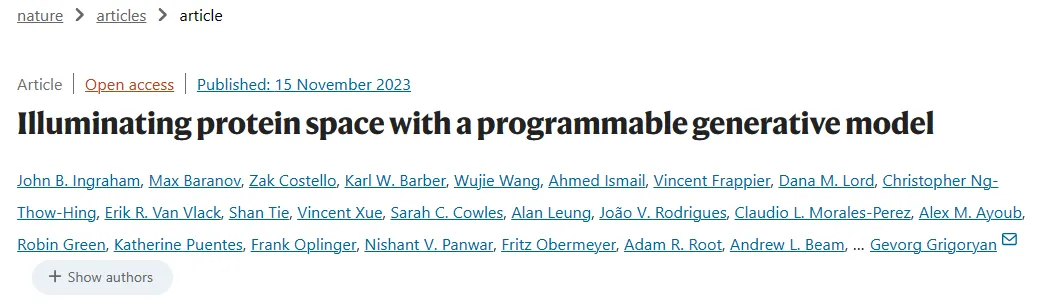
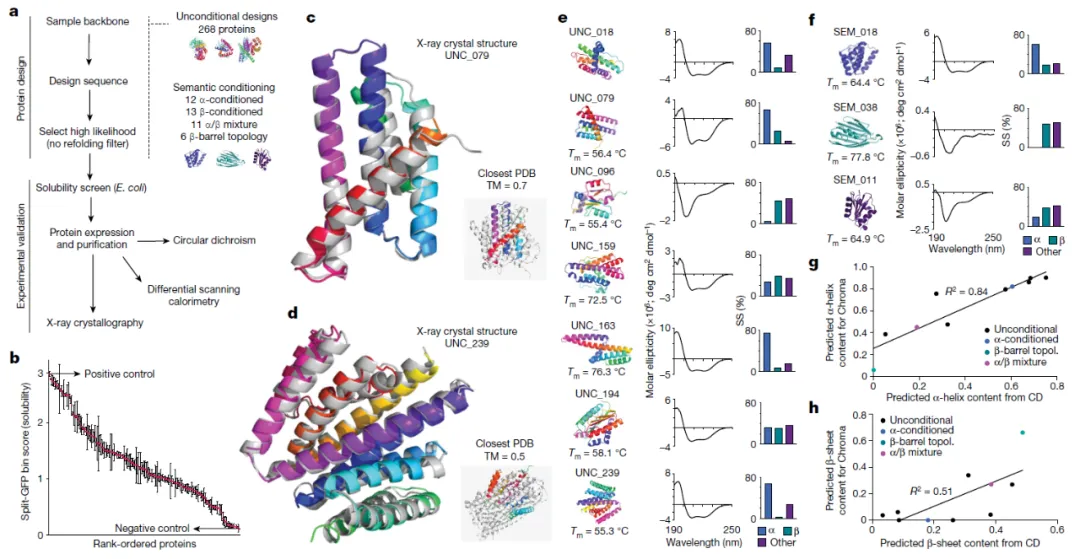
In this collaboration, Generate is the focus. According to publicly available information, the company was founded in 2018, incubated by top venture capital firm Flagship, officially launched in 2020, and is headquartered in Massachusetts, USA. The company aims to lead a fundamental shift from drug discovery to drug generation. Since its establishment, Generate has shown outstanding performance in financing. In November 2021, it announced the completion of a $370 million Series B financing round. Last year, despite the downturn, it announced the completion of a $273 million Series C financing round. The company's official website shows that its The Generate Platform integrates machine learning and high-throughput experimental validation. This collaboration with Novartis will combine the platform's strengths with Novartis' expertise and capabilities in target biology, biologics development, and clinical development. Currently, Generate has built a rich pipeline, involving tumors, immune-related diseases, infectious diseases, etc., with the fastest project already entering Phase I clinical trials.(Including TSLP monoclonal antibody GB-0895 for asthma treatment)。 Before Novartis, Generate entered into a research collaboration agreement with Amgen in January 2022 to develop protein therapies for five clinical targets, with a potential transaction value of $1.9 billion. The reason why Generate has become a favorite among major companies might be glimpsed from the papers published by the company. Last November, Generate wasNatureAn article was published introducing a generative AI model named Chroma, which is capable of designing entirely new proteins that do not exist in nature and possess favorable biophysical and therapeutic properties — referred to as generative AI. Currently, almost all existing therapies focus on modifying proteins found in nature, which only accounts for a small portion of all possible proteins. Generate believes that generative biology represents a fundamental shift in therapy development driven by generative AI. This approach goes beyond proteins found in nature, enabling the creation of novel proteins to address existing or emerging therapeutic needs. It holds the potential to usher in a new era of programmable medicines, making drug discovery faster, cheaper, and more flexible. Through the Chroma model, the company can harness the power of generative AI to infer generalizable principles governing the relationships between protein sequences, structures, and functions, thereby rapidly designing novel protein molecules with a wide range of therapeutic properties. The main method is to achieve protein design through Bayesian inference under external constraints, which involve symmetry, substructures, shapes, semantics, and even natural language prompts. Experimental characterization of 310 proteins shows that proteins sampled from Chroma are highly expressed, folded, and possess good biophysical properties. Creating non-existent proteins is indeed a sensational feat, representing a novel signal—AI is making biology programmable. This has undoubtedly caught the attention of major companies. It is worth mentioning that, in addition to Chroma, in July 2023, David Baker's team from the University of Washington alsoNatureA paper was published, describing a deep learning method called RFdiffusion that can design entirely new proteins from scratch. This method can generate various functional proteins, including topologies never seen in natural proteins. In May 2024, AlphaFold 3, jointly launched by Google DeepMind and its sister company Isomorphic Labs, was released.NatureFront page. DeepMind claims that for interactions between proteins and other molecular types, AlphaFold 3 is 50% more accurate than the best existing traditional methods in benchmark tests. These trends indicate that protein design has once again entered a period of technological explosion. Including Generate, biotechs with specialized skills are more likely to become the darlings of capital. 2
Whether or not to resuscitate
Global AI Pharmaceutical Recovery: Have Chinese Counterparts Felt the Warmth? China's AI pharmaceuticals industry is experiencing two different development paths, sensing varying levels of interest from the investment community. Companies with sufficient cash flow that provide AI-assisted solutions to large pharmaceutical enterprises, such as XtalPi, have successfully listed on the Hong Kong Stock Exchange in June. Other companies hoping to develop innovative drugs through AI face greater challenges. For instance, Insilico Medicine, which was the first AI drug discovery company in China to file for an IPO, missed the opportunity to become the “first” due to the expiration of its application documents and re-submitted its IPO materials in March 2024. In terms of revenue alone, Insilico Medicine is no slouch. In 2023, it reached $51.18 million, approximately 370 million yuan, surpassing XtalPi's 170 million yuan. However, expenses have also risen significantly, with annual spending at $210 million, nearly twice that of XtalPi. From the perspective of the key focus, the two leading companies are slightly different. Insilico Medicine mainly focuses on R&D, which means "spending a lot of money." The latest prospectus calls it an "AI-driven biotech company," with 15 drug candidate pipelines, highlighting a candidate drug for treating pulmonary fibrosis, which is referred to as the "core product." Clinical trials are the most costly part of the pharmaceutical industry. XtalPi's main businesses are drug discovery and intelligent automation solutions, with the two segments growing by 49.3% and 92.3%, respectively, from 2021 to 2023. Its success heavily relies on the support of major clients. According to a research report by Zhongtai International, companies like Pfizer, Johnson & Johnson, and Merck utilize its services, reflecting recognition of its service quality. In 2022, 16 of the top 20 highest revenue-generating biotech enterprises globally were its clients. It can be seen that the ability to generate revenue has become a challenge for China's AI pharmaceutical companies. Whether the business model is viable is a question that all players in the AI + pharmaceuticals field need to answer. Currently, medical investment in China is becoming more rational and pragmatic. Multinational pharmaceutical giants are willing to invest not only as a bet on the future but also to leverage AI for improving R&D efficiency and reducing costs. According to Boston Consulting Group’s prediction, based on the success rates of AI applications in Phase I and Phase II clinical trials, the overall efficiency of pharmaceutical R&D is expected to double. In other words, "going global" has also become a good remedy for domestic AI pharmaceutical enterprises. Without the support of large overseas pharmaceutical companies and without stable orders from big pharmaceutical firms, the only way to prove one's capability is to truly develop innovative drugs. But for China's AI pharmaceuticals, going overseas is not the only path; the voice in the secondary market continues to rise. According to incomplete statistics from Tongxieyi, in the first half of 2024, there were 22 AI pharmaceutical financing events in China, including 5 in June alone, with companies such as BioMap and Relay Therapeutics receiving strategic investments. Among the companies that have received investment, some are targeting "AI-powered innovative drugs." For example, Lai Mang Bio has secured 50 million yuan in angel++ round financing. The funds will be used for the IND application of "ultra-low dose" metabolism-enhanced CD19 CAR-T cell therapy drugs and to accelerate the clinical development of metabolism-enhanced cell therapy drugs for solid tumors. However, even XtalPi, with a market value of approximately HKD 400 billion, has yet to achieve profitability. The expectations for China's AI pharmaceuticals industry are not limited to building small but beautiful companies that generate tens of millions of dollars in revenue to be self-sufficient. Instead, the hope is to find truly suitable application scenarios, establish their own core strengths, and tell their own stories. Time is on our side.