Haitai Medical's Subsidiary EpTech Receives Approval for New Peripheral Embolic Coil

APT Medical
Cardiac Electrophysiology and Interventional Medical Device R&D Manufacturer

APT Medical
Minimally Invasive Cardiovascular and Cerebrovascular Interventional Device R&D, Manufacturer, and Distributor


Source: Heart Future
Recently, APT Medical Inc. (hereinafter referred to as "APT Medical"), a wholly-owned subsidiary of Shenzhen-based APT Medical Inc., has obtained the third-class medical device registration certificate for its embolization coils. This product is used for the embolization of peripheral aneurysms, arteriovenous malformations, and arteriovenous fistulas. The acquisition of this registration certificate enriches the company’s product portfolio and expands its product layout in the peripheral field.
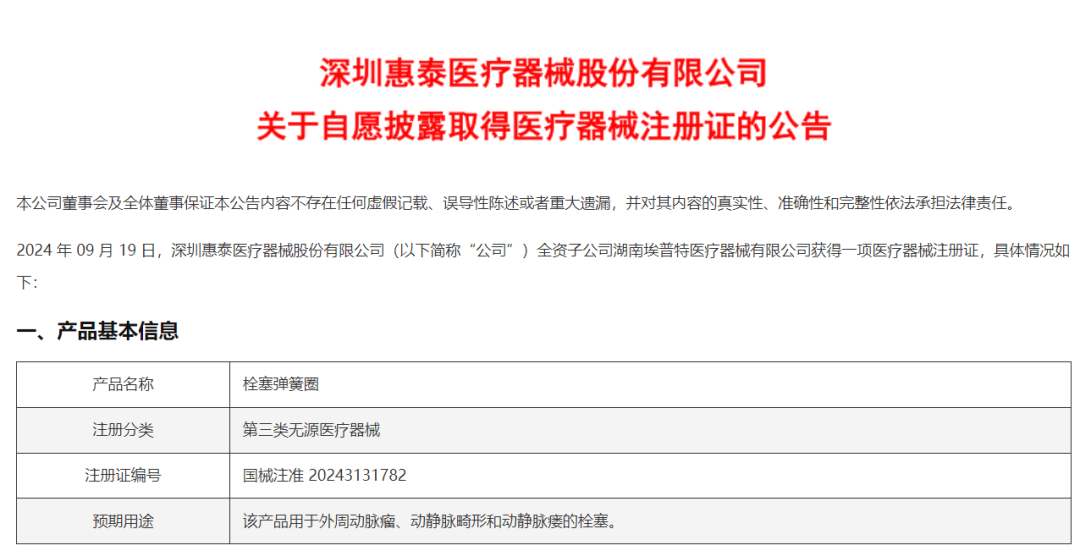
Registration Certificate Number:CN Medical Device Registration No. 20243131782
Registrant Name:APT Medical Inc.
Product Name:Embolization Coils
Management Category:Class III
Structure and Composition/Main Components:
The product consists of a coil, push rod, and introducer. The coil is composed of a platinum-tungsten alloy spring and PET fibers, while the introducer consists of a hub and tube body. The coil is preloaded in the introducer, with no connection between the coil and the push rod, eliminating the need for detachment. The product is sterilized using ethylene oxide and is for single use only. Shelf life is three years.
Scope of Application/Intended Use:
This product is used for the embolization of peripheral aneurysms, arteriovenous malformations, and arteriovenous fistulas.
Aneurysm is the localized or diffuse dilation or bulging of the arterial wall caused by lesions or injuries, mainly manifested as an expansive, pulsatile mass.Can occur in any part of the arterial system, most commonly in the limb arteries, followed by the abdominal aorta and carotid arteries.
It is not a tumor in essence, but it looks like a "balloon-like" bulge growing on the artery, hence the name "aneurysm." Generally speaking, it is a localized, ball-like protrusion formed at a "weak point" on the arterial wall due to the impact of blood flow, similar to a balloon blown up on the vessel wall that could rupture at any time. Without therapeutic intervention, it may eventually progress to aneurysm rupture, clinically presenting as sudden, severe tearing pain radiating outward, accompanied by massive bleeding.Patients can rapidly develop cardiac tamponade and hypovolemic shock, ultimately leading to death, which is extremely dangerous.
It is worth noting that true aneurysms of peripheral vessels can be accompanied by thrombosis, and some may lead to distal arterial embolism, resulting in ischemic necrosis of the soft tissue layer in the blood supply area. In such cases, regardless of the size of the aneurysm, intervention is necessary.
Coils are soft metal wires made of platinum. During embolization surgery, a microcatheter is inserted into the aneurysm cavity, and then a pusher is used to deliver the coil through the microcatheter into the aneurysm cavity. When the coil stabilizes inside the aneurysm, the connection between the pusher and the coil is released, the pusher is withdrawn from the microcatheter, and preparation begins for the delivery of the next coil.
When blood flows into an aneurysm, many small vortices form at the edges of the aneurysm wall, similar to a river channel, and these vortices slow down the blood flow. Coiling the aneurysm with platinum coils essentially amplifies this slowing effect artificially, causing the blood flow to become extremely slow and essentially stagnant within a short period of time, leading to thrombosis. The pressure inside the aneurysm then significantly decreases, making the likelihood of rupture very low.
With the popularity of interventional surgery,Currently, the annual global implantation volume of coils exceeds one million, with a single-product global market size surpassing 10 billion yuan.There are 47 imported coil products that have been approved in China, coming from companies such as Boston Scientific, Stryker, Cook, and MicroVention; there are 43 domestically produced coil products that have been approved, coming from companies such as Shanghai Xiaoyu Medical Technology Co., Ltd., APT Medical Inc., Zonare Medical Systems, and Suzhou Zhongtian Medical Technology Co., Ltd.
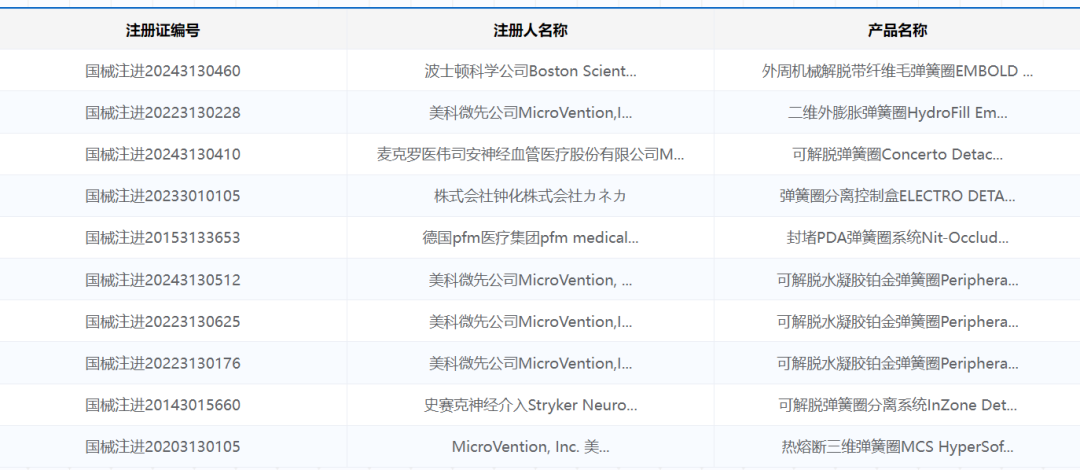
Part of the approved imported coil products
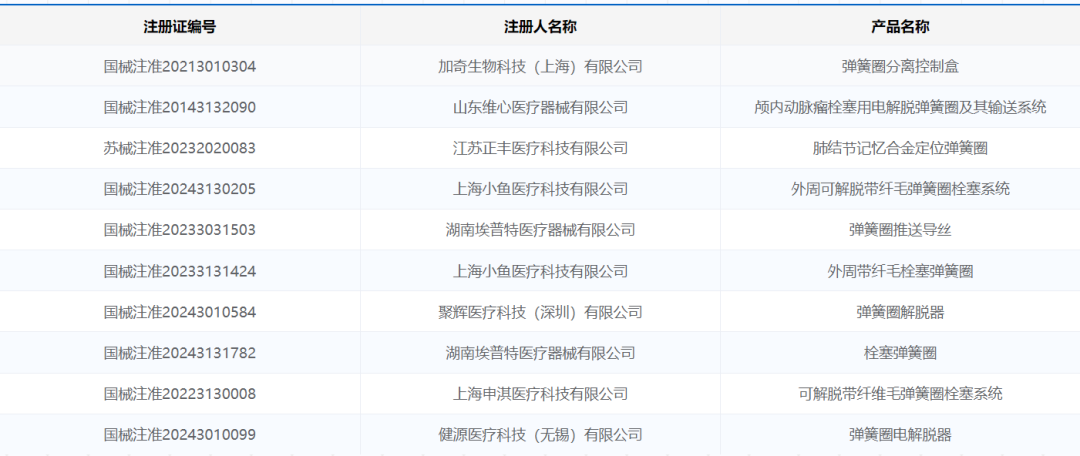
Part of the approved domestically produced coil products
As a high-value consumable, before the centralized procurement, the prices of coil products, whether imported or domestically produced, were relatively high. However, since the implementation of centralized procurement for coils began in 2021, it has now almost covered the entire Chinese market, with the unit price dropping from 12,000 yuan to 3,277 yuan. On March 21-22, 2024, Sichuan Province and Shanghai successively announced the "Notice on the Filing of Historical Procurement Data and Procurement Demand Volume for Coil-type Medical Consumables under the Beijing-Tianjin-Hebei '3+N' Alliance," marking the start of a new round of large-scale centralized procurement reporting for coils.
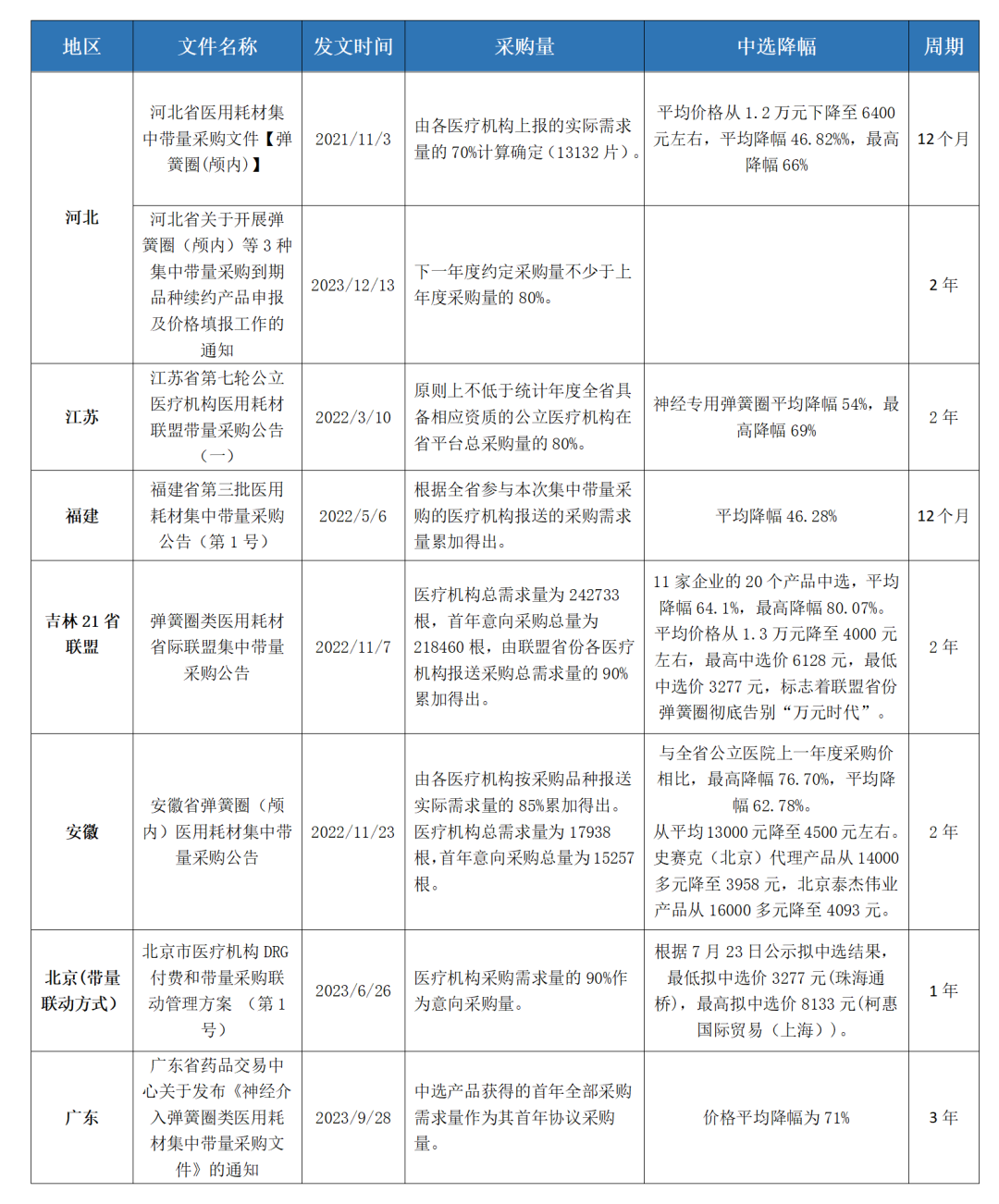 Coil embolization status prior to 2024
FuseSuper® Peripheral Ciliated Embolization Coils —— Little Fish Medical
In October 2023, FuseSuper® Peripheral Ciliated Embolization Coils, independently developed by Shanghai Xiaoyu Medical Technology Co., Ltd., a wholly-owned subsidiary of Shanghai Rongmai Medical Technology Co., Ltd., received NMPA approval for marketing. FuseSuper® is the first peripheral product launched by Xiaoyu Medical.The First in ChinaNMPA-Approved Chinese-Manufactured Peripheral Free-Ciliated Embolic Coils.
The product design adopts platinum-tungsten alloy and dense fiber hair, featuring excellent imaging performance, MRI compatibility, and biocompatibility, with two system sizes available: 0.018” and 0.035”. The unique structural design reduces push resistance, prevents vascular injury, and enhances surgical safety. Additionally, an innovative free-floating coil loading and delivery device improves grip comfort and stability, increases the degree of alignment between the coil and catheter, thereby enhancing the stability and controllability of coil delivery during operation.
ZYLOX® Phoenix Peripheral Detachable Fibered Coil Embolization System —— Zonare Medical
In December 2023, Guidepoint Bridge (2190.HK) announced that ZYLOX® Phoenix Peripheral Detachable Coils with Fiber System, independently developed by its subsidiary Guidepoint Medical, received NMPA approval for marketing. This is the first product launched by Guidepoint Medical targeting peripheral vascular embolization procedures.
ZYLOX® Phoenix is developed for minimally invasive interventional treatment of peripheral arterial embolization. Building on the existing coil technology, it optimizes and upgrades the interlocking arm detachment structure, enhancing the coil's bending capability and reducing the risk of premature detachment. Additionally, the product incorporates polypropylene anti-unwinding threads to further address the issue of premature coil unwinding. Compared with similar products currently on the market, ZYLOX® Phoenix coils offer a wider range of length and diameter specifications, providing more options to meet the needs of vascular embolization procedures.
Zhongtian Peripheral Embolization Coil System® —— Zhongtian Medical
In April 2024, Suzhou Zhongtian Medical Device Technology Co., Ltd.'s Zhongtian Huntianling® Peripheral Embolization Coil System received NMPA approval for marketing. The Zhongtian Huntianling® Peripheral Embolization Coil is suitable for the embolization of peripheral arteries and veins and arteriovenous fistulas. It is the first "fully controllable" mechanically detachable peripheral coil on the market.
This product adopts a brand-new self-expanding clamp lock ball head mechanical detachment innovative design, with one-touch unlocking and retraction for instant, safe, and controllable detachment; the ball head maintains annular flexibility, and the system has strong bending capability, ensuring excellent system maneuverability. Not only can it prevent insufficient or accidental detachment of the coil, enhancing operational controllability and safety, but also allows for retrieval, removal, or readjustment of the coil when unsatisfactory filling or improper sizing occurs, making the operation more flexible. Surface modification treatment further enhances the biocompatibility and embolic efficacy of the coil.
Fibered Embolic Coils —— Heartpulse Medical
In September 2024, the detachable fibered embolic coil developed by Shanghai Hongmai Medical Technology Co., Ltd., a subsidiary of Shanghai MicroPort CardioFlow Medtech Corporation, received NMPA approval for marketing. The product is suitable for embolization treatment of peripheral vascular aneurysms, arteriovenous malformations, and arteriovenous fistulas.
The fiber of this product adopts the "twisting" process, which makes delivery smoother. The high-density fiber accelerates thrombus formation, effectively increasing embolization density and reducing the risk of recanalization. At the same time, a more reasonable fiber distribution design reduces the risk of jamming during delivery, enhancing comfort and stability in the process. The coil section consists of a platinum-tungsten alloy coil body and dense fibers, offering excellent visibility, MRI compatibility, and biocompatibility. Available in various diameters and lengths, it is the domestically-produced free coil with the most configurations in China, meeting clinical needs for multiple coil embolization procedure scenarios.
EMBOLD™ Fibered Peripheral Mechanical Detachable Coil with Fibers —— Boston Scientific
In September 2024, Boston Scientific's peripheral mechanical detachable fiber-coated coil EMBOLD Fibered received NMPA approval. EMBOLD Fibered is used in various embolization procedures and obtained FDA approval in the United States as early as 2022, and has been commercially available in the U.S., Canada, and Japan. This entry into the Chinese market also marks Boston Scientific as the only company in China’s peripheral embolization field to offer fully controllable, semi-controllable, and free coils, providing Chinese patients with more diverse treatment options.
This coil can be retracted after exiting the catheter, allowing for repeated adjustments to achieve optimal embolization effects, reducing the probability of premature detachment. While enhancing surgical safety, it also improves embolization efficiency. No additional detachment device is required, achieving full controllability simply while reducing procedural steps and costs. Auditory and tactile feedback allows for accurate identification of coil deployment. The unique nitinol delivery system provides strong anti-kinking performance, preventing buckling, twisting, or premature detachment during advancement. Operations are faster and more precise, easily navigating distal and tortuous anatomical structures.
This article is reprinted, all opinions belong to the original author.Platform (Heart Future), Medical DeviceThe Medical Business Review remains neutral on all viewpoints in the article and only shares them for communication purposes.
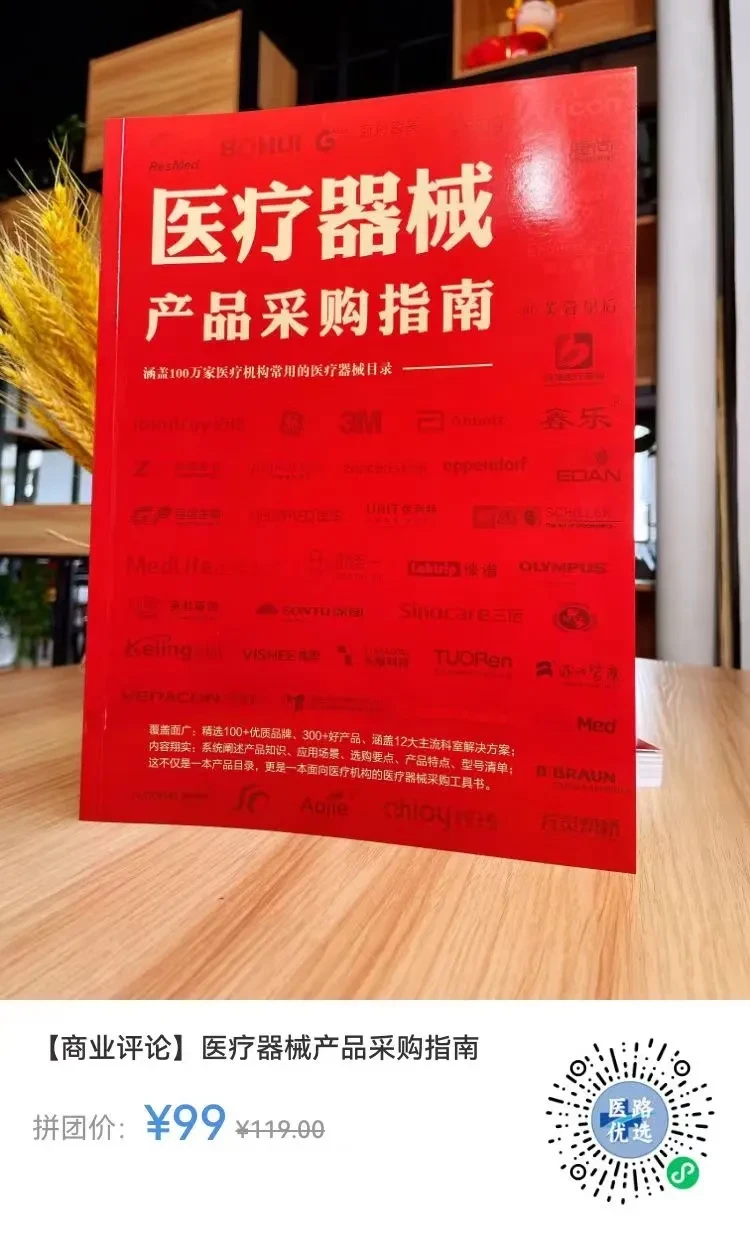
▼MoreBook Recommendation ▼
If you find the content helpful, welcomeStarred、Like、Forward!
Your support is our greatest motivation.