

Sanofi Completes $3.2 Billion Acquisition of Translate Bio to Advance mRNA Therapeutics and Vaccines

Translate Bio
mRNA Therapeutic Development Company

Sanofi
Pharmaceutical R&D Developer
On August 3, 2021, Sanofi announced that it had entered into a definitive agreement with Translate Bio (NASDAQ: TBIO), a clinical-stage mRNA therapeutics company.Sanofi to Acquire All Outstanding Shares of Translate Bio for $38 Per Share, Totaling Approximately $3.2 Billion. This price represents a 56% premium over the volume-weighted average price of Translate Bio's shares in the past 60 days.
It is worth mentioning that, despite having potential drugs for treating cystic fibrosis and other rare lung diseases in its early pipeline, Translate Bio had not yet launched any products on the market at the time of its acquisition. At that point, Translate Bio's clinical-stage pulmonary product, which utilized its mRNA platform, was being tested in Phase I/II clinical trials as an inhaled treatment for cystic fibrosis, with research also being conducted in areas such as liver disease and oncology.
Founding Team "Exit" Experience Abundant, Successful IPO Two Years After Name Change
Translate Bio, Inc. was founded in 2011 and is located in Cambridge, Massachusetts, USA. In its early stages, the company only disclosed that it was developing a technology platform to achieve selective activation of target genes. In November 2016, the team was officially registered under the name RaNA Therapeutics and was renamed Translate Bio in June 2017. The company utilizes its proprietary MRT.TMThe platform was acquired from Shire in 2016 and is used to develop candidate products for mRNA therapies.
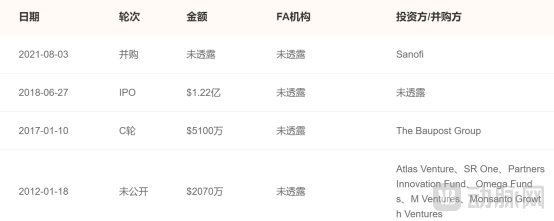
Like most startups, Translate Bio secured its first pot of gold in 2012. Shortly after renaming, it completed a Series C financing round exceeding 50 million US dollars.
Ankit Mahadevia, MD, the founder of Translate Bio, wears many hats as an entrepreneur, speaker, and writer, with Translate Bio potentially being just one of his many entrepreneurial ventures. Currently, Mahadevia serves as the Executive Chairman of Spero Therapeutics, where he also acted as CEO for a period and is one of the co-founders. Prior to joining Spero, he was a venture partner at Atlas Venture. He co-founded nine therapeutic companies, including Nimbus Therapeutics, Arteaus Therapeutics (acquired by Eli Lilly), and Translate Bio. Additionally, Mahadevia served as the CEO of several of these companies, including Rodin Therapeutics (acquired by Alkermes). Before joining Atlas, he worked at Arcion Therapeutics, Genentech, Vanda Pharmaceuticals, McKinsey & Company, and Monitor Group. His career began in healthcare policy, where he served on the U.S. Senate Committee on Health, Education, Labor, and Pensions, as well as at the Government Accountability Office.
One of Translate Bio's key investors, Jean-François Formela, shares a similar background with Mahadevia. He joined Atlas Venture in 1993 and became a partner, establishing its U.S. life sciences franchise. Formela is also a director and co-founder of IFM Therapeutics, Intellia Therapeutics (NASDAQ: NTLA), and Triplet Therapeutics. Additionally, he serves on the boards of Ikena Oncology (NASDAQ: IKNA) and Scorpion Therapeutics. Formela previously led investments in Arteaus Therapeutics (acquired by Eli Lilly), CoStim Pharmaceuticals (acquired by Novartis), and Exelixis (NASDAQ: EXEL). Formela holds a medical doctorate from the Paris University School of Medicine and a Master of Business Administration from Columbia University.
Two management members with extensive exit experience have set their sights on mRNA technology, andFocus on cystic fibrosis drugs and MRT5201 for treating rare liver diseases as early priorities.。
2018 became a pivotal year for Translate Bio. On April 12, the FDA approved the company to initiate the first human clinical trial of MRT5005, a drug for treating cystic fibrosis patients. MRT5005 is an mRNA candidate product designed to address the root cause of cystic fibrosis by delivering mRNA encoding the fully functional cystic fibrosis transmembrane conductance regulator protein to lung epithelial cells through nebulization.
Subsequently, Translate Bio submitted an IPO application worth up to $115 million to the U.S. Securities and Exchange Commission and went public on NASDAQ under the stock code TBIO.
In the same year, Translate Bio and Sanofi announced a multi-year research and development collaboration and an exclusive licensing agreement to develop mRNA vaccines for up to five infectious disease categories. According to the agreement, the two parties will jointly carry out R&D activities during the initial three-year research period, covering five vaccine projects. Sanofi will pay Translate Bio an upfront payment of $45 million. Translate Bio is eligible to receive up to $805 million in milestone payments for various vaccines, as well as tiered royalties. Sanofi's purpose for this collaboration is also very clear: to ensure that the company maintains its leading position in the development of next-generation vaccines.
Thus, the long-term cooperation between Translate Bio and Sanofi has officially begun.
Before the market heats up, seize the mRNA vaccine market
In 2018, the biopharmaceutical field considered mRNA vaccines an innovative approach, as they provide nucleotide sequences that can encode any protein associated with the prevention or treatment of a pathogen. Due to their high efficiency, rapid development capabilities, and potential to reduce production and safety management costs, mRNA vaccines may become an innovative alternative to traditional vaccines.
Translate Bio's MRTTMThe platform was initially developed by Shire Human Genetic Therapies, which was acquired by Translate Bio in 2016, and subsequently took over MRT.TM, and Michael Heartlein, the founder responsible for MRTTM technology development, has also joined Translate Bio following this acquisition, continuing to oversee MRT.TMOptimization of the platform and development of candidate products.
MRTTMThe process of platform production of mRNA products includes:
(1)Synthesis of mRNA Expressing Target Protein Using Unmodified Bases and Further Sequence Optimization, such as adding untranslated regions (UTR) at the 5' and 3' ends of mRNA to improve its stability and translation efficiency within cells;
(2)Packaging mRNA into delivery vectors, such as encapsulating mRNA into lipid nanoparticles (LNP).
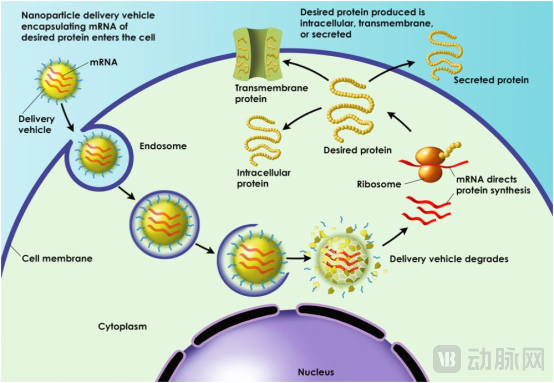
Mechanism of the MRTTM platform, image sourced from the Translate Bio official website
Among them, lipid carriers can protect mRNA from enzymatic degradation and have high encapsulation efficiency. Some lipids are positively charged in physiological environments and can electrostatically coat negatively charged mRNA, enabling the delivery system to bind well with target cell membranes. Lipid carriers have a development history of over 60 years in drug delivery. Lipid carriers for mRNA delivery can be divided into various types, including liposomes (LPs), lipid-like nanoparticles (LLNs), solid lipid nanoparticles (SLNs), nanostructured lipid carriers (NLCs), lipid-polymer hybrid nanoparticles (LPNs), nanoemulsions, exosomes, and lipoprotein particles (LPTs).
Therefore, utilizing MRTTMThe candidate products produced by the platform haveGood stability and low immunogenicitySuch advantages.
On February 26, 2020, Translate Bio based on MRTTMPlatformThe First Inhalable mRNA Therapy MRT5005, receiving FDA Fast Track designation for the treatment of cystic fibrosis (CF).
MRT5005 is Translate Bio's first clinical-stage mRNA candidate product, andThe first mRNA therapeutic drug deliverable to the lungs, designed to deliver mRNA encoding fully functional CFTR to lung epithelial cells via nebulization., thereby addressing the underlying cause of CF, and can be inhaled by patients using a handheld nebulizer. Additionally, in 2015, the FDA granted MRT5005 orphan drug designation for the treatment of CF.
Cystic Fibrosis (CF) is one of the most common genetic diseases globally, affecting approximately 70,000 people. It is caused by mutations in the cystic fibrosis transmembrane conductance regulator (CFTR), leading to the formation of thick mucus that accumulates in the lungs, digestive tract, and other parts of the body. This accumulation results in severe respiratory and digestive diseases, as well as other complications such as inflammation and diabetes.
At that time, MRT5005 was undergoing a randomized, double-blind, placebo-controlled Phase I/II clinical trial. The primary endpoint of the trial would be to evaluate the safety and tolerability of MRT5005 through single or multiple ascending doses administered via nebulization. MRT5005 was generally well-tolerated at low and medium dose levels; no serious adverse events (SAEs) were reported at any dose level. The most common adverse events on Day 29 were cough and headache, and all treatment-emergent adverse events (TEAEs) were considered mild to moderate.
Translate Bio thus believes MRTTMPlatformCan be applied through various administration routes for different indications and target tissues to treat both rare and non-rare diseases., and began to push other pipelines into preclinical research.
Among them,MRT5201 for Ornithine Transcarboxylase Deficiency (OTCD),The latter is a metabolic liver disease, the pathogenesis of which lies in the urea cycle disorder caused by OTC enzyme defects, leading to elevated blood ammonia levels and resulting in severe and irreversible neurological damage. The current standard treatment for OTC is dietary control, with liver transplantation being the curative approach; however, this is limited by a scarcity of liver donors and high surgical risks.
MRT5201 is an mRNA encoding a fully functional OTC enzyme, which is delivered to the liver via intravenous infusion, thereby producing normal OTC enzyme in hepatocytes to treat OTCD.
In addition, the company has also developed discovery-stage programs for other lung diseases, such as Primary Ciliary Dyskinesia (PCD), Pulmonary Arterial Hypertension (PAH), and Idiopathic Pulmonary Fibrosis (IPF), as well as candidate products targeting liver, eye, and central nervous system diseases.
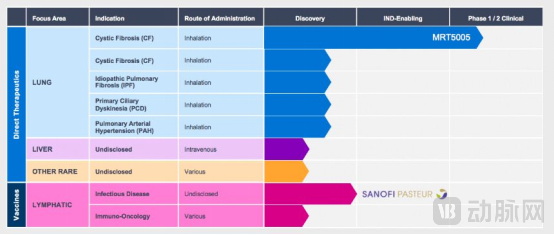
As of 2020, Translate Bio's R&D pipeline, image sourced from Translate Bio's official website
From Partner to Acquisition: Biotech Propels MNC into the Second Half of the mRNA Vaccine Race
On March 28, 2020, due to the impact of the COVID-19 pandemic, Sanofi Pasteur, the vaccine division of Sanofi, and Translate Bio jointly announced a collaboration to develop an innovative mRNA vaccine targeting COVID-19. At the same time, the Bill & Melinda Gates Foundation and Novartis declared that they, along with more than ten life science companies, have jointly established a new R&D organization to accelerate the development, production, and delivery of vaccines, diagnostics, and therapies for COVID-19. These companies includeBD, Bristol-Myers Squibb, Eli Lilly, Gilead, GlaxoSmithKline, Merck & Co., Merck KGaA, Pfizer, etc.。
Translate Bio, which focused on mRNA before the COVID-19 pandemic, has undoubtedly attracted significant attention. Just three months after the cooperation proposal, Sanofi Pasteur and Translate Bio expanded their partnership initially signed in 2018 to better develop mRNA vaccines for infectious diseases, including the COVID-19 vaccine. Under the new deal terms, Sanofi will pay Translate Bio $425 million in cash at $25.59 per share, including $300 million in cash and a $125 million private placement investment in common stock. Additionally, Translate Bio is eligible to receive potential milestones and other payments of up to $1.9 billion in the future. In addition to gaining access to the vaccine, this expanded collaboration will also grant Sanofi approximately 7.2% of Translate Bio's shares.
This $1.9 Billion Bet Deepens the Cooperation Between Translate Bio and Sanofi. In March 2021, Sanofi and Translate Bio initiated a Phase 1/2 clinical trial for the mRNA candidate vaccine MRT5500 targeting SARS-CoV-2. Three months later, a broader trial — a Phase I clinical trial for an mRNA vaccine to prevent seasonal influenza — was launched. Notably, this deepened cooperation...Translate Bio developed two vaccine formulations using different lipid nanoparticle components, named MRT5400 and MRT5401, which encode the hemagglutinin protein of the influenza A H3N2 (A/H3N2) virus strain.。
Two months later, in August 2023, Sanofi officially acquired Translate Bio.
Since 2020, well-known pharmaceutical companies such as Pfizer, Eli Lilly, Sanofi, GSK, and AstraZeneca have entered the mRNA drug field by collaborating with mRNA drug companies like Moderna, CureVac, or BioNTech to co-develop related products. From the perspective of these collaborations, most pharmaceutical companies are focusing on the development of therapeutic mRNA products, with preventive vaccines primarily targeting COVID-19 and influenza.
The waning attention on COVID-19 has not cooled down the mRNA technology; instead, it has attracted over tens of billions of investments from multinational corporations (MNCs) and made lower respiratory tract diseases (RSV-LRTD) and acute respiratory diseases (ARD) related to Respiratory Syncytial Virus (RSV), including influenza, become popular indications. In China, companies such as Afana Biotech, Jia Chen Xi Hai, Sirnaomics, Shenzhen Biotherapeutics, CSPC Pharmaceutical Group, and Starshine Medicine have also laid out plans for RSV mRNA vaccines.
As GSK and CureVac revise their mRNA vaccine collaboration licensing agreement, which includes milestone and royalty payments of up to 1.05 billion euros (approximately 11.39 billion RMB), the development of flu mRNA vaccines is entering a new phase. With public health topics such as influenza returning to the spotlight, multinational corporations (MNCs) as well as local companies like the Shanghai Institute of Biological Products under China National Biotec Group and Jia Chen Xi Hai are entering the mRNA field. They are continuously improving liposome technology and are committed to developing novel vaccines targeting the influenza virus, which is expected to bring new solutions for global flu prevention and control.