

Oncology Dominates Biopharma Fundraising Surge with Strong Investor Interest in 2024

Candid
3D Printing Dental Company

ArsenalBio
Cell Therapy Developer

Outpace Bio
Developer of Intelligent Cell Therapy
Halda
Cancer Drug Developer

IDRx
Biopharmaceutical Manufacturer

Author: Bu Bu
In 2024, the biopharmaceutical industry demonstrated strong growth momentum in the financing market, driven by breakthrough advancements in areas such as cancer treatment, immunotherapy, and gene editing. Many companies have successfully completed financings worth hundreds of millions of dollars, drawing attention from leading global investment institutions. These funds not only provide crucial support for clinical trials and product development but also highlight the capital market's high recognition of the potential of innovative therapies.
With the introduction of new technologies such as AI-assisted drug design and the rapid development of emerging therapies, the financing landscape of the biopharmaceutical industry is showing unprecedented vitality. In addition, the recent interest rate cut announced by the Federal Reserve is also highly likely to boost financing activities in the biotechnology sector.
01
Overview of the Latest Financing in the Biopharmaceutical Field
According to incomplete statistics, from January to September 2024, nearly a hundred biopharmaceutical companies completed financing of over 50 million US dollars, involving fields such as oncology, autoimmune diseases, and ophthalmology.
Table 1 shows the financing situation of biopharmaceutical enterprises with a scale of over 5 million US dollars from August to September 11, 2024. There were nine financings exceeding 100 million US dollars in size, among which Candid ranked first with a financing scale of 370 million US dollars. Oncology remains the focal area of these major financings.
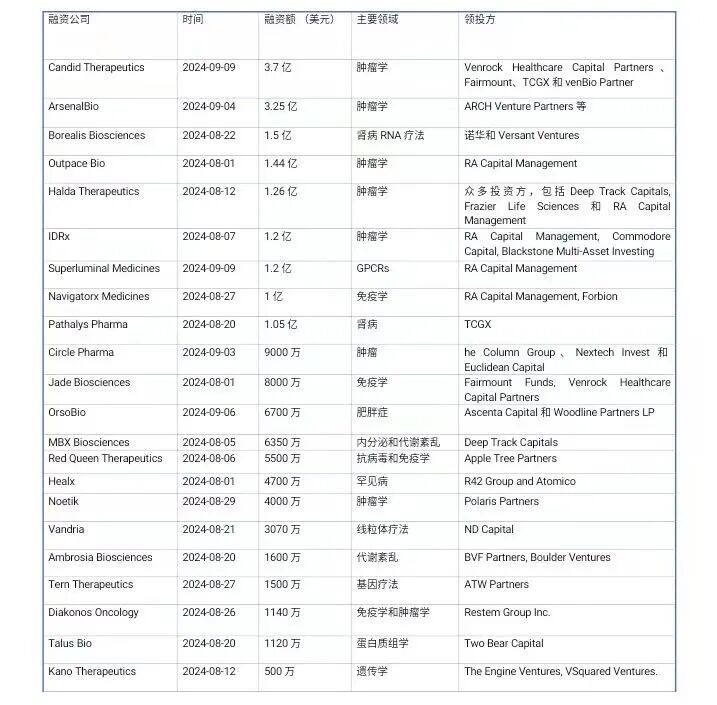
Table 1. Major financing situations of biopharmaceutical and technology companies in August-September 2024.
02
Trends in Biopharmaceutical Financing
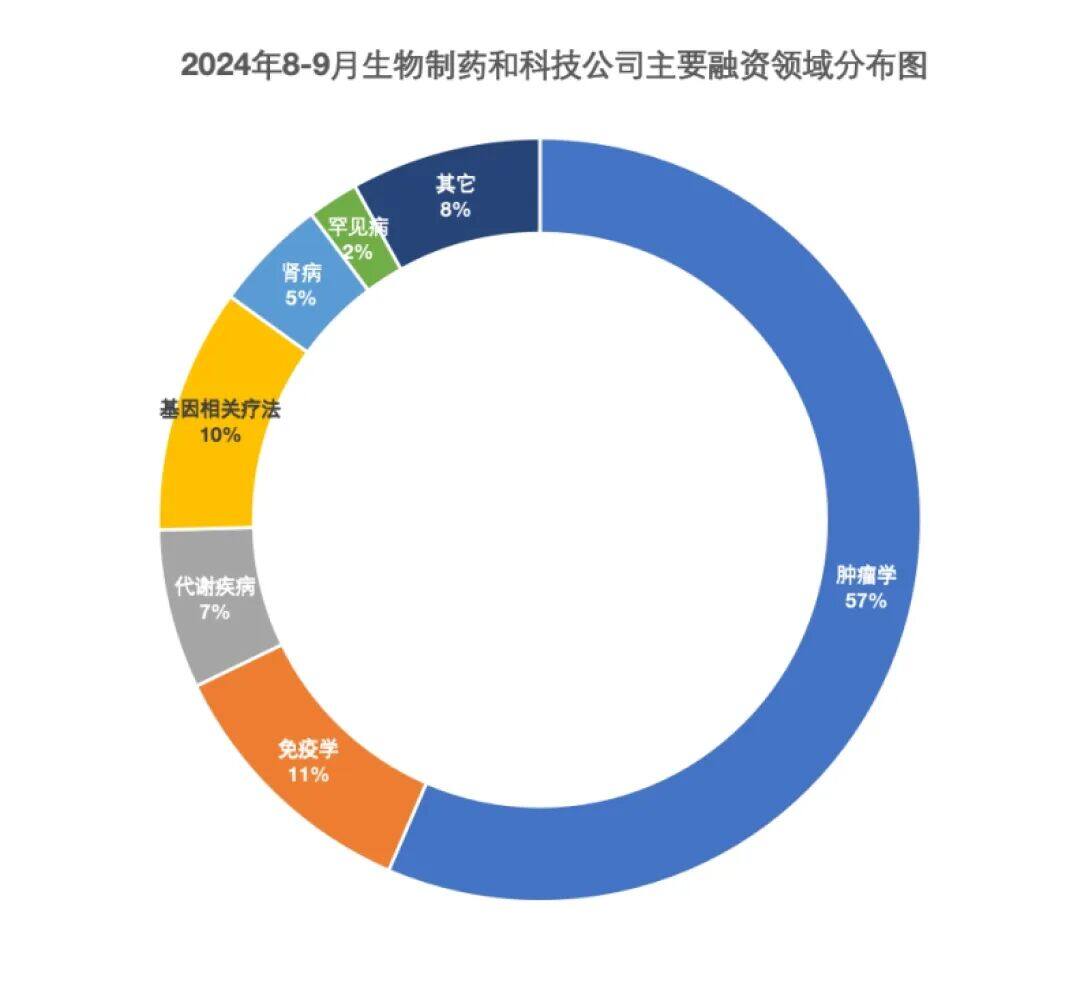
Figure 1. Distribution of Major Financing in Biopharmaceutical and Technology Companies from August to September 2024 (as of September 11).
From the perspective of development direction, oncology and immunology are the main financing areas, attracting significant investment, indicating notable innovation and market demand in these fields (Figure 1). Companies such as Candid, ArsenalBio, Outpace Bio, Halda Therapeutics, IDRx, and Noetik have secured substantial funding in the field of oncology.
Oncology
Reasons Why Biopharmaceutical and Technology Companies Developing Oncology Products Easily Secure Large Financing
Moreover, the scale of the cancer treatment market is enormous, and successful cancer drugs and therapies can yield significant commercial returns. Due to the vast market potential, investors are willing to pour in substantial funds, hoping for lucrative returns. Emerging technologies such as CAR-T cell therapy and immune checkpoint inhibitors have already made remarkable progress in cancer treatment. The innovation and breakthroughs of these technologies have attracted substantial investment, with investors recognizing the potential long-term value they may bring.
The quality of clinical trial data also has a significant impact on financing. If an oncology company's clinical trial data performs well, it can substantially boost investor confidence in successful commercialization, thereby attracting more funding. For venture capitalists and institutional investors, the potential return on investment in the cancer treatment field is high. If a company can successfully develop innovative treatment solutions, it may achieve substantial returns, encouraging them to invest more capital at an early stage.
Policy support is also a crucial factor. Governments and regulatory agencies in various countries offer substantial support for cancer research and treatment, including research funding, tax incentives, and expedited approval pathways. These supportive measures create a favorable environment for companies to attract investment. Additionally, successful investment cases will draw more investors.
Immune and Inflammatory Therapies
In the field of immunology and inflammatory diseases, there are several reasons for the financing boom.
Breakthroughs in the Treatment of Autoimmune Diseases Attract Investor AttentionAutoimmune diseases, such as rheumatoid arthritis, lupus, and multiple sclerosis, involve the immune system erroneously attacking the body's own tissues. In recent years, significant progress has been made in the development of novel immunomodulators and biologics targeting these conditions. These breakthroughs have drawn substantial investor interest to the field of immunity and inflammatory diseases.
Secondly, the management of chronic inflammatory diseases is also a crucial factor. Diseases such as Crohn's disease and ulcerative colitis require long-term management and treatment. The development of new drugs, such as novel medications targeting inflammatory pathways and biologics, can significantly improve treatment outcomes for these conditions. Due to the treatment demands and market potential of these chronic diseases, investors have shown strong interest in the development of related therapeutic solutions.
Immune and inflammatory diseases impose a significant burden on global health systems. The high incidence and high treatment costs of these diseases indicate substantial market potential. Effective therapies for these conditions can significantly improve patients' quality of life while presenting immense commercial opportunities. Consequently, investors are willing to fund companies with the potential to develop breakthrough treatments.
Gene Therapy
Gene-related therapies have also garnered attention, demonstrating the potential of these emerging technologies and investor interest (Figure 1). Borealis Biosciences and Tern Therapeutics have secured funding in the fields of RNA therapy and gene therapy, respectively.
Gene therapy and gene editing technologies have made remarkable scientific progress in recent years. For instance, the breakthrough development of CRISPR technology has made gene editing more precise and efficient. The advancement of these technologies allows gene-related therapies to target previously difficult-to-treat diseases, especially genetic disorders and certain types of cancer. Investors see the enormous potential of these technologies and are thus willing to invest substantial funds.
Secondly, the market potential for gene-related therapies is enormous. Although the development and implementation of these therapies face many challenges, successful gene therapies can have a profound impact on the medical field. The market is highly anticipative of treatments that can cure genetic disorders and certain complex diseases, which gives investors great confidence in this area, leading them to invest funds willingly.
Improved policy support and regulatory environment is also a driving factor. Regulatory agencies in many countries have provided expedited approval pathways and preferential policies for gene therapies, offering a favorable external environment for the development of gene-related treatments. Additionally, governments and institutions have provided funding and research support, further promoting increased investment.
Finally, the continuous improvement in technological innovation and R&D capabilities in the field of gene therapy has enabled these therapies to demonstrate unprecedented potential in addressing some complex and rare diseases. The potential of such technological innovation encourages investors to take the risk of investing substantial funds in anticipation of long-term returns.
03
The Impact of the Fed's Interest Rate Cut on Financing in the Biopharmaceutical Field
The Federal Reserve implemented a highly anticipated interest rate cut on September 18, reducing rates by 50 basis points. This marks the first rate reduction by the Fed since the onset of the pandemic in March 2020. Although the new benchmark rate remains high at 4.75% to 5%, this policy is likely to stimulate active financing within the biopharmaceutical sector.
The Fed's interest rate cut policy may have a significant impact on the financing environment for biopharmaceutical companies, especially in industries where research and development and clinical trials typically require substantial capital support. First, the interest rate cut will directly lead to lower borrowing costs, which is an obvious benefit for biotech companies that rely on funding to drive new drug development, clinical trials, and infrastructure construction.
In addition, interest rate cuts tend to drive up the stock market, providing biopharmaceutical companies with more favorable conditions for equity financing. Particularly for growth-stage enterprises, the opportunities and efficiency of raising funds through Initial Public Offerings (IPOs) or secondary offerings will increase.
Fed Rate Cuts May Also Drive Increased M&A Activity, Especially as Large Pharmaceutical Companies Seek to Acquire New Technologies and Drug Pipelines Through M&A. Lower Borrowing Costs Make It Easier for Big Companies to Raise Funds for Acquisitions, Boosting Opportunities for Biopharma Startups to Be Acquired. For Startups, This Not Only Provides Financial Support but Also Accelerates Technology Implementation and Commercialization.
Finally, interest rate cuts usually also imply a relatively stable economic environment, which will reduce the economic uncertainty for biopharmaceutical companies when planning long-term R&D projects. This environment helps companies better attract investor support.

Appendix
Overseas Biomedical Company Financing Exceeding $50 Million from January to July 2024:
Swipe up and down to view more

Recent Major (Incomplete) Financing Summary of China's Biomedical Industry:
Swipe up and down to view more
Ref.
Masson, G. et al. Fierce Biotech Fundraising Tracker '24: Candid cashes in $370M debut; Superluminal supercharges with $120M series A. Fierce Biotech. 10. 09. 2024.
Notable Biopharma Fundraises in August: Powering Promising Treatments. Maven Bio. 09. 09. 2024.
Fidler, B. Candid, with $370M, sets out to prove bispecifics’ worth in autoimmune disease. Biopharma Dive. 09. 09. 2024.
Fierce Biotech Fundraising Tracker '24: GC Therapeutics raises $65M series A; Nura nudges up series A by $68M. Fierce Biotech. 19. 09. 2024.

Click "Medicinal" below to follow more exciting content.
Disclaimer
The push rules of WeChat Official Accounts have changed again. If you don't tap"Views"Or not set to"Star Mark", we might just dissipate in the vast sea of text~ Click here, don't miss out on the latest news from PharmaDJ!??