Veryan BM3D® Peripheral Stent System – The World’s First and Only 3D Helical Stent – Receives NMPA Approval for Commercialization in China

Veryan
Medical Device R&D Manufacturer

Endovastec
Developer and Manufacturer of Aortic and Peripheral Vascular Interventional Medical Devices

Veryan BM3D®As the world's first and currently only three-dimensional helical stent, the peripheral stent system adopts bionic principles, using a unique three-dimensional helical structure to simulate the natural curvature of human blood vessels, reducing stimulation and damage to the vessels.

The product has successively obtained the EU CE certification, U.S. FDA marketing approval, and Japan PMDA marketing approval. It has now entered clinical application in nearly 30 countries across Europe as well as in the U.S. and Japan, with cumulative sales exceeding 35,000 sets, receiving widespread acclaim and recognition from clinical experts.
China, Shanghai — Recently, Shanghai MicroPort Endovascular MedTech (Group) Co., Ltd. (hereinafter referred to as "Endovastec™") exclusively represented Veryan BM3D®Peripheral Stent System Receives Approval from China's National Medical Products Administration (NMPA) for Market Launch. The product, developed by Irish medical device company Veryan Medical, is used to treat atherosclerotic occlusive disease of the femoral and popliteal arteries. It is the world’s first and currently the only peripheral vascular stent product featuring a three-dimensional helical structure.

▲Veryan BM3D®Peripheral Stent
Peripheral Arterial Disease (PAD) is primarily caused by atherosclerosis leading to vascular stenosis or occlusion. According to the "Chinese Expert Consensus on the Diagnosis and Treatment of Femoropopliteal Artery Occlusive Disease" published in 2022, femoropopliteal artery occlusive disease accounts for 47% to 65% of lower extremity arterial diseases, causing a series of clinical symptoms such as intermittent claudication and chronic limb-threatening ischemia. In severe cases, it may lead to amputation or even death.
Studies show that endothelial wall shear stress is a key factor influencing atherosclerosis, and lower wall shear stress increases the incidence of atherosclerosis. In the resting state, the inner walls of long and relatively straight superficial femoral arteries experience lower shear stress, making them prone to atherosclerosis and slowing the healing process. The implantation of straight stents further straightens the vessel, disrupting normal blood flow patterns and creating areas of low wall shear stress.
Veryan BM3D®As the world's first and currently only three-dimensional helical stent, the peripheral stent system adopts bionic principles, using a unique three-dimensional helical structure to simulate the natural curvature of human blood vessels. This reduces irritation and damage to the blood vessels, promotes the formation of physiological vortex-like blood flow within the stented segment, and increases shear stress on the vascular endothelium. As a result, it helps reduce intimal hyperplasia, resist atherosclerosis, and prevent restenosis. Additionally, its three-dimensional helical shape exhibits excellent biomechanical properties, allowing it to better accommodate various deformations of the femoral-popliteal artery caused by human movement. This effectively reduces localized strain within the stented segment, thereby lowering the risk of stent fracture.
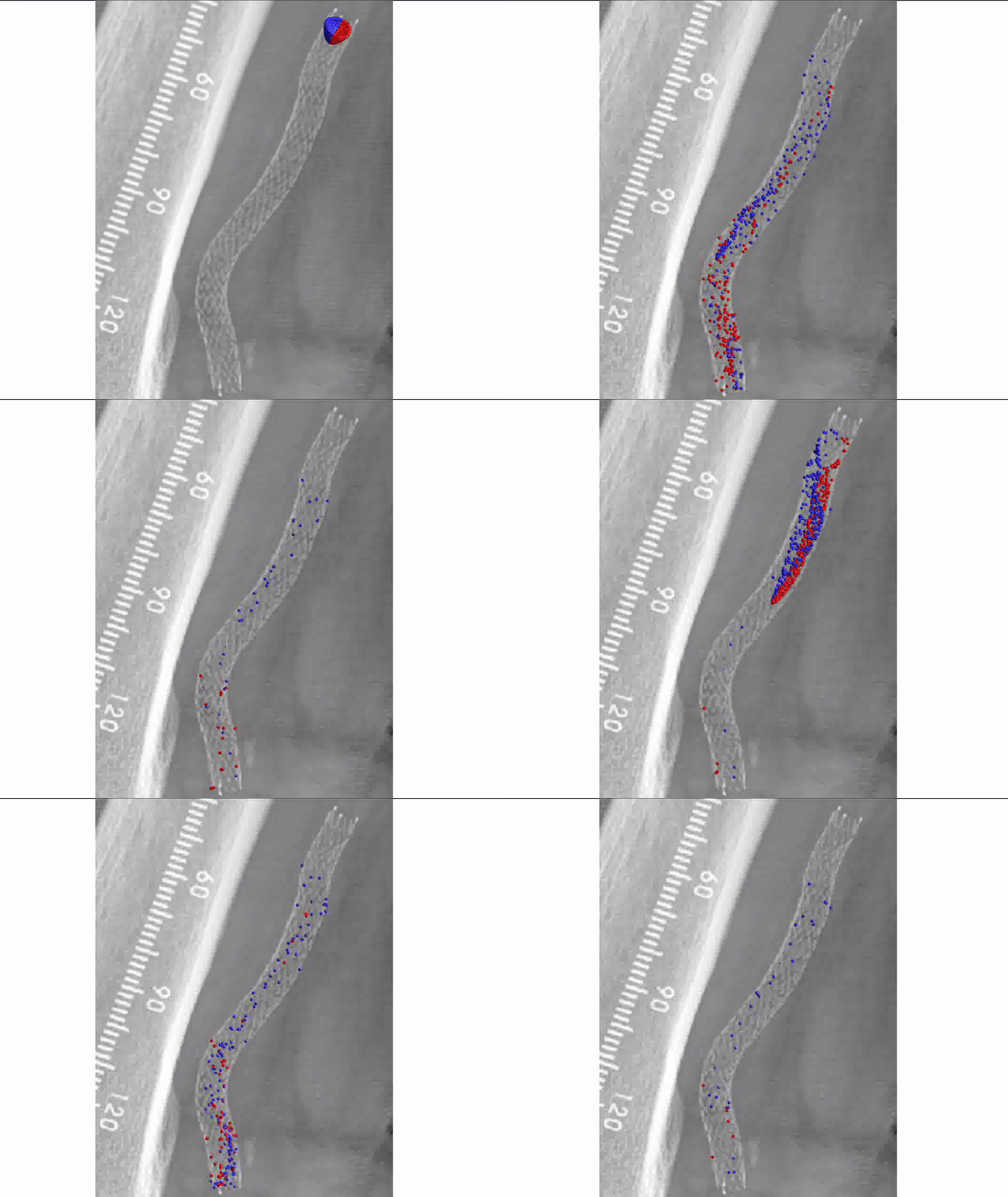
▲Veryan BM3D®Peripheral stents promote the formation of vortex-like blood flow
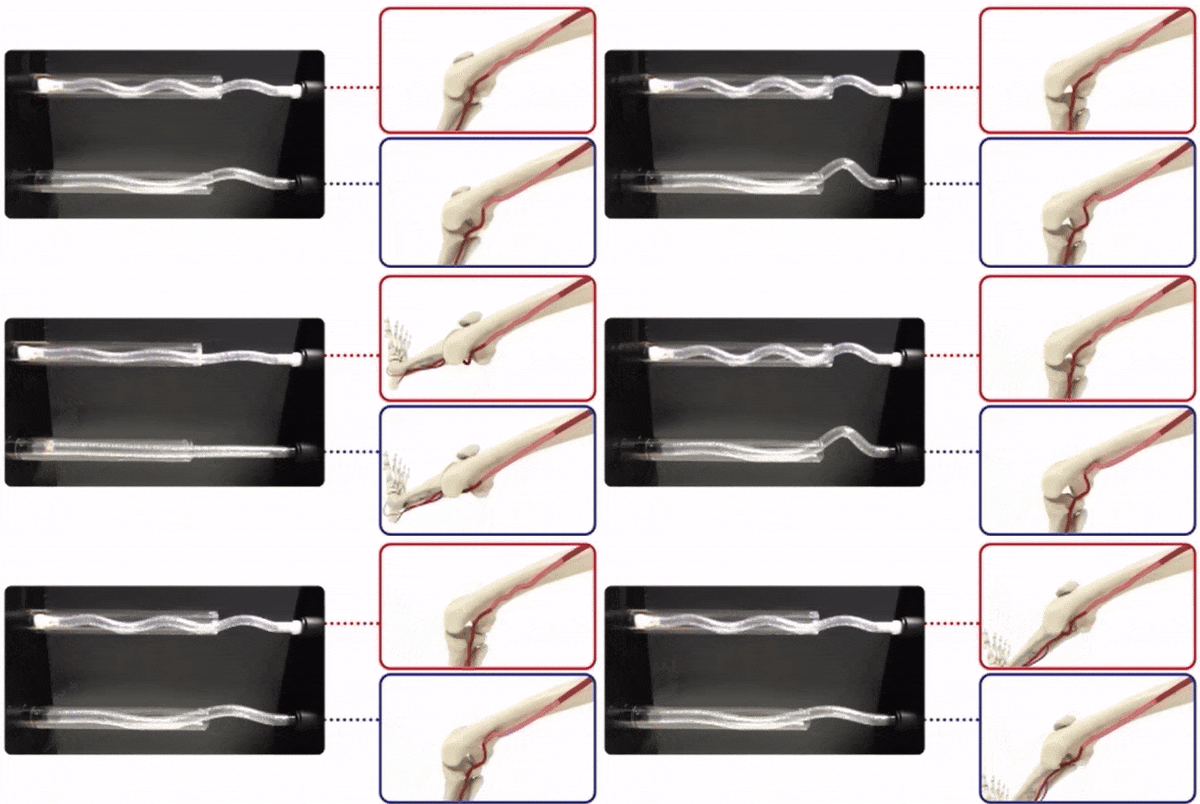
▲In vitro model, Veryan BM3D®Comparison between Peripheral Stent (Above) and Traditional Straight Stent (Below): Veryan BM3D in Knee Flexion®Peripheral stents can better conform to the natural curvature of human blood vessels, avoiding localized strain accumulation.
Veryan BM3D®The peripheral stent system received EU CE certification in 2012, FDA approval from the U.S. Food and Drug Administration in 2018, and PMDA approval from Japan's Pharmaceuticals and Medical Devices Agency in 2019. It has now entered clinical application in nearly 30 countries in Europe as well as in the United States and Japan, with cumulative sales exceeding 35,000 sets, earning widespread praise and recognition from clinical experts.
Veryan BM3D®The peripheral stent system has successively conducted pre-market clinical trials in Europe, the United States, and Japan. Among them, the MIMICS study, a prospective, randomized controlled trial conducted in Europe, confirmed that compared with straight tube stents, Veryan BM3D®The peripheral stent system has a better three-dimensional helical shape within the blood vessels of the implanted stent segment, providing more significant vortex blood flow, increasing wall shear stress, and better conforming to vascular movement, with a stent fracture rate of 0% at 2 years. The primary endpoint of the MIMICS-2 study—an IDE study with a prospective, multicenter, single-group target value conducted in Europe, the United States, and Japan—also reached its target value, with a stent fracture rate of 0% at 3 years, confirming its long-term safety and efficacy in treating patients with symptomatic femoropopliteal atherosclerotic disease. A prospective, multicenter real-world registry study conducted in Europe after product launch—the MIMICS-3D study—showed a primary patency rate of 70% at 3 years, Veryan BM3D.®The peripheral stent system also demonstrates strong performance in high-risk patient populations, such as severely calcified lesions (PACSS grade 3-4) and chronic total occlusions (CTO): the 3-year f-CDTLR (freedom from clinically-driven target lesion revascularization) rate for PACSS grade 3-4 lesions was 77.6% (Vs. 78.7% for PACSS grade 0-2 lesions), and the 3-year f-CDTLR rate for CTO patients was 75.6% (Vs. 81.0% for non-CTO patients).
"As the principal investigator of the IDE study for this product in the United States, Professor Thomas Zeller (University Heart Center Freiburg, Bad Krozingen, Germany) commented: 'In recent years, I have been routinely using Veryan BM3D in clinical practice.'"®Peripheral Stent System. The three-dimensional helical shape of this stent promotes the formation of vortex blood flow, a natural protective phenomenon in human arteries. The MIMICS clinical research project compared the performance of this helical stent with straight-tube stents and confirmed the advantages of Veryan BM3D.®Clinical Advantages of the Unique Design of Peripheral Stent Systems."
Veryan Medical is an Irish medical device company established in 2005, with years of development experience in product research and development, clinical trials, and sales. Endovastec has partnered with Veryan Medical to exclusively represent its innovative product, Veryan BM3D.®Registration and Market Launch of Peripheral Stent Systems in China. Veryan BM3D®The successful approval and market launch of the peripheral stent system in China will provide better device solutions for the diagnosis and treatment of patients with peripheral artery disease both in China and internationally, further enhancing Endovastec's™ comprehensive peripheral artery product line. In the future, Endovastec™ will continue to strengthen collaborations with resources both domestically and abroad, committing to promote more high-quality and innovative aortic and peripheral vascular interventional medical devices to markets worldwide, benefiting more patients globally.