Record-Breaking Deal: Pharma Giant Bets Big on China with Next-Gen CDK Inhibitor Portfolio

Regor Therapeutics
Pharmaceutical R&D Developer

Roche Spares No Expense for Talent.
On September 30, Roche's Genentech reached an agreement with Regor Therapeutics to acquire the company for an upfront cash payment of $850 million and other potential milestone payments.Regor Therapeutics' Next-Generation CDK Inhibitor Portfolio Sets a New Record for Upfront Payments in Out-Licensing of Chinese-Origin Molecules, Surpassing the Previous Record Set by BL-B01D1, a Bispecific ADC from Baili Tianhe, which was Licensed to BMS for $800 Million.
The difference is that,Baili Tianheng &BMS's deal is based on a single molecule.BL-B01D1, andBL-B01D1 is in the late clinical stage, and the subsequent overseas clinical expenses will be borne by both parties; this timeRegor Therapeutics &The deal of Genentech is based onNext-Generation CDK Inhibitor Portfolio, Expected to IncludeCDK2/4/6/InhibitorRGT-419B、CDK2 InhibitorQR-6401, the former is inPhase I clinical trial, the latterCurrently in the preclinical stage, after the completion of Phase I clinical trials, Genentech will be responsible for global clinical development, manufacturing, and commercialization.
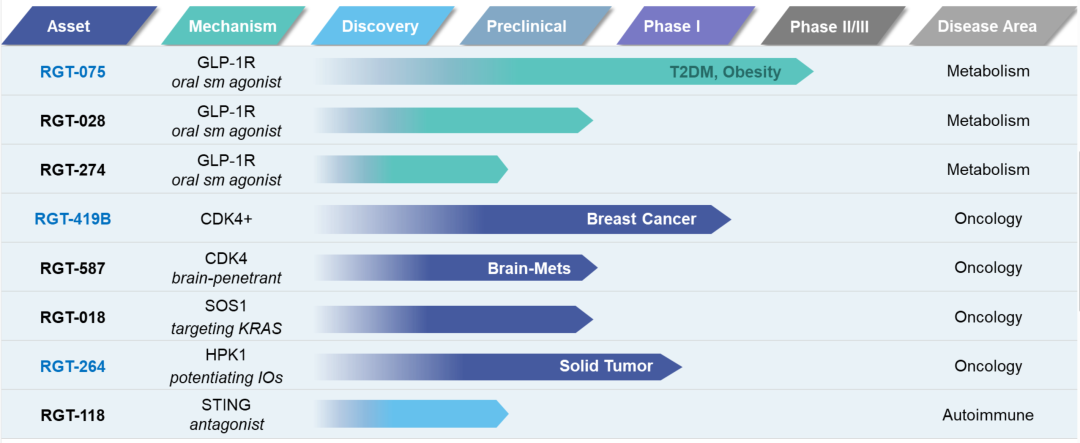 (Image source: Regor Therapeutics official website)
Recently, it’s not just Genentech spending heavily on CDK inhibitors. In late November last year, BeiGene acquired ETX-197, a CDK2 inhibitor from Oncurious, for an undisclosed upfront payment. However, including potential future milestones and sales royalties, the total deal value reached up to $1.33 billion.
As a number of generic versions of CDK4/6 inhibitors enter the market in bulk, some investors believeCDK InhibitorsThe track is already in a red ocean, soRoche,What Is the Significance of BeiGene's Leading Role in the Next Generation of CDK Inhibitors?
01
The Appeal of CDK Targets
Whether it is CDK4/6 inhibitors or CDK2 inhibitors, their main battlefield still focuses on the large breast cancer market. From the perspective of the latest deals, BeiGene will introduceCDK2 InhibitorConsidered as one's ownCDK4/6 Inhibitors as an Effective Addition to the Breast Cancer Landscape, and Regor Therapeutics’RGT-419B is claimed to beCDK4 Inhibitor with Single-Agent Efficacy for Refractory ER+/HER2- Breast Cancer.
Breast cancer is the largest malignant tumor globally (accounting for approximately 24.5% of all malignant tumors).), Breast cancer canAccording to the status of estrogen receptor (ER), progesterone receptor (PR), and HER2, they are divided into three subtypes: hormone receptor (HR).+) positive, HER2 positive (HER2+), and triple-negative subtypes, among whichHR+Breast cancer accounts for about 60%–70%.
Endocrine Therapy CombinedCDK4/6 Inhibitors, areHR+/HER2- Advanced Breast CancerFirst-line treatment options. Due to the established role of CDK4/6 inhibitors in breast cancer treatment, the market scale for CDK4/6 inhibitors has become substantial. By 2023, more than five CDK4/6 inhibitors have been commercialized globally, with combined sales from Pfizer, Novartis, and Eli Lilly alone approaching 10 billion US dollars.
Despite the frequent emergence of blockbuster drugs, existing and older-generation inhibitors inevitably have some defects, mainly including drug toxicity and drug resistance mechanisms.
1) Toxicity:Hematotoxicity isThe most common side effects of CDK4/6 inhibitors are due to their mechanism of action, which involves cell cycle arrest to inhibit proliferation. They target rapidly dividing cells, often leading to bone marrow suppression and reduced blood cell production. Among the four commercially availableIn terms of the performance of CDK4/6 inhibitors, neutropenia, leukopenia, anemia, and thrombocytopenia rank as the top four hematological toxicity side effects; additionally,CDK4/6 Inhibitor Treatment-InducedGastrointestinal adverse reactions are also worth attention.
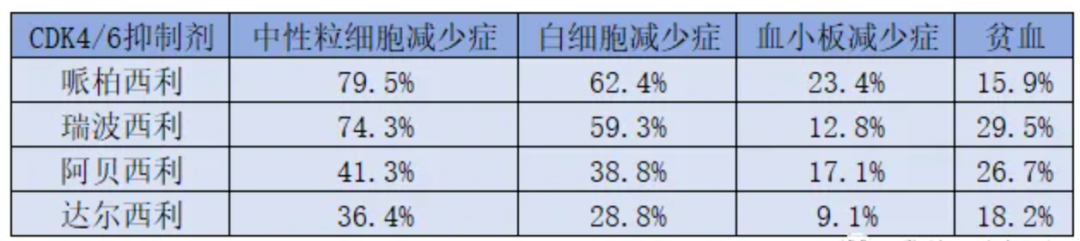
(Source: Breast Cancer Recovery Circle)
2) Drug Resistance:DespiteCDK4/6 Inhibitors Have Significantly ImprovedIn HR+/HER2- breast cancer patients, 15%-20% develop primary resistance to treatment, and 30%-40% will develop resistance over time. However, the mechanisms of resistance are diverse, mainly including ESR1 gene mutations, upregulation of the PI3K/AKT/mTOR signaling pathway, BRCA2 gene mutations, etc.
Obviously, the older generationCDK4/6 InhibitorsThe entry of generic drugs and the existing unresolved issues of toxicity and drug resistance have given rise to a new generation ofMore Breakthrough Opportunities for CDK Inhibitors.
02
Another Potential BIC CDK Inhibitor?
The RGT-419B that Roche is interested in this time is a new generation of CDK2/4/6 small molecule inhibitor developed by Regor Therapeutics (not yet available globally).CDK2/4/6 Inhibitors), with an optimized kinase activity profile, was positioned as "better" from the outset of its development.”Safety and Resistance of CDK Inhibitors.
Regor Therapeutics' RGT-419B incorporates some ingenious design concepts, achieving preliminary validation of its initial ideas in terms of both design rationale and drug mechanism, as well as in existing clinical data for breast cancer.
Existing commercialized CDK inhibitors mainly targetSubtypes 4 and 6 were inhibited, whileRegor TherapeuticsRGT-419B, developed by Regor Therapeutics Group, is based on this.By increasingCDK2 Subtype, Aimed atReduce the occurrence of existing CDK4/6 inhibitor resistance to achieve long-term efficacy.
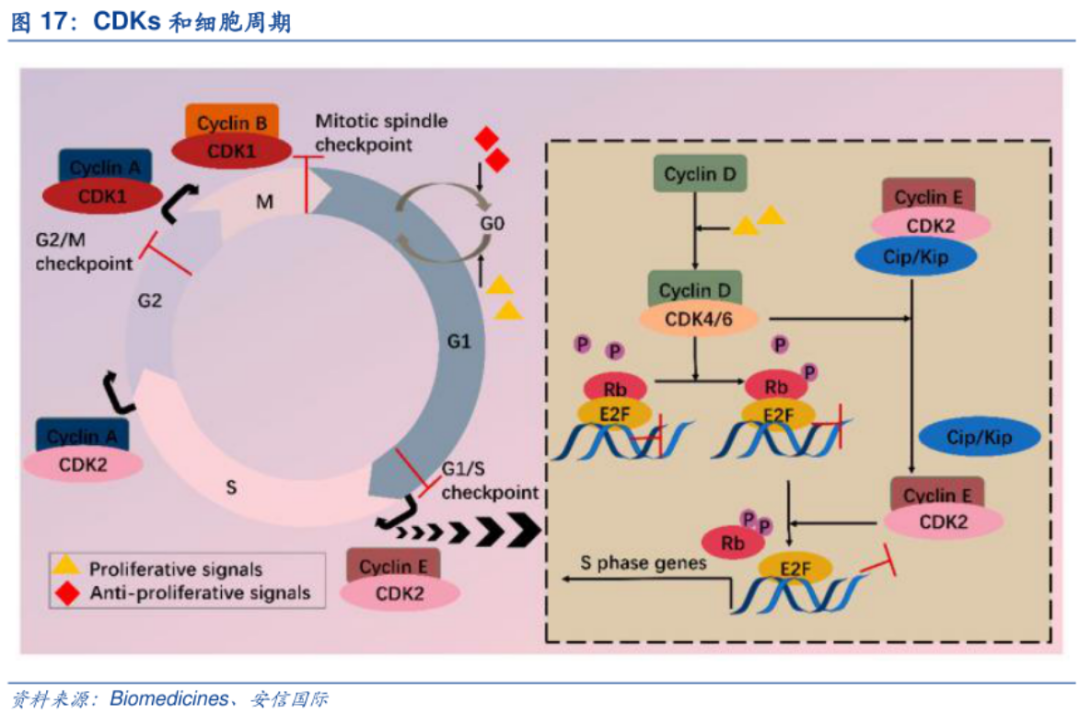
When CDK4/6 activity is inhibited, the amplification of cyclin Cyclin E and the activation of the oncogene MYC lead to MYC upregulating and activating CDK2. The CDK2-CyclinE complex can act as a compensatory pathway to phosphorylate Rb (the hyperphosphorylation of Rb protein by CDK4/6 eliminates its ability to inhibit cell cycle progression), releasing E2F transcription factors, promoting tumor cell proliferation, and driving the development of acquired resistance to CDK4/6 inhibitors in patients.
In overseas mapping, preliminary data from Pfizer's CDK2 inhibitor PF-07104091 as a monotherapy in 16 patients with metastatic breast cancer (who had received second-line CDK4/6i + ET monotherapy) showed that 3 patients achieved PR and 6 patients achieved stable disease, which also partly reveals CDK2 activation's impact onAssociation with Acquired Resistance to CDK4/6 Inhibitors.
In December 2023, Regor Therapeutics' RGT-419B was newly presented at the SABCS conference as a monotherapy for 12 patients who had progressed after receiving CDK4/6 inhibitors and ET treatment.HR+/HER2-Metastatic Breast CancerClinical data from Patient 1a showed: Three patients achieved partial response (PR) and are still continuing treatment; six patients have been treated with RGT-419B for over 24 weeks. Additionally, the safety and tolerability were good, with no dose-limiting toxicity, and no patients discontinued treatment due to adverse events.
In view of the potential of a new generation of CDK inhibitors in second-line breast cancer monotherapy, referring toFulvestrant (a commonly used second-line endocrine therapy drug) reached a sales peak of $1.028 billion in 2018. Its future global market potential is projected to be at least $2-3 billion, which is likely one of the key reasons Roche is willing to make a significant investment.
03
Chinese players are making efforts, and the trend of AI drug discovery is gaining momentum.
Faced with such a large market诱惑, companies in China are dedicated to developing a new generationThere are quite a few pharmaceutical companies developing CDK2/4/6 inhibitors or CDK2 inhibitors.
One of the strategic layouts of major pharmaceutical companies in China isCDK4/6 InhibitorsOn the basis of the existing layout, further extend the related layout of CDK2 inhibitors, such as currently having commercialization in China.Hengrui Medicine and Simcere Pharmaceutical, developers of CDK4/6 inhibitor products, disclosed at the 2023 Investor R&D Day event that the former is also conducting research on a CDK2 inhibitor, while the latter has developed the CDK2/4/6 inhibitor SCR-8079.
Another type of pharmaceutical company is just enteringIn the CDK inhibitor field, Biotechs or large pharmaceutical companies, from the perspective of IND application speed in China, Regor Therapeutics' RGT-419B was approved for IND as early as April 2022, making it the first CDK2/4/6 inhibitor in China. Close on its heels, in late 2022, CSPC Pharmaceutical Group’s self-developed CDK2/4/6 inhibitor SYH2043 also received clinical approval from the NMPA. Additionally, Tongyuan Kang Medicine's CDK2/4/6 inhibitor TYK-00540 entered the clinical stage in June 2023.
Although most domestically produced CDKs entering clinical trials in China2/4/6 inhibitors are still in the early stages of clinical trials, and most have not yet been validated by clinical data. However, from the two deals involving Regor Therapeutics and BeiGene, both licensed molecules have undergone refinement through AI.
From the public口径, the AI pharmaceutical platform for Genentech/Regor TherapeuticsRGT-419B, BeiGene/Angsen Pharmaceuticals' ETX-197 has played a significant boosting role. A background note is necessary here: the CDK family looks very similar, making it extremely difficult to develop a highly selective CDK2 inhibitor. Poor selectivity of the molecule can lead to off-target effects, resulting in suboptimal efficacy and safety.
Angsen Pharmaceuticals in AI ModelWith the assistance of Kinetic EnsemNET, an important hidden dynamic binding pocket for CDK2 was identified, leading to a potential BIC with high activity, high selectivity, and a wide therapeutic window.CDK2Candidate drug, which led to the subsequent deal with BeiGene.
Regor Therapeutics, throughThe self-developed AI-assisted new drug research and development CARD platform has found the best selectivity for multiple CDKs, smoothly advancing.RGT-419BEntered the clinical stage in the United States.
Inspired by the licensing trend of CDK inhibitors, future investors may need to pay attention to AI Biotech's potential difficult-to-drug targets or popular targets.IterationDrugInvestment opportunities.
Conclusion:Containing a new generation of CDK2 subtype inhibitorsCDKDrugs may potentially influence the overall landscape of breast cancer medication treatment in the future through monotherapy, combination therapy, and other methods. This is clearly a "zanubrutinib-like" potential opportunity. It is believed that more domestically produced CDK inhibitors will achieve overseas results in the future.
Scan the WeChat QR code to add.Medicine Space-TimeEditor
Please indicate: Name + Research Direction!