Epidermal Growth Factor Receptor Tyrosine Kinase Inhibitor (EGFR-TKI ) class drugs have brought new opportunities for the treatment of non-small cell lung cancer. Meanwhile, drug resistance has remained a research hotspot and challenge in this field. Currently, there are various solutions targeting different mechanisms of drug resistance.Immune Combination、ADCAndTargeted therapy and combination targeting for specific targetsStrategies such as...
Among them, new drug types such as bispecific antibodies and ADCs have shown great potential in the field of EGFR-TKI resistant NSCLC.Expected to usher in a new era of treatment for EGFR mutation-resistant advanced NSCLC。

Johnson & Johnson "EVAN"Todan Antibody"
Brings New Options for Patients Resistant to Osimertinib
On September 17, FDA Approved Johnson & Johnson's EGFR/c-MET Bispecific AntibodyAmivantamab Combined with Standard Chemotherapy(Carboplatin and Pemetrexed) for the treatment of adult patients with locally advanced or metastatic NSCLC with EGFR exon 19,These patients experienced disease progression during or after EGFR-TKI treatment.。
The FDA approval was based on the Phase 3 MARIPOSA-2 (NCT04988295) The results of the MARIPOSA-2 study. The MARIPOSA-2 study enrolled 657 patients. Patients with locally advanced or metastatic EGFR exon 19 deletion or L858R substitution NSCLC, who experienced disease progression during or after treatment with the third-generation EGFR-TKI osimertinib, were randomized to receive amivantamab plus chemotherapy, amivantamab plus chemotherapy plus lazertinib, or chemotherapy alone.
The results showed that, compared with chemotherapy alone,Amivantamab in combination with chemotherapy can reduce the risk of disease progression or death (Progression-Free Survival [PFS]) Decreased by 52%。Patients receiving amivantamab combined with chemotherapyMedian PFS was 6.3 months, while the median PFS for chemotherapy alone was 4.2 months. Additionally, amivantamab combined with chemotherapy demonstrated53% Confirmed Overall Response Rate (ORR), while chemotherapy alone was only 29%.
It is worth mentioning that the subcutaneous injection formulation of Amivantamab developed by Johnson & Johnson has also submitted marketing applications to the FDA and NMPA in June and September this year, respectively. At the 2024 ASCO Annual Meeting, researchers disclosed the Phase III PALOMA-3 study (NCT05388669) data, which aimed to evaluateSubcutaneous Injection of Amivantamab + LazertinibWith intravenous injection of Amivantamab + Lazertinib,Patients with EGFR-mutated advanced or metastatic NSCLC who progressed after treatment with osimertinib and chemotherapyPharmacokinetics, efficacy, and safety.
Data show:
The ORR in the subcutaneous injection group was 30%, compared to 33% in the intravenous injection group; regarding median PFS, the subcutaneous injection group showed 6.1 months, significantly longer than the 4.3 months observed in the intravenous injection group.
Compared with the intravenous injection group, fewer patients in the subcutaneous injection group experienced infusion-related reactions and venous thromboembolism.
Subcutaneous Injection of AmivantamabMedian infusion time for the first infusion reduced to 4.8 minutes(Range 0-18), intravenous injection of AmivantamabMedian infusion time for the first infusion shortened to 5 hours(Range: 0.2-9.9).
On Day 1 of Cycle 1, 85% and 52% of patients in the subcutaneous injection group and intravenous injection group, respectively, found the treatment convenient.The treatment rates at the end of treatment were 85% and 35%, respectively.
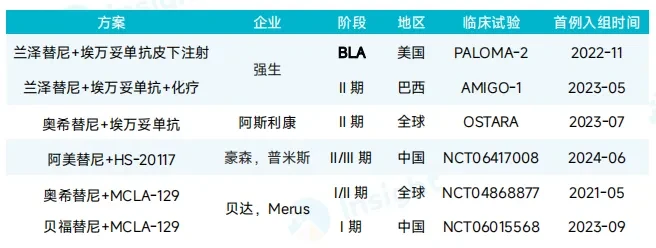
Besides Johnson & Johnson, AstraZeneca, Hosen, and Beta are also developing treatment plans that combine 3rd generation TKI with EGFR/MET bispecific antibodies.
Screenshot source:Insight ReportImmune + Anti-angiogenesis + Chemotherapy Breaks Through TKI Resistance for the First TimeEvoq Opens the Path to Dominating Tumor ImmunotherapyPreviously, the studies of pembrolizumab and nivolumab combined with chemotherapy for TKI-resistant NSCLC have both ended in failure, showing no significant difference in efficacy compared to chemotherapy in phase III clinical trials.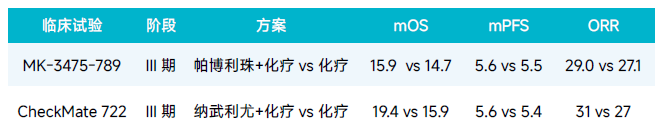
Screenshot source: Insight reportMay 6, 2023Sintilimab in combination with bevacizumab and chemotherapy becomes the world's first approved PD-1 inhibitor for TKI-resistant NSCLC.Currently, bevacizumab + platinum-based doublet chemotherapy has been recommended as a Level 1 therapy by the Chinese Society of Clinical Oncology (CSCO) for second-line treatment of EGFR mutation-resistant advanced NSCLC.After the success of PD-1 + VEGF + chemotherapy,Bispecific antibodies targeting PD-1/VEGF have also made breakthrough progress in this field.On May 21, 2024, Akeso Biopharma's Eftilagimod Alpha was approved in China for use in combination with platinum-based doublet chemotherapy to treat patients with locally advanced or metastatic non-squamous non-small cell lung cancer (NSCLC) who are positive for EGFR mutations and have progressed after EGFR-TKI treatment, becomingThe World's First Approved PD-1/VEGF Bispecific Antibody。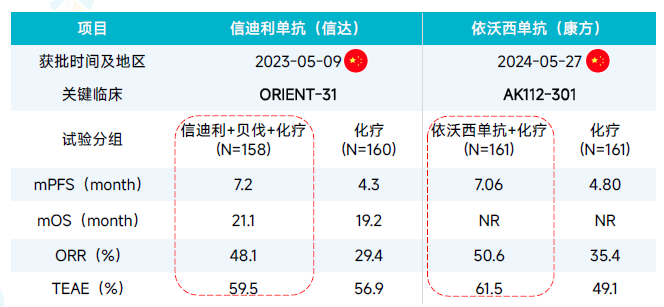
Screenshot source: Insight reportInsight database shows that there are 10 clinical-stage projects targeting PD-(L)1/VEGF bispecific antibodies.And all are independently developed by Chinese enterprises.Among them, PM8002 from Primus advances the fastest, initiating Phase II/III clinical trials for lung cancer indications in mid-2023, while most other projects are still in the early clinical stages; therefore, Akeso's Eveci has an absolute leading advantage.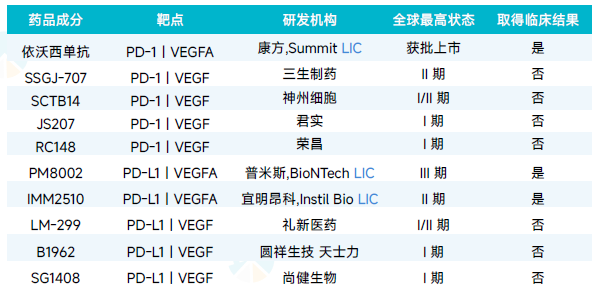
Screenshot source:Insight ReportLukang Satuzumab Overcomes TKI Resistance with Significant EfficacyTaking the Lead in the ADC Field
In addition to bispecific antibodies, emerging ADC drugs are gradually becoming "star drugs" to overcome resistance in advanced NSCLC due to their unique therapeutic mechanisms. Among them,Kelun Botai's TROP2-targeted ADC Luskansatuzumab inIn the population with EGFR mutation resistanceHas already demonstratedSignificant efficacy。August 20, 2024Kolon Biotech has submitted in China based on the OptiTROP-Lung03 study (results not yet disclosed).Marketing Application for Lucantuzumab, for third-line treatment of EGFR-mutant NSCLC, and has been granted priority review by the CDE.The previously released Phase II results showed,Compared with EGFR wild type,LukansatuzumabIn the population with EGFR mutation resistanceEfficacy is significant, with an ORR reaching 60%.。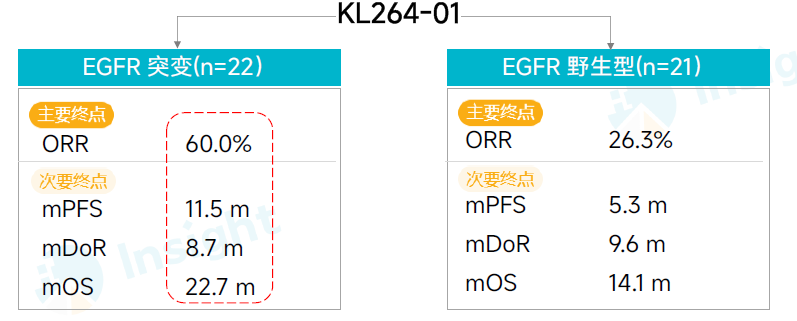
Screenshot source: Insight reportCurrently, used for TKI resistanceEGFR Sensitivity MutationIn the second-line therapy for NSCLC,A total of 4 ADCs in Phase III clinical trials or above, with targets mainly focused on TROP2 and HER3.。In December 2023, Daiichi Sankyo submitted HER3 ADC Depatuxizumab to the FAD.HER3-DXd) Marketing Application, Announced in June 2024 Due to Third-Party Manufacturer Inspection ResultsReceived a complete response letter.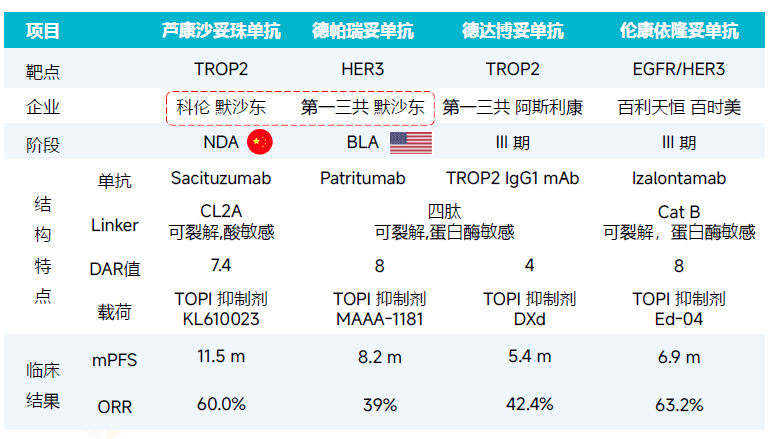
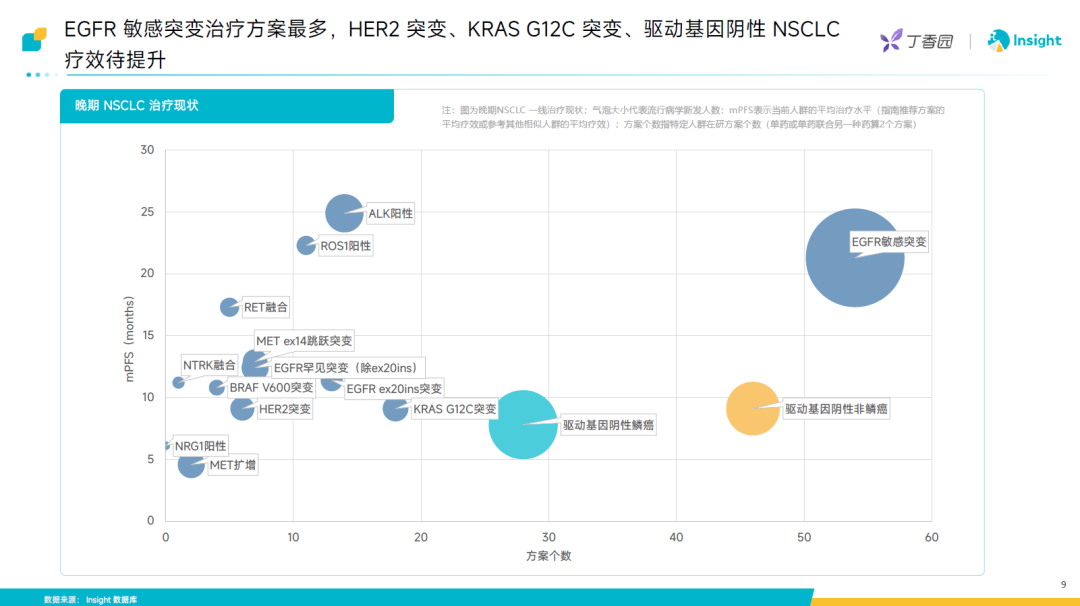
Screenshot source: Insight reportDaiichi Sankyo not only hasHER3-DXd, there is another TROP2 ADC, Dato-DXd (Datozumab Deruxtecan), which is Kelun's biggest competitor;From the existing clinical results, both Lucantusumab and Depatuxizumab have shown remarkable efficacy, with Lucantusumab being slightly superior.Approximately 50% of non-small cell lung cancers are adenocarcinomas, and the mutation frequency in lung adenocarcinoma is very high, reaching 40%-60%. In addition to EGFR mutations, ALK and HER2 mutations also account for a relatively high proportion in the Asian population.Currently, in the treatment landscape for advanced NSCLC, the largest number of approved and investigational treatment options target EGFR sensitizing mutations, with significant PFS benefits observed.The number of treatment options targeting HER2 mutations is relatively limited, and there is still room for improvement in clinical benefits.; KRAS G12C mutation, driver gene-negative NSCLC inTreatment PlanAlthough there are quite a few,But the relative efficacy also needs to be improved.。Screenshot source:Insight ReportTo learn about the competitive landscape of new drugs in other driver gene areas or driver gene-negative areas in the NSCLC field, you can download the Insight self-developed report.