HomeRoche's Faricimab Receives Fourth Indication Approval in China for CRVO/HRVO-Related Macular Edema with Extended Dosing Interval of Every 3–4 Months
Roche's Faricimab Receives Fourth Indication Approval in China for CRVO/HRVO-Related Macular Edema with Extended Dosing Interval of Every 3–4 Months
Oncology Drug Research, Development, and Manufacturing

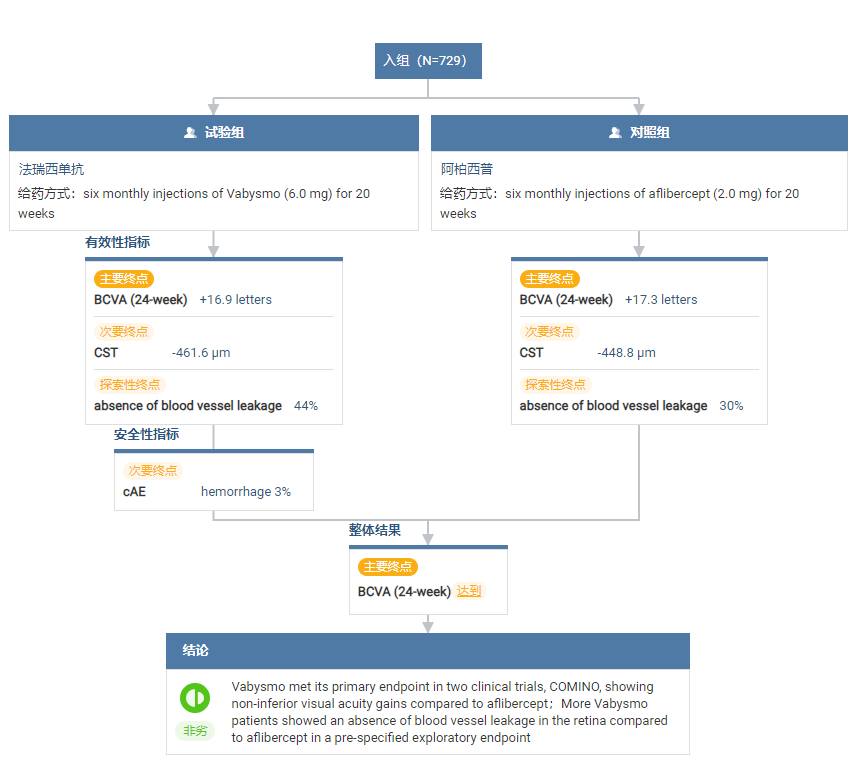
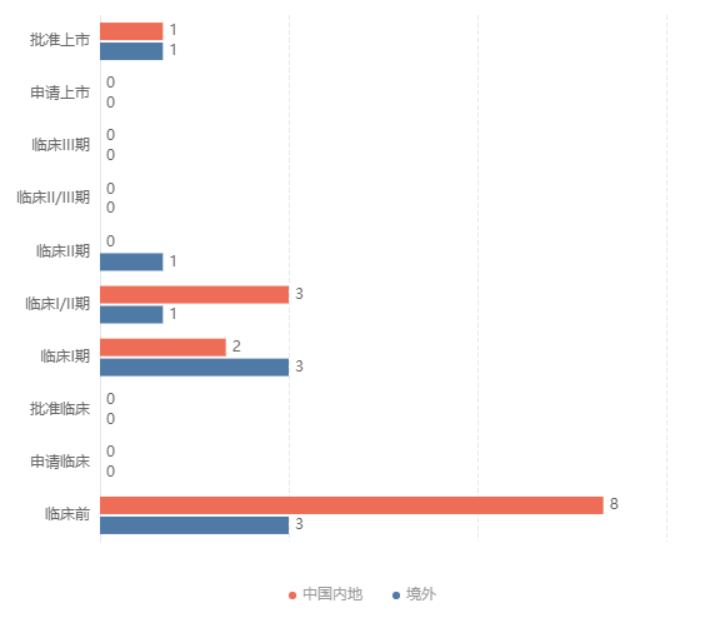
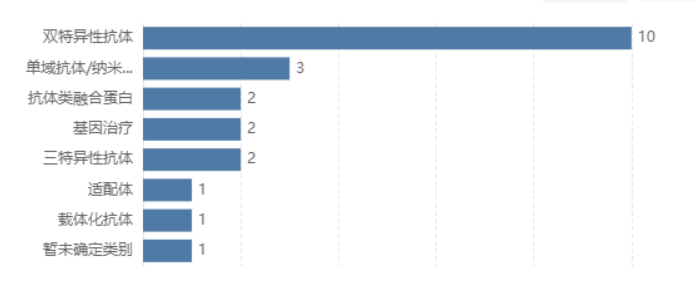
On October 14, the NMPA website showed that Roche's Faricimab Injection was approved for a new indication in China.(Application No.: JXSS2300058),For the treatment of macular edema secondary to central retinal vein occlusion or hemiretinal vein occlusion (CRVO/HRVO)。 Image Source: NMPA Official WebsiteFaricimab (Vabysmo)Is the world's first approved bispecific antibody for ophthalmologyCompared with traditional single-pathway drugs, it can simultaneously target both the angiopoietin-2 (Ang-2) and vascular endothelial growth factor A (VEGF-A) pathways, inhibiting new blood vessel formation while enhancing vascular stability.In January 2022, Faricimab was approved by the FDA for the treatment of diabetic macular edema (DME) and neovascular age-related macular degeneration (nAMD), and in October 2023, it was also approved for the treatment of macular edema secondary to retinal vein occlusion (RVO).Faricimab performed well after its market launch, with rapid sales growth, reaching 591 million and 2.357 billion Swiss francs in 2022 and 2023, respectively.In the first half of 2024, the sales of Faricimab reached an impressive 1.794 billion Swiss francs (approximately 2.027 billion US dollars), successfully ranking it among the top 5 best-selling drugs of Roche.。In China, Faricimab was first approved by the NMPA in December 2023 for the treatment of DME, in January 2024 for the treatment of nAMD, and in May 2024 for the treatment of macular edema secondary to branch retinal vein occlusion (BRVO).This is the fourth indication for Faricimab approved in China.。Results from the global Phase 3 COMINO trial, which compared faricimab head-to-head with aflibercept for the treatment of macular edema secondary to central retinal vein occlusion (BRVO and CRVO), showed that monthly treatment with faricimab provided early and sustained vision improvement in patients with central retinal vein occlusion, meeting the primary endpoint.That is, at 24 weeks, the improvement in vision was non-inferior to aflibercept.At the same time, the data shows that faricimab has achieved rapid and significant regression of retinal fluid. In addition,Long-term data show that nearly 48% of patients are able to extend the treatment interval to three to four months.。The specific data is as follows:At week 24, patients in the faricimab group gained 16.9 letters in vision improvement, compared to 17.3 letters in the aflibercept group.。In terms of secondary endpoints, the central subfield thickness (CST) reduction was 461.6μm in the faricimab group and 448.8μm in the aflibercept group; 44% of patients in the faricimab group had no retinal vascular leakage, compared to 30% in the aflibercept group.Screenshot source: Insight databaseAnti-VEGF drugs are effective treatments for retinal diseases such as DME and AMD. However, the currently marketed aflibercept, conbercept, and ranibizumab require frequent administration, needing to be administered every 4 weeks or every 8 weeks. In contrast, the anti-VEGF/Ang-2 drug faricimab not only demonstrates excellent efficacy,Can also achieve injection once every 3-4 months.。In terms of safety, faricimab was well-tolerated, consistent with previous study results, and no serious adverse reactions were observed.According to the Insight database, there are currently multiple anti-VEGF/Ang-2 drugs under development globally, most of which are in the preclinical stage, with the fastest being in Phase I/II clinical trials, developed by Boehringer Ingelheim.BI 836880, a bispecific nanobody。 Screenshot source: Insight databaseIn terms of drug types, the anti-VEGF/Ang-2 drugs under research include not only bispecific antibodies but also gene therapies.Screenshot source: Insight databaseAmong them, XMVA09 from Stareye Bio is a gene therapy drug that combines dual-target antibodies and intravitreal injection, with the potential to achieve lifelong efficacy after a single injection. The interim results of the IIT indicate that the safety of XMVA09 injection is reliable, with good tolerability, and it has preliminarily met the expected research goals in terms of efficacy.EXG102-031, developed by Jiayin Bio, is an rAAV-based gene therapy that expresses a therapeutic fusion protein capable of binding/neutralizing all known VEGF and Ang-2. Unlike existing antibody drugs that require repeated injections, EXG102-031 only needs a single injection to achieve long-term expression in the body and is expected to effectively treat abnormal blood vessel formation and blood leakage in the retina. In June 2023, EXG102-031 was approved for clinical trials in China for the treatment of nAMD.Cover Source:Company LogoDisclaimer:This article is for information sharing only,不代表 Insight 立场和观点,nor does it recommend or introduce any treatment options. If needed, please consult and contact正规医疗机构. Editor:vvyPR Article Coordination: WeChat insightxbSubmissionWeChat: insightxb; Email: insight@dxy.cn Diversified functions, traceable data……Insight Database Web Version Awaits Your Experience Click to read the original text,ImmediatelyUnlock!