
Written by Wang Cong
Editor | Wang Duoyu
Typesetting | Shuicheng Wen
More than500 million peopleSuffering fromDiabetes, causing nearly7 MillionPersonDeath.This disease is characterized by excessively high glucose concentrations in the blood, caused by insufficient insulin production or impaired response to insulin.Injecting synthetic insulin can lower blood glucose levels in diabetic patients; however, blood glucose levels may fluctuate due to factors such as diet and exercise, making them difficult to predict. This makes it challenging for patients to choose the appropriate insulin injection dose, as even a slightly higher dose may lead to...Hypoglycemia, This is a very frightening complication for diabetes patients, as hypoglycemia can lead to loss of consciousness, coma, and even death. To avoid the risk of hypoglycemia caused by insulin injections, many diabetes patients choose to reduce their insulin dosage, which can result in poor blood glucose control and increase the risk of long-term complications caused by hyperglycemia.In order to solve the above problems, since the 1970s, scientists have been trying to design a kind of insulin that can change its biological activity according to different blood glucose levels, thereby achieving blood glucose control without the risk of hypoglycemia. Although many papers and patents have been published in this field, so far, no method has been able to truly solve this problem and be used for the treatment of diabetes.On October 16, 2024, international pharmaceutical giantNovo NordiskResearchers in international top academic journalsNaturePublished an article titled:Glucose-sensitive insulin with attenuation of hypoglycaemiaResearch Paper.
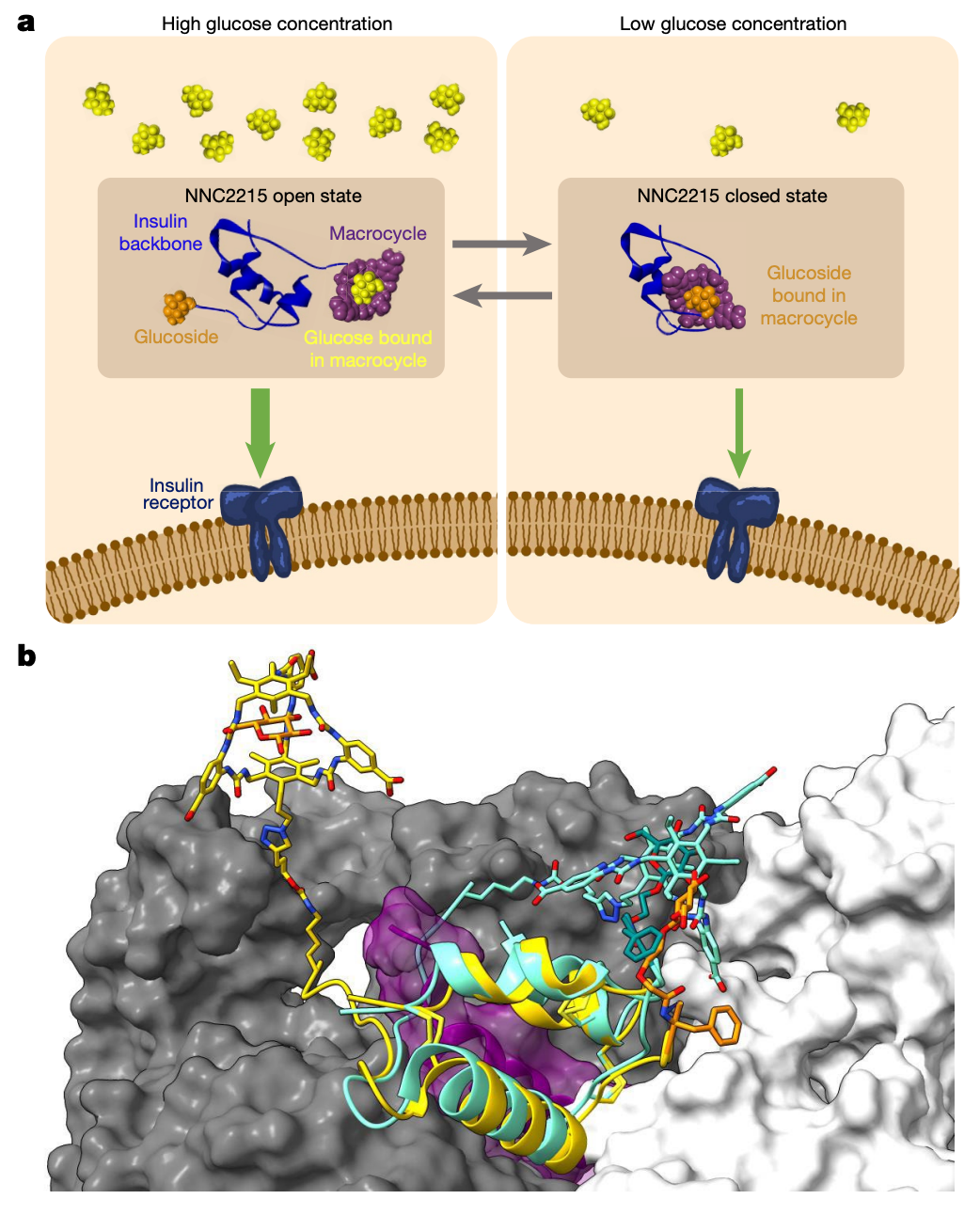
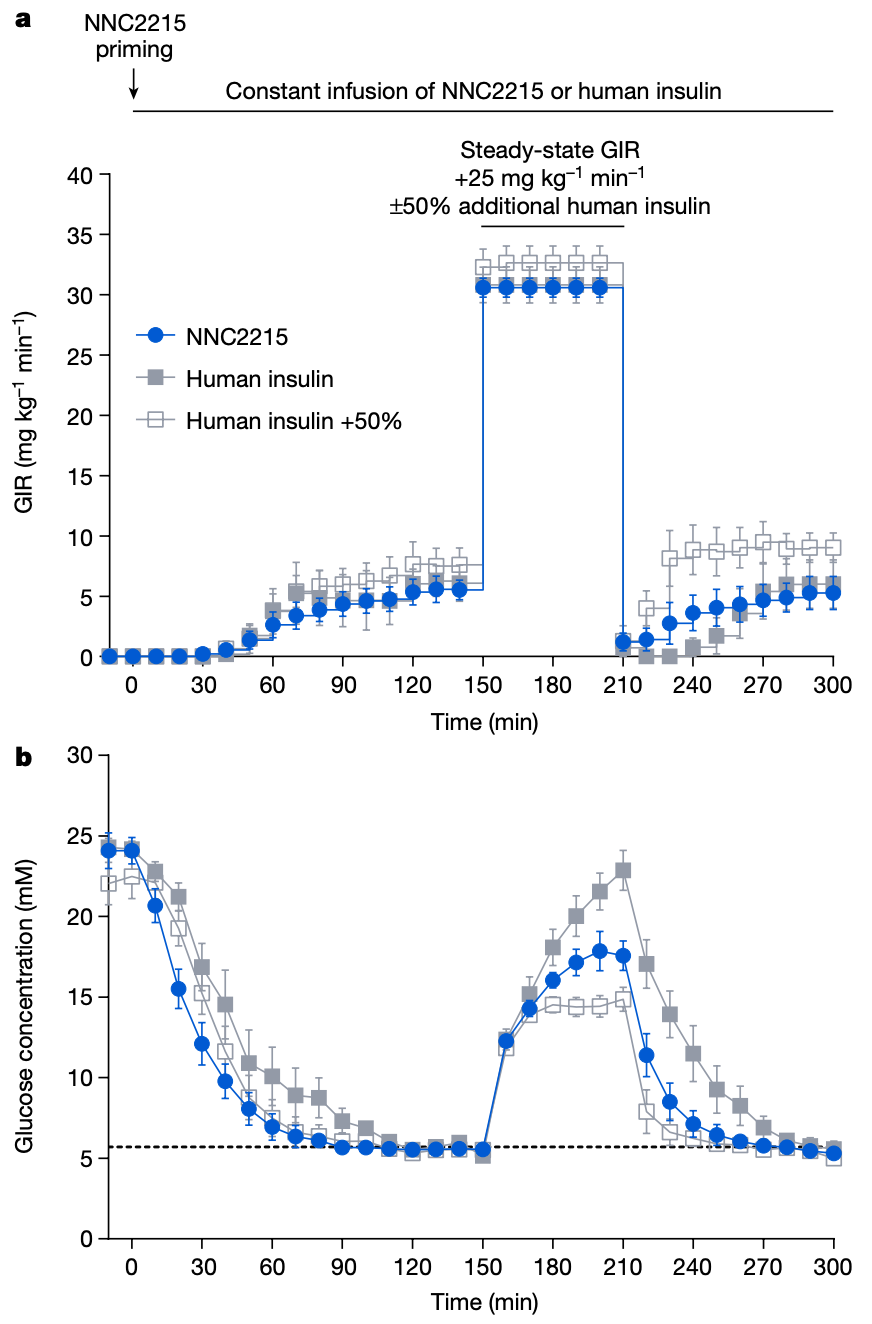
The study designed aSmart InsulinThis modified insulin can adjust its activity based on blood glucose levels, reducing its activity during hypoglycemia to prevent a sudden drop in blood sugar. The research could offer diabetes patients a more flexible way to supplement insulin, thereby reducing the risk of experiencing hypoglycemia.Designing a glucose-sensitive insulin is a long-term goal, which can automatically adjust its bioactivity in a reversible manner based on blood glucose levels, ultimately achieving better glycemic control while reducing the risk of hypoglycemia.In this latest study, the research team designed a modified insulin —NNC2215, its activity can vary according to changes in blood glucose levels. NNC2215 is a biologically active insulin conjugate with a molecular switch that can toggle based on glucose levels. At high glucose levels, the switch turns on, making the insulin more active and removing glucose from the blood, thereby lowering glucose levels; when glucose levels decrease, the switch turns off, halting glucose absorption.The experimental results show that when the glucose concentration increases from 3 mM to 20 mM(Approximately the range of blood sugar level fluctuations experienced by diabetes patients), Insulin receptor forNNC2215The affinity increased by 3.2 times, confirming its potential to respond to changes in blood glucose levels.In rat and pig diabetes models, NNC2215 was shown to be as effective as human insulin in lowering blood glucose. This higher glucose sensitivity of NNC2215 protected these animals from hypoglycemia.Overall, this improved smart insulin is expected to reduce the risk of hypoglycemia and meet the demand for rapid-acting insulin during meals.Improve the treatment of diabetes.This combination of dual properties should enable insulin to adjust blood glucose levels more effectively, keeping blood glucose within the normal range without increasing the risk of hypoglycemia, thusImproving the short-term and long-term risks and complications brought by diabetes,But current insulin can't do this.https://www.nature.com/articles/s41586-024-08042-3


SettingsStar Mark, so as not to miss exciting tweetsWelcome to forward to Moments and WeChat groupsTo promote the dissemination and exchange of cutting-edge research, we have established severalProfessional Exchange Group, Press and hold the QR code below to add the editor's WeChat and join the group. Due to the large number of applicants, please note the following when adding WeChat:School/Professional/Name, ifPI/Professor, please also indicate.
PointIn progress, Convey Your Taste