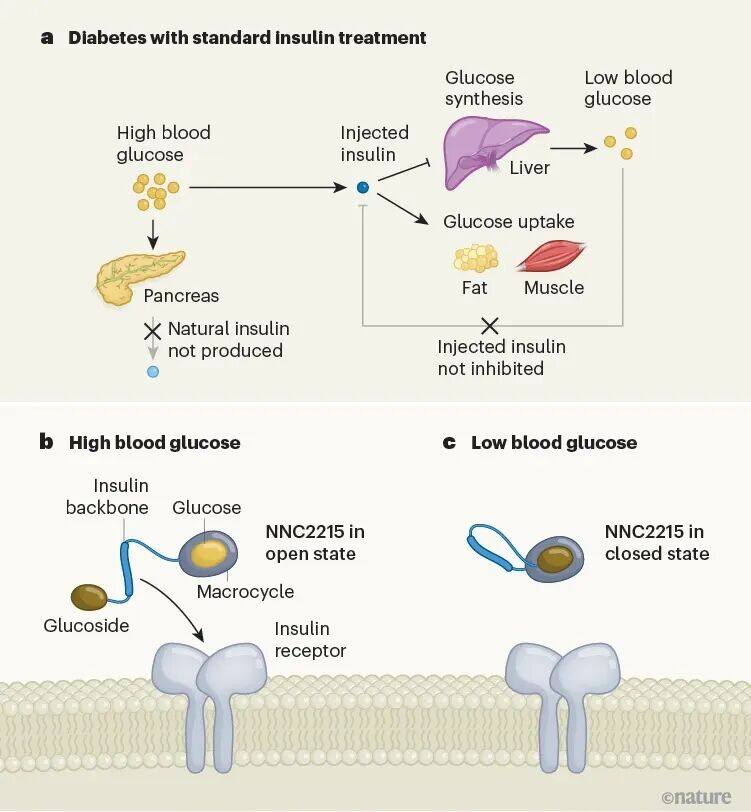
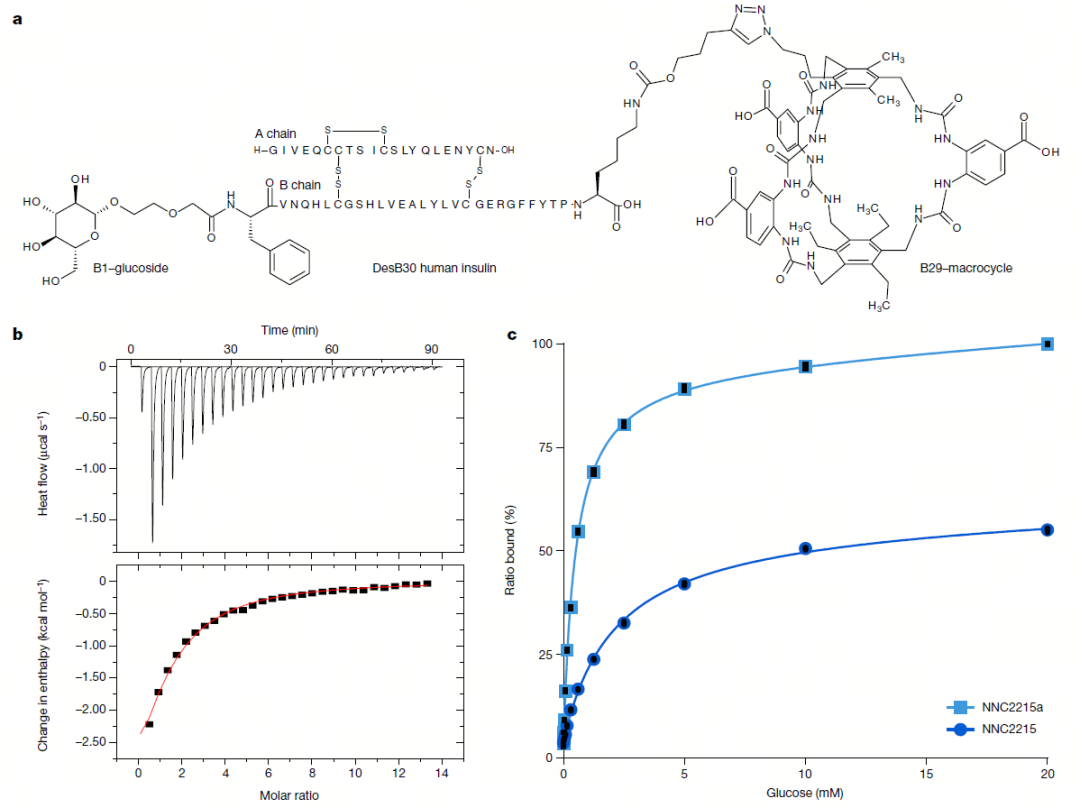
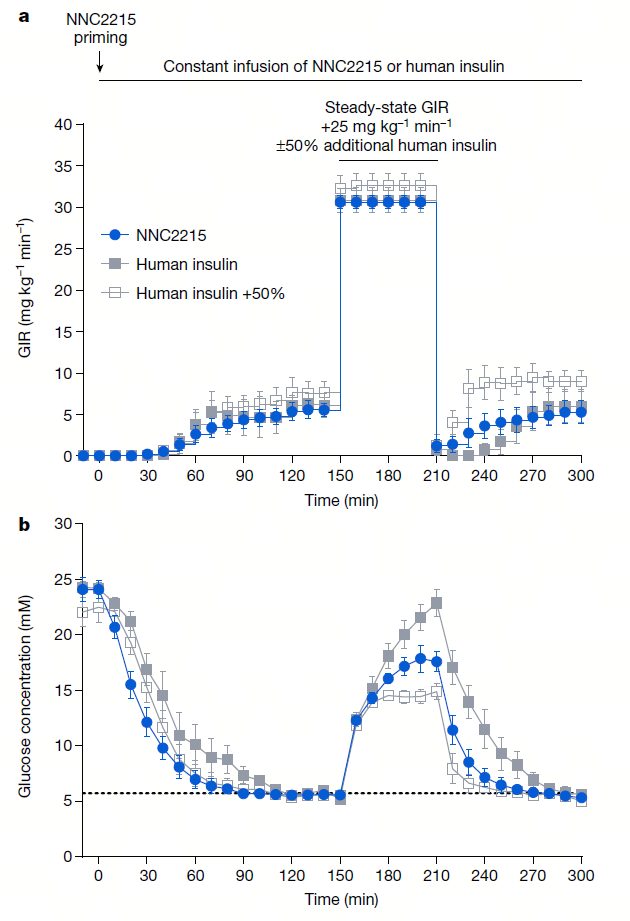
Diabetes is a global public health issue. According to data from the International Diabetes Federation, there were approximately 537 million adults with diabetes worldwide in 2021, and this number is expected to increase to 643 million by 2030.Diabetes is characterized by high glucose concentration in the blood due to insufficient insulin secretion or impaired response to insulin. Injected synthetic insulin can lower blood sugar, but it may also lead to hypoglycemia, a complication that diabetic patients dread because it can cause loss of consciousness, coma, or even death. To avoid this situation, scientists began attempting to produce smarter insulin 45 years ago, and since then, many strategies have been tried, all without success.On October 16, a team of scientists from Novo Nordisk published groundbreaking results in the journal Nature. They designedA New Type of Insulin, this insulinCan automatically turn on and off based on glucose levels in the blood.In animal experiments, this "smart" insulin effectively reduced high blood glucose levels while preventing the blood glucose concentration from dropping too low.For people without diabetes, the increase in glucose after eating causes the pancreas to secrete insulin into the bloodstream, promoting glucose metabolism and storage in fat and muscle tissues while inhibiting the liver from producing glucose. These responses lower glucose to normal levels, thereby halting the release of insulin.Many people with diabetes experience long-term complications caused by high blood sugar. However, the risks of these complications (including blindness, kidney disease, and nerve damage) can be reduced or eliminated through strict blood sugar control. For individuals with type 1 diabetes (who cannot produce insulin), this blood sugar control can be achieved by injecting insulin several times a day, but this treatment increases the risk of hypoglycemia. The main issue is that insulin naturally released by the pancreas is metabolized within minutes and quickly cleared from the bloodstream, while subcutaneously injected insulin is absorbed slowly, taking a long time to enter the bloodstream. Afterward, it can remain active in the body for up to 40 hours and may lower blood sugar to dangerously low levels.In this newly published study, scientists have addressed this issue with a modified insulin that is only active when blood sugar is high, thereby reducing the risk of hypoglycemia.Specifically, the researchersA glucose-binding macrocycle(A cyclic molecule)AndA glycoside(A molecule chemically derived from glucose)Connected to different parts of the insulin molecule. They call this modified insulinNNC2215. This macrocycle is designed with a glucose-binding cavity, exhibiting appropriate affinity and selectivity for glucose.This design creates a switch:At low glucose concentrations, the glycoside binds to the macrocyclic cavity, thus keeping the insulin molecule in a closed conformation with little activity; when the glucose concentration increases, glucose binds to the macrocycle, displacing the glycoside and converting NNC2215 into a more active conformation.Using a technique called native mass spectrometry, the study confirmed that glucose binds to NNC2215 in a dose-dependent manner.a. In patients with type 1 diabetes, the pancreas cannot produce insulin to counteract the rise in blood glucose after eating. To reduce the long-term harmful consequences of hyperglycemia, blood glucose can be lowered by injecting insulin. However, even after blood glucose levels return to normal, injected insulin remains active, which may cause blood glucose to drop to dangerously low levels (hypoglycemia). b. Hoeg-Jensen et al. designed a glucose-sensitive insulin called NNC2215, composed of an insulin backbone, a glucose-binding macrocycle (cyclic molecule), and a glucoside (glucose-derived molecule). At high glucose concentrations, glucose binds to the macrocycle, causing NNC2215 to adopt an open conformation that enables it to bind to insulin receptors and exert its biological function. c. At low glucose concentrations, the glucoside occupies the macrocycle, causing NNC2215 to adopt a closed conformation, reducing its activity.To exert biological effects, insulin binds to a protein on the cell membrane called the insulin receptor. Through computer-generated structural models and binding experiments based on purified insulin receptors, researchers demonstrated that NNC2215 binds more effectively to the insulin receptor at high glucose concentrations than at low glucose concentrations.Chemical Structure and Glucose Binding Properties of NNC2215When insulin binds to its receptor, a signal cascade composed of various proteins is triggered within the cell. By measuring the activation of the insulin receptor and two enzymes in the pathway, studies have shown that NNC2215 successfully stimulated receptor signaling in cultured cells. Other experiments indicated that NNC2215 enhanced the ability of cultured rat adipocytes to synthesize lipids. Importantly, the effects of NNC2215 were dependent on glucose concentration.Next, the scientists injected NNC2215 into rats and pigs and found that blood glucose was effectively reduced, including injecting it subcutaneously in pigs to simulate human insulin use. In the pig diabetes model, no hypoglycemia associated with human insulin was observed when NNC2215 was administered. Finally, rats lacking insulin were used to study glucose-induced activation of NNC2215. During glucose tolerance tests, the research showed that the increase in glucose-induced NNC2215 activity was equivalent to a 30% increase in the human insulin dose. These preclinical results indicate that NNC2215 responds to glucose and is more effective than human insulin in lowering blood glucose levels without causing it to drop too low once normal glucose levels are restored.Glucose-induced NNC2215 activation during glucose tolerance test in streptozotocin-induced diabetic rats.To develop glucose-responsive insulin, academia and pharmaceutical companies have adopted various strategies, including the use of hydrogels, polymers, or lipid-based carriers. Has NNC2215 achieved this goal? Preclinical studies are promising, but relevant scientists have raised several important considerations. First, NNC2215 must be able to respond to glucose within a clinically relevant concentration range. Most of the data in this study were generated within a glucose range of 0–20 mmol L−1, but for most people using insulin, postprandial blood glucose concentrations are typically 4–14 mmol L−1 and efforts are made to maintain them within a narrower range of 4.4–7.2 mmol L−1. It remains unclear whether NNC2215 is sensitive enough to detect and respond to changes in glucose levels within this narrower range.Secondly, the goal of treatment is to mimic insulin release from the pancreas: a twofold increase in glucose leads to a 7-10 fold increase in insulin secretion. Based on current data, it is not clear whether NNC2215 can achieve this. Thirdly, whether NNC2215 is safe and effective for patients requires clinical trials.A spokesperson for Novo Nordisk stated that although this study demonstrated that NNC2215 is a glucose-sensitive "smart" insulin, research to further optimize the molecule is still ongoing.Note: All images in the article are from Nature. References:[1]https://www.nature.com/articles/s41586-024-08042-3[2]https://www.nature.com/articles/d41586-024-03286-5[3]https://www.nature.com/articles/d41586-024-03357-7