

Gene Therapy ABBV-RGX-314 Demonstrates Near 100% Reduction in Treatment Burden with Durable Efficacy in Wet AMD

ReGenXBio
Gene Therapy Developer

AbbVie
Innovative Drug Developer
▎WuXiEdited by Kant Content Team
REGENXBIO Inc. today announced positive data from a Phase 2 study of the investigational gene therapy ABBV-RGX-314, being developed in collaboration with AbbVie, in patients with bilateral wet age-related macular degeneration (AMD).Data shows that nine months after receiving ABBV-RGX-314 treatment, the patients' treatment burden was reduced by 97%.Detailed data were presented at this year's American Academy of Ophthalmology (AAO) meeting. According to the company's website,ABBV-RGX-314Expected to become the first gene therapy for chronic retinal diseases.

This study aims to evaluate individuals who have previously undergone unilateral treatmentABBV-RGX-314Among the treated patients, a single dose was administered to the other eye.Safety and Efficacy of Subretinal Delivery of ABBV-RGX-314.The treatment of the patient's second eye was performed one year or more after the first eye received ABBV-RGX-314 treatment.
The nine-month data from this bilateral study included nine patients who had received subretinal delivery of ABBV-RGX-314, participated in the Phase 1/2a or bridging study, and opted for treatment in the second eye. Prior to receiving ABBV-RGX-314, these patients had a high treatment burden in the fellow eye, with an average of nine anti-vascular endothelial growth factor (VEGF) injections in the year before entering the study, including some longer-lasting anti-VEGF injections.

Nine months later, the key findings of the Phase 2 bilateral eye study include:
The burden of patients receiving anti-VEGF treatment annually decreased by 97%.
100% of patients required zero or one supplemental injection.
78% of patients do not need injections at all.
In addition,The patient maintained stable best-corrected visual acuity (BCVA) and central retinal thickness (CRT) at nine months.ABBV-RGX-314 in Both EyesAqueous HumorSimilar levels of protein were produced in both. As of September 11, 2024, ABBV-RGX-314 was well-tolerated in the other treated eye, with no drug-related serious adverse events reported.
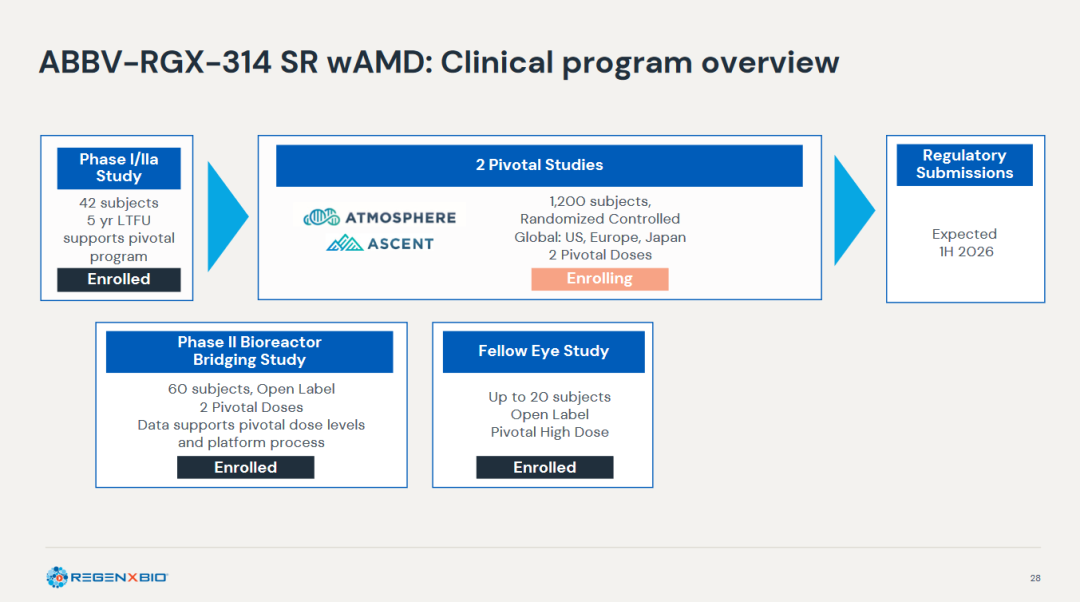
▲Development Plan of ABBV-RGX-314 (Source: Reference [2])
ABBV-RGX-314 uses an adeno-associated virus 8 (AAV8) vector carrying a transgene expressing an anti-VEGF antibody fragment.The protein expressed in the body inhibits blood vessel formation and retinal fluid accumulation by blocking VEGF signaling. Beyond treating wet AMD, both companies are also exploring the potential of ABBV-RGX-314 in treating diabetic retinopathy and other chronic retinal diseases.

▲To learn more about the application of cutting-edge technologies in the biopharmaceutical industry, please long press to scan the QR code above to access "WuXi AppTec Live Studio" and watch live discussions and exciting replays on related topics.


Share,PointLike,In ViewFocusing on Global Biomedical Health Innovation