On October 22, Hansoh Pharma announced that the registrational Phase III clinical study (AENEAS2 study) of its third-generation epidermal growth factor receptor (EGFR) tyrosine kinase inhibitor (TKI) Almonertinib (brand name: Almulet) in combination with chemotherapy as a first-line treatment for patients with locally advanced (Stage IIIB-IIIC) or metastatic (Stage IV) EGFR-mutated non-small cell lung cancer (NSCLC), has met its primary endpoint of progression-free survival (PFS). The PFS improvement demonstrated by Almonertinib in combination with chemotherapy in patients with advanced EGFR-mutated lung cancer was statistically significant and clinically meaningful.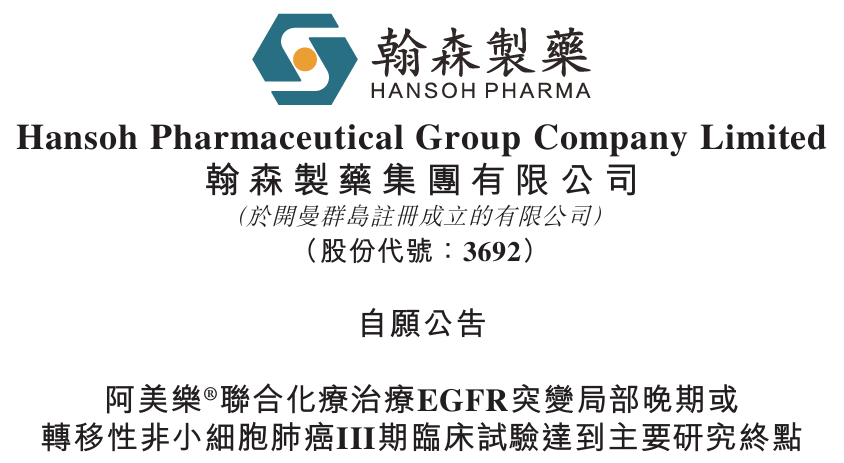 According to blinded independent central review, data from the AENEAS2 study demonstrated that patients treated with Aumolertinib in combination with chemotherapy experienced a statistically significant reduction of over 50% in the risk of disease progression or death. The median progression-free survival for the Aumolertinib plus chemotherapy group was extended to more than two years. Safety outcomes were consistent with the established safety profiles of the respective drugs from previous studies, with no new safety signals identified.
Source: PharmaCube Database
The PharmaCube database shows that in March 2020, Aumolertinib was approved for patients with locally advanced or metastatic NSCLC who progressed after prior EGFR-TKI treatment and were positive for the T790M mutation. In December 2021, Aumolertinib was approved as a first-line treatment for adult patients with locally advanced or metastatic NSCLC positive for EGFR exon 19 deletion or exon 21(L858R) substitution mutations.Two new indications for Aumolertinib have been accepted by the CDE and are currently under review. The new indications are: adjuvant treatment for adult patients with NSCLC who are positive for EGFR exon 19 deletion or exon 21(L858R) substitution mutations after tumor resection, and treatment for patients with unresectable locally advanced NSCLC with EGFR exon 19 deletion or exon 21(L858R) substitution mutations who have not experienced disease progression following platinum-based radical chemoradiotherapy.Copyright © 2024 PHARMCUBE. All Rights Reserved.
Welcome to forward, share, and reasonably cite. When citing, please clearly indicate the source of the article in a prominent position;For reprint, please leave a message or send a message to the WeChat Official Account backend, and indicate the name and ID of the official account.
Disclaimer: The information in this WeChat article is for general reference only and should not be directly used as decision-making content. Medicine Cube assumes no responsibility for any loss incurred by any party due to the use of the content herein.