

Roche Bets $1.05 Billion on AI-Driven CNS Gene Therapy with Dyno Therapeutics
Roche
Oncology Drug Research, Development, and Manufacturing

Dyno Therapeutics
Developer of Artificial Intelligence Gene Therapy Platform
On October 24, Dyno Therapeutics, an artificial intelligence gene therapy platform developer, announced a second research collaboration with Roche to develop next-generation adeno-associated virus (AAV) vector gene therapies for neurological diseases. Under the new agreement, Dyno will further provide Roche with its leading platform and sequence design technology to facilitate in vivo gene delivery.
Roche will pay Dyno Therapeutics a $50 million upfront payment, with additional payments during the research phase, and potential payments based on preclinical, clinical, and sales milestones.Total payments exceeding 1 billion US dollars.
The first collaboration between Dyno and Roche dates back to October 2020, aiming to develop next-generation AAV vectors for neurological disorders and liver-targeted gene therapies.The value of the collaboration may exceed $1.8 billion.
Under the terms of the new agreement, Dyno will be responsible for designing and discovering entirely new AAV capsids with improved functional properties. Roche will lead capsid validation studies and advance multiple neurogene therapy candidates utilizing innovative capsids developed by Dyno, progressing through preclinical, clinical, and commercialization stages.
AAV is the main theme in the current field of gene therapy. Most naturally occurring AAV vectors/recombinant AAV capsids used in clinical practice today are closely related to natural AAV in terms of amino acid sequence and biological characteristics, or even identical. Due to the lack of capsid optimization, these naturally selected capsids exhibit limited cell targeting specificity and lower in vivo transduction efficiency in many target tissues.For natural AAV capsids, their inherent immunogenicity can impact the safety and efficacy of treatment. Additionally, pre-existing humoral and cellular immunity in the human body may also limit the therapy options and effectiveness for patients.
Currently, methods to obtain new capsids include mining the naturally occurring sequence diversity of capsids, rational design, and directed evolution. Taking directed evolution as an example, specific amino acids in the capsid proteins that directly contact target cells are randomly mutated within the capsid proteins that make up the AAV viral capsid. By evaluating which amino acid changes can deliver AAV to the target tissue and iteratively stacking mutations through a rigorous process, the desired AAV characteristics are improved.
Traditional methods such as rational design or random mutagenesis each have their drawbacks, with the former being limited by library size and the latter by lower quality. Dyno's machine-guided design leverages data-driven approaches and machine learning to further enhance directed evolution methods. Dr. Eric Kelsic, co-founder and CEO of Dyno, once stated, "The combination of high-throughput technology and machine-guided design lays the foundation for creating highly customized AAV variants for future gene therapies."In this new study, we have confirmed that even a simple mathematical model can successfully generate active synthetic capsids if supported by sufficient data. In protein engineering, this iterative and empirical approach allows us to combine the advantages of rational design and random mutagenesis, producing a large number of high-quality capsid variants."
Dyno's Proprietary CapsidMap™ Platform Opens New Avenues for Identifying Novel Capsids (Cell-Targeting Protein Shells of Viral Vectors) with the Ability to Conduct Billions of Sequence-Function Tests In Vivo Every Month. The CapsidMap™ Platform Overcomes Limitations of Naturally Occurring Viral Capsids by Enhancing Targeting Capability, Payload Size, Immune Evasion, and Manufacturability.By constructing a large number of detailed synthetic AAV capsid sequence space maps, the platform enables rapid navigation to discover enhanced gene therapy vectors with transformative potential:
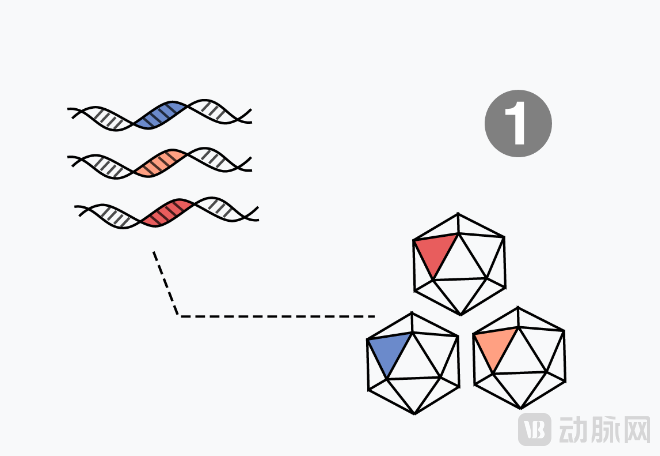
First, a DNA library encoding modified capsids was constructed: millions of capsid sequences were designed, then synthesized and assembled into a capsid library using DNA printers.
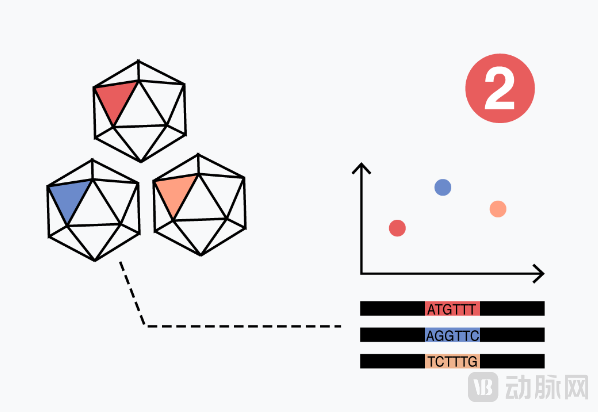
Secondly, further high-throughput measurements of capsid properties: Using next-generation high-throughput sequencing, capsids can be tracked via DNA barcodes, identifying individual capsid variants within a library. In mixed experiments involving millions of capsids, the platform can simultaneously measure multiple properties and metrics crucial to therapeutic success.
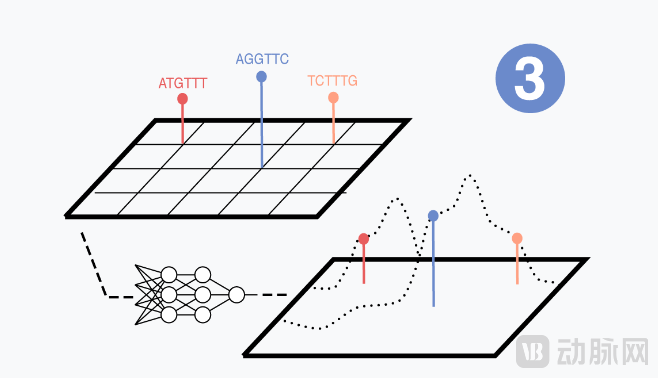
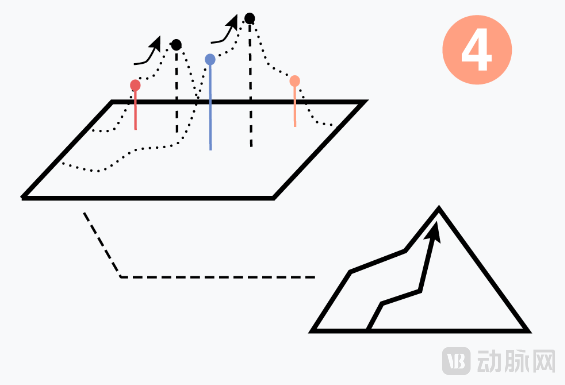
Furthermore, the Dyno team built and trained machine learning models based on the capsid functional space (fitness landscape) to predict the functionality of new sequences and construct the functional space of AAV capsids. With each new experiment, the understanding of the capsid functional space becomes more detailed. Consequently, the model is able to balance and search between exploration and optimization to find excellent improved capsids.
Professor George Church, co-founder of Dyno Therapeutics, once said, "Using the information generated from AAV capsid libraries, we are able to design capsids with more mutations than previous natural or synthetic variants, and the efficiency of producing active capsids far exceeds that of AAV capsids produced through random mutagenesis methods.” Moreover, capsids can be targeted to new organs and cell types to treat new diseases.”
It is reported that Dyno currently has two main in-development vector pipelines: the bCap1 vector for brain gene delivery and the eCap1 vector for ocular gene delivery. The Dyno bCap1 vector crosses the blood-brain barrier after intravenous injection, enabling safer, less invasive delivery at low doses to different cells throughout the CNS. The Dyno eCap1 vector effectively transduces all major cell types in NHP retinas via intravitreal injection, allowing for more efficient delivery of ocular gene therapies. Both have been validated through in vivo studies.
Based on the CapsidMap™ platform, Dyno Therapeutics has reached multiple R&D collaborations with several multinational corporations (MNCs) in various organ and related disease fields within 5 years:
In May 2020, Dyno launched the CapsidMap platform and announced partnerships with Novartis and Sarepta Therapeutics, a rare disease drug development company, which are expected to bringMore than 2 billion US dollars.Dyno Therapeutics will customize new AAV vectors for the experimental gene therapies of the two companies.The collaboration with Novartis mainly focuses on eye diseases; the collaboration with Sarepta mainly focuses on muscular diseases.
In 2021, Dyno Therapeutics, Inc. established a research and development collaboration with Astellas to develop next-generation AAV gene therapy vectors for skeletal and cardiac muscles.Total value of the partnership exceeds $1.6 billion.In 2020 and 2024 (this collaboration), Dyno Therapeutics collaborated with Roche twice.Total value of the partnership exceeds $2.8 billion.
At the same time, Dyno is also continuously expanding its platform construction and iterating models. When trained with appropriate, large, and diverse datasets, combined with sufficiently fast and versatile computational resources, sequence design algorithms become more powerful.In May this year, Dyno Therapeutics collaborated with NVIDIA to accelerate the advancement of biosequence design. This collaboration will leverage Dyno's leading artificial intelligence and in vivo experimental expertise, combined with NVIDIA's scalable AI-driven drug design platform, BioNeMo.
Dyno's reasoning and design pipeline relies on NVIDIA's accelerated computing. NVIDIA will support this collaboration through its cloud infrastructure, software, and the BioNeMo framework. This will enable Dyno to research and deploy advanced machine learning models for sequence design at higher speeds. Meanwhile, Dyno's machine learning scientists and engineers will collaborate with NVIDIA AI experts to expand, enhance, and optimize Dyno's AI-driven reasoning and search algorithms, providing services via NVIDIA NIM microservices and BioNeMo under NVIDIA AI Enterprise.
Founded in 2018, Dyno Therapeutics has been able to rapidly open global cooperation channels at such a fast pace. In addition to its robust platform and experimental data, its strong founding team also provided early endorsement.
In 2018, Professor George Church, a core member of Harvard University's Wyss Institute for Biologically Inspired Engineering, and his team, together with researchers from Sweden's Karolinska Institute and Lund University, jointly founded Dyno Therapeutics.
Professor George Church, founder of Dyno Therapeutics and member of the Scientific Advisory Board, is an academician of the three U.S. national academies, a leading figure in the "Human Genome Project," a pioneer in the fields of personal genomics, gene editing, and synthetic biology, a member of the first Academic Advisory Board of Alibaba's "Damo Academy," and a professor of genetics at Harvard Medical School.
Co-founder and CEO Dr. Eric Kelsic, a former postdoctoral researcher in Professor George Church's lab, holds a Ph.D. in Systems Biology from Harvard University and a Bachelor’s degree in Physics from the California Institute of Technology. While at the George Church lab, Dr. Eric Kelsic developed the foundational technology for Dyno Therapeutics' AI-driven capsid engineering platform. He not only successfully measured the first comprehensive functional space (fitness landscape) of AAV capsid proteins but also co-discovered the AAV MAAP (Membrane-Associated Accessory Protein) gene.
Behind Two R&D Collaborations Totaling Over $2.8 Billion Lies Roche's Persistence in the CNS Field.
In the direction of Alzheimer's disease, although Roche's two Aβ monoclonal antibody drugs, gantenerumab and crenezumab, showed unsatisfactory clinical performance and their development was terminated, there is still a bispecific antibody targeting Aβ/TfR, Trontinemab, under research, demonstrating the ability to cross the blood-brain barrier and impressive clinical data.
In contrast, Leqembi (Biogen, Eisai), an Aβ antibody treatment for Alzheimer's disease, received full FDA approval in 2023, becoming the first fully approved Alzheimer's drug by the FDA in 20 years. In July 2024, the second Aβ antibody, donanemab from Eli Lilly, also received FDA approval.
However, in the less-explored CNS field, there is still vast space for drug development and therapy research. Leqembi and donanemab have shown some ability to slow the progression of AD, but they cannot stop or reverse the disease’s course and are associated with side effects such as brain edema and hemorrhage.
The press release quoted Roche’s Head of Business Development, Boris L. Zaïtra, as saying: "We are committed to making significant progress in this area (CNS). Our previous collaboration with Dyno Therapeutics has given us great confidence to increase our investment in therapeutic gene delivery to support our portfolio of treatments for diseases of the nervous system."
In 2024, Roche demonstrated a high level of attention to gene therapy in the CNS field.In addition to this collaboration with Dyno exceeding $1 billion, in August, Genentech under Roche reached an agreement with Sangamo Therapeutics.Total value of nearly $2 billion in licensing agreements to develop gene therapies administered via intravenous infusion for the treatment of neurodegenerative diseases, including Alzheimer's disease.Layout of Alzheimer's Gene Therapy. At the same time, Genentech has obtained the rights to use Sangamo's AAV capsid STAC-BBB. This AAV capsid has demonstrated a strong ability to cross the blood-brain barrier (BBB) in non-human primate models.
Reference Materials:
VCBeat "Dyno Therapeutics Completes $100 Million Series A Financing, Artificial Intelligence Deepens Gene Therapy, Initiates the Journey of AAV Capsid Modification"
BioValley《Science: Optimizing AAV Capsids Using Machine-Guided Design Methods》