

Gilead Backs Appia Bio with Over $875M to Advance Allogeneic CAR-iNKT Therapy Capable of Producing 10,000 Doses from Single Donor

Kite Pharma
CAR-T Cell Immunotherapy R&D Provider
Appia Bio
Hematopoietic Stem Cell (HSC) Engineered Allogeneic Cell Therapy Developer

Gilead Sciences
Antiviral Drug Developer
In August 2021, Kite Pharma ("Kite"), a subsidiary of Gilead Sciences, and early-stage biotechnology company Appia Bio announced a collaboration and licensing agreement to develop hematopoietic stem cell (HSC)-derived cell therapies for the treatment of hematologic malignancies. The collaboration will leverage Appia Bio's "ACUA" allogeneic cell therapy technology platform to develop invariant natural killer T-cell (CAR-iNKT) therapies expressing chimeric antigen receptors.
According to the terms of the agreement, Appia Bio will be responsible for preclinical and early clinical studies of two HSC-derived CAR-iNKT candidate therapies using CARs provided by Kite. Appia Bio will receive an upfront payment, equity investment, additional milestone payments, and tiered royalties totaling up to $875 million. Kite will be responsible for subsequent development, manufacturing, and commercialization of the selected candidate products.
Kite, a pioneer in global CAR-T cell therapy, can to some extent reflect the future development trends of CAR-T cell therapy. Allogeneic CAR-T (also known as universal CAR-T) represents an important direction for the future of cell therapy.
Mass Production, Overcoming Preparation Pain Points
Appia Bio, a universal CAR-T therapy company highly favored by Kite Pharma, was founded in Los Angeles, California, in 2020. On May 11, 2021, local time, Appia Bio completed a $52 million Series A financing round, officially stepping out of stealth mode. The round was led by 8VC, with Dr. Francisco Gimenez, a partner at 8VC, and Dr. David Moskowitz, a principal at 8VC, joining the company’s board of directors. Additionally, Dr. David Baltimore, a Ph.D. from Caltech, was appointed as chairman of the board.
Appia Bio, co-founded by Nobel laureate and former Caltech president Dr. David Baltimore, includes Dr. Wang Pin, a professor of chemical engineering, materials science, and biomedical engineering at the University of Southern California (USC), and Dr. Lili Yang, an associate professor of microbiology, immunology, and molecular genetics at the University of California, Los Angeles (UCLA). Among them, Dr. Lili Yang brings key technology: how to harvest large quantities of iNKT cells from a single hematopoietic stem cell. As a result, Appia Bio can manufacture a large number of therapeutic cells from a single donor source to treat multiple patients.
When it comes to the development of universal CAR-T therapy, the limitations of existing autologous CAR-T therapies cannot be overlooked.
First, CAR-T therapy is expensive. For example, the cost of one treatment with Novartis' CAR-T cell therapy technology is $475,000, approximately RMB 3.3 million; in China, the retail price of Axicabtagene Ciloleucel Injection introduced by Fosun Kite Biotechnology Co., Ltd. is RMB 1.2 million per bag.
Although the cost of immune cell therapy is expected to decrease with more CAR-T drugs entering the market and standardized, large-scale production, personalized cell therapy products still require time-consuming manufacturing processes that rely on ex vivo gene transfer methods. After evaluating the patient's condition and completing peripheral blood extraction, subsequent steps include T-cell isolation, T-cell modification (transforming T cells into CAR-T cells), separation and expansion of CAR-T cells, reinfusion, and monitoring reactions. This complex manufacturing process leads to persistently high costs.
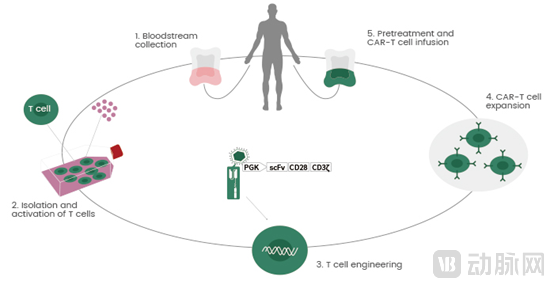
On the other hand, the current autologous CAR-T cell therapy is customized (using T cells from the patient's own blood), and it takes about 2-3 weeks from collecting the patient’s T cells to successfully preparing the CAR-T cells, which risks missing the optimal treatment period for patients. Therefore, researchers have started considering allogeneic CAR-T cells, also known as universal CAR-T (UCAR-T). The biggest advantage of universal CAR-T is that it can be prepared in advance and used promptly when needed by patients, significantly reducing both financial and time costs.
The advantage of universal CAR-T is that it allows the originally expensive customized product to be "mass-produced," thereby sharing costs, reducing prices, and shortening treatment time. Specifically, T cells are first obtained from healthy donors, genetically edited and modified, and then the finished product is preserved for a long term using liquid nitrogen or other means.
What sets Appia Bio apart is its utilization of iNKT cells starting from hematopoietic stem cells. Through the company’s ACUA (Appia Cells Used for Allogeneic) technology platform, it not only enables the production of large quantities of iNKT cells but also supports scalable, fully ex vivo manufacturing without the need for gene editing or purification steps. This platform provides potential support for the industrialization and commercialization of Appia Bio’s universal CAR-T therapy.
Expansion of iNKT Cells
As mentioned earlier, Dr. Lili Yang brought the core technology of Appia Bio, which is the expansion of iNKT cells.
iNKT (Invariant Natural Killer T cells) belong to the NKT (Natural Killer T cells) cell population, possessing characteristics of both T cells and NK cells (Natural Killer cells), which help bridge innate and adaptive immune responses. NKT cells were discovered in 1986 but did not receive much attention until recent years due to their unique properties.
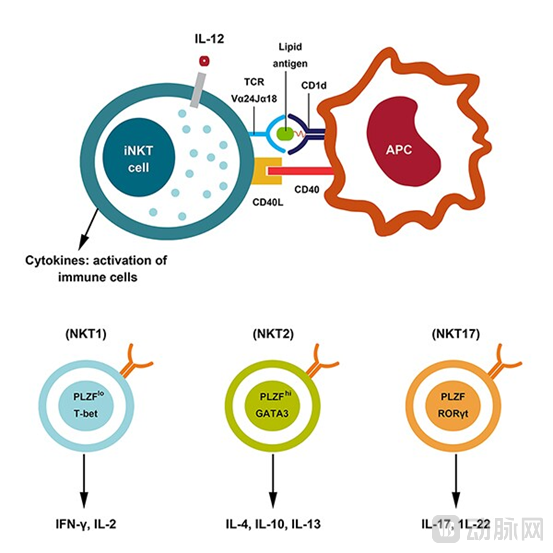
iNKT Cells are CD1d-Restricted T Lymphocytes That Utilize an Invariant T-Cell Receptor (TCR) α Chain and a Limited TCR β Chain Repertoire to Recognize Specific Lipid Antigens. Studies Have Found That They Respond Rapidly (Within Minutes) to Lipid Antigen Stimulation, Secreting Different Types of Cytokines Depending on the Stimulus. iNKT Cells Are Among the Earliest Cell Types to Respond to Pathogenic Stimuli, and Their Cytokine Production Helps Determine the Course of the Immune Response.
In addition, iNKT cells play a regulatory role in the anti-tumor immune process. Once activated, they can secrete cytokines to activate other immune cells involved in both innate and adaptive immunity. Moreover, due to their unique antigen recognition mechanism, iNKT cells do not induce graft-versus-host disease, making them a potential target for cancer immunotherapy in recent studies.
Like conventional T cells, iNKT cells develop in the thymus. In human peripheral blood, iNKT cells account for approximately 1% of circulating T cells, while in human adipose tissue, they can reach up to about 10-25%. In the human liver, iNKT cells are very rare, and non-invariant or diverse NKT (dNKT) cells dominate. As is the case in human adipose tissue, iNKT cells in mouse adipose tissue also account for approximately 10-25%.
Therefore, like traditional CAR-T therapy, isolating iNKT cells from patients to generate CAR-iNKT cell therapy poses significant challenges.
To this end, Dr. Lili Yang led her team in developing a new clinical guidance method aimed at designing more potent iNKT immune cells for universal cell-based cancer therapy. The relevant research findings were published in May 2024 in the journal Nature Biotechnology, under the title "Generation of allogeneic CAR-NKT cells from hematopoietic stem and progenitor cells using a clinically guided culture method".
Earlier, in 2021, shortly after the establishment of Appia Bio, Dr. Lili Yang's team announced a method to produce large quantities of iNKT cells using hematopoietic stem cells. However, as this preparation method required the use of three-dimensional thymic organoids and supporting cells, it posed challenges for production and regulatory processes, causing clinical application to stall temporarily. Now, with the publication of their paper, the team has unveiled a new technology that generates large amounts of iNKT cells from hematopoietic stem cells under feeder-free and serum-free conditions, eliminating concerns associated with the organoid-based approach in production and regulation.
The team isolated hematopoietic stem cells from 15 donated cord blood samples representing different genetic backgrounds. These cells can self-replicate and produce various blood cells and immune cells. It is estimated that a single cord blood donation can yield between 1,000 to 10,000 doses of therapeutic drugs, making it highly suitable for allogeneic cell therapy, an "off-the-shelf" immunotherapy. Subsequently, the team equipped iNKT cells with chimeric antigen receptors (CAR) so that the immune cells could recognize and kill specific types of cancer, targeting seven types of cancers including blood cancers and solid tumors.
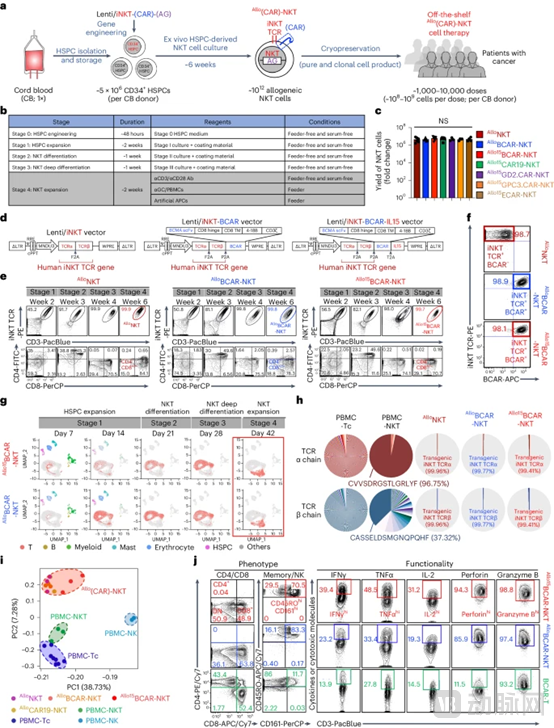
The paper pointed out that the resulting CAR-iNKT cells demonstrated potent antitumor efficacy against all seven cancers, suggesting their potential to treat a variety of cancers. Subsequently, in a multiple myeloma model, the team showcased the ability of CAR-iNKT cells to inhibit tumor growth without causing complications that may arise when donor cells are transplanted into patients.
The team believes that universal cell therapy based on iNKT cells is not only expected to become a means of cancer treatment but also an ideal one. The key point is that most existing cell therapies may cause graft-versus-host disease, while preclinical studies have shown that allogeneic CAR-iNKT cells do not appear to carry the risk of graft-versus-host disease for now. However, the paper also pointed out that the therapy must be designed and optimized according to the specific conditions of patients.
Teaming Up with Gilead, API-192 Makes Progress
Currently, Appia Bio, leveraging its ACUA technology platform and the lymphocyte developmental biology of chimeric antigen receptor (CAR) and T-cell receptor (TCR) gene engineering, generates CAR-iNKT cells from hematopoietic stem cells. According to existing research, the production volume of iNKT cells using hematopoietic stem cells can reach trillions, with over 99% of HSC-iNKT cells exhibiting a CD4-CD8+/- (CD8 SP/DN) phenotype, essentially excluding the CD4+CD8- (CD4 SP) population present in endogenous human iNKT cells. Multiple studies have reported that CD8 SP/DN human iNKT cells represent the iNKT subset with the strongest anti-tumor activity and are considered an ideal choice for cancer immunotherapy.
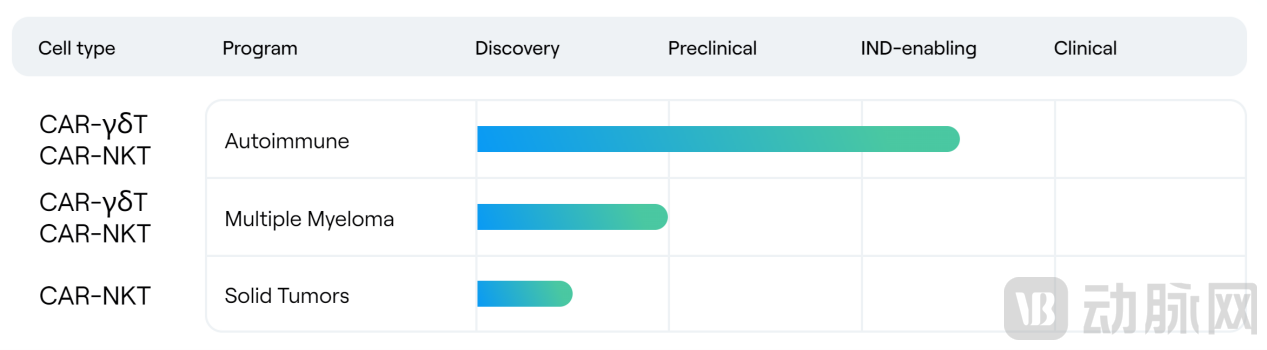
Appia Bio's pipeline under research targets indications including autoimmune diseases, multiple myeloma, and solid tumors, with the autoimmune disease-related pipeline currently at the most advanced stage.
Notably, in December 2023, Appia Bio presented data on API-192, the first candidate developed under a collaboration and licensing agreement with Kite Pharma, a subsidiary of Gilead Sciences, at the 65th American Society of Hematology Annual Meeting and Exposition. API-192, developed using Appia Bio's proprietary ACUA platform, is a first-in-class, off-the-shelf CAR-NKT cell therapy that expresses a dual chimeric antigen receptor (CAR) targeting two common B-cell antigens, CD19 and CD20, and incorporates soluble IL-15 to enhance expansion and persistence.
In addition, MiNK Therapeutics and Athenex both have iNKT therapy pipelines under development. Among them, Athenex once acquired Kuur Therapeutics, a company specializing in universal CAR-NKT cell immunotherapy. Kuur Therapeutics has three CAR-NKT products: KUR501, KUR502, and KUR503. The most advanced products, KUR501 and KUR502, have entered the clinical stage.
MiNK Therapeutics has a novel engineered iNKT cell therapy and bispecific iNKT cell engager platform, with a pipeline targeting tumors and autoimmune diseases. Indications include solid tumors, relapsed or refractory multiple myeloma, graft-versus-host disease (GvHD), and acute respiratory distress syndrome (ARDS) secondary to COVID-19.
Although some overseas companies have already laid out plans in the iNKT field, and research related to iNKT is encouraging, the overall iNKT industry is still in its early stages with relatively immature technology. In China, companies such as Hope Biotech and Xi'an International Medical have made moves in this area. Additionally, there has been no public announcement regarding pipeline developments for universal iNKT cell therapies.
As a universal CAR-T cell therapy from allogeneic sources, it still faces many issues such as immune rejection and insufficient in vivo expansion. So far, no universal CAR-T cell therapy product has been launched on the market. In China, companies with relatively rapid progress include Beigene Bio, Gracell Biotechnologies, Legend Biotech, and Maohang Bio. Therefore, whether universal CAR-iNKT therapy can become a standout among various universal cell therapies or achieve an early leapfrogging still awaits further clinical data.