Source: Heart Future;Editor: FeliciaReprint Requirements: If the source of the article is indicated at the beginning of the text, it can be reprinted directly.
Recently,Cardiovascular Hospital Affiliated to Xiamen UniversityDean Wang Yan led the team, working with Professor Nicolo Piazza and Professor Jean Buithieu from McGill University Health Centre in Canada, usingPeijia Medical (09996.HK)The English name of HighLife is HighLifeHighLife Transcatheter Mitral Valve Replacement System (Abbreviation: HighLife TSMVR)Successfully Completed One CaseTransfemoral Venous Atrial Septal Mitral Valve Replacement, CompletedSub-centerFirst Case Enrolled。This case involves a patient with severe functional mitral regurgitation, and the surgical procedure was successfully completed.The Looping process during the surgery took only about 13 minutes, with the total operation time being approximately 70 minutes., verifying the feasibility and ease of operation of the HighLife TSMVR product under multimodal imaging evaluation and standardized surgical procedure guidance.HighLife TSMVR in September 2022Passed the NMPA Special Approval for Innovative Medical Devices("Green Channel") is another product of Peijia Medical in the field of structural heart disease that has entered the special approval process for innovative medical devices, following the TaurusOne, TaurusElite, and TaurusNXT三代经导管主动脉瓣置换 products, and represents a strategic move into the realm of mitral valve interventional treatment.The HighLife TSMVR System isThe First in ChinaTransfemoral Venous Access for Transseptal Mitral Valve Replacement Systems Entering Clinical Trials, and in June 2024Obtained FDA Investigational Device Exemption (IDE) Approval in the United StatesMeanwhile, the interim data of the feasibility clinical trial disclosed at international conferences such as TCT and PCR confirmed that this technology is superior to existing treatment methods.May Achieve Less Invasive Mitral Valve Replacement。
Source: Cardiovascular Hospital Affiliated to Xiamen University (Case introduction sourced from "Outpatient" magazine)
# Patient Details
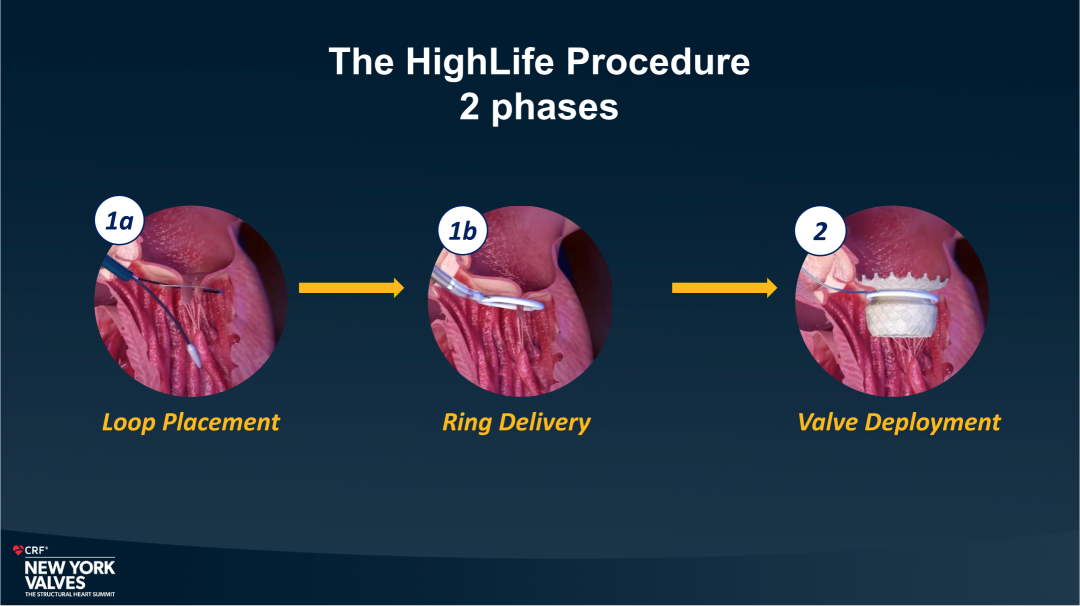
The patient is a 75-year-old male who experienced chest tightness, shortness of breath, and chest pain after coronary artery bypass grafting. Echocardiography suggested thatChinaSevere Mitral Regurgitation (MR 3+), Mild Tricuspid Regurgitation, The diagnosis is considered to beSevere Functional Mitral Regurgitation(Carpentier Type I).After multidisciplinary team discussion, it was considered that there were indications for mitral valve intervention.Not suitable for conventional surgical treatment, it was decided to use the HighLife TSMVR system from Peijia Medical.Transfemoral Venous Atrial Septal Mitral Valve Replacement。Through full-time-phase CT imaging, the anatomical structure characteristics and intraoperative projection positions of the patient were fully analyzed. Since the diameter of the mitral valve annulus was appropriate for this patient, it was estimated that there would be sufficient Neo-LVOT space and good cardiac chamber dimensions.Predict good apposition of the artificial valve with adjacent tissues and no risk of left ventricular outflow tract obstruction., soPlanned implantation of HighLife TSMVR standard model valve, and its anatomical puncture height is appropriate, allowing for puncture selection within the 30-35mm range during the procedure.The surgery mainly consists of two major steps.- The retrograde aortic approach utilizes a guidewire to form a loop around the native mitral valve, completing the implantation of the fixation ring along the guidewire track.
- Transseptal Pathway for Implanting Artificial Valves.
The surgery was performed via the left femoral artery access and right femoral vein access., First, the circular placement catheter is delivered to the estimated depth below the main valve via the femoral artery approach, and then pushed out at an appropriate angle under the guidance of multiple projection angles.Guidewire LoopingSteps. The operator meticulously manipulates and adjusts the guidewire direction multiple times.The guidewire successfully followed the anticipated path around the mitral valve leaflets., and the guidewire tip was advanced into the ascending aorta.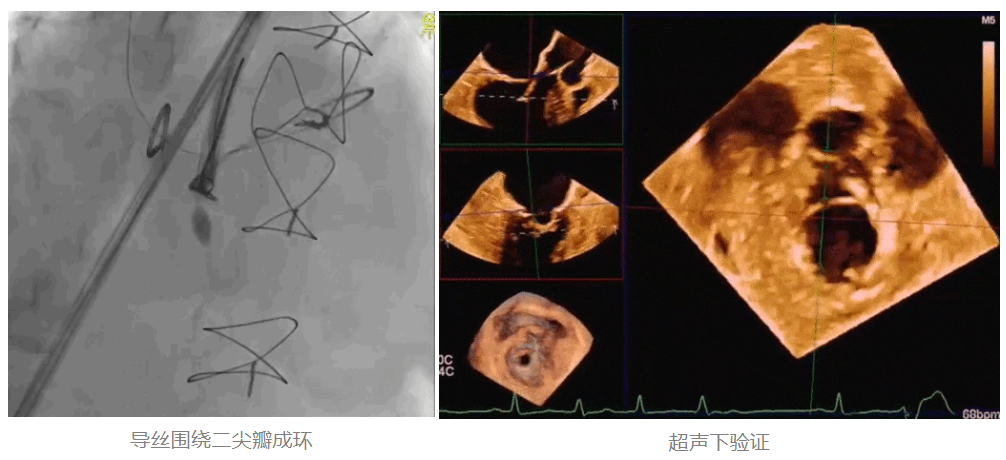
Subsequently, the guidewire was captured in the ascending aorta, and the guidewire loop track was fully verified under imaging. Finally, the distal end of the guidewire was externalized.Establishing the Important Track for Fixed-Ring Implantation. Subsequently, atrial septal puncture was performed smoothly under ultrasound guidance.Establish Transseptal Access. Then, a fixation ring was implanted below the mitral valve annulus along the guidewire loop, and its complete closure and appropriate position were confirmed by DSA and 3D ultrasound.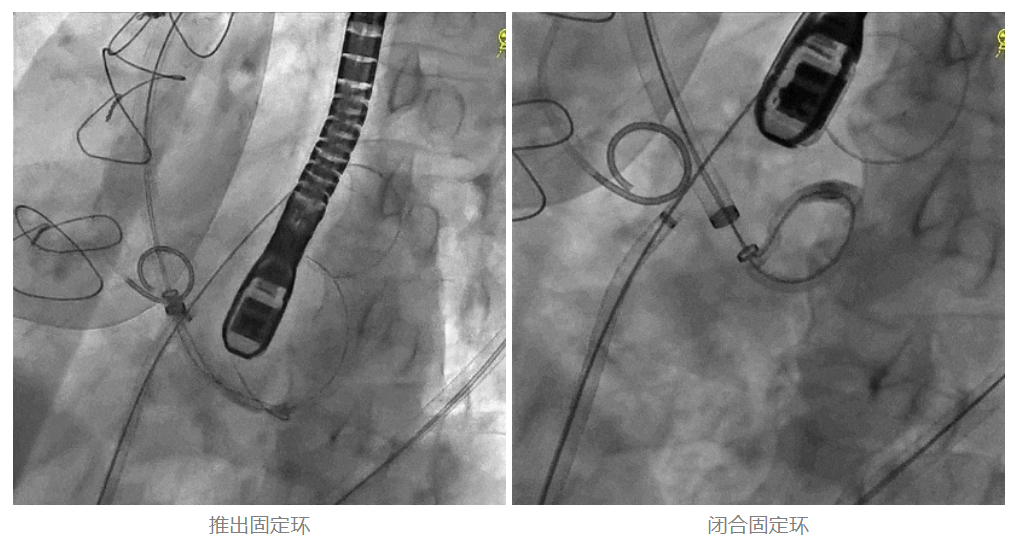
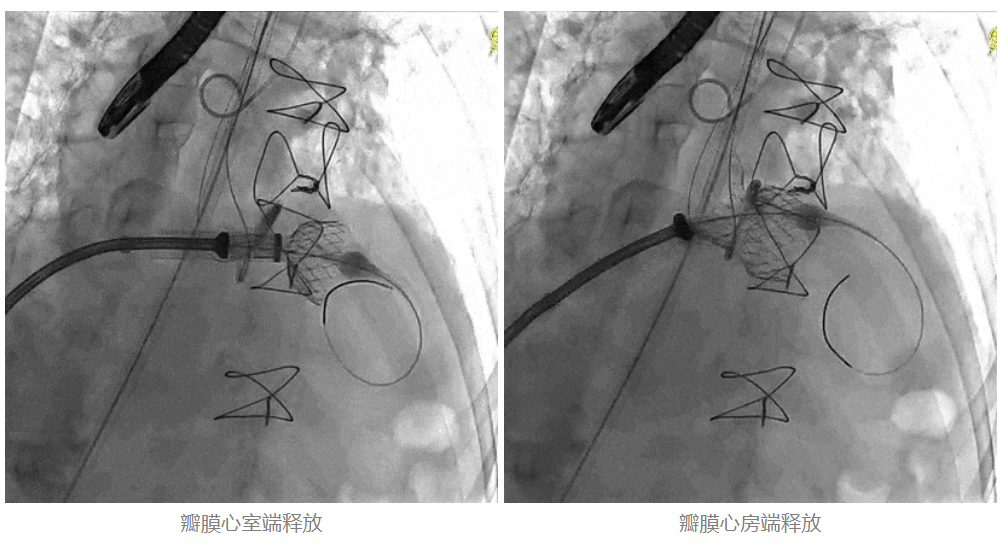
Insert the HighLife valve along the femoral vein., first release the ventricular end of the valve, then pull the delivery device, observe under ultrasound, ensuring the ventricular end of the valve fully adheres to the fixation ring, immediately maintain the tension and release the atrial end of the valve,Artificial valve dehooking, with the assistance of a fixation ring, completes self-coaxial alignment at the mitral valve annulus plane.Finally, the fixation ring delivery system and the artificial valve delivery system were gradually withdrawn.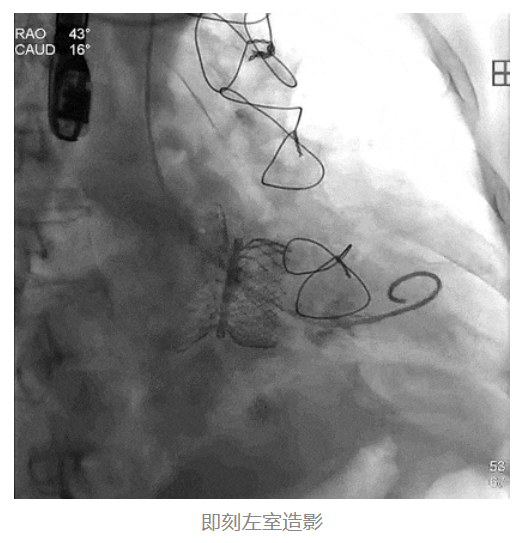
Immediate Ultrasound Assessment PromptComplete disappearance of mitral regurgitation, no paravalvular leakage,The artificial valve is implanted in an ideal position with good morphology. The LVOT blood flow spectrum is normal, and there is no risk of left ventricular outflow tract obstruction., the surgery was successfully completed.
# HighLife TSMVR System
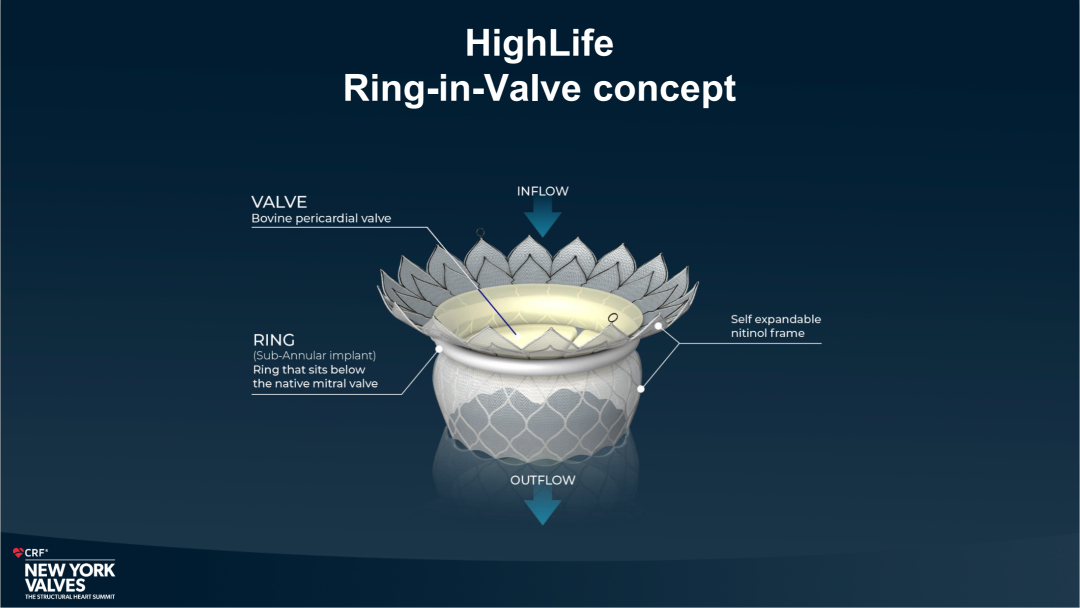
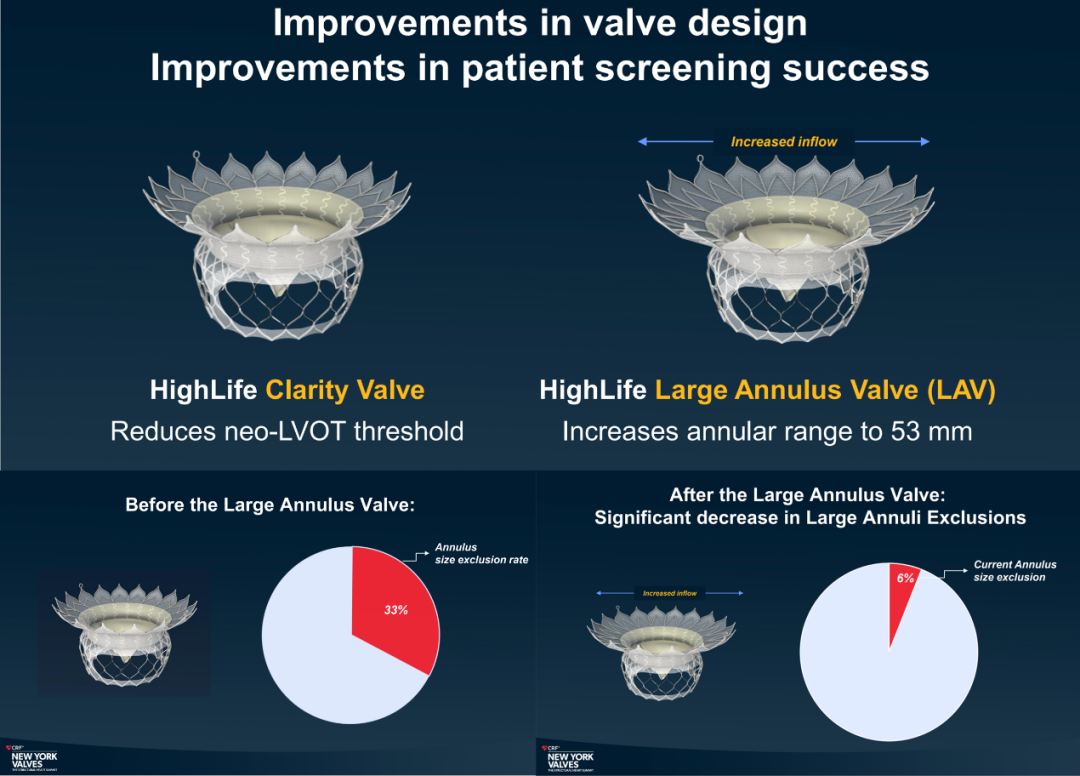
In December 2020, Peijia Medical announced that it would sign a licensing agreement with HighLife, a Paris-based medical device company focused on developing transcatheter mitral valve replacement (TMVR) systems for the treatment of patients with mitral regurgitation. According to this agreement,HighLife to Grant Puyi Medical Exclusive License for Its TMVR Patent Product Under Development,Peijia Medical has the right to manufacture, develop, and sell these products in Greater China., while HighLife has the right to collect prepaid license fees and subsequent milestone payments.HighLife TSMVR System Utilizes “Valve-in-Ring"The concept, ingeniouslyA circular structure is pre-placed around the mitral chordae tendineae via the transaortic approach as an anchor, followed by the implantation of a self-expanding bovine pericardial valve through the trans-femoral and trans-septal approach.。Through the mutual locking of two implants, an anchoring based on non-prosthetic radial support force is formed, which canAdapting to a wide range of anatomical structures with a single specification size, while avoiding damage to the native structure, effectively forming a seal and preventing paravalvular leakage.。During the HighLife TSMVR valve deployment, there is no need for rotational positioning or consideration of coaxiality.Self-adaptation and self-coaxial alignment can be achieved during the release process.Its delivery system through the atrial septum has an outer diameter of only 30Fr, effectively reducing the occurrence of related vascular complications. In addition,The surgical procedure is primarily guided by DSA imaging, with ultrasound as a supplementary tool, facilitating the widespread adoption of the technique.。HighLife TSMVR Device IterationOptimization One "Window Design": The HighLife Clarity valve adopts an "open-window design" at the outflow end, with perforations made in the original outer fabric covering to reduce obstruction to the LVOT and lower the risk of LVOT obstruction.
Optimization Two "Large Annulus":HighLife has added the Large Annulus Valve (LAV) large-sized valve without changing the main body and delivery system., the applicable range of the autologous annulus has been expanded from the original 45mm to 53mm, significantly reducing the failure rate caused by an oversized autologous mitral annulus diameter (from 33% to 6%).
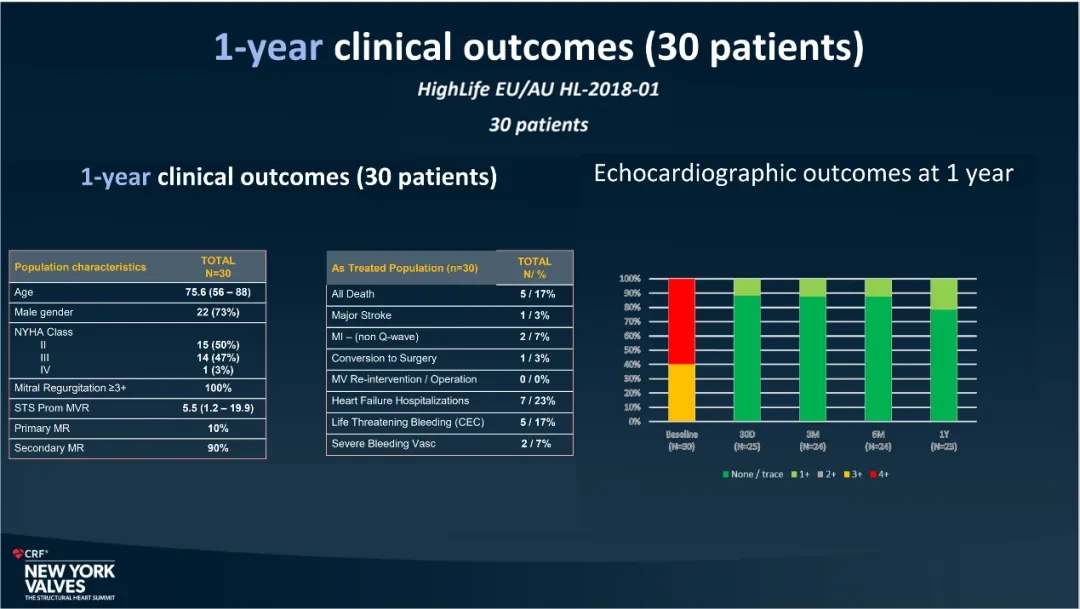
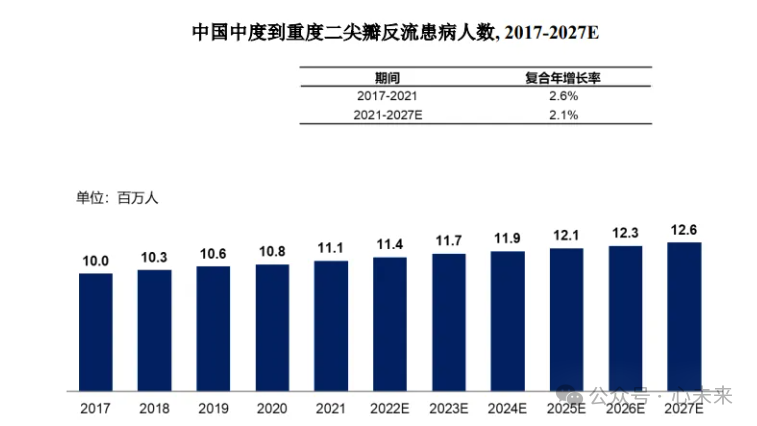
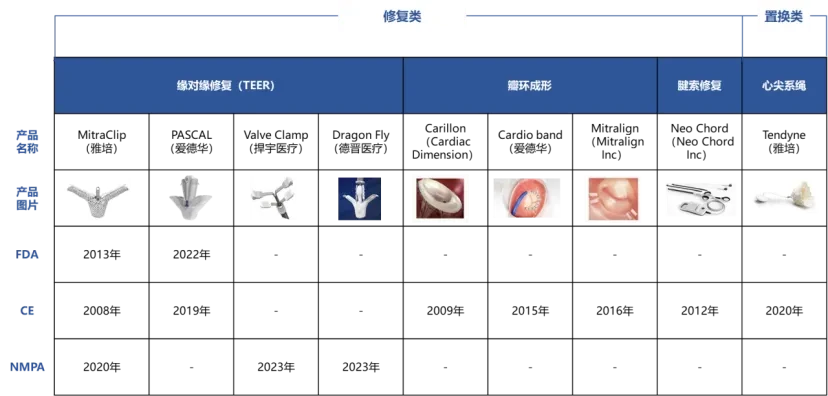
# Clinical Research ResultsHighLife TSMVR System Initiated Multi-Center Registration Clinical Trial in China in November 2022, with the First Case Enrolled by Professor Mao Chen's Team at West China Hospital, Sichuan University.All surgeries achieved excellent immediate outcomes, with a 100% success rate and no residual regurgitation.。HighLife TSMVRCurrently, the US EFS study has been launched globally., EU/AUSTRALIA Expanded Study, HighFLO Study, with over 30 centers actively participating,More than 110 patients benefited clinically from the use of HighLife Clarity and large-size valves.。Based on the clinical results of 30 cases from the HighLife TSMVR feasibility trial in Europe/Australia,HighLife TSMVR Achieved a 90% Technical Success Rate, the all-cause mortality rate of patients at 1 year post-operation was only 17%.All patients had mitral regurgitation reduced to mild or below, and no patient required reintervention for the mitral valve.During the 1-year follow-up period, approximately 80% of patients had mitral regurgitation graded as 0 to trace, while 20% of patients had mild regurgitation. Over 75% of patients maintained NYHA Class I/II at 1 year, and quality of life (based on KCCQ) also showed significant improvement at 1 year.This result indicates that,For high-risk surgical patients with moderate to severe and severe mitral regurgitation, HighLife achieved excellent technical success, reaching favorable primary safety endpoints and high efficacy endpoints.。# Mitral Regurgitation Market SizeIn the field of mitral regurgitation treatment, the first half of this yearTwo Chinese-Manufactured Mitral Valve Intervention Devices Commercially Launched, marking the competition between Chinese manufacturers and international giants in the high-end medical device market. However, facing the mature product MitraClip from the multinational company Abbott,Chinese-produced mitral valve products face challenges in market promotion and cultivating doctors' surgical habits.。In terms of price, domestically produced mitral valve products have obvious advantages.,For example, the price of捍宇医疗's products is about 40% lower than that of MitraClip, and德晋医疗's products are about 20% lower., which may prompt price competition in the market.In China, the prevalence of moderate to severe mitral regurgitation in the population aged 35 and above increased from 1.31% in 2017 to 1.37% in 2021.It is estimated that by 2027, the prevalence will increase to 1.42%.The number of patients with moderate to severe mitral regurgitation in China increased from 10 million in 2017 to 11.1 million in 2021, with a compound annual growth rate of 2.6% from 2017 to 2021. This patient population is expected to continue expanding.It is expected to reach 12.6 million people by 2027.,2The compound annual growth rate from 2021 to 2027 is 2.1%.。Surgical treatments for mitral regurgitation mainly include mitral valve repair and mitral valve replacement. In terms of the number of marketed products,Although the treatment pathways are abundant, the overall number of approvals is relatively low, with mitral valve repair being more mature.。Nine Mitral Valve Intervention Devices Approved Globally。In the field of transcatheter mitral valve edge-to-edge repair (TEER), Abbott's MitraClip is the only product to have received FDA/CE/NMPA triple certification. Edwards' PASCAL obtained CE and FDA approval in 2019 and 2022, respectively.In September and December 2023, HanYu MedicalValveClamp, Dejin MedicalDragonFlyTwo China-produced TEERs Approved for Marketing by NMPA, breaking the situation of China's market being monopolized by foreign capital.Compared with TEER, the development of related devices for annuloplasty and chordal repair is relatively slow, and there is also less evidence from evidence-based medicine.In the field of mitral valve replacement, currently only Abbott's transapical approach Tendyne has been approved for CE., becoming the world's first approved and marketed transcatheter mitral valve replacement device. ▲Globally Approved Mitral Valve Repair and Replacement ProductsDue to the complexity of the mitral valve structure and the high technical barriers,Transcatheter mitral valve replacement is difficult to develop,Currently, the vast majority are in the exploratory or early clinical exploration stage.,Abbott Tendyne was approved for CE marking and launched in early 2020.,Medtronic, Edwards, and others followed closely in pursuit of breakthroughs.Among the TMVR challengers in the Chinese market, the three TAVR giants启MicroPort Medical, HeartFlow Medical, Peijia MedicalMainly rely on strategic cooperation to layoutBy introducing foreign technologies through purchasing, agency, and other methods, a rapid track layout can be achieved in a short time. However, it is difficult to fully master core key technologies, and subsequent re-innovation capabilities may be insufficient.Currently, in the field of mitral valve replacement in China, a tripartite dominance has been formed byNuPulse Medical, Yixin Medical, and Zhenyi MedicalThe three companies correspond to three TMVR products: Mi-thos, MitraFix, and TruDelta.All three products have entered the registration clinical stage, with promising prospects.。Peijia MedicalFounded in 2012, with its headquarters located in Suzhou. Listed on the Main Board of the Hong Kong Stock Exchange in May 2020, stock code 9996.HK. CompanyFocus on innovation, research and development, and productionStructural Heart Disease and Cerebrovascular Intervention FieldsHigh-end medical devices,Covering aortic valve, mitral valve, tricuspid valve and surgical accessories, cerebrovascular interventional hemorrhage, ischemia, access productsThe company's three generations of aortic valve systems have all been approved as innovative medical devices by the National Medical Products Administration (NMPA) in China.Peijia Medical has established global innovation centers and R&D centers in the United States, Canada, France, and other countries to conduct cutting-edge technology research and product development. It has also built high-end medical device manufacturing (R&D) bases that meet GMP standards in Shanghai and Suzhou, China.The product has been deployed in thousands of hospitals.。
In August 2024, Peijia Medical released its interim report for the period ending in mid-2024.The company achieved operating revenue of 300 million RMB, representing a year-on-year increase of 33.9%. The transcatheter valve therapy business recorded sales revenue of 130 million RMB, marking a year-on-year growth of 21.0%.. As of now,The company's valve business has 7 approved products and 9 products under development., covering areas such as aortic valve regurgitation, long-lasting valves, polymeric valves, interventional non-implant shock wave therapy, and mitral and tricuspid valve replacement and repair.