Vanishing CEOs in AI Drug Discovery: Leadership Exodus Amid Clinical and Financial Pressures

Atomwise
Developer of Machine Learning Systems for Drug Research and Development

BenevolentAI
AI Drug Discovery Developer


If 2023 was the year of setbacks for AI drug pipelines, then 2024 can be called the year of CEO departures.
Atomwise recently discovered,Many CEOs of AI pharmaceutical companies at home and abroad have resigned this year, including Valo Health, Atomwise, BenevolentAI, Exscientia, and NeoX Bio, among other well-known companies in the industry.
In fact, as long as the company operates smoothly, replacing the CEO is usually not a big deal, but in the case of the aforementioned companies, many of them involve the departure of founders who are also CEOs.
They left for various reasons, some due to internal conflicts, some because of scandals, and others departed before the release of Phase II data from the core pipeline.
 Frequently Departing CEOs
Just in early October,AtomwiseAbraham Heifets, the founder and CEO of Atomwise, has reportedly left the company after leading it for over a decade. No successor has been announced.
Atomwise was founded in 2012 and isOne of the world's first biotechnology startups focused on artificial intelligenceAtomwise trained the convolutional neural network AtomNet based on a large amount of biological data related to molecular structure and function.
Convolutional neural networks were the hot technology at the time, enabling large-scale small molecule screening based on specific targets and propelling the company into the first tier of AI-driven drug discovery.
According to the Deep Pharma Intelligence report, during the period of 2020-2021, Atomwise topped the list with 17 major pharmaceutical enterprise cooperation orders. Well-known partners include Sanofi, Pfizer, Bayer, Eli Lilly, and also Hoshion Pharmaceutical in China.Drug达成合作。
Its founder, Abraham Heifets, graduated from Cornell University and obtained his Ph.D. from the University of Toronto. Heifets was once an expert in the fields of big data and high-performance computing and worked at IBM's T. J. Watson Research Center on high-performance computing.
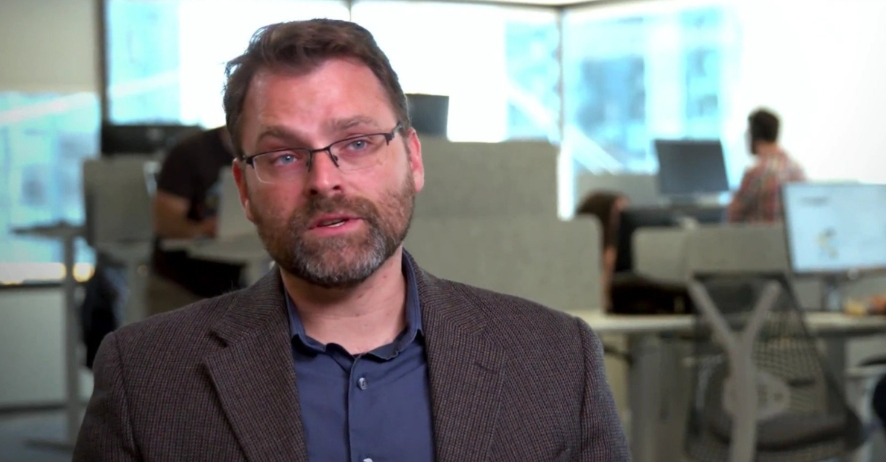
Fig.: Abraham Heifets
Abraham Heifets' departure had been anticipated.Previously, Atomwise was reported to be in an operational crisis, and the company laid off one-third of its employees due to business adjustments.
Atomwise's latest round of financing also remained in 2020.In August of the same year, it announced the completion of a $120 million Series B financing round, with investors including the Saudi Public Fund, BV Baidu Ventures, Tencent, Y Combinator, and others.
Coincidentally, just after the founder and CEO of Atomwise resigned, BenevolentAI, a UK-based AI pharmaceuticals listed companyBenevolentAI CEO Joerg Moeller Announces Departure After Just 9 Months in Role.
Joerg Moeller has many years of R&D and management experience in the pharmaceutical industry. He worked at Bayer for more than 20 years, serving as Executive Vice President, Head of Pharmaceutical Research and Development, and a member of the Pharmaceuticals Division Executive Committee.
At the beginning of the year, he joined BenevolentAI amid the company's transformation crisis.
Due to the failure of the core pipeline,BenevolentAI has initiated large-scale layoffs twice in the past yearIn May 2023, the company announced layoffs of 180 employees, accounting for 50%; in April this year, BenevolentAI cut another 30% of its workforce and closed its office in the United States.
It was reported that the new CEO from Bayer left office in less than a year due to internal company conflicts and other reasons.
At the same time, an AI pharmaceutical company incubated and supported by FlagshipValo Health, ahead of the release of critical Phase 2 clinical trial data,Continuous changes in the executive level.
The company's initial CEO was David Berry, a general partner at Flagship. After he left, he founded a venture capital fund called Bedford Bridge, and then the CFO took over as CEO.
This startup expects to obtain data from its Phase 2 Spectra trial for diabetic retinopathy by the end of the year, but unexpectedly lost two CEOs in succession this year.
Last year, a British AI pharmaceutical companyExscientiaAnnounced the termination of its founder and CEO, Dr. Andrew Hopkins, due to "inappropriate relationships" with two employees.
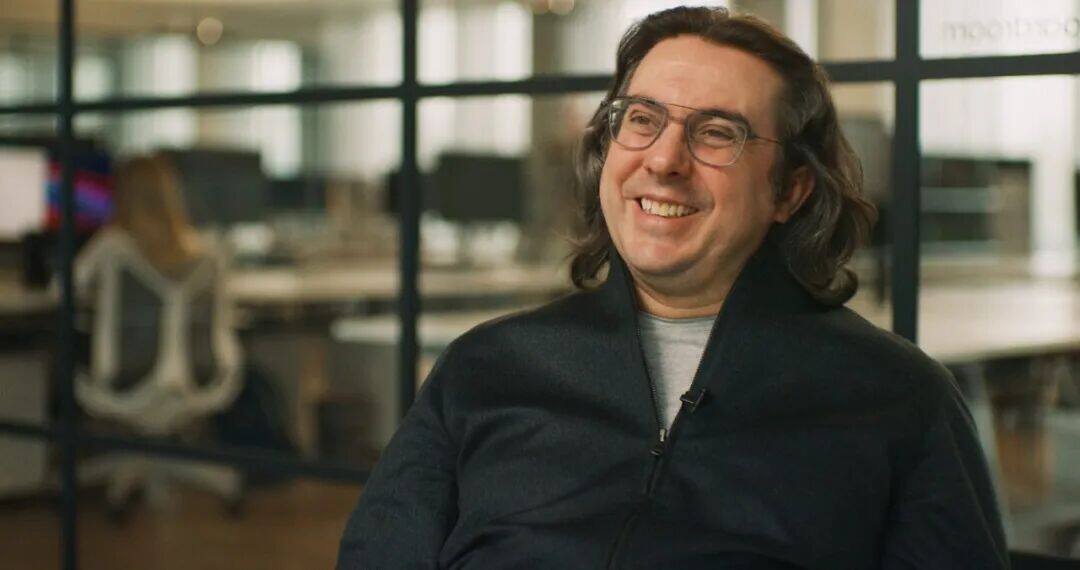
Fig.: Andrew Hopkins
But as the founder of Exscientia, HopkinsHas served as the company's CEO since its inception and is the soul of the company.Upon the announcement of the dismissal, the company's stock price plummeted 20% immediately.
 Three Major Deep-seated Problems to Be Solved
Many AI pharmaceutical companies in China have experienced changes in leadership.
It is reported that the founder and CEO of AI pharmaceutical company NeoX BiotechChen HangHas already stepped down from the main position. Chen Hang was once a Ph.D. in the chemistry department at MIT and conducted research work at the MIT Computational Immunology Laboratory.
According to the official website, Liu Fan, Ph.D. from Caltech, serves as the CEO of NeoX Biotech, a position currently held by the co-founder.
Previously, AI + large molecule drug research and development company Cornerstone Bio appointed Dr. Chi Ying as the company's Chief Executive Officer, while the former CEO, Zhang Yuan, will serve as the Chief Operating Officer, continuing to serve the company.
Another Chinese AI pharmaceutical company, SuiKun Intelligence, also announced that Dr. Jian Liu, a senior drug R&D scientist, has joined the company as CEO, while the whereabouts of the former CEO, HaiNian Zeng, remain unknown.
The management of a company is closely related to its positioning and stage of development. For example, in the early stages of a company's establishment, investors tend to favor teams with excellent technical skills. In the mid-to-late stages of a company’s development, the team must take responsibility for pipeline results and commercial progress.
For biotechs with shaky foundations, the turnover of senior personnel often signals that major events are about to occur within the company, especially when core founding team members leave.
Following the departure of Exscientia's founder and CEO, Dr. Andrew Hopkins, the company went a long time without finding an official successor before announcing its merger with Recursion.
BenevolentAI's stock price plummeted by 90% and has yet to recover due to pipeline setbacks and frequent departures of its CEOs, leading to business contraction and tight cash flow.
After more than a decade of development, the AI pharmaceutical industry is now facing a greater crisis than when it was flooded with hot money:
1. Drugs discovered by AI-driven methods are taking longer to enter clinical stages than initially expected.
2. The high investment in artificial intelligence research and development has left many AI companies facing a tight financial situation.
3. Finally, there is a discrepancy between the market's expectation for short-term returns and the intrinsic long-term nature of drug discovery.
The current pharmaceutical environment remains in a harsh winter, and AI pharmaceutical companies need to advance their pipelines, secure sufficient collaboration orders, or develop new businesses to generate self-sustaining revenue.
The replacement of a CEO in an enterprise may bring about a series of impacts, which involve the company's business strategy, governance structure, employee morale, investor confidence, and other aspects.
In fact, the departure of a CEO and the arrival of a new CEO are not always bad for a company.
After all, the emergence of new leaders often means the transformation of the company's business, responding to market challenges and seizing new opportunities, which helps to boost morale.
Of course, whether it is possible to lead the company out of the three major difficulties requires not only a leader with courage but also the joint efforts of the industry.