Novartis Receives IND Approval in China for First-in-Class Trispecific Antibody PIT565 Targeting CD3/CD2/CD19

Novartis
Drug Development and Manufacturing

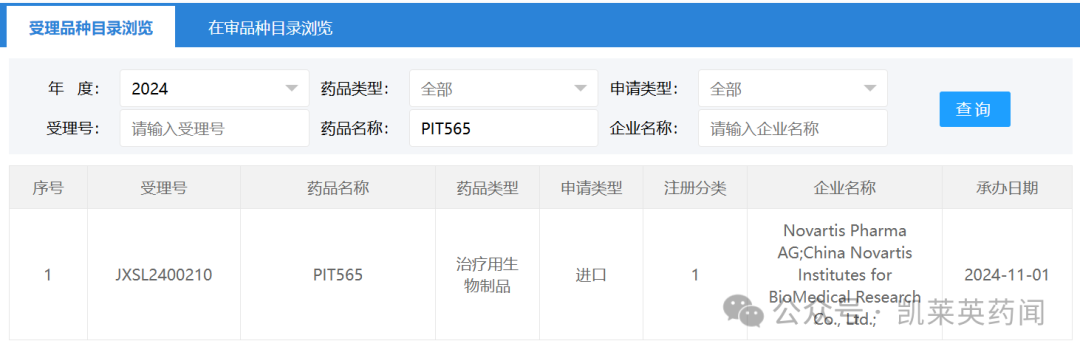
Today, according to the Center for Drug Evaluation of the NMPA, the IND application for Novartis' PIT565 injection has been accepted.PIT565 is a tri-specific antibody drug targeting CD3/CD2/CD19., with a potentially first-in-class mechanism of action, is currently being developed forIncluding B-cell acute lymphoblastic leukemia, B-cell lymphoma, systemic lupus erythematosus, and non-Hodgkin lymphoma.Including multiple indications.
About PIT565
PIT565 can simultaneously bind to CD19+ on tumor cells, CD3 (a TCR signaling component) on T cells, and CD2 (a co-stimulatory receptor), thereby redirecting the cytotoxicity of T cells toward CD19-positive malignant B cells.
CD2 signaling is associated with a non-exhausted T-cell phenotype. The interaction between CD2 and its ligand CD58 has been shown to be crucial for CD19 CAR-T cells to kill tumor cells, while the loss of CD58 expression on lymphoma cells is associated with resistance and relapse in patients treated with CD19 CAR-T therapy. Therefore, compared with CD3 bispecific antibodies, CD2 co-stimulation via PIT565 can overcome T-cell exhaustion and increase the depth and duration of patient responses.The study shows:
In the redirected T-cell cytotoxicity (RTCC) in vitro assay, which uses CD19+ tumor cells and primary T cells co-culture, PIT565 mediated more sustained T-cell activity in tumor cell killing and proliferation compared to the control bispecific product.
In a human peripheral blood mononuclear cell adoptive transfer model, PIT565 demonstrated superior performance compared to control bispecifics in an established diffuse large B-cell lymphoma tumor model.ProductA stronger anti-tumor response.
In safety and pharmacology studies, PIT565 demonstrated performance in cynomolgus monkeysExhibiting IgG-like pharmacokinetics and expected pharmacological and tolerability profiles similar to CD3 bispecific products.
Research Progress on Tri-Antibody Drugs
In recent years, immunotherapy for tumors has been one of the hottest topics in research. Trispecific antibodies, a type of monoclonal antibody engineered to simultaneously recognize three targets, are a promising class of anti-tumor drugs capable of eradicating tumor cells more accurately and effectively. Unlike bispecific antibodies, trispecific antibodies not only bind to target cell-related antigens and activating receptors on functional cells but also engage another target on the surface of functional cells, further activating these cells, prolonging their anti-cancer activity, and enhancing their tumor-fighting capabilities.
Typically, tri-specific antibodies are created using variable domain genes and have three antigen-binding sites. Unlike bispecific antibodies, which can only bridge immune cells, activate immune cells, or block dual signaling pathways, tri-specific antibodies offer broader applications. They can simultaneously bridge and activate immune cells or bridge immune cells while blocking dual signaling pathways. Among these functions, the mechanism of simultaneously bridging and activating immune cells is closely related to the human immune system and has a strong killing effect on target cells.
T cell activation relies on two signals, including the first signal and the second signal. After a tri-specific antibody binds to a tumor target antigen through one binding site, the second binding site on another binding arm can specifically bind to the TCR on T cells, thereby activating the first signaling pathway, guiding T cells to the vicinity of the target cells, and achieving the aggregation/localization of immune cells., while the third binding site on the binding arm can activate the second signaling pathway, further inducing the activation of immune cells.
So far, no tri-specific antibody has been approved for marketing,It is predicted that by 2028, the global market for trispecific antibodies will exceed 2 billion US dollars.
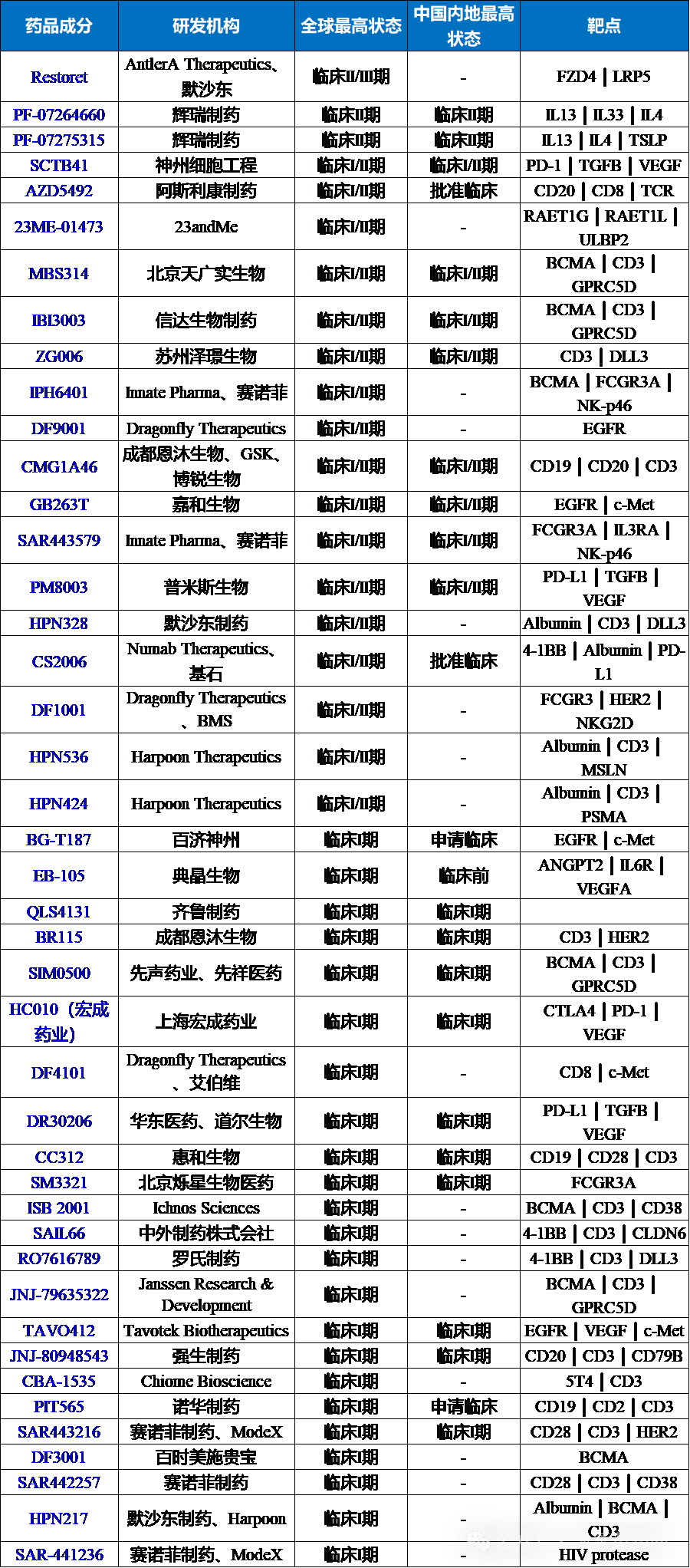
According to incomplete statistics, currently under research areMore than a hundred types of triple-target drugsIn addition to Novartis, multinational corporations (MNCs) such as Merck, Sanofi, Pfizer, BMS, AbbVie, and Johnson & Johnson have also developed multiple products through either in-house research or collaborative deals. Chinese companies such as CStone Pharmaceuticals, Promab, Eddingpharm Jiahe, Mune/Bioray, and Innovent are also making advances in this field.
Tri-specific antibody product in clinical stage
About Novartis' Layout in B-Cell Lymphoma
According to statistics, Novartis has laid out nearly forty products in the B-cell lymphoma field, covering small molecule inhibitors, monoclonal antibodies, bispecific antibodies, multi-specific antibodies targeting multiple pathways, as well as cell therapies, and more.
Novartis inRelevant Layout in the Field of B-cell Lymphoma

Scan the WeChat QR code to add the editor of the Antibody Circle.Those who meet the requirements can join the Antibody Circle WeChat group!