AbbVie's Q3 Immunology Blockbusters Skyrizi and Rinvoq Drive $4.8B Surge, Offsetting Humira Decline

AbbVie
Innovative Drug Developer

▲November 28-29, Beijing
Beijing Early Development and CMC Strategy Conference for Innovative DrugsClick for FreeRegistration
Note: This article does not constitute any investment opinions or recommendations; please refer to official/company announcements for accuracy. This article only provides an introduction to drugs related to healthcare and is not a recommendation of treatment plans (if involved), and does not represent the platform's position. Any article reprints require authorization.
According to the company's third-quarter filing, AbbVie is raising its profit outlook and full-year guidance for 2024 as revenue from its immunology blockbusters Skyrizi and Rinvoq exceeded quarterly expectations.
Global Skyrizi's net revenue was $3.2 billion, an increase of approximately 50% from last year, while Rinvoq's net revenue reached $1.6 billion, growing by about 45%. Thanks to these two blockbuster drugs, AbbVie raised its adjusted diluted earnings per share guidance for this year from a range of $10.67 to $10.87 to between $10.90 and $10.94, despite a decline in sales of its formerly best-selling drug Humira. Global net revenue for Humira this quarter was $2.2 billion, a decrease of approximately 37% year-over-year.
William Blair analysts wrote in a Wednesday report that Rinvoq and Skyrizi have filled the gap left by Humira, with sales of the two drugs exceeding their estimates by $185 million. AbbVie's quarterly revenue of $14.4 billion also surpassed the company’s previous guidance, consensus, and analyst estimates of $14.2 billion, which the Blair analysts attributed primarily to the strong performance of Rinvoq and Skyrizi.
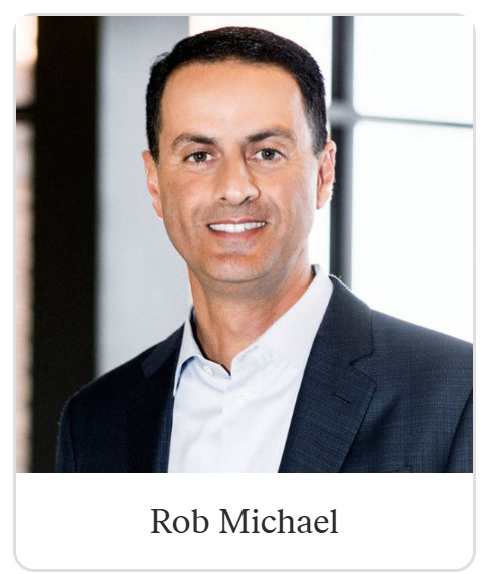
AbbVie CEO Rob Michael said on an investor call Wednesday morning that the trends seen in this latest document are "net positive, as we see Skyrizi and Rinvoq outperforming and offsetting the dynamics with Humira."
"We are beginning to see this dynamic across the entire Humira molecule, and what we're seeing now is a shift to other mechanisms, including Skyrizi and Rinvoq, which is a long-term, very positive benefit," Michael added. "Essentially, two years after Humira [loses exclusivity] in the U.S., we will return to strong revenue and profit growth and regain real performance across many parts of the business, not just Skyrizi and Rinvoq."
The company this year in its five key growth areas (Eye Care, Immunology, Oncology, Neuroscience, and Aesthetics) Executed by 15 transactions are part of the growth recovery, including a licensing agreement with FutureGen Biopharmaceutical for an anti-TL1A antibody for inflammatory bowel disease, and the $1.4 billion acquisition of early-stage neurology biotech Aliada Therapeutics.
Michael said on the investor call that the company would "focus more on early opportunities to drive growth over the next decade."
Michael said: "If we see a differentiated opportunity in large markets with unmet needs, such as metabolic agents, we would consider seizing it, especially if it can help drive growth over the next decade. But again, this would be more opportunistic. We have to see differentiation, and right now, that's not our primary focus."
Copyright statement: This article is reproduced from the Biopharmaceutical Era,Media or individuals who do not wish to be reproduced can contact us, and we will delete it immediately.