

Lupus Biologics Surge: GSK's Strategic Acquisition of Chimagen's Trispecific Antibody CMG1A46 to Reinforce Leadership in Autoimmunity

GSK
Pharmaceutical R&D Manufacturer

Chimagen Biosciences
Monoclonal Antibody Drug Developer and Manufacturer
The research and development of new drugs in the field of autoimmune diseases has become a key focus for companies both in China and internationally, with the potential market represented by systemic lupus erythematosus (SLE) being particularly significant.
Recently,GSK (GSK)Official Release`, which cooperates with China's innovative drug enterprises`Chimagen Biosciences(Chimagen Biosciences) reached an acquisition agreement regarding the trispecific antibody CMG1A46. Accordingly,GSK to Pay Chimagen Biosciences $300 Million Upfront for Full Global Rights to CMG1A46((Excluding Greater China)。Moreover,Chimagen BiosciencesStillWill be eligible for a total amount of$550 million CMG1A46 based on successful development and commercial milestone payments。
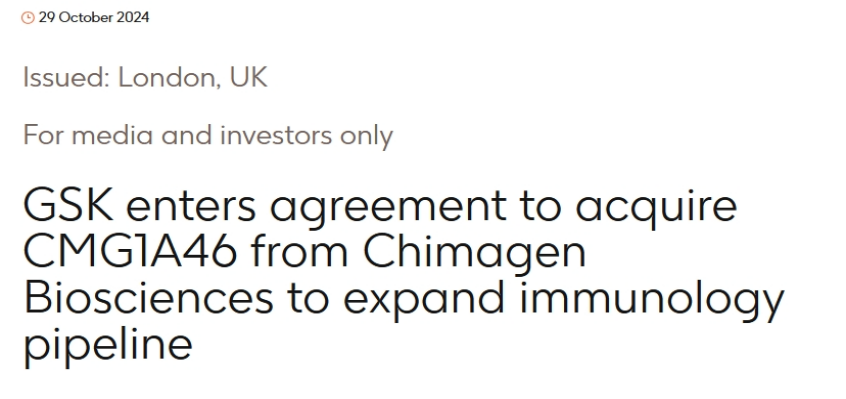 It is worth noting that,GSK Plans to Develop and Commercialize CMG1A46, Focusing on Systemic Lupus Erythematosus (SLE), Lupus Nephritis (LN), and Potentially Expanding to Other B Cell-Driven Autoimmune Diseases. As an SLE TreatmentAn old player in the field,PreviouslyGSK's BelimumabThe R&D achievements and commercial success obtained,Also allows the industry toCMG1A46FutureMarket PotentialFull of Expectations。
Industry insiders believe that GSK's heavy investment in acquiring the commercial rights to Chimagen Biosciences' CMG1A46 reflects its emphasis on the autoimmune market and the potential in the systemic lupus erythematosus treatment field, demonstrating GSK's determination to further expand its market advantage in niche areas. At the same time, the keen interest of numerous international biopharmaceutical companies in the autoimmune disease sector, along with the strategic positioning of various promising biologic agents, also indicates that competition within the autoimmune space will become increasingly intense.
Systemic Lupus Erythematosus (Systemic lupus eRythematosus, abbreviated as SLE, is a chronic, diffuse connective tissue disease primarily caused by abnormal activation of the immune system, which attacks the body's own tissues. The exact cause of this disease remains unclear but may be related to genetic factors, environmental influences, and estrogen. Long-term sun exposure...Sunburn, Specific drug use, Infection, andOral estrogen may induce or exacerbate symptoms of systemic lupus erythematosus. This disease is more prevalent in women of childbearing age, especially.In the age group of 10 to 40, the incidence rate in females is significantly higher than in males, approximately 9:1.
Currently, for patients with mild systemic lupus erythematosus (SLE) without significant visceral damage, non-steroidal drugs are used to control arthritis, and antimalarial drugs such as hydroxychloroquine and thalidomide are used to treat mild SLE. For patients with moderate active systemic lupus erythematosus, immunosuppressants and glucocorticoids, such as methotrexate and prednisone, can be individually administered. For severe systemic lupus erythematosus, high-dose glucocorticoids and intravenous immunoglobulin therapy can be applied, followed by maintenance treatment once the condition is alleviated. However, the limited control effects of traditional therapies and the potential side effects leave unmet needs in clinical treatment, providing room for innovation and application of biologics.
CMG1A46 is a 151 KD IgG-like "1:(1+1)" trispecific antibody developed by Chimagen Biosciences based on its TRIAD platform. It can simultaneously target the CD3 receptor on T cells and two different biomarkers on tumor cells, CD20 and CD19. By recruiting T cells, it kills tumor cells expressing CD19 and/or CD20, for the treatment of various drug-resistant and relapsed B-cell hematological malignancies. It is currently the world's first anti-CD3/CD19/CD20 trispecific antibody product to enter clinical trials.
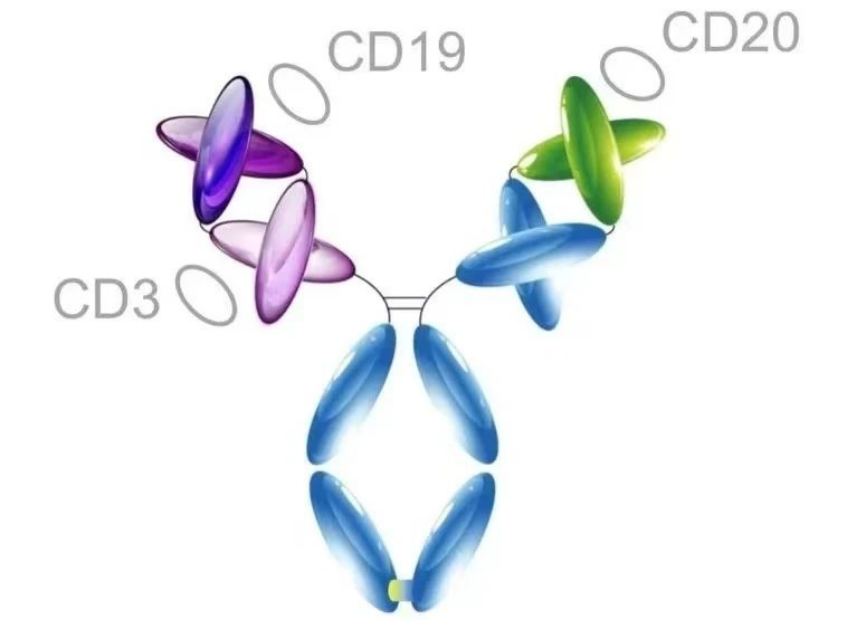
2022October, Chimagen BiosciencesOfficialAnnounced that its world's first targeted malignantPhase I Clinical Trial of T-Cell Mediated Tri-Specific Antibody CMG1A46 for B-Cell Hematological Malignancies Completes First Dosing in the United States. This study aims to evaluate the safety and preliminary efficacy of CMG1A46 in humans.
In December 2020, Chimagen Biosciences presented the preclinical study results of its anti-CD3/CD19/CD20 trispecific antibody CMG1A46 for non-Hodgkin lymphoma in an oral presentation at the American Society of Hematology (ASH) Annual Meeting. Experimental data showed that CMG1A46 demonstrated tumor cell lysis mediated by human PBMCs (peripheral blood mononuclear cells) in a dose-dependent manner. Compared with conventional "1:1" IgG-based CD3×CD20 bispecific antibodies, CMG1A46 exhibited enhanced potency and safety.
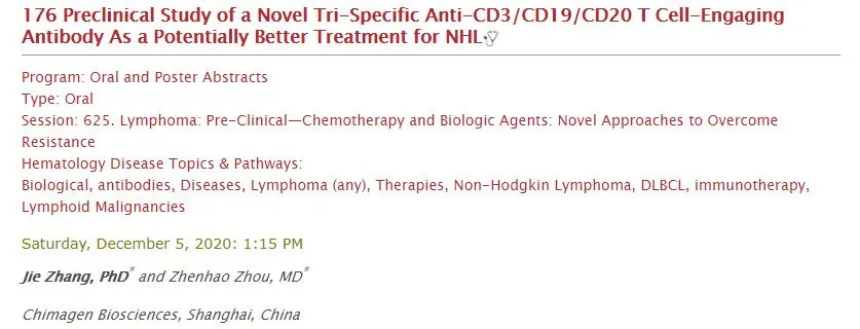
In vivo studies have shown that in a mouse model engrafted with human PBMCs, CMG1A46 demonstrated strong tumor suppression activity and induced rapid regression of CD19+/CD20+ lymphoma and CD19+/CD20- tumors. The dose of CMG1A46 used in this study was six times that of conventional CD3×CD20 bispecific antibodies (CMG1A46 at 3mg/kg versus the standard 0.5mg/kg), with higher anti-tumor efficacy and no significant increase in toxicity. It is reported that GSK plans to initiate a Phase I trial in lupus patients in 2025. If this phase demonstrates good safety and preliminary efficacy, it will lay a solid foundation for subsequent clinical trials.
Notably, even before GSK acquired Chimagen Biosciences' CMG1A46, the commercial value of this product had already drawn attention. On November 9, 2021, Chimagen Biosciences granted Borui Biosciences the rights for preclinical development and clinical registration, development, manufacturing, and commercialization of another tri-specific antibody, CMG6A19, within Greater China. As a result, Chimagen Biosciences will receive over 100 million RMB in total from Borui Biosciences, including upfront payments, research and development milestones, sales milestones, as well as royalties based on the sales of CMG6A19 within Greater China.
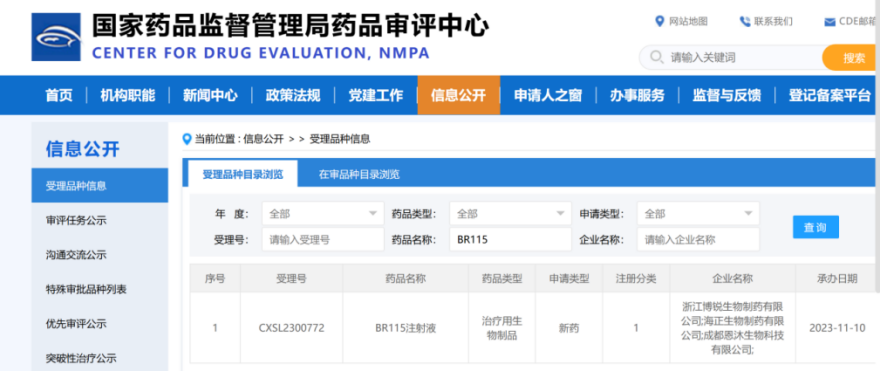
On January 18 this year, the Center for Drug Evaluation (CDE) of the National Medical Products Administration (NMPA) disclosed on its official website that the Class 1 new drug BR115 Injection, jointly submitted by Bright Biology and Chimagen Biosciences, had been approved for clinical trials. It is intended to be developed for the treatment of advanced malignant solid tumors. BR115 is the CMG6A19 from the collaboration between the two parties at that time.
In the field of SLE treatment, GSK has been strategically positioned early on and has enriched its pipeline by introducing external projects. However, in recent years, GSK's efforts to acquire projects through mergers and acquisitions in the autoimmune disease area have encountered multiple failures, with unsatisfactory outcomes. In October 2022, GSK announced the failure of its Phase III ContRAst-3 study for otilimab, a GM-CSF monoclonal antibody, in treating moderate to severe rheumatoid arthritis (RA), as it did not meet the primary endpoint. Consequently, GSK decided not to proceed with the regulatory submission. This outcome undoubtedly had a certain impact on GSK’s R&D pipeline in the field of autoimmune diseases.
The rise of Belimumab in the autoimmune drug market has evidently allowed GSK to see the dawn in niche sectors. As a humanized monoclonal antibody targeting BLyS, Belimumab was first approved by the FDA for marketing in March 2011 and gained approval to enter the Chinese market in July 2019. With global sales exceeding $600 million in 2018, it gradually grew into a "blockbuster" with global sales surpassing $1 billion, achieving an annual sales growth of over 20%, bringing substantial profits to GSK.
From the global perspective of pharmaceutical research and development, autoimmune diseases have always been a key and challenging area for scientific research. The pathogenesis of these diseases is complex and diverse, involving dysfunctions in multiple aspects of the immune system. There is an urgent need to develop targeted, highly effective, and safe therapeutic drugs. Large-molecule biologics are playing an increasingly important role in improving remission rates, reducing disease activity, lowering recurrence rates, and decreasing the use of hormones. Globally, it is not just...GSK,Novartis、Sanofietc.AlsoYesEnterprises in the field of autoimmune diseasesThe best among others。
Novartis has an extensive layout in the SLE field, such as Ianalumab (VAY736), which achieved positive results in Phase II clinical trials for the treatment of Sjögren's syndrome and SLE and is currently being tested in Phase III clinical trials. Additionally, Novartis' CAR-T therapy YTB323 has demonstrated potential in treating severe refractory autoimmune diseases, including SLE. This therapy showed a lasting reduction in SLE disease activity indicators during Phase I/II clinical trials, and Novartis is now preparing to initiate Phase IIb/III clinical trials to study treatments for severe refractory SLE and lupus nephritis patients.
Sanofi also has several drugs in development in the SLE field, among which some have achieved significant clinical progress, such as Dupixent (Dupilumab). Although Dupixent was not originally designed specifically for SLE, its success in treating type 2 inflammation-related diseases such as atopic dermatitis and asthma has provided Sanofi with valuable experience and confidence in SLE research and development. At the same time, Sanofi has other R&D initiatives targeting potential SLE therapies, with investigational drugs possibly reducing SLE inflammation and symptoms by inhibiting specific inflammatory pathways or cell signaling.
Chinese pharmaceutical companies are also highly active in the competition for biologic development in SLE, with companies like Hengrui Medicine, RemeGen, ConnoMed, and Zhirong JinTai deeply involved in the large-molecule drug sector, driving an innovation wave that is in full swing.
Telitacicept (RC18, trade name: Tai'ai®) is a globally first-in-class injectable recombinant B lymphocyte stimulator (BLyS)/a proliferation-inducing ligand (APRIL) dual-target novel fusion protein product independently developed by Rongchang Bio. Currently, Telitacicept was approved in China for the treatment of systemic lupus erythematosus (SLE) in March 2021 and was included in the National Reimbursement Drug List by the end of the same year. The other two indications for Telitacicept are rheumatoid arthritis and generalized myasthenia gravis; among them, the indication for rheumatoid arthritis was approved for marketing in July 2024, and the marketing application for the treatment of generalized myasthenia gravis was accepted by the CDE in October this year and has been included in the priority review and approval process.
SHR-2001, an antibody-cytokine fusion protein independently developed by Hengrui Medicine for subcutaneous injection in clinical use, is intended for the treatment of autoimmune diseases. On February 28, 2023, the IND application for SHR-2001 was accepted by the NMPA. On May 21, 2023, Hengrui Medicine announced that its subsidiary, Guangdong Hengrui Medicine Co., Ltd., had received the "Drug Clinical Trial Approval Notice" issued by the NMPA for injectable SHR-2001, approving the drug to proceed with clinical trials for the indication of systemic lupus erythematosus.
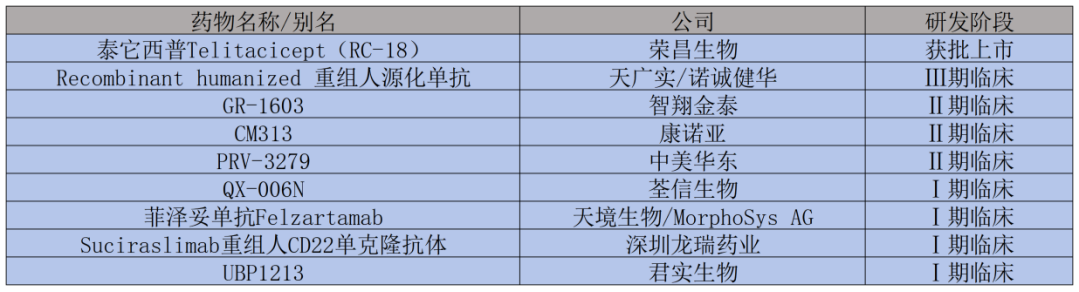
Industry analysis points out that, despite the fact that the treatment of SLE still faces many challenges, researchers are continuously striving to explore safer and more effective treatment methods in order to bring better prognosis and quality of life to patients. At the same time, significant progress has been made in the field of SLE treatment in recent years, which cannot be ignored. With the development of modern scientific research technology, researchers have gained a deeper understanding of the pathogenesis of SLE. Pharmaceutical companies in and outside of China also have broader and deeper investments in the SLE treatment area. In the future, more SLE treatment drugs will enter the market, leading to increasingly fierce competition.
Editor: Vanilla


www.yyjjb.com.cn
Insight into Industry Trends

"Pharmaceutical Economy Herald"
Academic Official Account
Focus on the Frontier of Oncology Academia

Terminal Official Account