

AbbVie Submits Epcoritamab, a CD3/CD20 Bispecific Antibody Developed Through $3.9B Genmab Collaboration, for Market Approval in China

AbbVie
Innovative Drug Developer
On November 6, 2024, according to the CDE website, AbbVie's CD3/CD20 bispecific antibody Epcoritamab (US trade name: Epkinly) was submitted for marketing authorization in China. This is a T-cell engaging bispecific antibody indicated for the treatment of adult patients with relapsed or refractory DLBCL, not otherwise specified (NOS), including DLBCL arising from indolent lymphoma and high-grade B-cell lymphoma, who have received at least two or more lines of systemic therapy.
Epcoritamab is a bispecific CD20-directed CD3 T-cell engager, created using Genmab's DuoBody® technology platform and jointly developed by Genmab and AbbVie. It is a clear to slightly opalescent, colorless to slightly yellow solution supplied in single-dose vials with dosage strengths of 4mg/0.8ml and 48mg/0.8ml for subcutaneous injection.
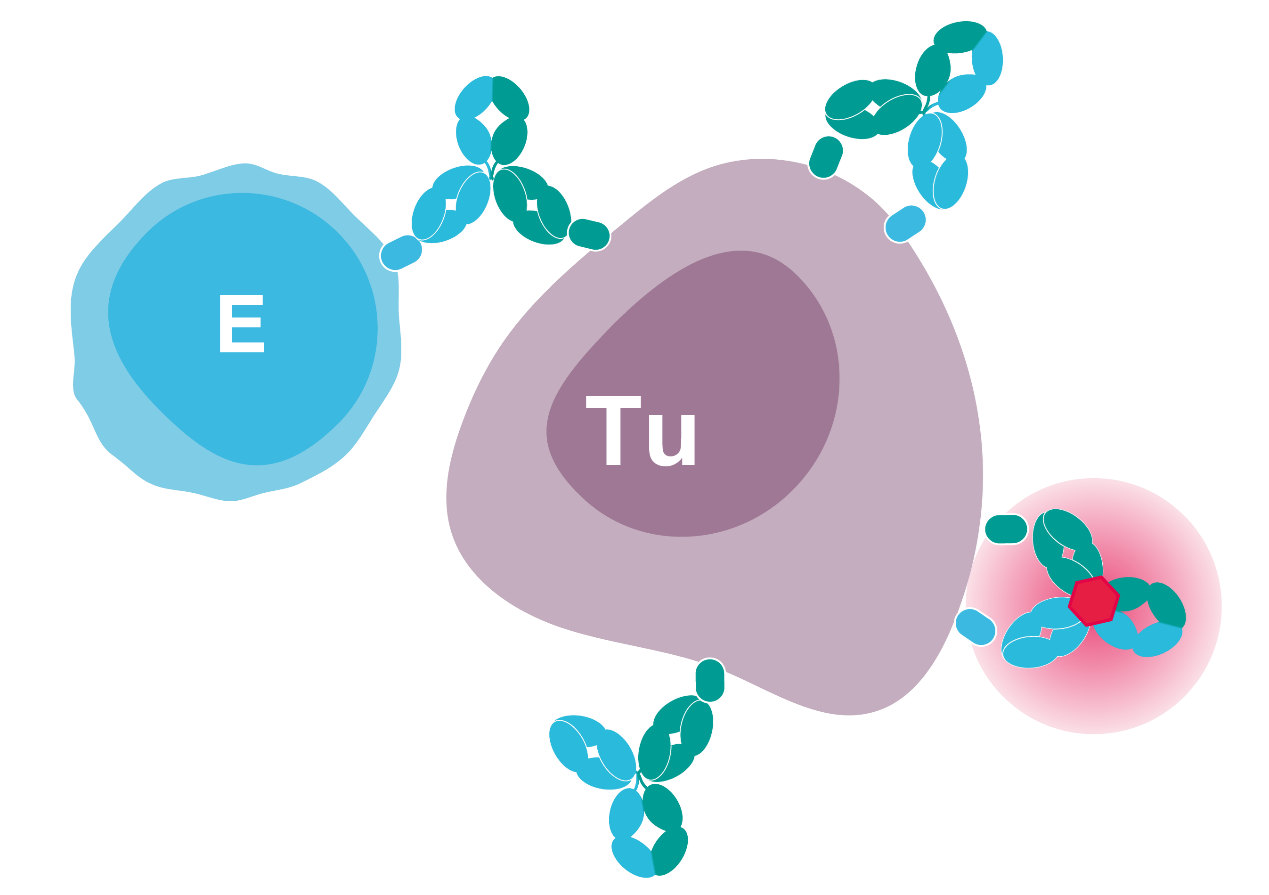
Among them, Genmab's DuoBody®The technology platform aims to specifically guide cytotoxic T cells and induce an immune response against specific types of target cells. The drug employs a dual-targeting strategy, simultaneously binding to the CD3 receptor expressed on the surface of T cells and CD20 expressed on the surface of lymphoma cells and healthy B cells.
$3.9 Billion Deal: License-Out Guru Partners with MNC
As of now, Genmab has achieved annual profits of several billion dollars through royalty shares from the sales of several blockbuster products ranked in the global top 100, primarily led by daratumumab. The number of such potential star monoclonal antibody molecules continues to grow. To date, eight therapies utilizing Genmab's innovative achievements have been approved, with approximately 20 products currently in clinical development.
Genmab is one of the pioneers of innovative drug license-out in Europe, having reached a collaboration with Amgen on the IL-15 antibody (AMG714) in the year the company was founded. After 25 years of development, Genmab's current representative technology platforms include DuoBody.®(Bispecific Antibody), HexaBody®(Six-Resistance), DuoHexaBody® and HexElect®. Each technology platform is built on the basis of natural antibody biology, aiming to harness the power of the human immune system to combat various diseases.
Thanks to this development model, it was only natural for Genmab and AbbVie to sign a collaborative development agreement. In 2020, AbbVie and Genmab reached a $3.9 billion collaboration to formally introduce the CD3/CD20 bispecific antibody drug epcoritamab, enhancing their pipeline competitiveness in the oncology sector. Under the agreement, AbbVie paid Genmab an upfront payment of $750 million, along with potential development, regulatory, and milestone payments totaling up to $3.15 billion. Genmab is entitled to receive 22-26% of the sales revenue from epcoritamab in markets outside the U.S. and Japan. Following the announcement of the collaboration, both companies' stock prices were on an upward trend.
What AbbVie is interested in is Genmab's unique bispecific antibody drug development platform — DuoBody.®, bispecific antibodies that can be produced rapidly, stably, and at scale.
It is known that human IgG (Immunoglobulin G) can be divided into four subtypes: IgG1, IgG2, IgG3, and IgG4, with IgG4 accounting for approximately 5% and possessing unique biological characteristics. Previously, Van der Neut Kolfschoten et al. demonstrated that IgG4 can dynamically undergo heavy chain exchange in vivo, also known as Fab-arm exchange (FAE), which may lead to the formation of half-antibody molecules or bispecific antibodies formed by two half-antibody molecules. In an in vitro environment, Fab-arm exchange can also be simulated by adding reducing agents such as GSH. Based on the naturally occurring phenomenon of Fab-arm exchange, the development of engineered bispecific antibodies holds promising potential.
And this is precisely the inspiration for the DuoBody® technology platform, which has been optimized to be relatively simple to operate: introducing the K409R and F405L mutation sites respectively in the Fc CH3 regions of two IgG1 antibodies, and then mixing the two target antibodies in a redox environment to complete Fab-arm exchange, forming a bispecific antibody.
The following are the specific steps:
Using animal recombinant cell lines, two IgG1 antibodies were produced separately, with the K409R and F405L mutation sites introduced respectively in the Fc CH3 region of the third constant domain of each antibody.
According to the standard methods for recovery and purification, process and produce IgG1 antibodies;
Under specific experimental conditions, the recombination of mixed-treated antibodies generates high-throughput IgG1 bispecific antibodies.
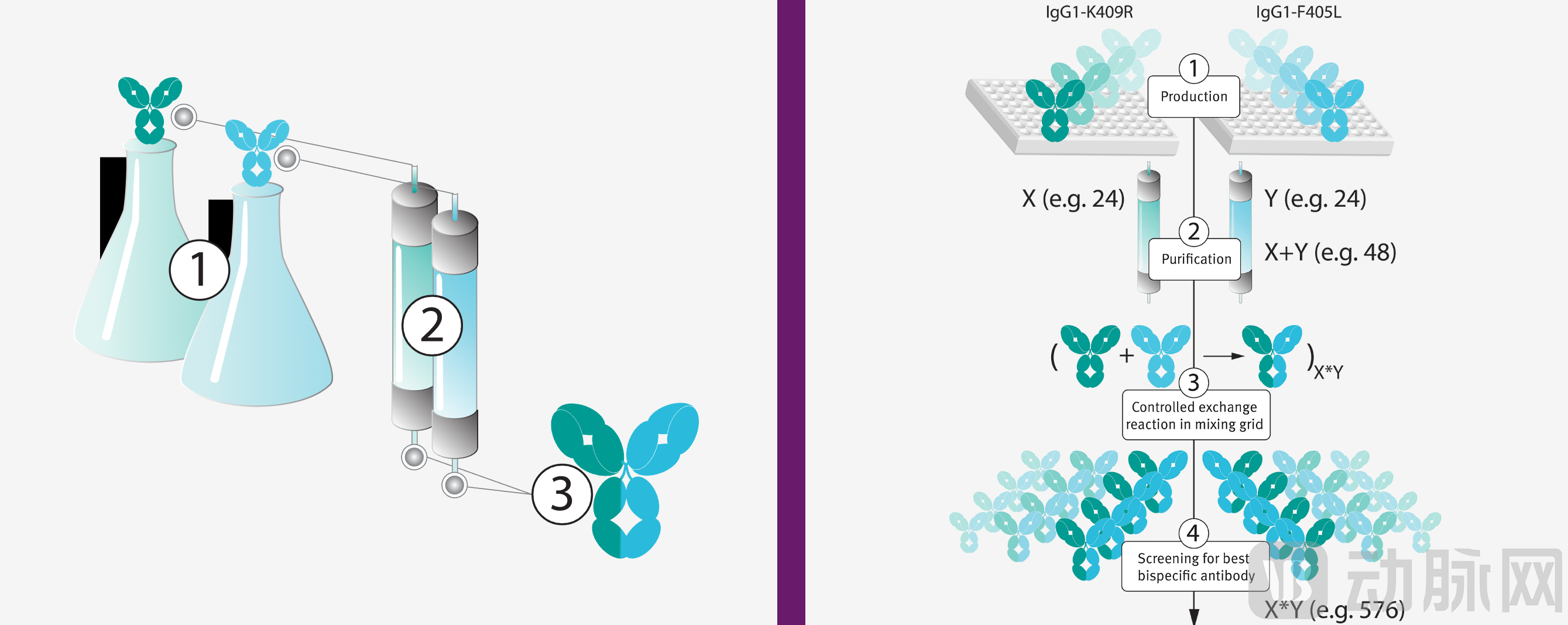
DuoBody Based on cFAE Principle®The advantages of the technology platform are already very clear. First, only one site of each antibody needs to be mutated, making the engineering simple; second, it retains the functions of the natural IgG1 Fc (ADCC, CDC effects, etc.), a half-life and pharmacokinetics similar to natural IgG1, as well as the original antigen binding sites, providing the same functionality as natural antibodies. Economically, pipeline products developed based on this platform are also suitable for large-scale production, with high purity and good stability.
As for Duobody®The technology platform itself can not only be used to prepare bispecific antibodies but also be applied to develop Fc fragment-based dual-targeting fusion proteins and other products.
FDA Approves First Bispecific Antibody Drug in DLBCL Field
Epcoritamab is precisely based on Duobody.®Technology platform development, its characteristics also showed up in the subsequent clinical trials.
In November 2022, AbbVie announced that the FDA had accepted the Biologics License Application (BLA) for Epkinly and granted it priority review for the treatment of adult patients with relapsed/refractory (R/R) large B-cell lymphoma (LBCL) who have received two or more lines of systemic therapy. Around the same period, the EMA also accepted the Marketing Authorization Application (MAA) for Epcoritamab for the treatment of adult patients with R/R diffuse large B-cell lymphoma (DLBCL, a major subtype of LBCL) who have received two or more lines of systemic therapy.
The regulatory application for Epcoritamab is based on the preliminary results from the large B-cell lymphoma (LBCL) expansion cohort of the previously published Phase 2 clinical trial, EPCORE NHL-1, for the treatment of relapsed/refractory B-cell non-Hodgkin lymphoma (B-NHL). This study cohort included 157 patients with relapsed/refractory LBCL, with a median of three prior lines of therapy. The overall response rate (ORR) was 63%, and the complete response rate (CR) was 39%. Baseline characteristics included: 61% of patients were refractory to initial therapy, 20% had previously undergone autologous stem cell transplantation (ASCT), and 39% had received CAR-T cell therapy (with 75% being refractory to CAR-T therapy).
In patients who had not previously received CAR-T cell therapy, the ORR was 69% and the CR was 42%; in patients who had previously received CAR-T cell therapy, the ORR was 54% and the CR was 34%. With a median follow-up of 10.7 months, the median duration of response (mDOR) was estimated to be 12 months; in patients who achieved CR, the mDOR has not yet been reached, and 89% of patients were still in CR at 9 months.
The safety of Epcoritamab is consistent with previous study findings. Most treatment-emergent adverse events (TEAEs) occurred within the first 12 weeks of treatment and have been resolved. The most common TEAEs of any grade (incidence ≥15%) included cytokine release syndrome (CRS, 49.7%), fever, fatigue, neutropenia, diarrhea, injection site reactions, nausea, and anemia. The most common Grade 3 or 4 TEAEs (≥5%) included neutropenia (14.6%), anemia, decreased neutrophil count, and thrombocytopenia. Grade 3 CRS was observed in 2.5%. No Grade 4/5 CRS was observed.
One year later, on May 19, 2023, AbbVie and Genmab jointly announced that the Biologics License Application (BLA) for Epcoritamab had been approved by the FDA for the treatment of relapsed or refractory diffuse large B-cell lymphoma (R/R DLBCL) patients who have received second-line or multiple systemic therapies. This is the first bispecific antibody product approved by the FDA for the DLBCL field and also the second CD3/CD20 bispecific antibody approved by the FDA.
This approval is based on the pivotal Phase I/II open-label EPCORE NHL-1 study. The research is divided into three parts: a dose-escalation study (Phase I), a dose-expansion study, and a dose-optimization study (Phase II), aiming to evaluate the preliminary efficacy and safety of Epcoritamab in treating patients with relapsed, progressive, or refractory NHL. The primary efficacy endpoint is the objective response rate (ORR). The dose-expansion portion of the study enrolled 148 patients with CD20+ DLBCL who had received a median of three prior lines of therapy. The overall response rate with Epkinly was 61%, with a complete response rate of 38%. In heavily pretreated patients with relapsed or refractory DLBCL, the median duration of response was 15.6 months.
In September of the same year, Epcoritamab was approved for marketing in Japan to treat follicular lymphoma, high-grade B-cell lymphoma, mediastinal large B-cell lymphoma, large B-cell lymphoma (third-line), and diffuse large B-cell lymphoma. In the same month, it also received approval from the EU EMA for the treatment of diffuse large B-cell lymphoma (third-line). By the end of 2023, Epkinly, which had been on the market for only six months, contributed $31 million in sales to AbbVie. According to AbbVie's financial report, in the first half of 2024, Epkinly’s global sales reached $63 million. With the expansion into new indications, it is expected that Epcoritamab will exceed $100 million in sales in 2024.
Lack of First-Mover Advantage, Differentiation to the Rescue
On September 19, 2024, the Drug Clinical Trial Registration and Information Disclosure Platform showed that AbbVie registered a Phase III clinical trial in China to evaluate the safety and efficacy of Epcoritamab + Rituximab and Lenalidomide compared with chemoimmunotherapy in previously untreated follicular lymphoma subjects.

Image source: VBInsight database
Previously, AbbVie and Genmab have initiated three Phase 3 clinical trials of Epcoritamab in China: Subcutaneous injection of Epcoritamab in combination with R-CHOP for the treatment of newly diagnosed diffuse large B-cell lymphoma (CTR20231626, EPCORE DLBCL-2), with the control group being R-CHOP (rituximab, cyclophosphamide, doxorubicin hydrochloride, vincristine, and prednisone); Epcoritamab for the treatment of patients with relapsed/refractory diffuse large B-cell lymphoma, with the control group being chemotherapy chosen by investigators (CTR20221558); Subcutaneous injection of Epcoritamab in combination with rituximab and lenalidomide for the treatment of relapsed or refractory follicular lymphoma (CTR20230864, EPCORE™ FL-1), with the control group being rituximab and lenalidomide (R2).
Currently, there are four CD3/CD20 bispecific antibodies approved globally, including Epcoritamab (Akceytamab), Mosunetuzumab (Roche/Biogen), Glofitamab (Roche), and Odronextamab (Regeneron). Among them, Mosunetuzumab was the first to be approved in June 2022. In China, only Roche's Glofitamab has been approved for marketing, indicated for the treatment of diffuse large B-cell lymphoma (third-line).
The clinical efficacy of CAR-T therapy has made CD20/CD3 bispecific antibodies a major focus for pharmaceutical giants in China and abroad in the field of hematological tumor bispecific antibodies.
Among them, Roche is the first company to launch a CD20/CD3 bispecific antibody drug in the market, both domestically and internationally. Close on its heels, Genmab/AbbVie has put significant effort into the product's mode of administration. The main difference between Epcoritamab and Roche’s two CD20/CD3 bispecific antibodies lies in the method of administration—Epcoritamab is administered via subcutaneous injection, offering greater clinical convenience. However, Roche is also developing a subcutaneous formulation of Lunsumio.
Local players are not lagging behind: CD20/CD3 bispecific antibodies from companies such as Genor Biopharma, Zhengda Tianqing, and Junshi Biosciences are all in the clinical stage. Competition in the CD20/CD3 field has become extremely intense. Latecomers need more compelling clinical data and a more differentiated advantage to carve out a path in this competitive landscape and pose a substantial challenge to products already on the market.