BMS Reports 72% Disease Control Rate with First-in-Class PRMT5 Inhibitor BMS-986504 in MTAP-Deleted Solid Tumors

Bristol-Myers Squibb
Biopharmaceutical and Nutritional Product R&D and Sales

Mirati Therapeutics
Developer of Novel Cancer Therapies

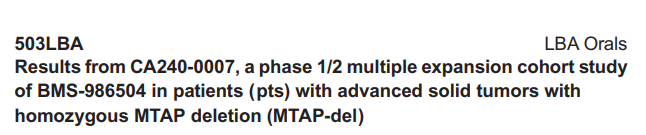
At the recently concluded 2024 Molecular Targets and Cancer Therapeutics Conference (AACR-NCI-EORTC), Mirati Therapeutics, a subsidiary of Bristol-Myers Squibb, announced BMS-986504.(MRTX1719) Clinical data from the first-in-human trial, which was selected as an LBA oral presentation at the conference.
Screenshot source: Official website of the conference
This is a study in homozygous MTAP-deleted (MTAP-del) patients with advanced solid tumors.I/IIResults of the multi-cohort expansion study, with endpoints of safety, pharmacokinetics, and clinical activity.
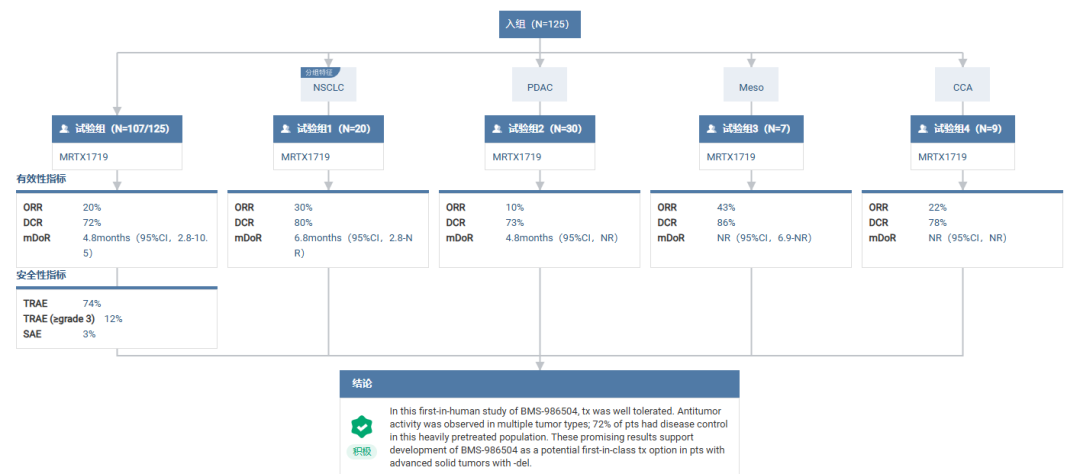
As of May 15, 2024, a total of 125 patients were enrolled (previous systemic treatments 1 - 9), including 36 patients with pancreatic ductal adenocarcinoma.(PDAC)Patient, 24 with non-small cell lung cancer(NSCLC)Patient, 10 Cases of Cholangiocarcinoma(CCA)Patient and 8 Cases of Mesothelioma(meso)Patient.
Median follow-up time 5.8 months(95% CI 4.2-7.6),Anti-tumor activity was observed in multiple dose groups, up to the 800 mg dose group. In 107 patients,Overall ORR was 19.6%(21/107), including patients with multiple types of tumors,ORR in NSCLC Patients is 30%(6/20)、The ORR in PDAC patients is 10%.(3/30),ORR was 42.9% in mesothelioma patients(3/7),CholangiocarcinomaThe ORR in patients was 22%.(2/9). The median response time for all patients was 4.2 months.
Screenshot source: Insight database
In all dose groups, 74% of patients experienced treatment-related adverse events (TRAEs), among which12% of patients experienced ≥Grade 3 TRAEs.The most common TRAEs (occurring in ≥10% of patients) included nausea, vomiting, fatigue, diarrhea, and decreased appetite.
Severe TRAEs occurred in 3% of patients, with 2% discontinuing treatment due to TRAEs.No patients discontinued treatment due to treatment-related myelosuppression.No treatment-related deaths were observed. Three patients experienced dose-limiting toxicity, with two in the 800 mg once-daily dose group (one with grade 2 seizure; one with grade 2 vomiting/fatigue), and one in the 400 mg twice-daily dose group (grade 2 rash).
The researchers concluded that BMS-986504 demonstrated good tolerability in the first-in-human study, with antitumor activity observed across multiple tumor types.In heavily pretreated populations, the disease control rate reached 72%.These promising results support the continued development of BMS-986504 as a potential first-in-class treatment for patients with MTAP-del advanced solid tumors.
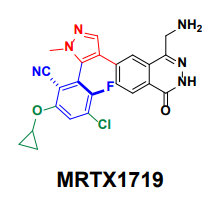
BMS-986504(MRTX1719)It was originally developed by Mirati Therapeutics, Inc. In 2023, Bristol-Myers Squibb acquired Mirati Therapeutics, Inc., bringing the drug under its ownership.
Screenshot source: Company official website
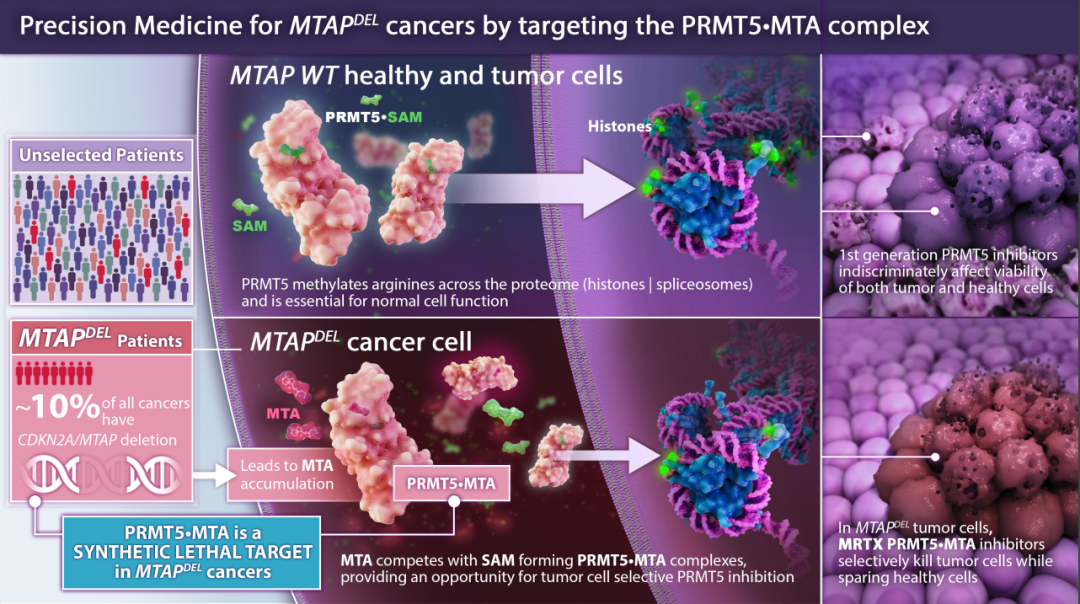
PRMT5, an arginine methyltransferase, participates in DNA repair, cell cycle, and transcriptional regulation through the methylation modification of substrate arginine, exerting a crucial influence on various cellular functions.
PRMT5 and MTAP(Methylthioadenosine phosphorylase)Constituting "synthetic lethality," the MTAP gene is adjacent to CDKN2A and is often deleted simultaneously with it. CDKN2A is the most frequently altered tumor suppressor gene in human cancers, and its deletion is associated with the development of various tumors.
Homozygous deletion of MTAP leads to the accumulation of its substrate, methylthioadenosine. (MTA)Accumulation, MTA competes with SAM, the cofactor of PRMT5, to form the PRMT5-MTA complex, which creates a novel specific target for MTAP-deficient tumors.
Screenshot source: Corporate official website
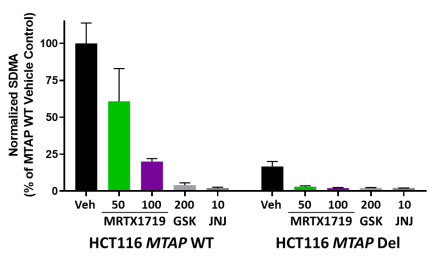
BMS-986504 is designed to specifically bindPRMTS-MTA Complex, without affecting the activity of PRMT5 in MTAP wild-type cells, thus achieving tumor selectivity.
Screenshot source: Company official website
Most PRMT5 inhibitors currently under clinical investigation do not bind to PRMTS-MTA and do not exhibit selectivity for MTAP-deficient tumors. Since PRMT5 is crucial for the survival of both cancer and normal cells, this may lead toThe Problem of Narrow Therapeutic Index。
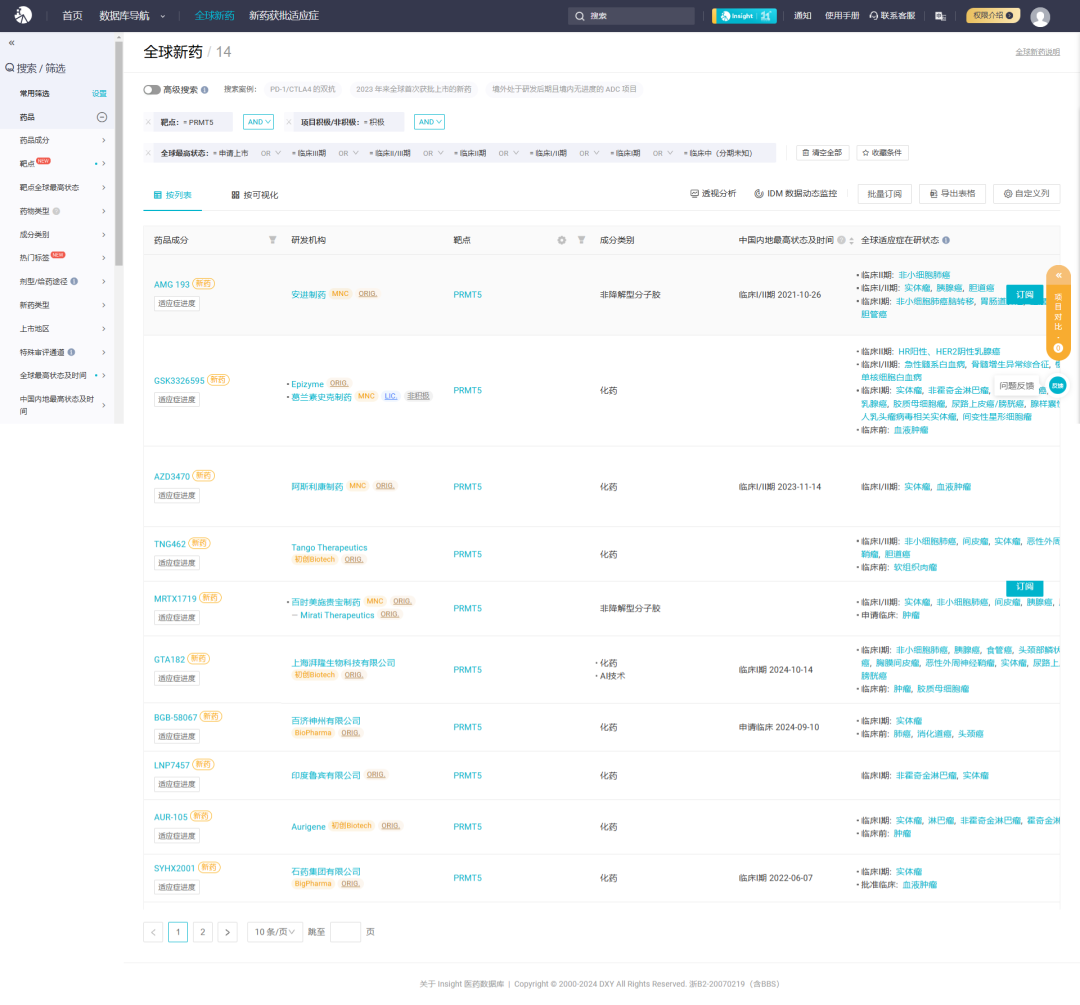
According to the Insight database, globally under researchA total of 14 PRMT5-targeted drugs have progressed to the clinical stage, but the most advanced have only entered Phase II clinical trials, with several multinational pharmaceutical companies in the first tier.
Screenshot source: Corporate official website
GlaxoSmithKlineGSK3326595 is a first-generation PRMT5 inhibitor that lacks selectivity for MTAP wild-type and deletion types.
Amgen's AMG 193Also withPRMT5-MTA Specific Binding, Preliminary Results Presented at the 2024 ESMO Conference Show Promise in Non-Small Cell Lung Cancer(N=11)、PDAC(N=16)、BTC(N=11)The ORR in18.2%、12.5%、18.2%No clinically significant bone marrow suppression signs, as observed with the first-generation PRMT5 inhibitors, were noted.
Tango Therapeutics' TNG462 also recently announced preliminary clinical data, with observations in 7 enrolled cholangiocarcinoma patients.Three patients achieved confirmed relief (ORR=43%)Four patients with bile duct cancer are still under treatment, with a median treatment time of 24 weeks and still increasing.
In addition,AstraZenecaAZD3470 is also a new generation PRMT5 inhibitor, which has progressed to Phase II clinical trials, and clinical result data has not been disclosed yet.