GSK CEO Emma Walmsley on Navigating the New Trump Administration, Rebuilding Trust, AI Transformation, and China Strategy

GSK
Pharmaceutical R&D Manufacturer

Following Trump's re-election as President of the United States, the global healthcare community has begun analyzing the potential impact on the pharmaceutical industry and public health policies. Particularly, Trump stated,Famous vaccine skepticRobert F Kennedy (RFK) may play a significant role in his administration, raising questions about the future of U.S. vaccine policy.Suspected。
Nevertheless, GSK CEO Emma Walmsley believes that,Her company can "constructively" cooperate with the incoming government.。“We have had a very successful collaboration with the Chinese government, including during the COVID-19 pandemic.", Walmsley told Endpoints News at the Financial Times Global Pharmaceutical and Biotechnology Summit in London."
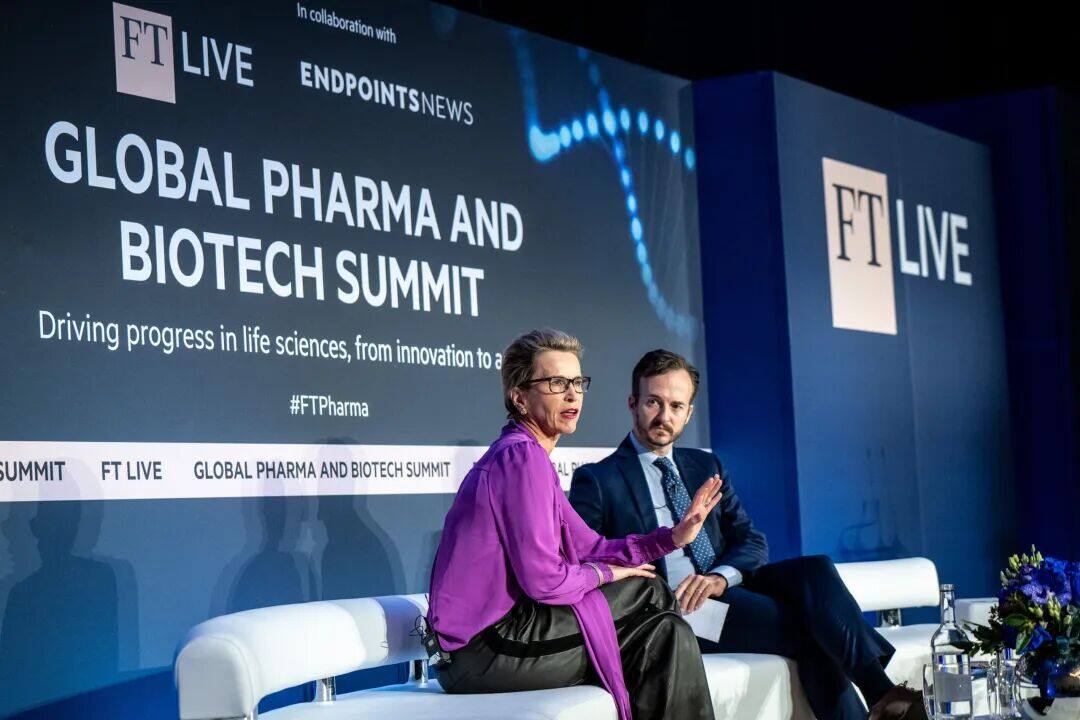
▲GSK CEO Emma Walmsley with Drew Armstrong of Endpoints at the Financial Times Global Pharmaceutical and Biotechnology Summit (Photo provided by the Financial Times)
Drew Armstrong:Your company is a major vaccine manufacturer that has just launched a new Respiratory Syncytial Virus (RSV) vaccine, and the incoming U.S. administration has ties to anti-vaccine sentiment. As the CEO, how will you address this situation?
Emma Walmsley:First, the United States is extremely important for GSK – we are a global company, but more than half of our business is in the U.S.
I have met President Trump a few times personally, both here and in the United States. We have worked very successfully with that administration, including during the pandemic of COVID-19. So when I look at GSK and the innovation that just keeps coming, I feel optimistic. That's going to be key to our constructive cooperation with governments. Other than clean water, there is no better healthcare invention than vaccines. Fundamentally, vaccines keep people out of hospitals, which is where you start to spend money.
Let's see who the government will appoint to what positions. I think elections are like pregnancy — everyone focuses their energy on D-Day (referring to Election Day or the decisive day). So we’ve already gone through the ‘delivery’ and ‘revealing the gender,’ but what really matters is the road ahead.
We have a good track record of practicing, so we will engage constructively. Making America healthy again is a very good idea. This is a country with an average life expectancy that is 4 years lower than the OECD average, and 30% of Americans have two chronic diseases. Do you know what costs the most money? We've been talking about drug pricing. What percentage of total U.S. healthcare spending do you think goes to drugs?
Drew Armstrong:I remember it was about 10%.
Emma Walmsley:Yes, it's 10%. What really matters and costs money is keeping people out of the hospital. So what should we do? We need to innovate, strive to find new solutions, and bring them to patients as soon as possible.
Drew Armstrong:I think one trend that people are very concerned about in the public health space is the decline in vaccination rates for children, which was happening even before the pandemic. Diseases like measles, which were largely eradicated in the U.S., have had outbreaks. We're starting to see this distrust of authority and skepticism of science really have an influence.
Emma Walmsley:All institutions, whether governmental, corporate, or global, are experiencing a decline in trust. In the healthcare sector, this decline in trust is particularly sensitive. At the heart of our industry's trust issues lies a fundamental argument about human rights in healthcare and a profound misunderstanding of the pharmaceutical business model.
I think 50% of new parents in the United States have been exposed to anti-vaccine information online. As far as I know, vaccination rates in 38 states of the U.S. are lower than they were in 2019. This is serious because part of our portfolio is infectious disease vaccines, but none of us want to face widespread deaths from diseases for which we have simple, safe solutions.
So what should we do? The primary thing is transparency: honest communication about the facts among adults. The issue of vaccines is more pointed because you're injecting healthy people, usually infants — parents will have a lot of questions. I asked a lot of questions when I took my children for vaccinations too. Of course, there are also new technologies, including our RSV vaccine for the elderly. So you must be absolutely transparent. All the data show that the benefits and risks of vaccines are reasonable.
"You can't just shout 'believe us.' You need to put the facts out there, and I hope science and truth will prevail."
Drew Armstrong:We have spent a lot of time focusing on the relationship between the United States and China, and its impact on the pharmaceuticals industry. There doesn’t seem to be much division between Republicans and Democrats on the issue of decoupling from China. What are the consequences if we continue down this path?
Emma Walmsley:We are carefully preparing for this reality, including continuing to seize the real opportunities in China, both substantial growth opportunities and exciting sources of innovation. The largest market in the world and the leading market for innovation remains the United States. But I have had the opportunity to run businesses in China and have lived there. The transformation that China has gone through is absolutely extraordinary.
Clearly, the macroeconomic pressures currently faced by China are real and may persist for some time. However, our industry is a long-term one, and China is a country that plans for the future.
From an operational perspective, our business in China is experiencing good growth. Just considering the market size, I am optimistic about its potential contributions. In terms of the supply chain, we have also taken this opportunity to readjust our global manufacturing layout, and frankly, this has allowed us to gain more regional flexibility in the process. Regarding biosecurity, we are quite well-protected.
But it's also a huge source of innovation and business development for us. Last week, we announced the introduction of a very exciting lupus immunology asset from China. In the antibody-drug conjugates (ADCs) field, we acquired two assets from China's Hansoh Pharma.
But if you don't pay attention to geopolitics, you may not be able to lead in any industry or company. We are ready.
Drew Armstrong:I want to ask you a question about artificial intelligence (AI), but I hope this is not a question you've already answered before. Everyone agrees that AI will bring tremendous disruption and enhance productivity. However, for those engaged in business and administrative work, we might experience an industrial revolution similar to the transformation of the industrial base during the 1970s and 80s. As a result, our labor force and political landscape will undergo significant changes 10 or 20 years from now. What are your thoughts on this?
Emma Walmsley:I am incredibly excited and ambitious about this, but at the same time, I remain realistic and pragmatic. I may be somewhat biased in this regard because I am a member of Microsoft's board of directors, so I can look at this issue from another perspective.
Imagine if you could use your mobile phone to find a doctor anytime, anywhere, to provide services for people—how would that transform the delivery of healthcare? I’ve attended global health conferences where discussions revolved around how artificial intelligence could dramatically improve the efficiency of doctors. We also talked about drug pricing in Africa—one of the biggest challenges is whether the healthcare system can deliver medicines to patients. So, I believe there will be a significant transformation in the way healthcare is delivered.
It's interesting how that will impact medical school education, because the physician who uses AI will replace the one who doesn't. But I think it's like every industry, every board is talking about how AI is going to change productivity and we're no different. We're looking at it across our value chain, whether that's in our manufacturing, our forecasting, our logistics, our compliance reviews, or how we train and develop our people.
I am pretty confident that the biggest change in our industry is going to be R&D productivity. Drug pricing has to cover the cost of failures - 90 percent of drugs don't work, and that costs billions.
I think as long as the regulators are in lockstep with us — and we'll see if that's the case — it will be a complete game-changer. But I think they want to do it.
Drew Armstrong:Frankly speaking, will there be some positions in this industry that will no longer exist? I saw a job description the other day, "Document Control Specialist," and my first reaction was, this position will cease to exist.
Emma Walmsley:There will also be more new positions emerging. The world is changing, which keeps our work at the forefront and makes it appealing. I can hardly imagine anything more important than healthcare, or any greater opportunity than artificial intelligence entering this industry. We should pursue this opportunity with great ambition, agility, and fearlessness, while also taking responsibility.
Drew Armstrong:Thank you for taking the time to speak with us today.