

JensCare Biotech Founder Zhong Shengping: Pioneering Heart Valve Innovation to Address Unmet Clinical Needs

Kingstron Bio
Structural Heart Disease Product Developer in Cardiac Surgery
"Insights·Exclusive Interview" Column: Through in-depth conversations with outstanding enterprise founders/core figures, this column explores the stories behind innovation and dreams of founders from Haier Capital's invested companies. Covering various dimensions such as their entrepreneurial journey, research experience, business growth, and social value, we uncover the key moments they have experienced with their enterprises and the driving forces that have propelled them along the way.
"To be a pioneer in technology rather than a follower, and to make every effort to meet the unmet clinical needs." Recently, when discussing the development of the valve sector in China, Mr. Zhong Shengping, founder of Kingstron Bio, a platform enterprise specializing in the research and development of innovative medical devices for structural heart disease, stated that the industry is continuously exploring clinical treatment methods that benefit more patients. On the path forward, the "heartbeat" constantly tests the endurance and technical depth of enterprises.
Valvular Heart Disease is One of the More Common Cardiovascular Diseases in China
A large number of imported products monopolize the domestic market in China, making the treatment costs for heart valves expensive and causing countless patients to hesitate. Against this backdrop, Kingstron Bio, founded in 2012, has established itself in the market with its price and technological advantages. As one of only two companies in China that own third-generation surgical valves, Kingstron Bio, with its "competitive" products, is further accelerating the process of localization, reducing the financial burden on patients. At the same time, it is expected to force imported products to lower their prices, providing patients with more options. Over the years, focusing on the research and production of medical devices for cardiac surgery related to structural heart disease, Kingstron Bio has mastered various core technologies in the field of heart valves, such as the independently intellectual property-owned 3D double-saddle valve annuloplasty ring design, anti-calcification technology for biological valves, dry membrane preservation technology, and leaflet thinning technology.

"Centered on the 'Heart,' Creating Hardcore Technology"
In 2010, the success of China's first transcatheter aortic valve replacement surgery officially marked the entry of this revolutionary technology into China.
At that time, Zhong Shengping, who had graduated with a Ph.D. from the University of Liverpool over 17 years prior, was already a "veteran entrepreneur" in the biotechnology field. Two years later, relying on his "keen sense" honed from years of dedication to the medical industry and driven by the simple idea of "giving back to patients with high-quality products," Zhong Shengping officially entered the bioprosthetic heart valve sector, founded Kingstron Bio, and embarked on another 12-year journey of his life.
If we open the human heart, we can see four valves. These four valves are like the heart's four doors, opening and closing every second, allowing blood to flow in and out continuously. However, due to their extremely high usage frequency, at a certain stage, the "doors" may stop functioning properly—some may fail to close after opening, while others may leak. At this point, repairing or even replacing the "doors" becomes necessary.
Since the industry still upholds the principle of "repair over replacement," this is one of the main reasons why valve developers often focus on valve repair as an initial goal in their entrepreneurial stage. There are two mainstream types of biological valve materials: porcine pericardium and bovine pericardium. Clinically, bovine pericardium is considered to have a longer service life compared to porcine pericardium. However, the use of bovine pericardium presents challenges in anti-calcification treatment, as bovine pericardium has lower homology with humans, making anti-calcification treatment more difficult. Currently, on a global scale, companies that have mastered anti-calcification treatment technology for bovine pericardium are mostly international giants like Edwards.
Zhong Shengping stated, "Although interventional surgery can achieve valve replacement, it cannot remove the calcified parts, nor can it completely eliminate the lesion. There are also certain flaws in terms of surgical precision." The latest generation TAVR system product from Kingstron Bio utilizes MicroEX leaflet processing technology, one of the most advanced pericardial treatment technologies in the world currently, providing reliable anti-calcification and biomechanical properties for bovine pericardial materials.
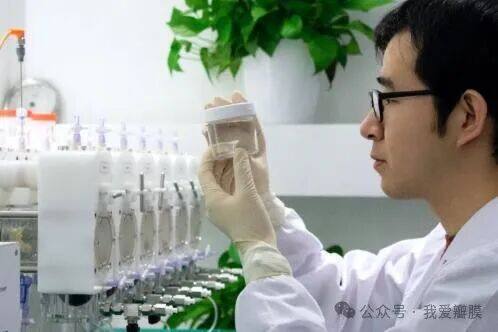
Previously, a public case from the team of Professor Wang Yan, the president of Xiamen University Affiliated Cardiovascular Hospital (the only tertiary cardiovascular specialty hospital in Fujian Province), showed that the product of Kingstron Bio used in the trial — the all-new generation dry valve pre-loaded retrievable TAVR system ProStyle — has successfully entered the NMPA clinical trial enrollment as the world's first retrievable pre-loaded valve to enter the NMPA registration clinical trial. In addition to its anti-calcification properties, it also solves the problem of difficult preoperative assembly of interventional valve products.
In the long term, whether a valve can last long enough is the most important factor in determining if it is a good product. Solving the problem of easy calcification in bioprosthetic valves is key to extending their lifespan. Currently, the artificial bioprosthetic heart valve under research by Kingstron Bio has successfully addressed the challenge of valve leaflet calcification and the short in vivo lifespan of existing bioprosthetic valves, which is expected to significantly improve the durability of bioprosthetic valves.
Multi-pipeline progress, breakingInternational Monopoly "Membrane Curse"
When talking about the gap between domestically produced valve products and foreign ones, Zhong Shengping frankly stated that in the TAVR field, there is at least a five-year technological gap between China and foreign countries. "Many foreign products have already been iterated to the second or third generation, with technologies like retrievability becoming standard features. However, very few of the products under development or entering clinical trials in China possess this functionality. There is still much for domestic companies to do."
"In the past few years, being in the healthcare industry, Kingstron Bio can be said to have survived against all odds amidst the continuous impact of the pandemic and the deepening of healthcare reforms under multiple pressures." Moreover, Zhong Shengping mentioned, "In the research and development of interventional valve technology, medical metals, medical polymer materials, testing and processing equipment... every step we take might face a 'bottleneck.'"
"But precisely because of this, we must rise to the challenge." Zhong Shengping admitted that along the way, the various challenges in the product development process have continuously strengthened their core belief in 'innovation': innovation must focus on key core technologies, and if we are going to do it, we must aim for the most cutting-edge.
Over the 12 years of innovation and entrepreneurship, Kingstron Bio has gathered numerous experts and doctors in the field of heart valves from around the world. Adhering to the integration of industry, academia, and research, as well as an independent technological route, the company possesses industry-leading core patented technologies in valve production. In 2018, Kingstron Bio launched its first product—the Element Power Valve Annuloplasty Ring—which quickly became the top Chinese-produced product in its category due to the advantages of its third-generation semi-rigid physiological ring. From 2021 to 2022, Kingstron Bio successively introduced the Xpower Bovine Pericardial Bioprosthetic Heart Valve and the Eternity Bovine Pericardial Biopatch. Both products utilize independently patented, industry-leading anti-calcification technology for bovine pericardium, combined with the latest advancements in valve mechanics design, achieving a quality comparable to the latest generation of imported products.
At the end of September this year, the list of the sixth batch of national-level specialized, refined, distinctive, and innovative "little giant" enterprises was announced, and Kingstron Bio was awarded the national-level specialized, refined, distinctive, and innovative "little giant" certification.
Zhong Shengping is confident in Kingstron Bio's multi-pipeline R&D capabilities, "In the future, Kingstron Bio will continue to provide Chinese heart disease patients and doctors with several industry-leading products, including a dry pre-mounted transcatheter aortic valve system, transcatheter mitral valve system, and vascular grafts." Strong R&D capabilities and long-term product planning are the key strategies for Kingstron Bio to establish itself in China, expand globally, and further break the international monopoly 'membrane spell.'

Breaking Through with Strength: The Medical Industry Ecosystem Gains New Momentum
Haier Capital and Kingstron Bio established contact as early as around 2022. After mutual engagement and research, they achieved a high level of trust and recognition. In 2023, Xiamen Hehe Meimei Industrial Fund under Haier Capital officially invested tens of millions of RMB in Kingstron Bio's C+ round of financing, expressing approval of the company’s development and business model through concrete actions.
After this round of financing, Kingstron Bio accelerates the research, development, and implementation of innovative products for mitral and tricuspid valves, and advances the registration of the third-generation TAVR products, as well as the large-scale production of surgical bioprosthetic valves and biological patches, promoting the continuous high-quality development of the bioprosthetic valve medical industry.
The person in charge of Haier Capital's Kingstron Bio project stated: As one of the few innovative companies in China that truly possesses valve technology heritage and expertise, Kingstron Bio has an experienced R&D and management team, along with a comprehensive pipeline of heart valve products. The company has achieved full coverage of both surgical and interventional product lines, demonstrating significant commercial synergies where surgical and interventional products complement each other, reaching broader markets through channel sharing. Its self-developed core technologies have reached an internationally advanced level, which will drive the company’s products to establish themselves in China while expanding globally. As one of the outstanding co-creation partners in Haier Capital’s healthcare sector, Haier Capital will leverage its industrial resources to support the company’s growth. We look forward to the early market launch of Kingstron Bio's next-generation innovative products, benefiting a wide range of patients.
Only by daring to tackle tough challenges and investing efforts in developing core platform technologies can products be innovative and differentiated, and enterprises have lasting vitality. In the future, Haier Capital will join hands with medical companies such as Kingstron Bio to continuously focus on domestically produced alternatives in China, committing to delivering the best products into the hands of doctors and patients, and truly creating social value.