The application of artificial intelligence (AI) technology in scientific research, especially in the fields of new energy and new materials, is presenting unprecedented opportunities and development trends. The new paradigm of AI for Science not only greatly accelerates the research process but also significantly enhances the transformation of research achievements and industrial upgrading. Against this rapidly evolving backdrop, DP Technology, as a pioneer in AI for Science, is closely collaborating with key representative enterprises in the industry to jointly explore the practical implementation of AI in various sectors, empowering the AI for Science industry-academia-research community with concrete actions.On November 6, "2024 Scientific Intelligence Summit - AI4S Industry and Practice Forum", includingCATL, BYD, Wanhua Chemical, GAC Aion, Shanghai Electric, Huayou Cobalt, Dongyang Guangkeetc.Upstream and downstream of the industry chainDozens ofEnterprises Gather Together, Discuss TogetherAIfor Science in the New [Industry]Opportunities、NewApplication andNewFuture.
Ecological Cooperation Enterprises
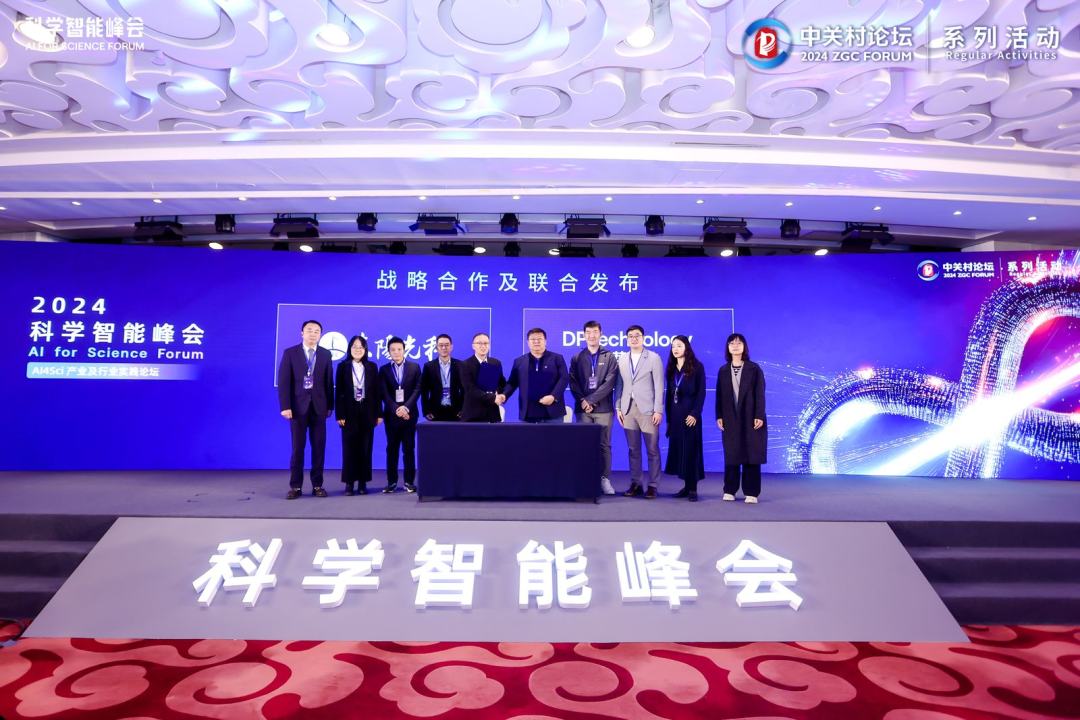
At the forum, DP Technology signed strategic cooperation agreements with CATL, Dongyangguangke, and YiHua Intelligence, respectively. GAC Aion shared a case study of its collaboration with DP Technology, analyzing how both parties jointly promote and deepen the development of artificial intelligence (AI) in the new energy and new materials fields through their cooperation and practical implementation.At the same time as the signing of the strategic cooperation, the cooperating enterprises respectively showcased their multi-field collaborations and phased achievements with DP Technology in the field of AI for Science.Among them,CATLDeepening Strategic Cooperation Announced with DP Technology. CATL stated: Artificial Intelligence (AI), as a representative of new productive forces, has become a key engine driving social progress and technological innovation. The deepened strategic cooperation between the two parties actively responds to China's innovation-driven development strategy, jointly expanding the future space for the development of frontier technologies in the new energy field. Focusing on application scenarios in the R&D of advanced battery materials, they will integrate and utilize AI for Science infrastructure to build a closed-loop intelligent R&D system that combines experimental ("wet") and computational ("dry") approaches. The research will mainly focus on the application of Artificial Intelligence (AI) + physical models in new energy material R&D, as well as applying AI + physical models to energy device R&D to enhance the rational design of energy devices.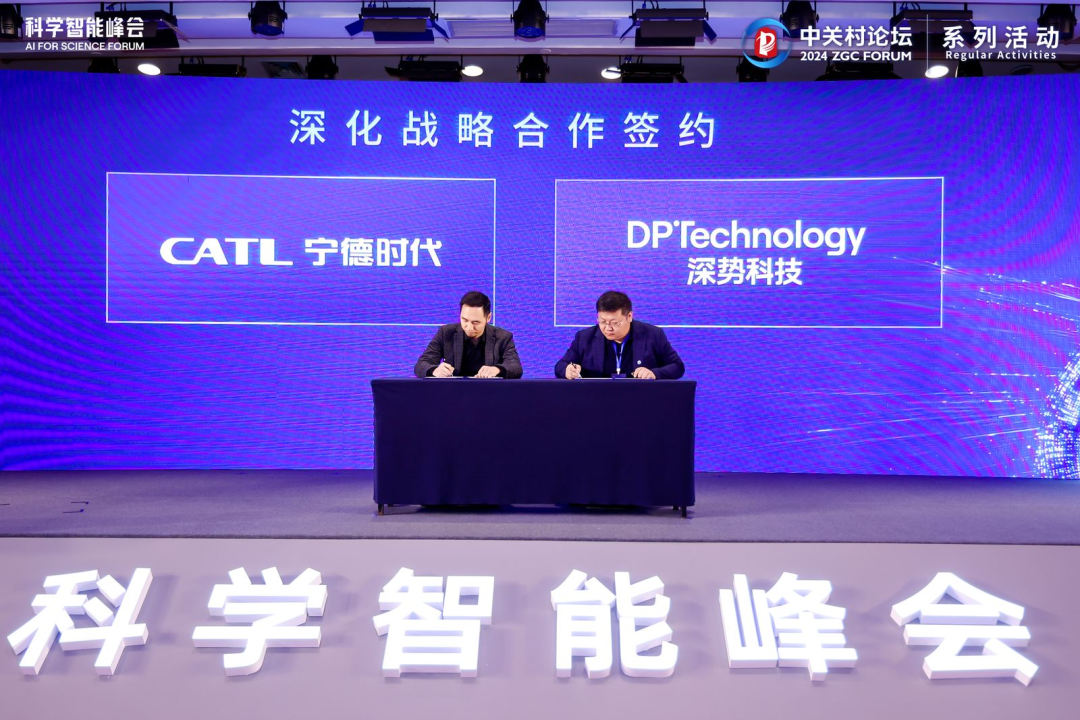 Dongyang GuangkeDeep Strategic Cooperation Reached with DP Technology. Tang Huoqiang, Dean of Dongyangguang New Energy Research Institute, comprehensively analyzed the future strategic directions and cooperation goals of both parties. He stated that through project collaboration and the establishment of a joint laboratory, the two sides will rapidly achieve technical exchanges and knowledge sharing, deepening inter-enterprise cooperation. Based on DP Technology’s expertise and platform, AI technology will drive innovation in the field of materials science, creating a leading AI + intelligent material R&D platform in China and internationally, supporting Dongyangguang's leadership in the new materials sector. Tang Huoqiang pointed out: Specific AI collaborations include SEM image segmentation, electrolyte formula screening, cathode material formula screening, capacitor life prediction, and catalyst formula screening. Preliminary successes have been achieved in multiple application scenarios, with the SEM image segmentation model already deployed and performing well.
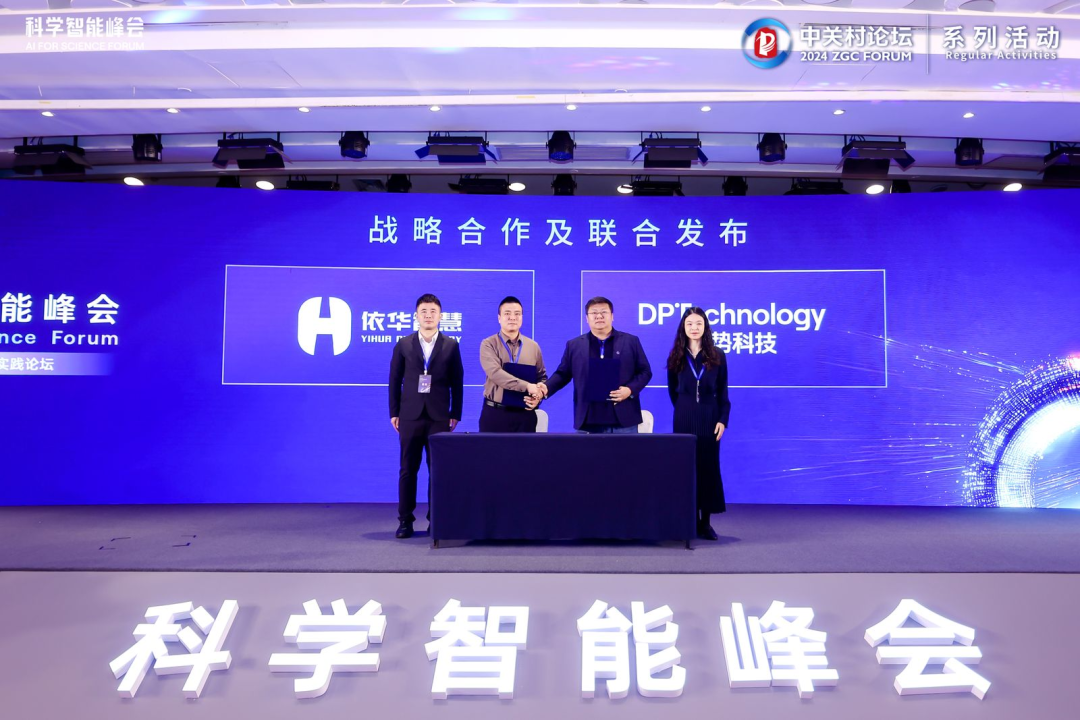
 Yihua WisdomStrategic Cooperation Reached with DP Technology。Through this collaboration, the achievements of the industry-academia-research cooperation that realizes complementary advantages of both parties will be showcased. Meanwhile, in the energy storage field, the two parties will jointly develop an intelligent R&D system and equipment for the "dry-wet closed loop" under the new AI for Science paradigm, accelerating the R&D process and efficiency of key materials in the energy storage sector, and jointly exploring new business models and development opportunities.
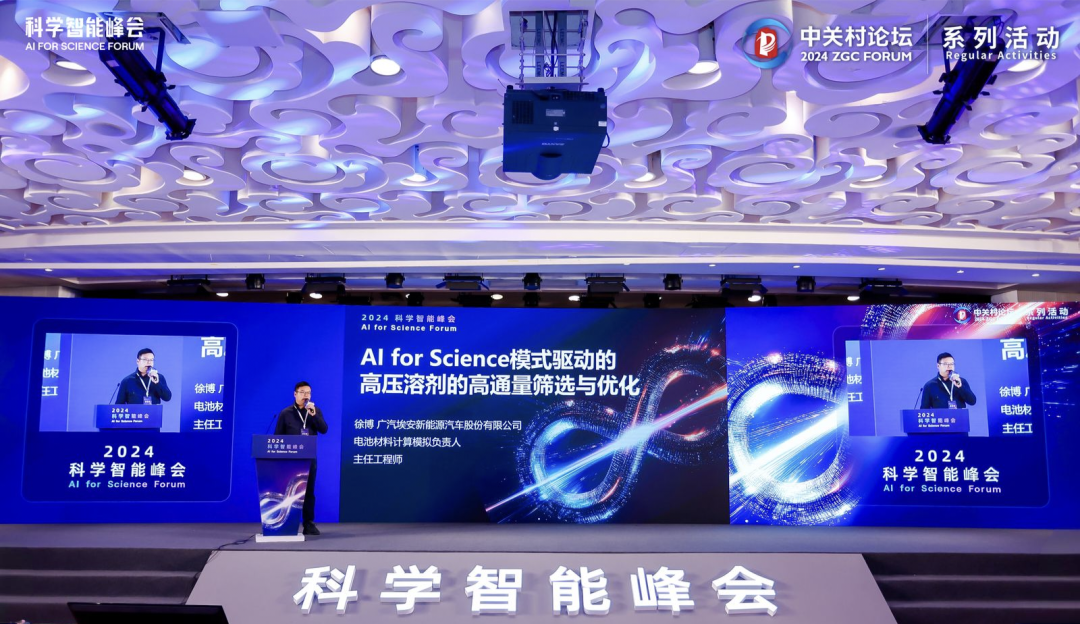
 In addition,GAC AionAlso based on the cooperation with DP Technology, the report shares industry practices and exploration progress. Xu Bo, head of battery material computational simulation at GAC Aion, introduced: From 2017 to 2024, the "blood" of batteries is liquid electrolytes, and the production of electrolytes has grown rapidly both globally and in China. Customers are demanding increasingly higher product quality, and the need to enhance electrolyte R&D capabilities is becoming more urgent. In this process, GAC Aion faced some pain points and bottlenecks. The collaboration with DP Technology enabled GAC Aion to solve these problems—by leveraging DP Technology’s platform and tools for high-throughput screening, using experimental data to allow AI models to filter solutions from numerous formulations during the R&D process, and ultimately conducting experimental validation. Throughout this process, GAC Aion aims to internalize high-throughput screening capabilities, including workflows, AI modeling methods, and models, embedding them into the company’s platform to continuously serve battery R&D. For example, by using DP Technology's Uni-Mol large molecular conformation model and Uni-QSAR property prediction tool, calculations were performed on melting points, boiling points, and various physical properties of solvent molecules, significantly improving R&D efficiency and accuracy.
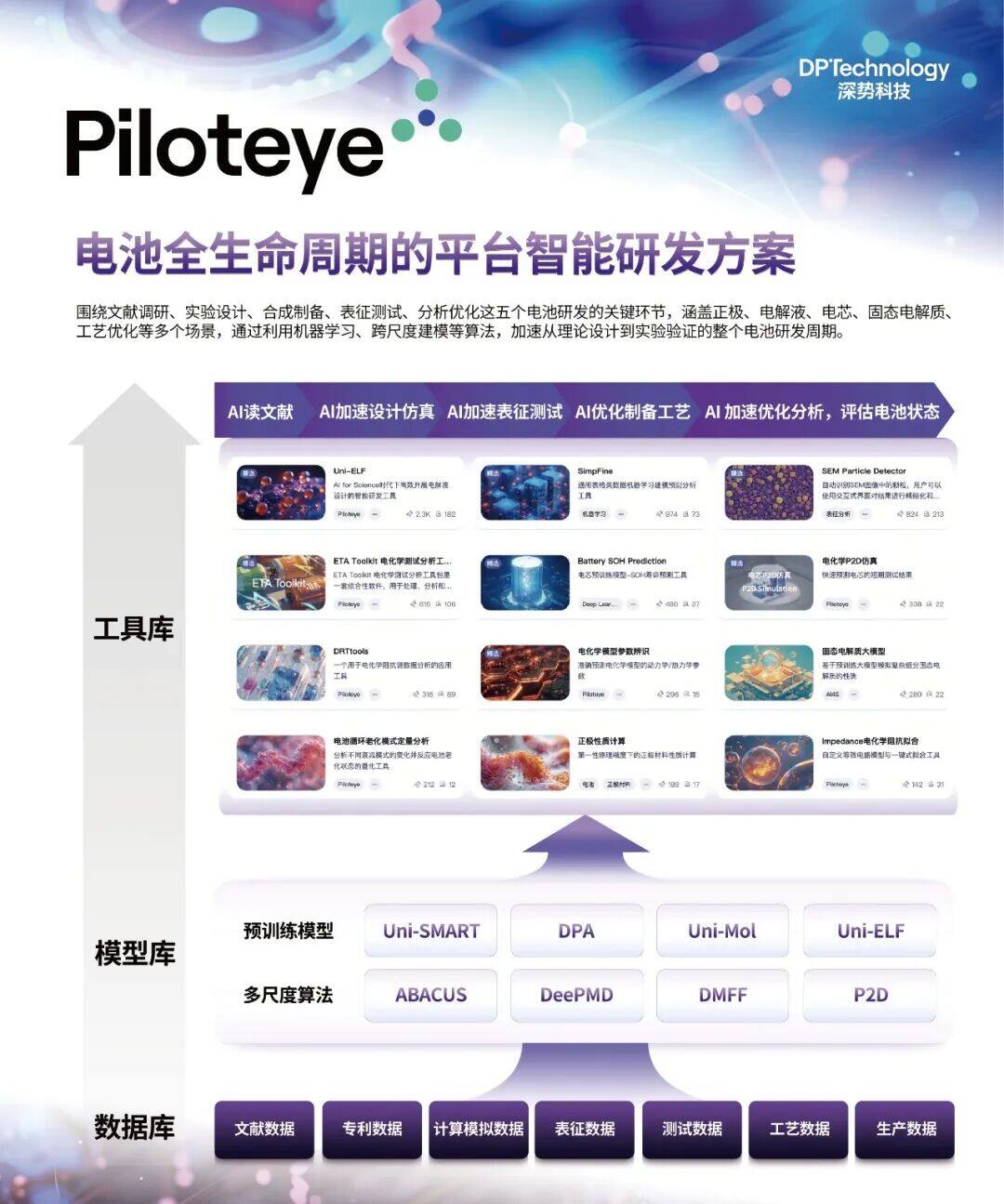
 Currently, DP Technology has gradually built a systematic R&D solution for energy batteries based on AI for Science. Starting from material property parameters, it predicts the physicochemical properties of material particles and further simulates the performance at the electrode and cell scales. It rationally models processing techniques, simultaneously simulating the impact of these techniques on electrode and cell performance. It addresses key challenges in battery R&D through collaborative research and application development, improving the accuracy and reliability of battery design, shortening the cycle from innovation to mass production, and promoting the realization of "rational design," "platform-based development," and "intelligent manufacturing."Among them, based on the DeePMD method and the DPA interatomic potential pre-trained model, the key properties of the full doping space for cathode materials and solid electrolytes were evaluated with accuracy comparable to experiments, and efficiency at least 1000 times faster than mainstream methods. Product-level doping evaluation of cathode materials and solid electrolytes enables interactive screening of tens of thousands of materials, accelerating the new material R&D cycle to one-third of the original duration.Based on the Uni-Mol molecular 3D results pre-trained model and the Uni-ELF formulation model, accurately predict multiple key physical properties across the entire molecular space of electrolytes, rapidly recommend candidate target molecules, and accurately predict the key property results of thousands of electrolyte formulations within minutes. Quickly design and optimize electrolyte formulations. Meanwhile, product-level prediction and high-throughput screening of electrolyte molecule and formulation properties can generate an electrolyte formulation property report with a single click, accelerating the screening process and reducing the screening of millions of formulations to days.In terms of cell and characterization processes, it covers the entire workflow of "cell simulation design -> testing -> analysis -> optimization," completing comprehensive evaluations of cell performance at the push of a button, reducing experimental testing from several months to days. Product-level process control and characterization analysis tools enable rapid comprehensive analysis of process adjustments, automate batch processing of electron microscopy images, and create effective iterations with experiments, cutting development costs in half.Empowering partners and enabling thousands of industries is the steadfast belief and practice of DP Technology. Driven by AI for Science, various sectors have gradually recognized its immense potential as a representative of new productive forces. AI for Science not only involves cutting-edge exploration of the future but also includes solid practical applications. DP Technology looks forward to collaborating with partners to jointly develop higher-quality industry solutions, continuously challenge new research frontiers, and drive the ongoing transformation and development of the entire industry.
Piloteye® Battery Design Intelligent R&D Platform
DP Technology is a global leader in AI for Science. AI for Science involves using AI to learn a series of scientific principles and knowledge, and further address key issues in scientific research and industrial R&D.Relying on deep cultivation in the field of interdisciplinary research, DP Technology has built the "Deep Potential·Universe" AI for Science large model system, further addressing key issues in scientific research and industrial development. This effort has transitioned research methods across numerous disciplines from the "experimental trial-and-error/computational" era into the "pre-trained model era." It establishes an "innovation-to-application" pipeline and open ecosystem for AI for Science, constructs microscale industrial infrastructure based on AI for Science, and empowers "industries across the board." The initiative aims to build a new generation of industrial design and simulation systems for the most fundamental areas of human economic development: biomedicine, energy, materials, and information science and engineering.DP Technology is a national high-tech enterprise and a national specialized and new "little giant" enterprise, with research and development centers located in cities such as Beijing, Shanghai, and Shenzhen. The scientific research and technology team is led by an academician of the Chinese Academy of Sciences, gathering more than a hundred outstanding young scientists and engineers from various fields such as mathematics, physics, chemistry, biology, materials, and computer science. Among them, the proportion of PhDs and postdoctoral researchers exceeds 35%. Core members have received the "Gordon Bell Prize," the highest award in the field of global high-performance computing in 2020. Their related work was selected as one of China's top ten scientific and technological advances in 2020 and one of the ten major technological breakthroughs in the global AI field.