Five New Drugs Recommended for Priority Review by CDE

Johnson & Johnson
Medical Device R&D and Manufacturer

Auson Pharmaceuticals
International Biopharmaceutical Service Provider
On November 12, the CDE proposed to include 5 new drugs in the priority review, as follows:
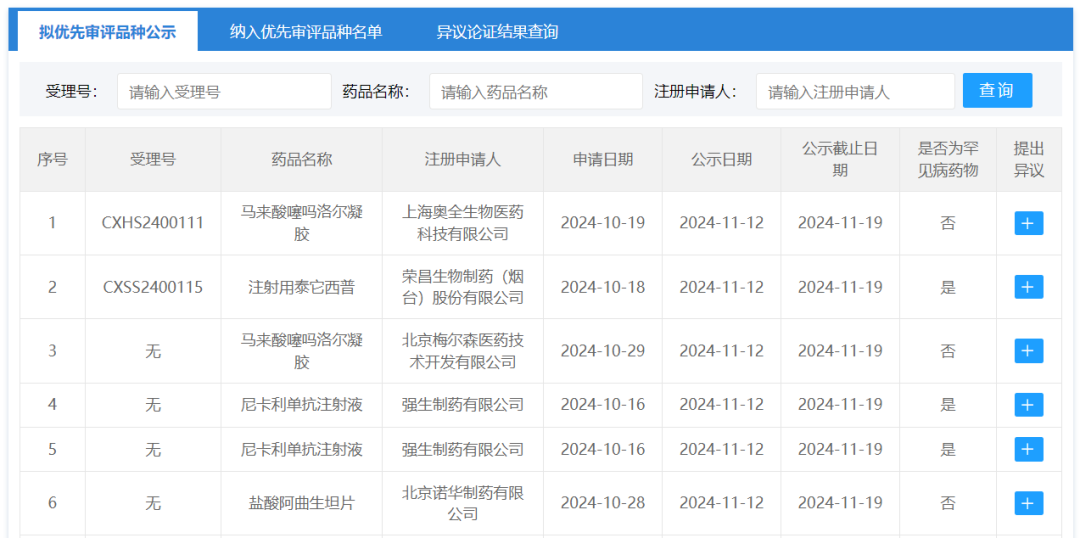
Image Source: CDE Official Website
Novartis:
Atrasentan Hydrochloride Tablets
Atrasentan, an endothelin A receptor antagonist developed by Novartis, can reduce glomerular pressure, alleviate the burden on the kidneys, inflammation, podocyte damage, and proteinuria, and slow down mesangial cell proliferation and fibrosis. Earlier this month, the innovative drug combination of Atrasentan and Feihe Da® (Iptacopan Hydrochloride Capsules) made their debut joint appearance at the 7th China International Import Expo.
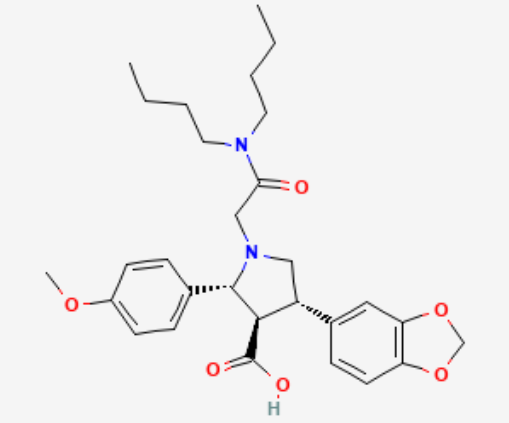
Source of the image: Pharma Data Enterprise Edition - Global Drug Analysis System Database
According to the CDE official website, the indication for which Esaxerenone Tablets are proposed to be included in the priority review this time is to reduce proteinuria in adult patients with primary Immunoglobulin A Nephropathy (IgAN) who are at risk of disease progression. Novartis stated that Esaxerenone is the first non-immune, highly selective IgAN precision treatment drug submitted for marketing in China.
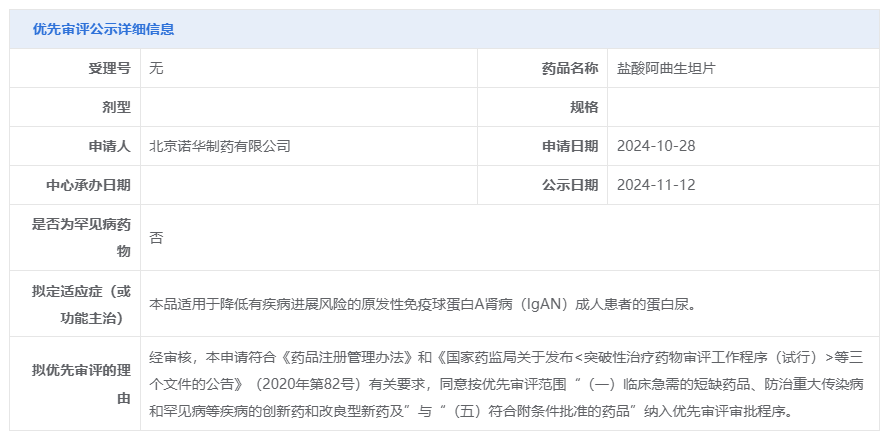
Image Source: CDE Official Website
Johnson & Johnson:
Nicalimab Injection
Nicalimab injection, acquired by Johnson & Johnson for approximately $6.5 billion, is a neonatal Fc receptor (FcRn)-targeted antibody therapy designed to bind with FcRn, ensuring that autoantibodies taken up by monocytes and endothelial cells are not re-released into the bloodstream but instead degraded within the cells.
In August this year, the FDA accepted the marketing application for Nicalimab for the treatment of myasthenia gravis.
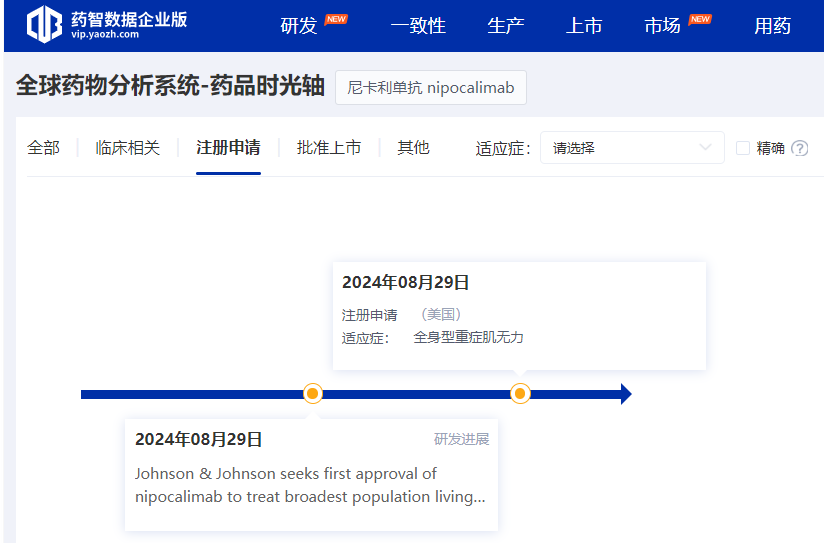
Source of the image: Pharma Data Enterprise Edition – Global Drug Analysis System Database
The indication for which Nicallizumab Injection has been included in the CDE's proposed priority review is: treatment of generalized myasthenia gravis (gMG) in adult and adolescent patients (over 12 years old) who are autoantibody-positive (positive for anti-acetylcholine receptor [AChR], anti-muscle-specific tyrosine kinase [MuSK], or anti-low-density lipoprotein receptor-related protein 4 [LRP4]). This drug is an orphan drug.
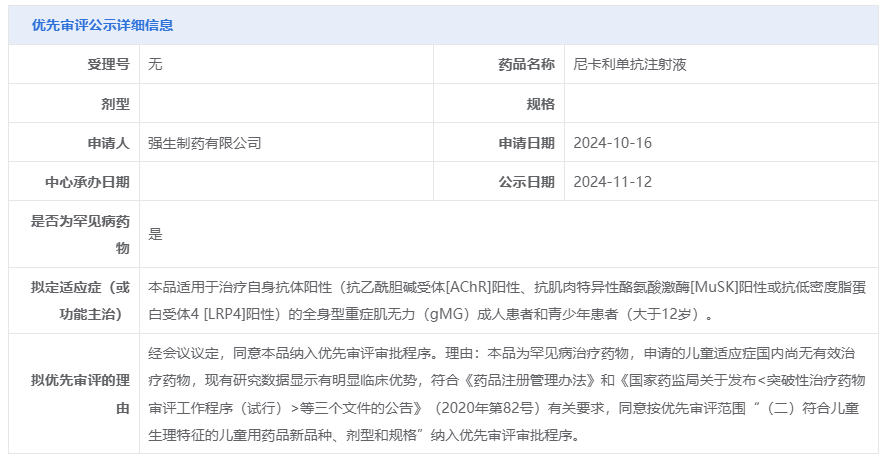
Source of the image: CDE official website
Melson Pharmaceuticals, Auson Biologics:
Timolol Maleate Gel
Timolol is a non-selective beta-adrenergic receptor blocker that can be used to reduce the systemic adverse effects caused by oral propranolol. In recent years, it has been increasingly utilized as a systemic medication and an alternative option for many patients under observation.
Melson Pharmaceuticals and Shanghai Auson Pharmaceuticals Co., Ltd.'s Timolol Maleate Gel have been proposed for inclusion in the priority review, intended for the treatment of superficial infantile hemangiomas in the proliferative phase.
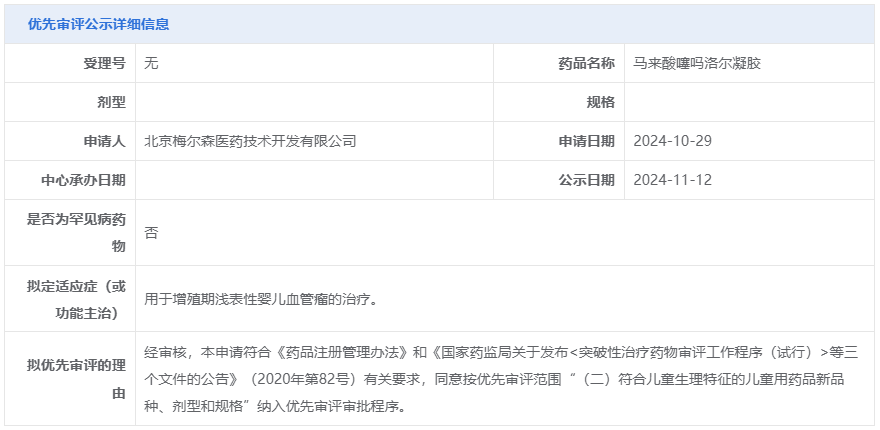
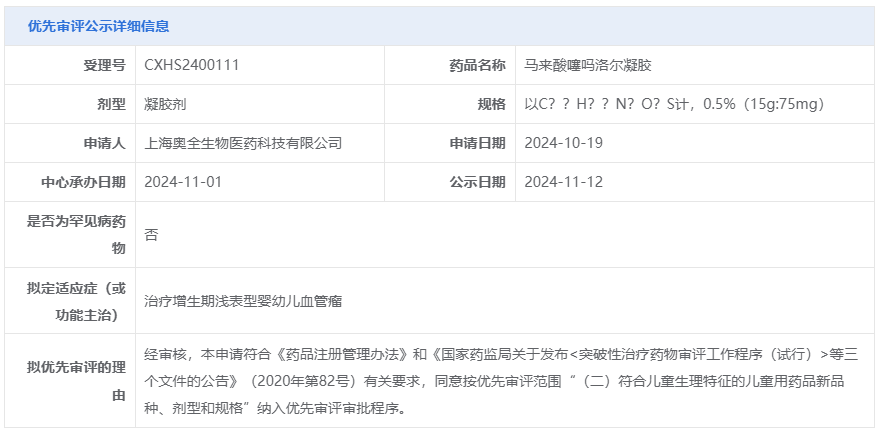
Image Source: CDE Official Website
It is reported that infantile hemangioma is one of the most common benign tumors during childhood, with an incidence rate of 4% to 10% among infants and young children. It occurs more frequently in females than in males (with a male-to-female ratio of 1:3 to 1:5), and approximately 60% of cases occur in the head and neck region. In most patients, the tumor is not visible at birth but emerges suddenly within days to weeks after birth, followed by rapid growth. This process can last from 6 months to 1 year and is referred to as the proliferative phase of hemangioma. Subsequently, it gradually enters the involution phase on its own, lasting for 5 to 10 years. By the age of 5, about 50% of the tumors will have completely regressed.
However, after natural regression, residual erythema, pigmentation changes, telangiectasia, atrophic scars, and fibrofatty tissue growths often remain locally, affecting appearance to varying degrees. Unless the hemangioma is located in a concealed area, is small in size, or is in a stable state (where "watchful waiting" can be adopted), active treatment is required in other cases. The earlier the treatment, the better the cosmetic outcome and functional recovery.
Rongchang Bio:
Telitacip Injection
Telitacimab is a novel dual-target biologic developed by Rongchang Bio, which achieves renal protection by targeting B-cell-related B lymphocyte stimulator (BLyS)/a proliferation-inducing ligand (APRIL). In March 2021, Telitacimab was approved in China for the treatment of systemic lupus erythematosus (SLE); in July this year, it was also approved for the treatment of rheumatoid arthritis. In October, Rongchang Bio submitted a new marketing application for the drug. According to the information on priority review disclosed by the CDE, the indication for this marketing application is myasthenia gravis.
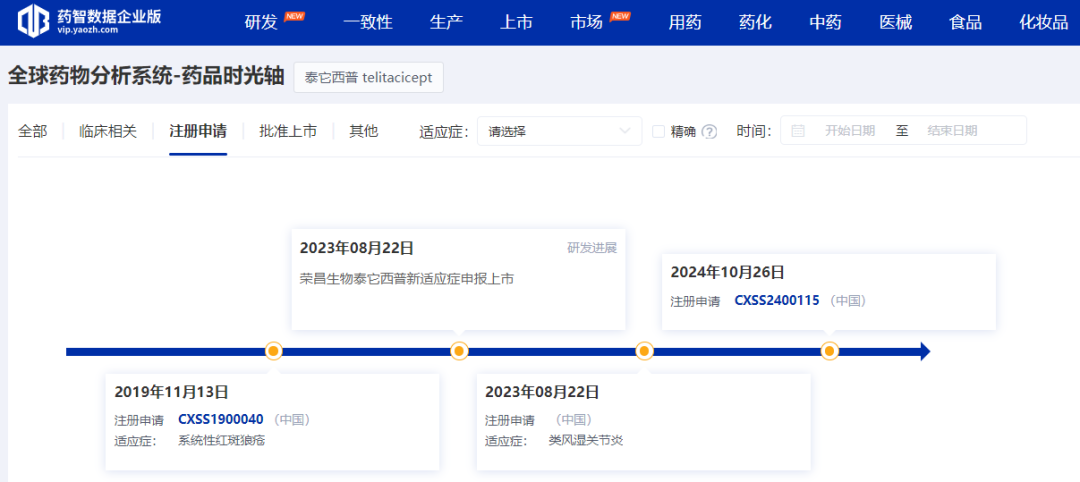
Source of the image: Pharma Data Enterprise Edition - Global Drug Analysis System Database
It is reported that Telitacicept has obtained three recognitions in the field of myasthenia gravis: China's NMPA breakthrough therapy designation, U.S. FDA orphan drug designation, and fast track designation. This time, injectable Telitacicept has been proposed by the CDE for priority review, with the indication being: in combination with conventional therapeutic drugs, for the treatment of adult patients with generalized myasthenia gravis (gMG). This drug is a rare disease medication.
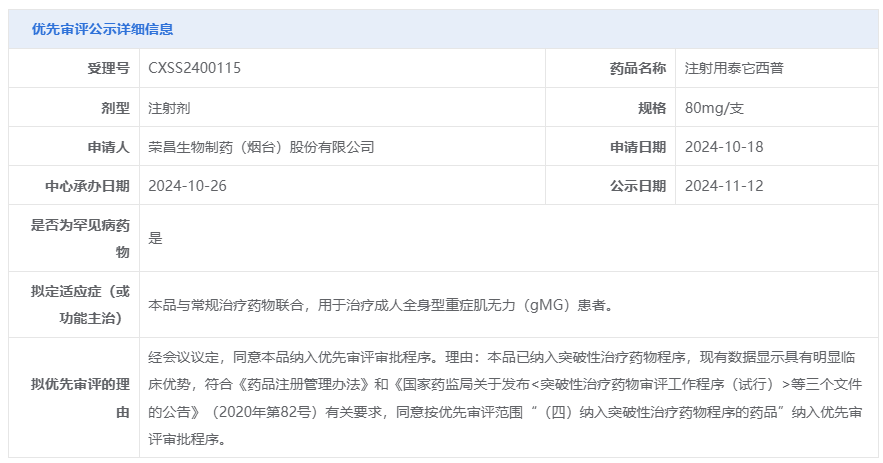
Source of the image: CDE official website

Editor: Mu Mian
Disclaimer: This article is a reprint from PharmNet. The images and text are the original works of the author, and the purpose of the reprint is to convey more information. It does not represent the views of this platform. If there are any issues regarding the content, copyright, or other aspects, please leave a message on this platform, and we will address it promptly.