

AstraZeneca Withdraws Dato-DXd BLA for Non-Squamous NSCLC, Submits New Application for EGFR-Mutated NSCLC Based on TROPION-Lung05 Data

AstraZeneca
Biopharmaceutical Manufacturer
▎Armstrong
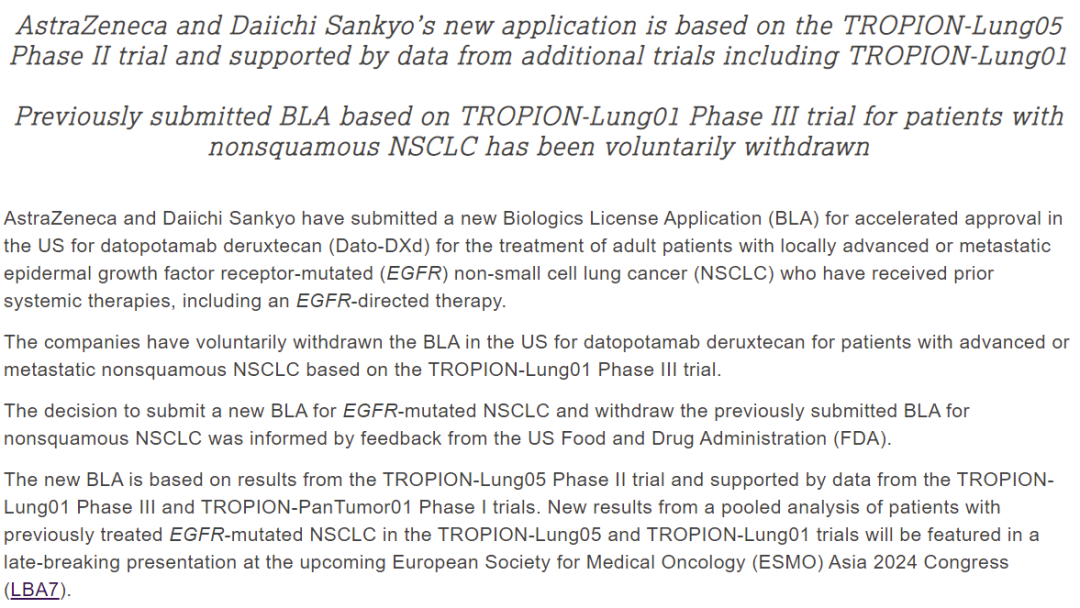
On November 12, 2024, AstraZeneca announced the withdrawal of its previous marketing application for the treatment of non-squamous NSCLC based on the Phase III clinical data from TROPION-Lung01. Instead, it submitted a new marketing application for later-line treatment of recurrent or metastatic EGFR-mutant NSCLC. This application is based on the Phase II clinical data from TROPION-Lung05 (supported by data from TROPION-Lung01) and the Phase I clinical data from TROPION-PanTumor01. The strategic adjustment of this marketing application was made based on feedback from the FDA.
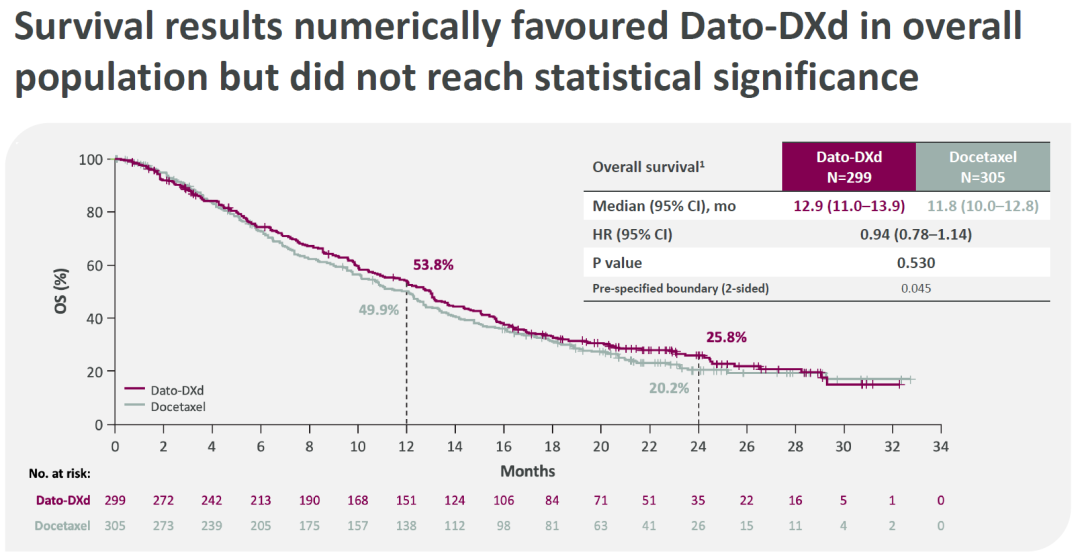
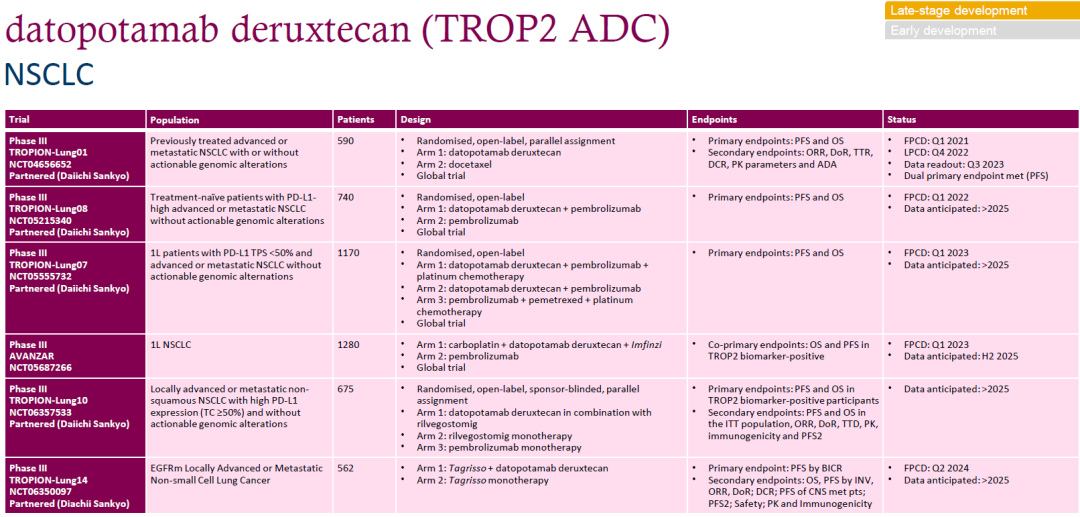
Previously, AstraZeneca submitted a marketing application for second- to third-line treatment of non-squamous NSCLC based on the PFS endpoint achieved in the TROPION-Lung01 trial. In September this year, AstraZeneca announced the OS data from this Phase III clinical trial. The mOS for the Dato-DXd treatment group and the docetaxel chemotherapy group were 12.9 months and 11.8 months, respectively, with an HR of 0.94 and a p-value of 0.53, which did not reach statistical significance.
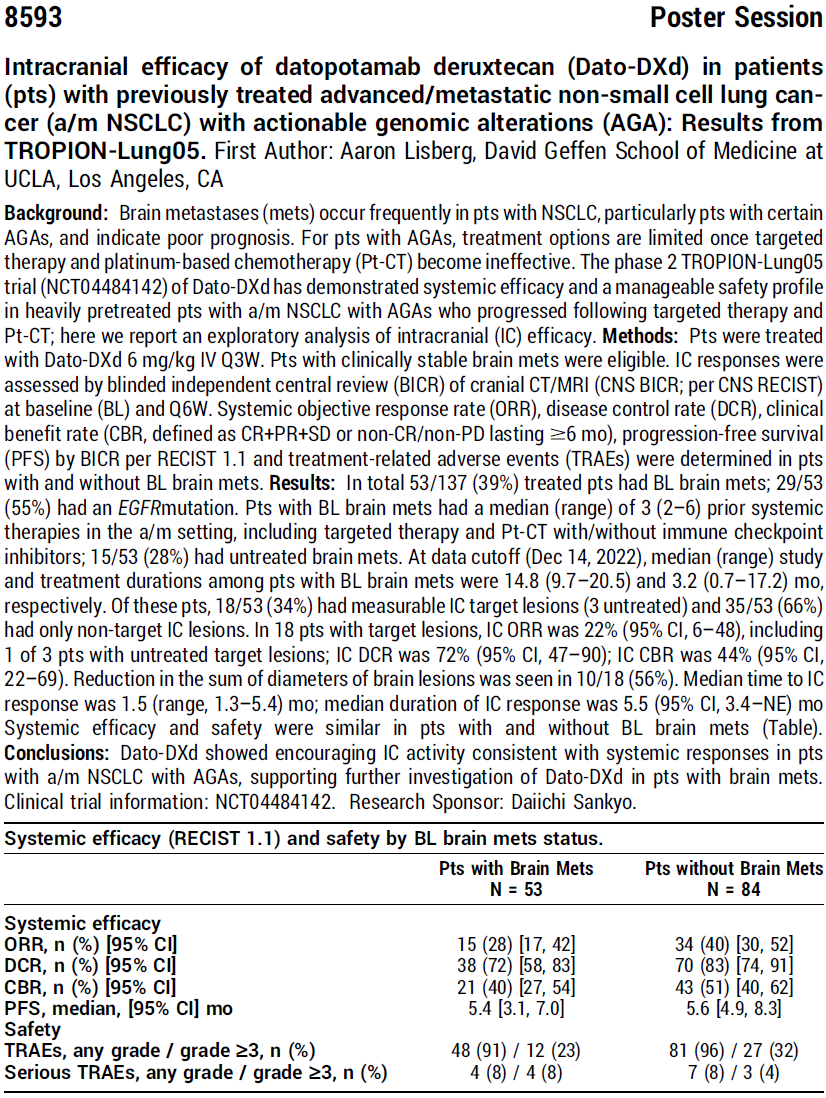
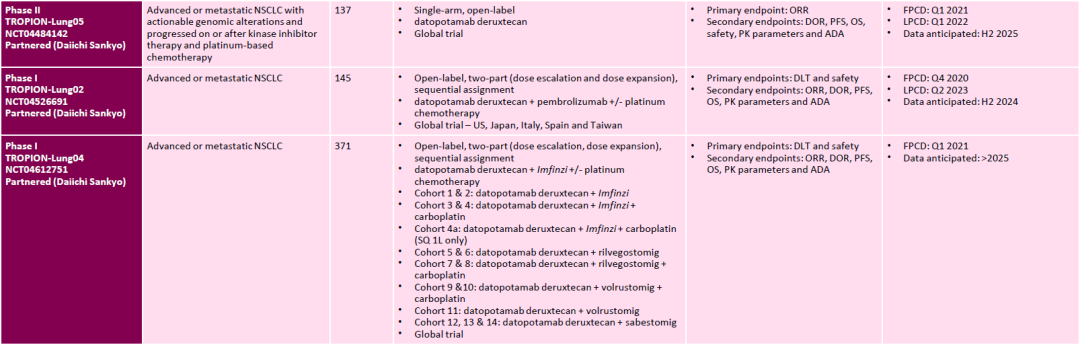
TROPION-Lung05 is a study targetingDriveGene Mutation (AGA) RecurrentSingle-arm Phase II Clinical Trial for NSCLCFor patients without brain metastasis, the ORR and DCR were 40% and 83%, respectively, while for patients with brain metastasis, the ORR and DCR were 28% and 72%, respectively. The data indicate that Dato-Dxd shows a promising response in NSCLC patients with driver gene mutations and brain metastasis, supporting further clinical exploration.
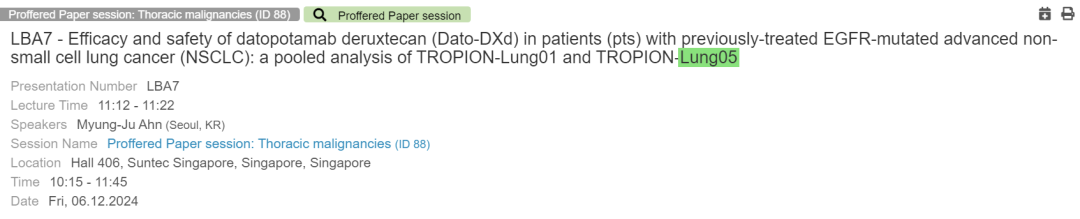
Latest clinical data of TROPION-Lung05 and TROPION-Lung01 for previously treated NSCLC with EGFR mutations will be presented at the ESMO Asia 2024 conference on December 6.
Summary
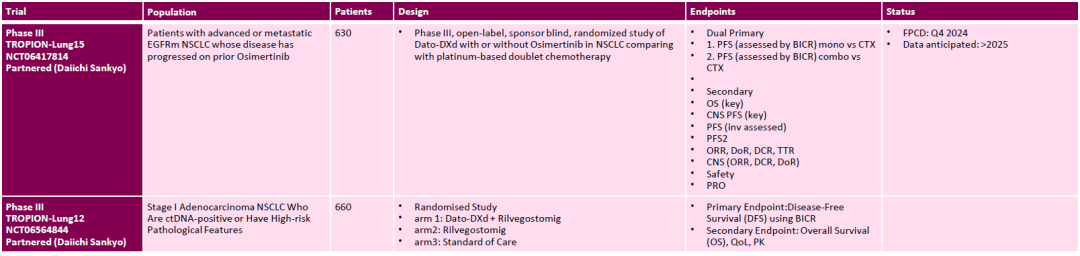
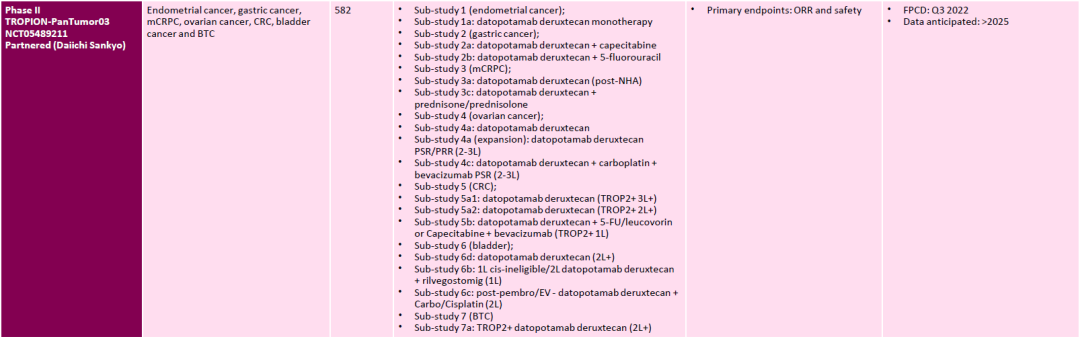
Dato-DXd currently has nine Phase III clinical trials ongoing for NSCLC, while exploring various combination therapies, covering both EGFR wild-type NSCLC and EGFR-mutant NSCLC. Early-stage clinical trials for pan-tumor indications are also actively progressing.

Comprehensive Review Series of Armstrong Technology
A Comprehensive Review of Complement-Targeted Drug Technologies;
Complement drugs: an important direction in ophthalmic treatment;
The Landscape of Large Molecule New Drug Research and Development in China;
A Comprehensive Overview of China's Bispecific Antibody Technology;
A Comprehensive Review of Antengene's Pharmaceutical Technologies;
Comprehensive Overview of Harbour BioMed Technologies; Comprehensive Review of Rongchang Biotechnology; Comprehensive Review of Zai Lab's Technologies; Comprehensive Overview of WuXi Biologics; Hengrui Medicine Technology Full Review; A Comprehensive Review of Hansoh Pharma's Technology; Comprehensive Review of Chia Tai Tianqing's Technology; Comprehensive Overview of GeneChem Technologies; Comprehensive Review of CStone Pharmaceuticals' Technology; Comprehensive Review of BeiGene Technologies; Beigene Technology Full Review 2nd Edition; A Comprehensive Review of Innovent Biologics Technology; Comprehensive Review of Innovent Biologics Technology, 2nd Edition; Comprehensive Review of Zhongshan Kangfang Technology; Comprehensive Review of Henlius Technologies; A Comprehensive Review of Simcere Pharmaceutical Technologies; Comprehensive Overview of Junshi Biotechnology; Comprehensive Overview of Genor Biopharma; Comprehensive Overview of Zhi Dao Biotechnology; A Comprehensive Review of Daor Biotechnology; Full Review of Shangjian Biotechnology; Comprehensive Overview of Alphamab Oncology Technologies; Full Review of Keymed Pharmaceutical Technologies; Full Review of Keymed Pharmaceutical Technology 2.0; Comprehensive Overview of岸迈Biotechnology; Comprehensive Overview of Lijin Biotechnology; Full Technical Review of Canbridge Capital; Yu Guoliang's Antibody Drug Layout; Full Review of Quanxin Biotechnology; Comprehensive Overview of An Yuan Pharmaceutical Technology; 3SBio Technology: A Comprehensive Overview; Comprehensive Review of Renhui Biotechnology; Comprehensive Overview of Lepu Biotechnology; Comprehensive Overview of Tongrun Biotechnology; Comprehensive Overview of Immunomic Therapeutics; Comprehensive Overview of PegBio; Comprehensive Overview of Mabwell Biotechnology; Comprehensive Overview of Momenta Technology; A Comprehensive Overview of NGM Technology; Comprehensive Overview of Promab Biotechnologies; Full Review of Primus Biotechnology 2.0; Comprehensive Overview of Clover Biotechnologies; Zelgen Pharma Antibody Drug Overview; Hengrui Medicine Antibody Drug Overview; A Comprehensive Review of Qilu Pharmaceutical's Antibody Drugs; Full Review of CSPC Pharmaceutical Group's Antibody Drugs; Hansoh Pharma Antibody Drug Overview; Huahai Pharmaceutical Antibody Drug Overview; A Comprehensive Review of Kelun Pharmaceutical's Antibody Drugs; A Comprehensive Review of Bio-Thera Technologies; Full Review of Fennec Technologies。