

Novartis and Takeda Unveil Strategic Moves in Cell Therapy: In Vivo CAR-T and iPSC-Derived Platforms Take Center Stage

Vyriad
Oncolytic Virus Therapy Developer

Alloy Therapeutics
Drug Discovery and Development Service Provider

Welcome to follow Asymchem Pharma News
November 20, 2024Vyriad Announces Strategic Collaboration with Novartis, to discover and develop in vivo chimeric antigen receptor T-cell (CAR-T) therapies. According to the terms of the agreement, Novartis focuses on advancing the in vivo CAR-T cell therapies identified and developed by Vyriad into clinical trials, and Vyriad will receive upfront payments, milestone payments, and tiered royalties for the selected programs.
Coincidentally, another clinical-stage companyAlloy Therapeutics ("Alloy") announced that the company has reached a strategic collaboration and licensing agreement with Takeda.Co-develop induced pluripotent stem cell (iPSC)-derived CAR-T cell platform (iCAR-T) and CAR-NK platform (iCAR-NK) for solid and hematological tumors.
Two MNCs on the same day targetedCAR-T cell therapy reaches related cooperation, and next we will analyze the related cooperation one by one, in order to glimpse the future planning of enterprises……
About Vyriad
Vyriad is a clinical-stage biotechnology company leveraging engineered viruses, viral vectors, and viral envelope glycoproteins to develop next-generation targeted gene therapies that deliver genes directly to target cells.
In CAR-T therapy, Vyriad's targeted lentiviral vector platform can deliver the CAR payload to T cells in a natural environment. Through Vyriad's developed lentiviral delivery system, it may target and transduce resting T cells and reprogram them in vivo, making it a potential treatment for patients.
In addition, the platform has also been developed for oncolytic virus therapy, in vivo gene therapy, and gene editing products.
About Alloy
Alloy Therapeutics is a biotechnology ecosystem company. Its launched AntiClastic™ ASO platform combines improvements in primary sequences with novel spatial conformations of nucleic acid drugs. The resulting AntiClastic ASO candidates exhibit enhanced potency, facilitate delivery to target RNA, minimize interactions with unintended RNA targets and inflammatory responses, thereby achieving a superior therapeutic index. This platform is widely applicable for treating diseases by targeting genes expressed in the central nervous system (CNS), liver, muscles, eyes, and other areas.
In addition to AntiClastic ASO, the company is expanding into the development of gene drugs.By collaborating with Alloy Therapeutics' antibody discovery services, the ATX-Gx™ transgenic humanized mouse platform will be widely accessible to the global scientific community or utilized in partners' respective laboratories.
Based on the agreement reached with Takeda this time, Alloy will further advance the development of the iCAR-T/NK platform by leveraging the synergies of its unique business model, while enabling biotechnology and pharmaceutical partners to have broader access to the technology for developing cancer treatments, including those for solid tumors.
About Novartis' Layout in Cell Therapy
As one of the earliest pharmaceutical companies to launch a CAR-T product, Novartis significantly expanded its CAR-T production capacity in 2020. However, since then, the sales of Kymriah have failed to grow further, leaving much of Novartis’ production capacity idle.
In April 2023, Legend and Janssen signed a three-year production contract with Novartis. According to the agreement, Novartis will manufacture Cilta-cel (cilta-cel) for clinical trial use outside of China.March 2024,The CMO agreement between Legend Biotech and Novartis has expanded from clinical production to commercialization, with a validity period of up to 5 years. Novartis is expected to commence clinical production in Q3 2024 and start commercial production in Q1 2025.
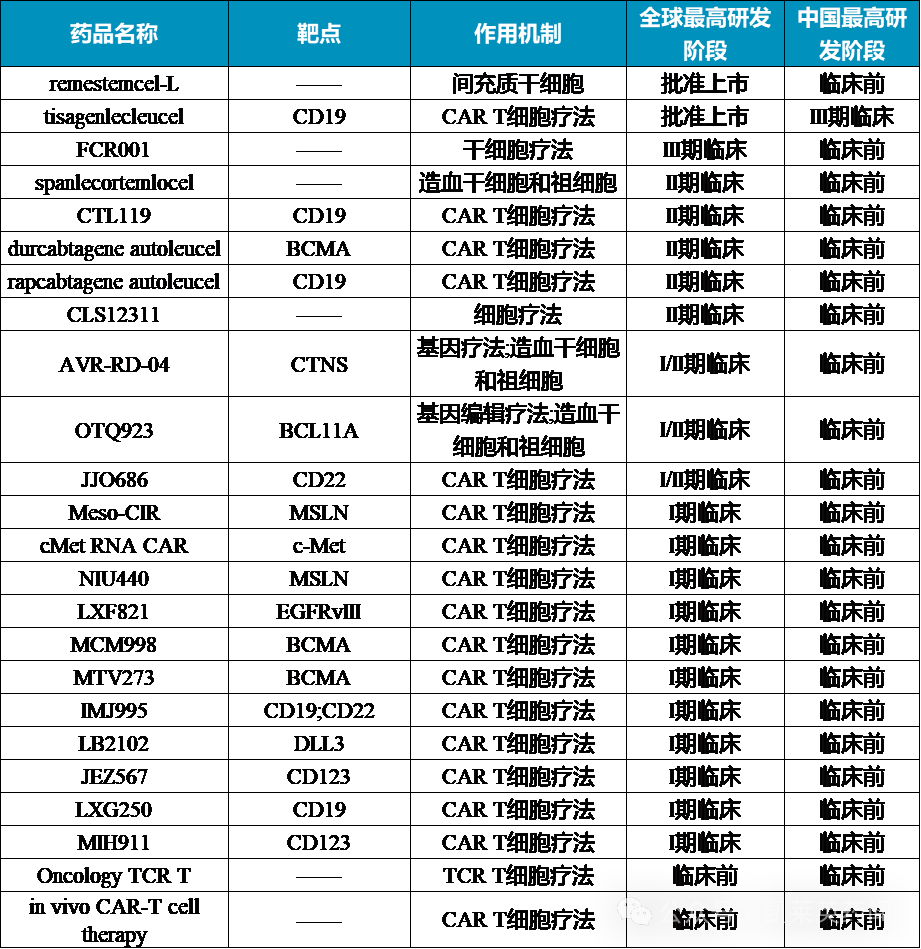
In November 2023, Legend Biotechnology Ireland Limited entered into an exclusive global licensing agreement with Novartis, granting Novartis the rights to develop, manufacture, and commercialize LB2102 and other potential DLL3-targeted CAR-T therapies worldwide. Novartis paid an upfront payment of $100 million in January 2024 and also agreed to pay up to $1.01 billion in milestone payments upon achieving specific clinical, regulatory, and commercial milestones, along with tiered royalties on net sales. The unique design of this product will be combined with Novartis' next-generation CAR-T cell therapy manufacturing platform, which is expected to bring transformative benefits to patients with small cell lung cancer in the future.
According to incomplete statistics, the company has deployed more than 20 types of cell therapies, covering CAR-T, TCR-T, stem cell therapy, etc.
About Takeda's Layout in Cell Therapy
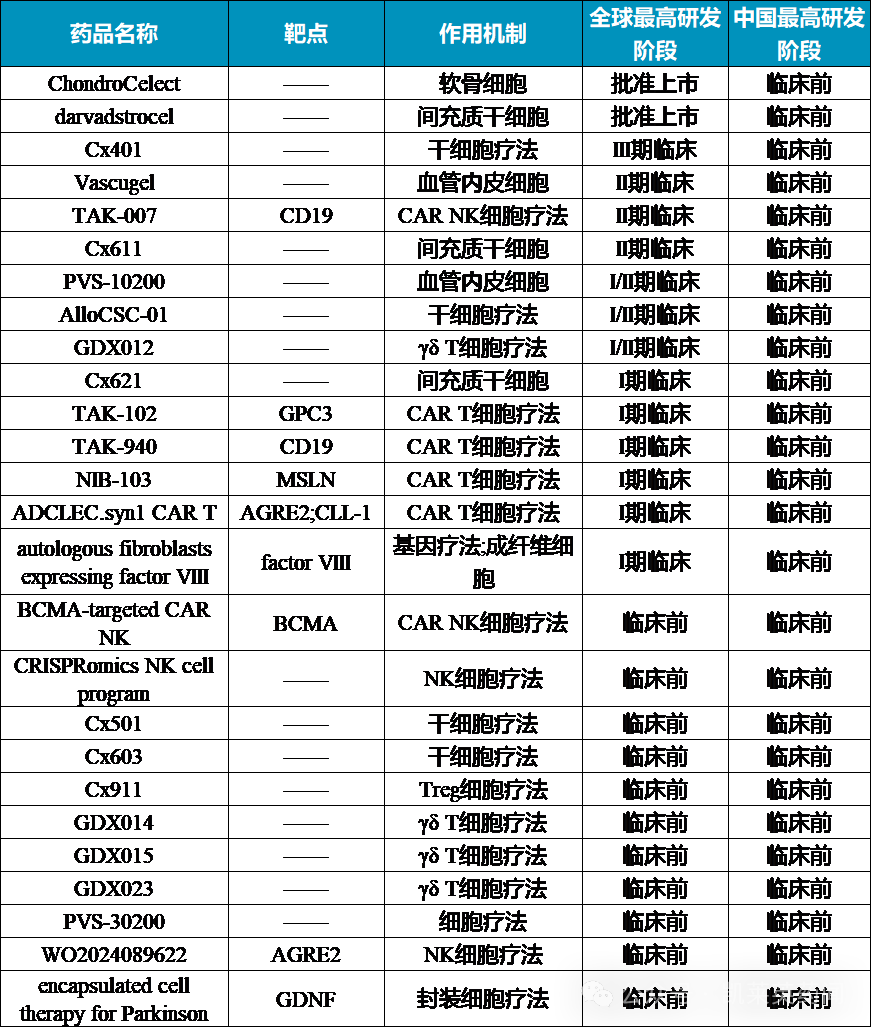
Many large pharmaceutical companies have already laid out plans for CAR-T therapy. Facing competition, Takeda hopes to take a shortcut by collaborating with Kyoto University, which is at the world's forefront in induced pluripotent stem cell (iPSC) technology, utilizing Kyoto University’s leading iPSC-derived iCAR-T to gain an upper hand. iCAR-T has the potential to develop "off-the-shelf" cell therapies, offering first-class performance and enhanced efficacy while significantly reducing manufacturing costs compared to autologous cell therapies.
According to incomplete statistics, Takeda currently has over 20 drugs in its cell therapy pipeline, with most of its CAR-T research in the early clinical stages.
Latest Advances in CAR-T Therapy
CAR-T cells are genetically modified T cells that express synthetic receptors on the cell surface to detect and eliminate cancer cells by recognizing specific tumor antigens. CAR-T cells consist of an extracellular single-chain antibody fragment, a transmembrane domain, and an intracellular T-cell signaling domain. Ordinary T cells recognize antigens through the T-cell receptor (TCR), which relies on antigens presented by antigen-presenting cells in the form of MHC-peptide complexes. The binding of TCR to MHC-peptide complexes induces intracellular cascades: phosphorylated TCR recruits intracellular second messengers to provide the first signal, while co-stimulatory molecules on the T-cell surface (CD28, CD27, CD134, CD137, or ICOS) and various receptors on APCs (CD80, CD86, CD137L, or ICOSL) combine to deliver the second signal.
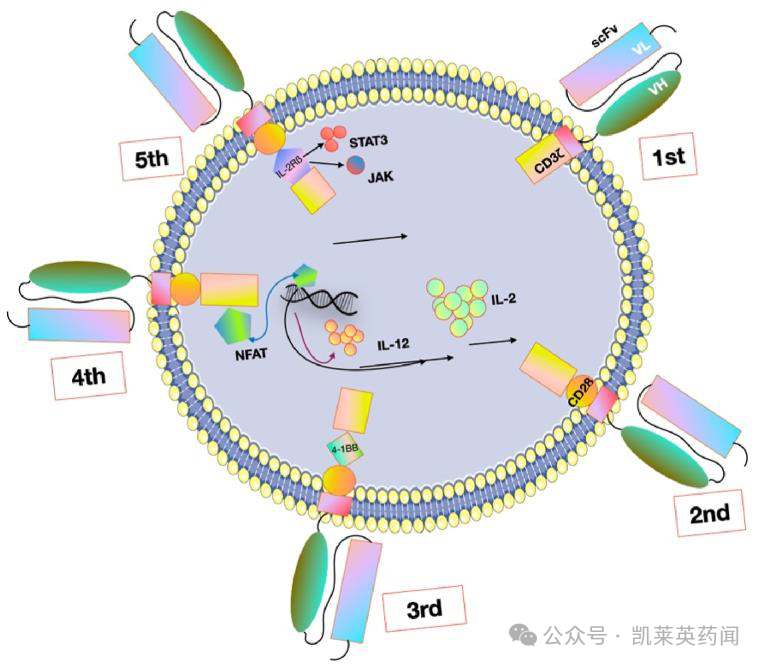
Unlike T cells, CAR-T cells can recognize antigens on the surface of cancer cells without the need for human major histocompatibility complex (MHC) molecules. Therefore, CAR-T cells are capable of distinguishing a broader range of targets compared to natural T cells.From the perspective of structural design, CAR-T has evolved through five generations.
The first-generation CAR-T cells were developed in the late 1980s and early 1990s. These CAR-T cells contain single-chain variable fragments (scFv) that are specific to particular antigens expressed on cancer cells. However, the first-generation CAR-T cells struggled to proliferate, lacked the ability to persist in vivo, and had insufficient cytokine release. Consequently, the first-generation CAR-T cells demonstrated limited efficacy against certain types of cancers and were ineffective for patients with low levels of target antigen expression.
The second-generation CAR-T cells are an improvement over the first-generation CAR-T cells, featuring two domains: an extracellular antigen recognition domain and an intracellular signaling domain. The extracellular domain consists of a single-chain variable fragment (scFv), which is specific to certain antigens expressed on the surface of cancer cells. The intracellular domain comprises a co-stimulatory domain and a CD3ζ domain that transduces activation signals. The co-stimulatory domain enables dual activation through co-stimulatory molecules and intracellular signals, promoting sustained T-cell proliferation and cytokine release, thereby enhancing the anti-tumor capability of T-cells. The second-generation CAR-T cells have demonstrated superior clinical efficacy in treating hematologic malignancies compared to the first-generation CAR-T cells.
The third-generation CAR-T cells are designed with two or more co-stimulatory domains to further enhance the activation and proliferation of CAR-T cells, thereby improving anti-tumor activity and persistence. This design has been shown to enhance cytokine production and improve the survival and proliferation of CAR-T cells. However, in some early clinical trials, the actual efficacy of third-generation CAR-T cells did not show significant differences compared to second-generation CAR-T cells.
The fourth generation of CAR-T incorporates an NFAT (nuclear factor of activated T cells) response element containing a transgenic protein, which can secrete therapeutic molecules with various functions, such as enhancing T-cell proliferation, improving T-cell persistence, overcoming immunosuppression, or targeting tumor-specific antigens.
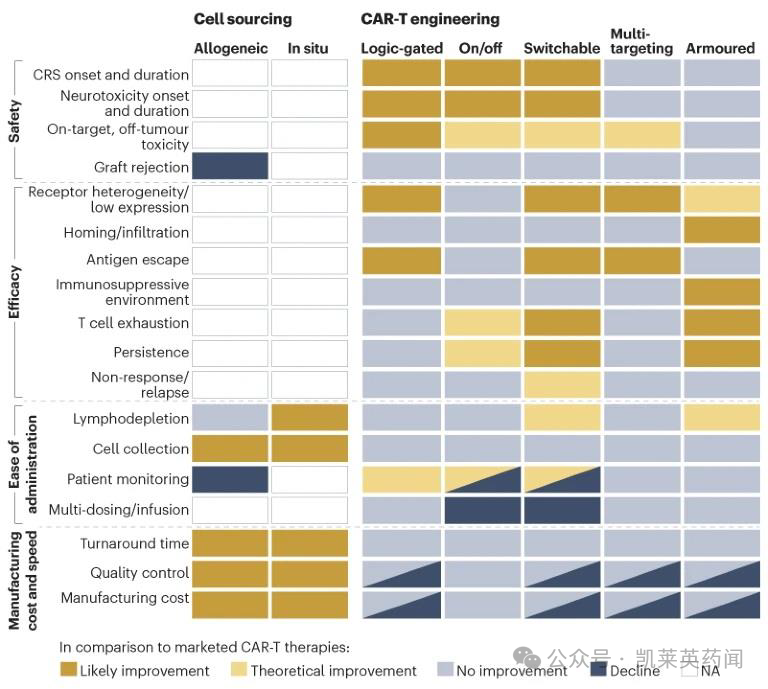
The fifth-generation CAR-T is attempting to solve the bottlenecks of previous generations by applying multiple new technologies. For example, designing dual-targeting CARs to enhance the specificity and efficacy of CAR-T and reduce the risk of drug resistance; or integrating additional membrane receptors and T-cell engagers (such as JAK-STAT signaling domains) into the endodomain to provide extra signaling, thereby improving T-cell activation, proliferation, and persistence; or adding logic-gated systems to increase the specificity of CAR-T cells, control their activity, or overcome limitations associated with traditional CARs; other attempts include adding switches such as suicide genes to eliminate CAR-T in case of severe adverse effects or when treatment is no longer needed.
Since 2017, the U.S. Food and Drug Administration has approved six CAR-T cell therapies for the treatment of hematologic malignancies. The first four are anti-CD19 CARs, and the latter two CAR-T cell products target B-cell maturation antigen (BCMA).
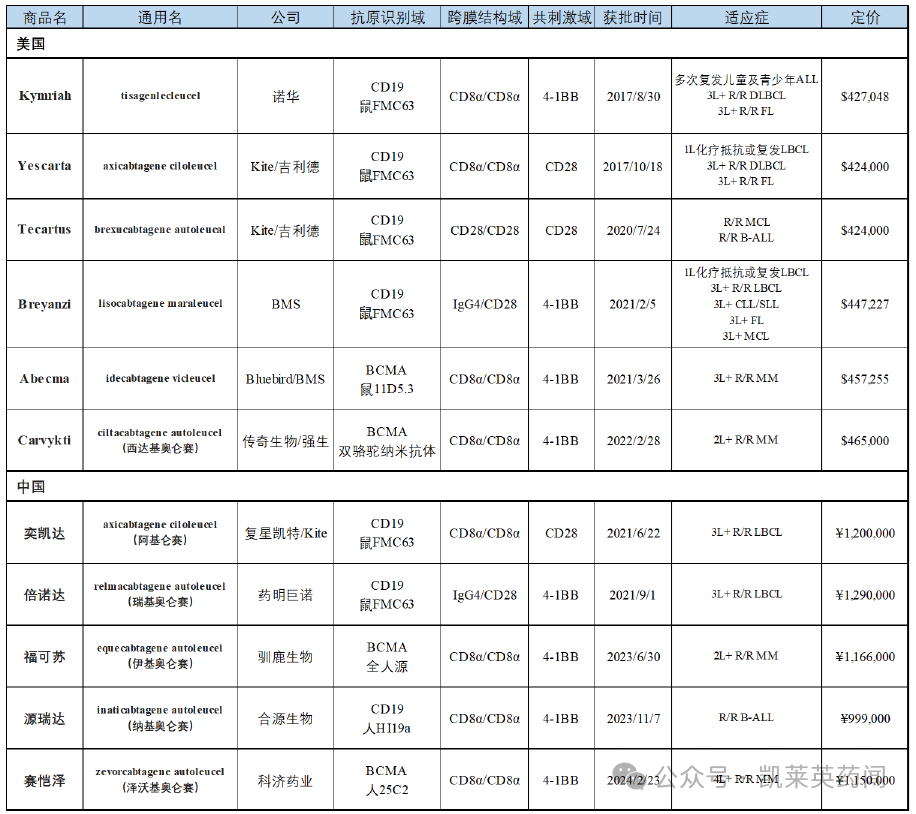
Currently, all approved CAR-T therapies are highly customized treatments with complex processes, long production cycles, and high costs. Although CAR-T demonstrates significant efficacy compared to traditional therapies, the high cost and long waiting times are the main factors limiting its widespread adoption. Regarding production costs, customized manufacturing struggles to achieve economies of scale, and process optimization has limited impact on cost control.Developing universal CAR-T therapy remains the most viable solution.
The clinical advantages of CAR-T are significant, and it is expected to experience rapid growth in the future. By 2030, the global CAR-T market size is projected to reach USD 21.8 billion, with a compound annual growth rate (CAGR) of 22.1% from 2024 to 2030. The CAR-T market size in China is expected to grow to RMB 28.9 billion by 2030, with a CAGR of 45.0% from 2022 to 2030.
References
1. Official Websites of Various Companies
2. First Shanghai Securities, Guoyuan International
3. Peptide Circle, Stem Cell Home


"Views"Click once