Source: Heart Future; Editor: Sophia
Reprint Requirements: If the source of the article is clearly indicated at the beginning of the text, it can be reprinted directly.AI-driven technologies are enhancing diagnostic capabilities, patient outcomes, and clinical workflows.. These technologies leverage machine learning algorithms and large datasets to provide more accurate diagnoses and patient care.
At present, medical technology companies are striving.Combining Artificial Intelligence Technology with Cardiovascular Medicine, from imaging, electrocardiography to patient monitoring, etc. According to a recent statement by the American Heart Association, there are currently few artificial intelligence tools that have been sufficiently proven to improve care for cardiovascular disease and post-stroke, and thus are widely adopted.
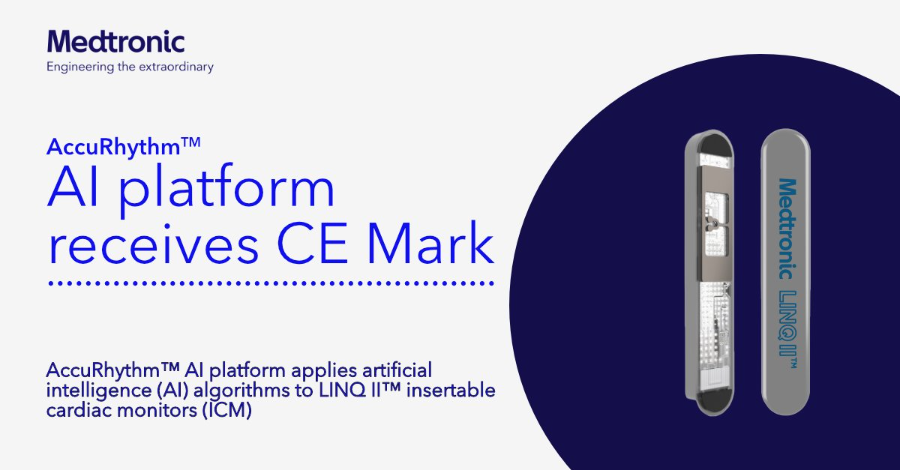
In the field of cardiology, artificial intelligence devices are transforming the way heart diseases are detected, monitored, and treated.Medical technology companies have developed algorithms that can analyze complex data from ECGs, ultrasounds, and other cardiac tests more effectively than the gold standard methods. Many companies have released data related to artificial intelligence technology.Indicate that these algorithms accelerate the diagnostic process and provide more reliable results.。Medtronic Applies Artificial Intelligence to ItsReveal Line Implantable Cardiac Monitoring Device, to help detect arrhythmias, reduce false alarms, and improve information accuracy. The medical technology giant Medtronic has launched the AccuRhythm AI update, which applies deep learning algorithms to the CareLink network to eliminate false positives for atrial fibrillation and false pause events.Medtronic expects,After adding these algorithms, the cumulative false alarm rate for atrial fibrillation and pauses will be reduced by 85%. Additionally, the company expects the false alarm rates for atrial fibrillation and pauses to reach 98.2% and 99.9%, respectively.。Recently,Stacey Churchwell, Head of Medtronic's Cardiovascular Diagnostics and Services DivisionInterviewed by MedTech Dive。Stacey Churchwell said,Medtronic is committed to supporting early disease detection and treatment through artificial intelligence technology,PublicMedtronic integrates AI algorithms into its implantable cardiac monitors for detecting abnormal heart rates.。HeartFuture will organize the Q&A interview transcript as follows.
# How Medtronic Overcomes Inherent Challenges in Developing Artificial Intelligence, Such as Potential Algorithm Bias?Stacey Churchwell: AboutFor LinqImplantable Cardiac Monitor (ICM)The Accurhyth AI Algorithm,Medtronic trained and validated it using a large global data repository, which includes not only the training of standard ECGs but also some rare and emergency scenarios.Help us reduce bias and ensure that AI algorithms won't make inappropriate decisions when entering the market.。The Linq II device is an insertable cardiac monitor capable of detecting atrial fibrillation — irregular or very rapid heart rhythms. Since many similar devices have false alarms, AccuRhythm AI is targeting this issue.To prevent artificial intelligence from re-learning bad habits or biases, once researchers are satisfied with the performance, the training of the algorithm will be locked. Before launching the Accurhyth AI algorithm, we strictly verified the AI's decisions together with human referees.To ensure the consistency between the algorithm and human decision-making。
# What is the goal of incorporating artificial intelligence into ICM?
Stacey Churchwell:ICM will detect any abnormal conditions., its high sensitivity was already determined at the design stage. It can detect all signals of abnormal sinus rhythm and mark them.
Before the introduction of artificial intelligence, there might be some things that were either clinically irrelevant or inoperable, requiring the nursing team to manually screen and review these alerts to determine if they were genuine.However, ICM can reduce their workload, but there are still areas where ICM can be improved.We see this as an opportunity to potentially leverage artificial intelligence in the cloud for further improvements. For instance, when the ICM detects abnormal sinus rhythm, these signals are sent to the cloud where AI resides, entering the CareLink network, which has already been trained on millions of data points.
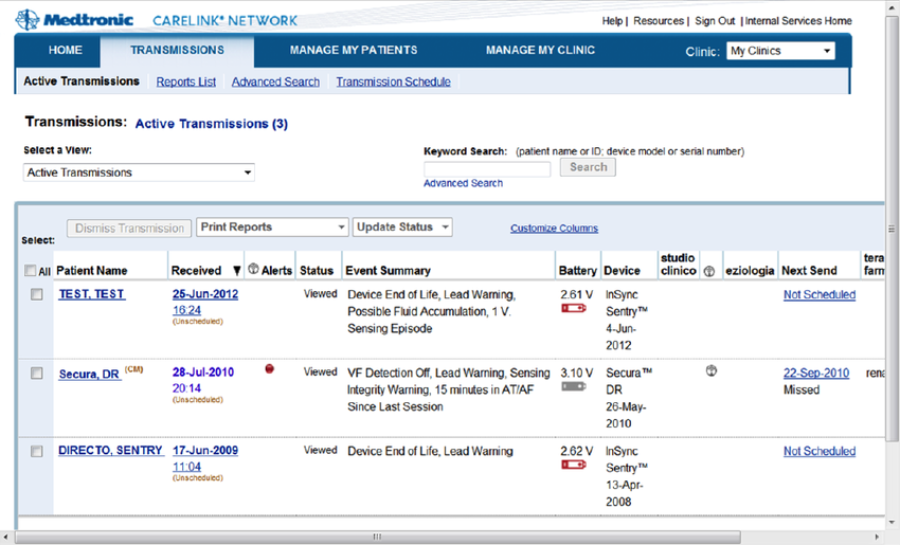
Medtronic's Carelink Network User Interface
# How Artificial Intelligence Enhances the Operational Capabilities of Devices?
Stacey Churchwell: We have a lot of data that can be used to train artificial intelligence,Let AI Understand and Search for SignalsThe algorithm undergoes a process of learning, understanding, and evaluating signals, and is capable of determining which signals are real, unreal, or relatively rare.Therefore, AI acts like a filter. When the algorithm identifies "erroneous signals" or "false signals," these signals are immediately eliminated.So doctors, the clinical team will not see the wrong signals.。AI algorithms will only release "true signals" and "suspicious signals," then letThe final judgment is made by the clinician.
# How is artificial intelligence performing?
Stacey Churchwell: We are very excited about the results of the application.Clinicians say AI algorithms have played a significant role. Medtronic hopes that this AI algorithmThe ability to identify "true signals" remains consistent, with a sensitivity to the signals maintained at 99%.In this way, doctors and patients will have more confidence in our products. When AI says it detects atrial fibrillation, they will believe in the authenticity of the detection.Last year, we launched AccuRhythm AI 2.0, which significantly reduced the false alarm rate for atrial fibrillation.
# What are the benefits of cloud-based?
Stacey Churchwell: First, we can leverage cloud computing power instead of overburdening the device itself with excessive computational load, as doing so would necessitate extending battery life.Another huge benefit is that we can improve devices implanted years ago.
When we flip the switch in the cloud, every device that’s still active will benefit.Whether we implanted the relevant Medtronic device today, two days ago, two weeks ago, two months ago, or even two years ago, as long as it is still active, artificial intelligence can intervene to provide assistance.
# What is the next focus of artificial intelligence?
Stacey Churchwell:We believe the next frontier is prediction, and Medtronic hopes to demonstrate that Linq can play a role in advancing heart failure management.We are currently conducting a large clinical trial called Alleviate-HF, which is exploring this issue and will obtain results in about a year.
On September 23, 2020, Medtronic announced the first patient enrollment in the ALLEVIATE-HF clinical trial.This trial will evaluate the capability of its Reveal LINQ™ Insertable Cardiac Monitor (ICM) in identifying patients at high risk of heart failure deterioration.This trial is a prospective, randomized, multi-center, interventional, Investigational Device Exemption (IDE) study, which will enroll up to 300 patients across up to 30 sites in the United States, and will follow the patients.Follow-up for at least seven months and up to three years。The first group of patients were treated by Dr. Barry Bertolet at Cardiology Associates of North Mississippi and Florida Heart Center.Recruitment.If the trial is successful, it will help advance the commercialization of solutions and algorithms that use artificial intelligence for prediction.The trial will determine whether the early information provided by the LINQ device enables clinicians to take action before the patient's condition worsens.If a patient is at high risk of a heart failure event, the LINQ device will alert clinicians, giving doctors time to adjust medications to improve patient health.Reveal LINQ ICM Allows DoctorsContinuous Wireless Monitoring of Patients' Cardiac Arrhythmia Diseases,By adding proprietary algorithms to the Reveal LINQ system, clinicians willBe Alerted to Signs of Worsening Heart Failure。Doctors can receive information transmitted nightly from the patient's bedside monitor to Medtronic's CareLink® network.Patient data will be stratified by risk level, providing doctors with remote access to patient data.And allow them to intervene as early as possible without the system.