Recently, Medtronic announcedAcquisition of Fortimedix Surgical.Fortimedix Surgical is a minimally invasive surgical medical device company headquartered in the Netherlands. The company has extensive in-house stent manufacturing facilities and possesses key manufacturing technologies such as laser cutting, electropolishing, and heat treatment. It is committed to transforming the current state of minimally invasive surgery through innovative single-port devices. In the field of minimally invasive surgery, Fortimedix Surgical is gradually changing surgical methods with its advanced technology and products. Particularly, its breakthroughs in single-port technology are expected to provide patients with safer and more efficient surgical experiences.Fortimedix Surgical's product FMX314 has received approval in the United States.FDAApproval, which indicates that its products have been recognized in terms of safety and efficacy.Currently, the company hasCompleted a 11-million-euro Series A round of financing.01
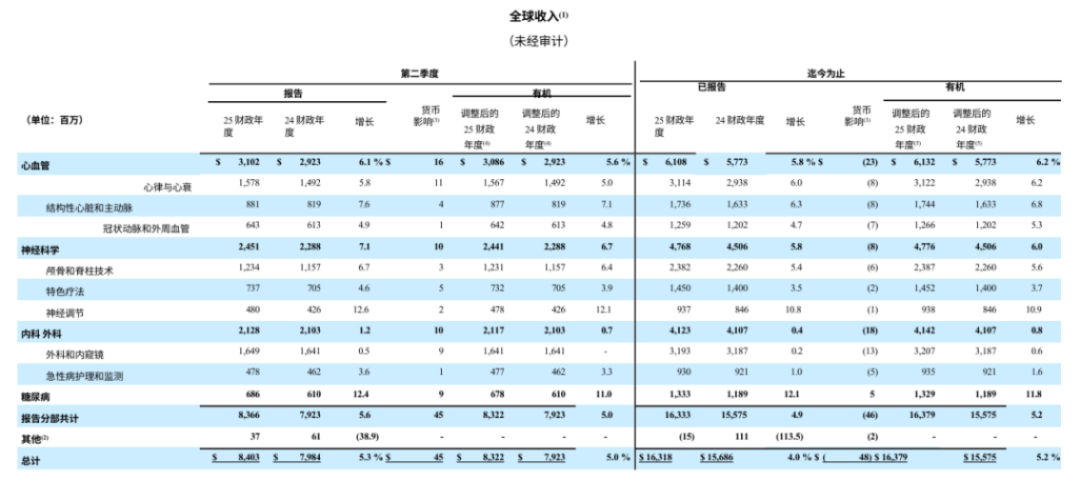
On November 19, Medtronic announced its Q2 financial report for the fiscal year 2025 ending October 2024, showcasing strong performance that prompted the company to raise the lower limit of its full-year revenue and adjusted EPS guidance.In terms of revenue, the company's fiscal year 2025 second-quarter report shows a profit close to $1.3 billion, with earnings per share at 99 cents. Sales reached $8.4 billion, increasing by 5.2% compared to the same period last year, including an organic growth of 5.0%. This achievement exceeded Wall Street's expected $8.27 billion.Medtronic Raises Revenue Growth Guidance from 4.5%-5% to 4.75%-5%; Adjusted EPS Guidance Updated from $5.42-$5.50 to $5.44-$5.50.In terms of stock price, although Medtronic's shares opened more than 1% lower on the 19th at $85.91 per share, its financial performance still gained market recognition. Earnings per share calculated according to GAAP were $0.99, and non-GAAP earnings per share were $1.26.All business portfolios performed excellently.
Cardiovascular business grew 6.1% to $3.102 billion;
Neuroscience business grew by 7.1% to US$2.451 billion;
Medical surgical business grew 1.2% to $2.128 billion;
Diabetes business grew by 12.4% to USD 686 million.
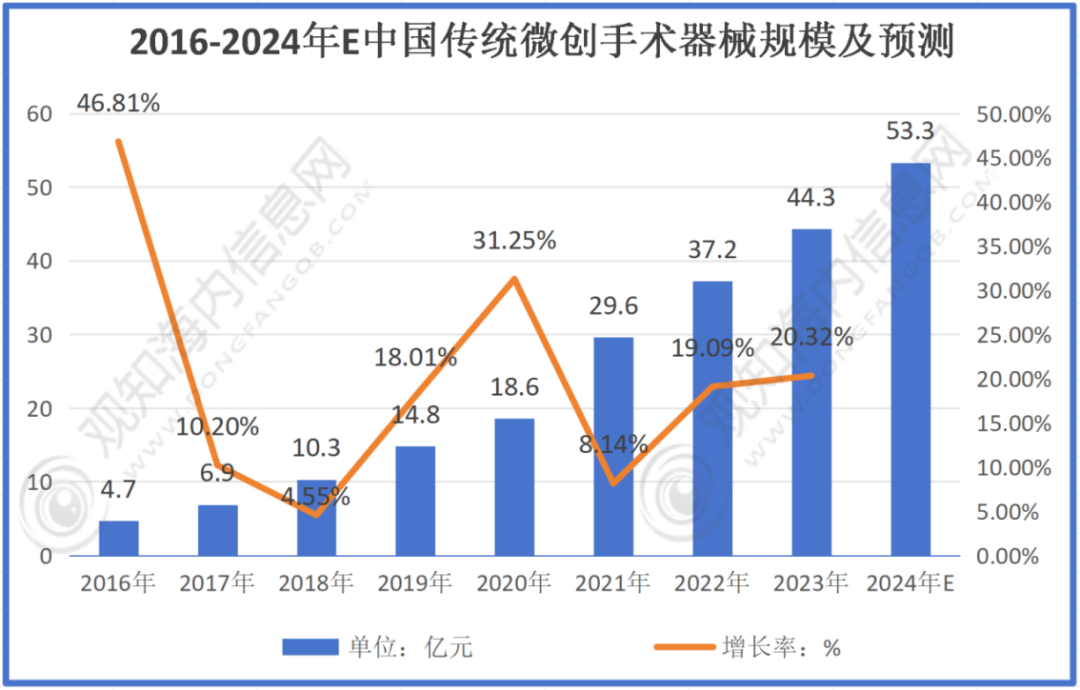
Particularly in the cardiovascular field, the arrhythmia and heart failure departments achieved mid-to-high single-digit growth. The company highlighted the growth of defibrillation solutions and cardiac pacing therapies, while the performance of cardiac ablation remained flat. The growth of the PulseSelect pulsed field ablation system offset the decline in cryoablation.According to Chairman and CEO Geoff Martha, issues with a third-party component supplier limited the supply of the PulseSelect system, hindering the broader ablation business. Now that the supplier is back on track, capacity is expected to expand.In the field of neuroscience, the cranial and spinal technology division achieved above-market performance due to the continued adoption of the AiBLE spinal implant ecosystem. The neuromodulation division also achieved above-market results with the ongoing launch of the Percept RC Deep Brain Stimulation (DBS) system.The emergency care and monitoring departments in the medical surgery field achieved low single-digit growth, while the surgery and endoscopy departments remained stable.Double-digit revenue growth in the diabetes business, driven by the continued adoption of the MiniMed 780G automated insulin delivery system.Geoff Martha said on the earnings call that TAVR, pulsed field ablation, neuromodulation, diabetes and more will continue to drive the company's growth.It emphasized that renal denervation is another area with growth potential. Recently, the Symplicity Spyral renal denervation catheter received transitional pass-through payment (TPT) under the Medicare Hospital Outpatient Prospective Payment System in the United States.When asked about the M&A strategy, Geoff Martha said that the company aims to carry out mergers and acquisitions in a "top-down" approach.Notably, during the earnings call, Geoff Martha also outlined plans to submit the Hugo surgical robot platform to the FDA for urological indications in early 2025.02The market prospect for minimally invasive surgical instruments is broad, and the scale is expected to continue growing in the future. With the continuous improvement in people's demand for medical quality and the gradual increase in acceptance of minimally invasive surgeries, the demand for traditional minimally invasive surgical instruments has been steadily growing. Minimally invasive surgery offers advantages such as minimal trauma, quick recovery, and less pain, leading more and more patients to opt for it. This provides a broad development space for the market of traditional minimally invasive surgical instruments.Data from Bizhes Consulting shows that: The global minimally invasive surgical instruments market size was $26.49 billion in 2024 and is expected to reach $59.29 billion by 2029.The top global companies in the minimally invasive surgical instruments market include GE Healthcare, Medtronic, Stryker, Smith & Nephew, Abbott, NuVasive, Inc., CONMED, Zimmer Biomet, Siemens, and Intuitive Surgical, among others.As China's aging population continues to grow, by around 2035, the population aged 60 and above will exceed 400 million, accounting for over 30% of the total population, entering a stage of severe aging. Considering the decline in physical function among the elderly, the various advantages of minimally invasive surgery are better suited to meet the complex and diverse medical needs of older adults, making minimally invasive treatment gradually become the mainstream approach in interventional therapy.From 2016 to 2024, the market size of China-produced traditional minimally invasive surgical instruments in China showed an overall upward trend, increasing from an initial 470 million yuan to a projected 5.33 billion yuan. Although the growth rate fluctuated, it maintained an overall growth trend. This indicates that the market demand is continuously expanding, possibly driven by advancements in medical technology and increased acceptance of minimally invasive surgeries.2016—2024 China Traditional Minimally Invasive Surgical Instruments Market Size and ForecastSource: Sullivan, Guanzhi Hainai Information ConsultingAccording to statistics, by 2024, the number of minimally invasive surgeries per million people in China and the penetration rate of minimally invasive surgeries will increase to 18,242 cases and 49.0%, respectively. This will drive the growth of the minimally invasive device market, with an expected market size of 58.7 billion yuan for China's minimally invasive surgical instruments industry by 2027, indicating significant development potential for the industry.Currently, the minimally invasive surgical instruments market in China includes several well-known companies that hold significant market share and influence in the research, development, production, and sales of minimally invasive surgical instruments. For example: Nanjing Minimally Invasive Medical Technology (Nanjing M.I.T.), KaiLiTai, MicroPort Robotics, Tinavi Medical Technologies, WEGO Orthopedics,堃博医疗 (Broncus Medical), Sinocare, and Yuyue Medical. These companies possess strong R&D capabilities and advanced production technologies in the field of minimally invasive surgical instruments, continuously launching innovative products to meet the needs of doctors and patients. At the same time, these companies also focus on market expansion and brand building, actively participating in domestic and international medical exhibitions and exchange activities to enhance brand awareness and influence.In the future minimally invasive medical market, how to enhance the intelligence level of artificial intelligence and improve the precision of robotic operations is not only a technical challenge but also an all-around competition. Are we all looking forward to future medical technologies serving every patient in need more effectively? ▲Source of the article: Medical Device Innovation Network▲Unauthorized reproduction is prohibited, and reprinting is allowed only after 24 hours! Disclaimer: This article is intended solely for the purpose of information transmission and is for reference only. It does not constitute any advice on investment or treatment; please exercise caution. If it involves issues related to the content, copyright, or other aspects of the work, to protect the rights and interests of both parties, please contact us and we will handle it immediately. If this article is reprinted by any platform, the platform must take responsibility for the article itself; the Medical Device Innovation Network is not responsible for any secondary dissemination caused by the reprint. P/R/E/V/I/E/W