Shenzhen CoreMed's Implantable Biventricular Assist System DuoCor Granted Entry into NMPA's Innovation Review Pathway

Core Medical
Artificial Heart Series Product Developer


Source: Heart Future
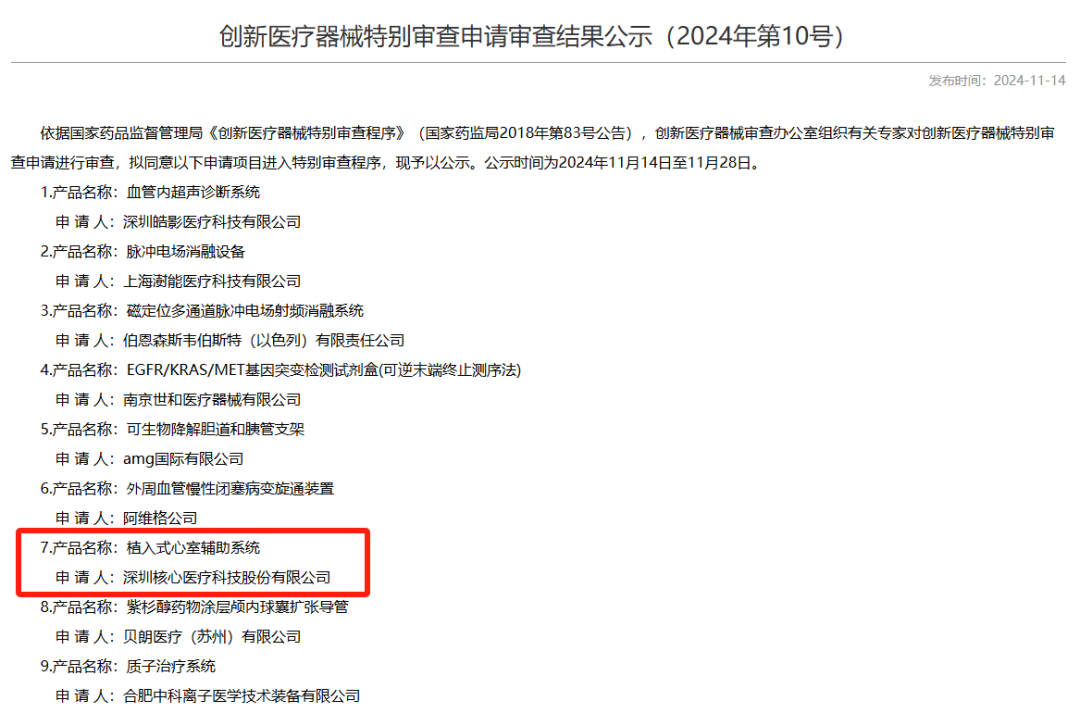
Recently, the NMPA announced the review results of the special review application for innovative medical devices (Notification No. 10, 2024). Nine products have entered the innovation channel, including the implantable ventricular assist system applied for by Shenzhen Core Medical Technology Co., Ltd.
Currently, there is no dedicated biventricular assist system (BiVAD) product available globally. Most often, two left ventricular assist devices (LVADs) are used to achieve BiVAD functionality. This makes it difficult to regulate the circulation support for the left and right ventricles post-surgery. Additionally, two lines extend from the left and right sides of the abdominal cavity to connect externally to a controller. This setup not only places significant burden on patients but also poses a high risk of infection. Moreover, most existing LVAD products are not suitable for right ventricular implantation.
Core Medical's innovative integrated full-magnetic levitation dual ventricular assist system, DuoCor, is based on ultra-compact full-magnetic levitation technology. It uses a single controller combined with an innovative control algorithm to achieve dual-pump coordinated control through just one percutaneous cable (as of November 20, 2024), and successfully completed its first clinical FIM implantation surgery in July 2024.
The Dual Ventricular Assist System DuoCor features "coordinated control, flexible configuration, low infection risk, low power consumption, and high portability," offering more options for symptom relief, quality of life improvement, and survival benefits for heart failure patients; it enhances long-term survival rates while improving patient quality of life, providing better clinical solutions for patients with left, right, and biventricular heart failure.
In June 2023, Corheart® 6, the implantable left ventricular assist system independently developed by Core Medical, was officially approved for marketing by NMPA. This is the artificial heart with the most implantations in China and also the smallest and lightest artificial heart globally (as of June 2023), used to provide hemodynamic support for patients with advanced refractory left heart failure. Its blood pump has a diameter of only 34 millimeters, a thickness of 26 millimeters, and weighs about 90 grams, which is 40% smaller in diameter and 50% lighter than similar products on the market.
The new generation BiVAD product DuoCor, as an integrated fully magnetically levitated biventricular assist system, features blood pumps and internal components that adoptFull magnetic levitation lightweight design, small size, light weight, according to the needs of the condition, can achieveLeft Pump Implantation, Right Pump Implantation, Dual Pump ImplantationThe flexible configuration increases the range of clinical indications. At the same time, it adopts a single controller combined with an innovative control algorithm design,Achieve coordinated operation of the left and right pumps through a single controller, with only one percutaneous line.
Two blood pumps as A Coordinated System Operation, effectively simulating the natural function of the heart and reducing the patient's...The complexity and risks potentially brought by multiple independent devices within the system Risk. Depending on the needs of different patients, it is possible to choose to implant one pump, two pumps, or both pumps simultaneously. External components are more streamlined and lightweight, with longer battery life., a set of extracorporeal components reduces the weight of external devices by more than 3-6 times compared to existing solutions, making the overall system more portable. The overall power consumption of the system is low.With dual-battery support, even when both pumps are running simultaneously, there's no need for frequent recharging. Compared to existing solutions, the overall battery life has increased by more than 100%.
Pump Selection
Pump Implantation Method
Integrated Control Adjustment Kinetic Energy
July 2023,Union Hospital, Tongji Medical College, Huazhong University of Science and TechnologyProfessor Dong Nianguo and Professor Xia Jiahong from Wuhan Union Hospital led their team to successfully perform an implant surgery using DuoCor on a patient with end-stage biventricular heart failure, significantly improving the patient's condition.
Initiate cardiopulmonary bypass, occlude the ascending aorta, and perfuse cardioplegia to induce cardiac arrest; complete the left ventricular apical purse-string suture.Opening in the Left Ventricle and Implanting an Assist Pump, After the heart resumed beating, the right atrial appendage was sutured in the same way.Create an opening in the right ventricle and implant a right ventricular assist pump;Anastomose the artificial vessel with the ascending aorta and pulmonary artery; start the biventricular assist pump and vent.; Finally, adjust the flow as needed and gradually stop the extracorporeal circulation.
Left Ventricular Assist Device(Left Ventricular Assist Devices, LVAD): This type of device is primarily used to assist the pumping function of the left ventricle and is the most common type of VAD. LVADs can significantly improve the quality of life and survival rate of patients with advanced heart failure. Percutaneous Ventricular Assist Device(Percutaneous Ventricular Assist Devices, PVAD): PVAD is a smaller, skin-insertable VAD mainly used for short-term support, such as post-cardiac surgery recovery or cardiac support after acute myocardial infarction. Biventricular Ventricular Assist Device(Biventricular Ventricular Assist Devices, BIVAD): Simultaneously support the pumping function of both the left and right ventricles, used in cases of heart failure involving both ventricles. Right Ventricular Assist Device(Right Ventricular Assist Devices, RVAD): Mainly used to assist the pumping function of the right ventricle, often for patients with right heart failure or pulmonary hypertension.
In patients with heart failure, left ventricular failure is the most common. Since 2017, 132 hospitals across China have completed 908 cases of LVAD implantation involving four different models, with the number of LVAD implants increasing annually. Among these hospitals, 23 (17%) have performed more than 10 implantations each, accounting for 627 cases (70%) of the total implant volume. However, approximately 30% of end-stage heart failure patients experience biventricular failure, meaning both the left and right ventricles exhibit insufficient ejection capacity. In such cases, implanting an LVAD alone does not achieve the desired outcomes.Patients Need Full Support。
In addition, although the isolated implantation of LVAD is highly effective for patients with left heart failure, it increases the burden on the right heart due to enhanced left ventricular output. This requires a certain level of right heart function to adapt to the hemodynamic changes brought by the LVAD after implantation. Long-term follow-up studies on LVAD implantation internationally have found that,Approximately 10%-30% of patients will experience varying degrees of right heart failure symptoms after LVAD implantation.。
Although the total artificial heart (TAH) is an option, its large size, complex structure, and high cost have limited its clinical application. In contrast,Biventricular Assist System (BiVAD) preserves the patient's original heart and provides more balanced hemodynamic support., and when the device fails, the original heart can partially maintain cardiac output, which improves rescue rates, results in fewer clinical adverse events, and may potentially promote myocardial recovery. This is the future trend in the treatment of biventricular heart failure.
In 2001,Impella Cardiotechnik AGThe dual-heart assist system obtained the European CE certification. Subsequently, the Intracardiac Pump LV 6.4 in the dual-ventricular assist system was renamed to Impella LD and Impella 5.0, which obtained CE registration certificates in 2002 and 2003 respectively. The company was later acquired by the American company Abiomed (a subsidiary of Johnson & Johnson).
MI-VADThe company is also researching a new type of interventional ventricular assist device—MI-VAD. MI-VAD consists of three main components, providing minimally invasive treatment for patients with Class III and IV heart failure. It can be implanted in the supravalvular position of the aorta or pulmonary artery, effectively enhancing and restoring left or right ventricular cardiac function in patients with dilated or restrictive cardiomyopathy. The device does not require sternotomy or extracorporeal circulation, is fully implantable, and can be wirelessly charged. It also allows for diagnosis and programming via a smartphone, offering patients greater freedom, comfort, and an improved quality of life while eliminating the risk of infection caused by external connections.
However, the research on biventricular assist devices in China is still in its infancy, with relatively few clinical application cases. In April 2022, Director Nian-Guo Dong of the Department of Cardiac and Great Vessel Surgery, in collaboration with Core Medical, began developing a "single control system for biventricular assist."
With the continuous development and improvement of ventricular assist device technology, its application prospects in treating end-stage heart failure are becoming increasingly broad. In the future, ventricular assist devices are expected to achieve smaller size, lighter weight, better blood compatibility and tissue compatibility, as well as more intelligent control and monitoring systems. This will make ventricular assist devices a treatment option for more patients with end-stage heart failure and is expected to replace heart transplantation as one of the main methods for treating advanced heart failure.
Shenzhen Core Medical Technology Co., Ltd. was established in August 2016, with its headquarters located in Shenzhen. The company focuses on the research, development, and production of high-end innovative medical device products, such as mechanical circulatory assist devices (commonly known as "artificial hearts"). It has achieved a comprehensive layout in the field of implantable and interventional artificial hearts, and is committed to providing a full range of solutions for heart failure patients worldwide.
In the miniaturization of artificial hearts, the key performance indicators of Corheart® 6, an ultra-small fully magnetically levitated artificial heart independently developed by Core Medical, have reached the same level as international counterparts, significantly enhancing the competitiveness of Chinese-produced artificial hearts in the global market.
In product lines such as the interventional artificial heart CorVad, Core Medical has also carried out innovative R&D to achieve a larger flow rate within a smaller interventional size. Its self-designed micro motor and control technology have further reduced the risk of hemolysis, enhancing product stability and long-term operational reliability.
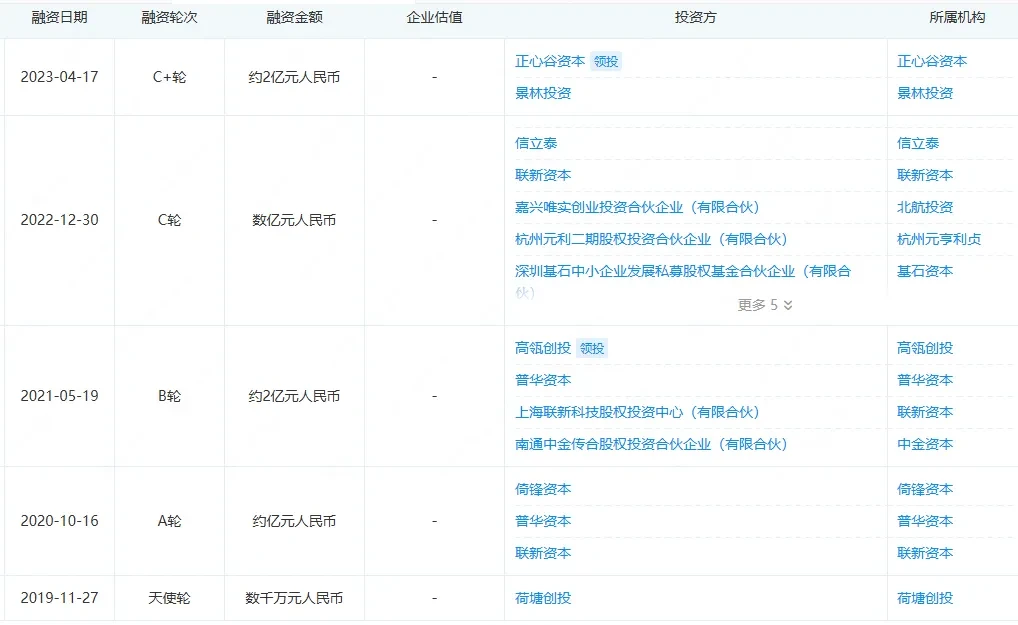
Since 2019, Core Medical's innovative achievements in the artificial heart field have been highly favored by the capital market, completing 5 rounds of financing in five years, with a steady development momentum.
As of the date of this report, the company's financing history is as follows:
Dr. Yu Shunzhou, the founder of Core Medical, graduated from Harbin Institute of Technology. After completing his Ph.D. at HIT, Yu Shunzhou went to the University of California, Davis for further studies in mechanical engineering. In 2011, by chance, he was introduced to the field of artificial hearts and began working as a senior engineer at a top U.S. artificial heart company, where he participated in the development of several artificial heart products, including Heartmate 3 – the world’s most advanced left ventricular assist device.
In 2016, Medtronic's acquisition of HeartWare, the second-ranked company in the artificial heart field, for $1.1 billion made headlines. At that time, the prevalence of cardiovascular diseases in China continued to rise, while heart transplant donors were extremely scarce, and heart failure was dubbed the "final battlefield" in the cardiovascular field. Witnessing all this, Yu Shunzhou decided to return to China to start a business, leading to the establishment of Core Medical.
Seemingly a natural and effortless decision, but behind it lies a little-known detail: Yu Shunzhou's mother is also a heart failure patient. He once frankly said when talking about his entrepreneurial journey: "I have a heart failure patient in my family, so I deeply understand the longing for life and the desire for quality of life that heart failure patients have."
In 2016, Yu Shunzhou returned to China and founded Core Medical, settling in Zhinanyuan, Nanshan, Shenzhen.
This article is reprinted, all views belong to the original author.Platform (Core Medical), Medical DevicesThe Medical Business Review remains neutral on all viewpoints in the article and only shares them for exchange.
*Advertisement
▼More Book Recommendations▼
In order not to miss any content, everyone remembers toMedical Device Business ReviewSet as Star? Oh,
Looking forward to meeting you at the earliest opportunity each time