XtalPi and Academician Shen Xiangyang Co-Build Greater Bay Area AI for Science Ecosystem, Launch PatSight — a Multimodal AI Model for Chemical Literature

XtalPi
Computation-Driven Innovative Drug R&D Provider

On November 23, NVIDIA founder Jensen Huang was awarded an honorary Doctor of Engineering by the Hong Kong University of Science and Technology.Engaged in a "fireside chat" with Harry Shum, the founding chairman of the IDEA Research Institute and a foreign member of the U.S. National Academy of Engineering, on core issues of artificial intelligence (AI) development. Jensen Huang pointed out,AI It is bringing profound changes to various scientific fields and industries. As the only region in the world where both mechanical and electrical technologies and AI are thriving simultaneously, the Greater Bay Area has extraordinary opportunities in the robotics field. Notably,, just on the previous day, November 22,The 2024 IDEA Conference, hosted by the International Digital Economy Academy (IDEA Institute) in the Guangdong-Hong Kong-Macao Greater Bay Area, has successfully concluded in Shenzhen.Academician Harry Shum also expressed optimism about the development of the Greater Bay Area’s AI for Science industry ecosystem. The conference introduced a series of cutting-edge research and industrial implementation achievements by IDEA based on AI technology, includingWith XtalPi (2228.HK)Multimodal Large Model for Chemical Literature Collaboratively LaunchedPatSightOfficially launched.
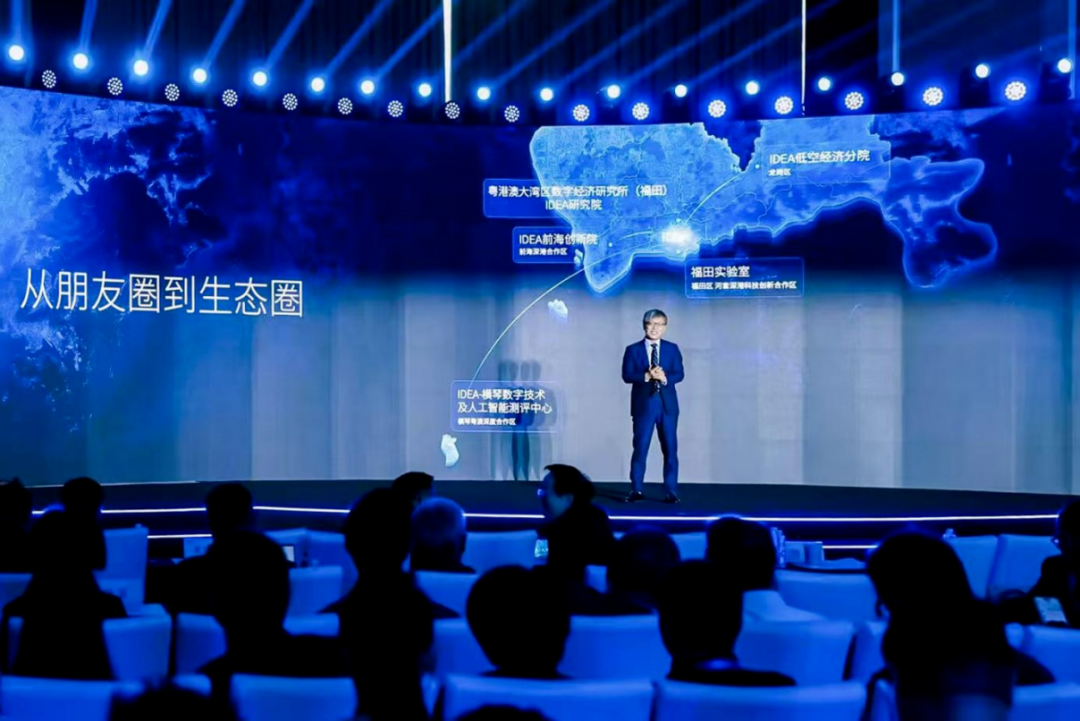
As an R&D platform enterprise rooted in the Greater Bay Area and driven by AI + robotics innovation, XtalPi is committed to building scientific intelligence-based R&D infrastructure. Through collaborations with research institutions and cutting-edge enterprises such as IDEA, XtalPi empowers the industrial implementation and commercial transformation of AI and large models in the fields of biomedicine and new materials. At the 2024 IDEA Conference, Wen Shuhao, Chairman of XtalPi, was invited to participate in the roundtable discussion "AI for Science: Frontiers of Research and Practical Implementation," where he joined industry experts in exploring advanced practices and the future of the Scientific Intelligence (AI4S) field.

● Multimodal Large Model for Chemical Literature, Patsight Patent Data Mining Platform Released
This year's Nobel Prize has further pushed this scientific revolution into the spotlight. As basic research is receiving increasing attention, AI for Science has become an important direction for technological innovation and entrepreneurship. The IDEA team has conducted research and industrialization practices starting with predictive capabilities and data capabilities in the field of chemistry.
Among them, the multi-modal large model in the pharmaceutical chemistry field developed by the IDEA XtalPi Artificial Intelligence Laboratory has been successfully applied to PatSight, a new generation of patent data extraction tool created by XtalPi, accurately achieving the parsing of chemical molecular structures and table recognition in pharmaceutical chemistry literature patents.Shorten the time for data mining of patented compounds in the pharmaceutical field from the traditional several weeks to 1 hour., Empower Users for High EfficiencyEarthDeciphering the Mysteries Between Small Molecule Compound Structures and Bioactivity.
At the end of 2021, XtalPi joined the IDEA Research Institute CTO Labs program and co-founded the "IDEA XtalPi Artificial Intelligence Laboratory." Last year, the lab launched idealFold, an AI-based high-throughput, high-precision antibody structure prediction model, significantly improving the R&D efficiency of antibody drugs. PatSight marks another important advancement from this lab. Over the past two and a half years, the two parties have leveraged their respective technological strengths to address technical challenges in the biopharmaceutical industry, engaging in in-depth R&D collaborations in areas such as innovative drug discovery and patent data extraction.

● AI for Science: Frontiers of Research and Practical Applications
At the conference, Wen Shuhao, Chairman of XtalPi, was invited to attend the roundtable forum together with Cai Zheng, Deputy Director of the Department of Astronomy at Tsinghua University; Liu Tieyan, President of Beijing Zhongguancun School; Wang Danwei, Chief Development Officer of IDEA; Yao Baogang, Vice President and Chief Technology Officer of IDEA; and Xu Jinbo, Founder and Chief Scientist of Beijing Molecular Hearts Technology. They shared insights on the future development and industrial practice of scientific intelligence.
Wen Shuhao stated that, as technological intelligence deeply integrates into industrial practices, companies need to pursue a dual-track approach: on one hand, strengthening fundamental scientific research to solidify their foundation and confidently face international competition; on the other hand, adhering to industry demand-oriented strategies, closely aligning with customer needs to drive R&D innovation, achieving the commercial implementation of AI and robotics technologies, and creating value for the industry.
Currently, in the practice of new drug development and new material exploration, AI can not only improve efficiency but also achieve creative breakthroughs that are "uniquely available," significantly expanding the chemical space that humans can explore and master, providing us with more advanced tools to understand and transform the world.With the comprehensive arrival of the AI era,Facing the constant emergence of new opportunities, companies need to focus on specific areas for in-depth development, thereby continuously expanding their competitiveness and realizing the immense commercial potential of AI in driving fundamental scientific research innovation.