

Roche Acquires Poseida Therapeutics for $1.5 Billion to Advance Allogeneic CAR-T Pipeline
Roche
Oncology Drug Research, Development, and Manufacturing

Poseida Therapeutics
Biological New Drug Developer
On November 26, 2024, Roche announced that it would acquire biopharmaceutical company Poseida Therapeutics (referred to as "Poseida") for $9 per share in cash, with a total equity value of approximately $1 billion. Shareholders will also receive a non-transferable contingent value right (CVR) in cash totaling $4 per share, bringing the total transaction value to up to approximately $1.5 billion. The transaction is expected to be completed in the first quarter of 2025.
It is reported that the two parties reached a cooperation and licensing agreement in 2022, focusing on developing off-the-shelf CAR-T cell therapies to meet the medical needs of patients with hematologic malignancies.
Previously, there was a $6 billion cooperation
On August 3, 2022, Poseida Therapeutics announced a broad strategic collaboration and licensing agreement with Roche to focus on the development of allogeneic CAR-T therapies for hematologic malignancies. The collaboration covers the research and development of various existing and novel "off-the-shelf" cell therapies targeting multiple myeloma, B-cell lymphoma, and other hematologic indications.
According to the agreement, Poseida will receive an upfront payment of $110 million and may obtain $110 million in near-term milestones and other payments in the coming years. In addition, Poseida is also eligible for R&D, regulatory, net sales milestones, and other payments that could reach up to $6 billion in total value, as well as royalties on net sales across multiple programs.
At the same time, Roche will obtain exclusive rights from Poseida Therapeutics to develop and commercialize several allogeneic CAR-T programs targeting hematologic malignancies within Poseida’s portfolio. These include P-BCMA-ALLO1, an allogeneic CAR-T therapy for the treatment of multiple myeloma currently in Phase 1 clinical trials, as well as P-CD19CD20-ALLO1, an allogeneic dual-target CAR-T therapy for the treatment of B-cell malignancies.
In the case of complementary professional knowledge and capabilities, the two parties will also collaborate on a research program to create, develop, and improve the next generation of universal CAR-T therapies, and on that basis, jointly develop other allogeneic CAR-T candidate products. For the existing projects licensed to Roche and part of the therapies in future collaborative projects, Poseida will conduct Phase 1 clinical studies and produce the corresponding CAR-T cells, then transfer these projects to Roche, who will take full responsibility for the late-stage clinical development and global commercialization of all collaborative project products.
Technology Platform Focuses on Universal CAR-T Pain Points
Poseida Therapeutics is a clinical-stage biopharmaceutical company that utilizes proprietary gene engineering platform technologies to create curative cell and gene therapies, gradually transitioning from autologous to allogeneic CAR-T therapies. The company’s CAR-T cells do not contain scFv structures but are composed of fully human Centyrin domains. Centyrin is a small, simple, and highly stable protein that binds to target antigens with high specificity and affinity, offering high stability while maintaining low immunogenicity.
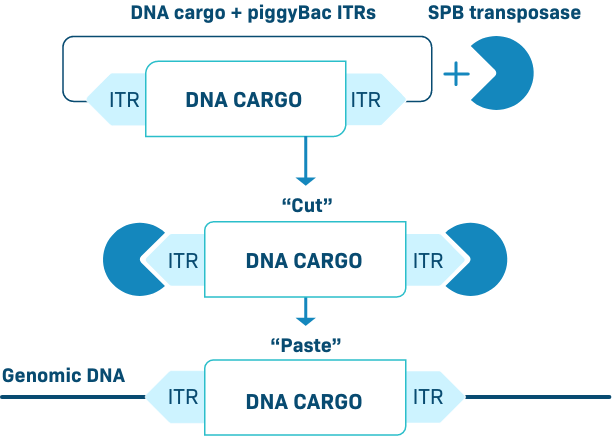
Poseida's proprietary platform is the non-viral piggyBac DNA delivery system.It is reported that the platform does not use viral vectors but instead utilizes gene-editing technology to deliver CAR molecule genes to T cells. The advantage of this method is its ability to generate CAR-T products with highly active stem cell memory T cells (TSCM cells), which exhibit a longer-lasting and highly active response with lower toxicity. Additionally, non-viral vector manufacturing has low costs, short production times, and reduced risks of mutagenesis and tumorigenesis. Moreover, PiggyBac's cargo capacity may be 20 times that of lentiviral vectors, enabling the effective delivery of large gene fragments and achieving stable transgenic expression.
Another technology platform is the Cas-CLOVER site-specific gene editing system.Cas-CLOVER combines the precise specificity of first-generation CRISPR and obligate dimeric nuclease systems like TALEN, forming a proprietary obligate dimeric nuclease system composed of part of the Type II restriction endonuclease Clo051. The genomic cleavage of this enzyme strictly depends on dimerization, making it a fully dimeric system and providing it with exact site specificity; Cas-CLOVER employs a Cas9 enzyme known as dCas9, which is incapable of cutting DNA and functions as a DNA-binding protein only when bound to the appropriate guide RNA. Poseida Therapeutics uses the Cas-CLOVER system to knock out receptors of multiple key inhibitory signals in T cells within CAR-T cells, ensuring the activation state of the CAR-T cells.
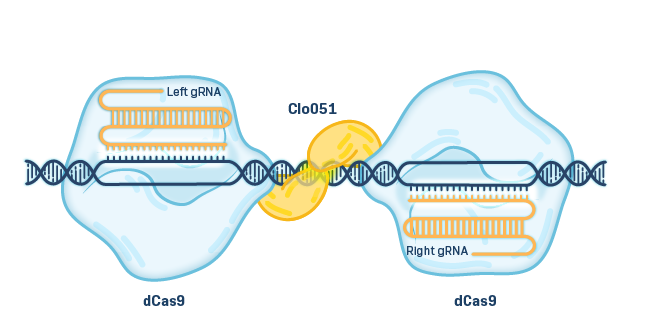
Compared with the limitation of TALEN technology which can only be used in activated cells, and the potential safety risks of CRISPR/Cas9 due to possible off-target mutations, the novel hybrid gene editing system technology platform developed by Poseida Therapeutics is expected to circumvent these issues—resolving off-target mutations while overcoming the editing restrictions in resting T cells.
At the same time, Poseida's research products also aim to address the limitations of other CAR-T therapies, including the duration of response, the ability to treat solid tumors, and safety issues. Its unique transfection, editing, and delivery platforms offer distinctive advantages that could lead to lower-cost and shorter production time CAR-T therapies, resolving current bottlenecks.
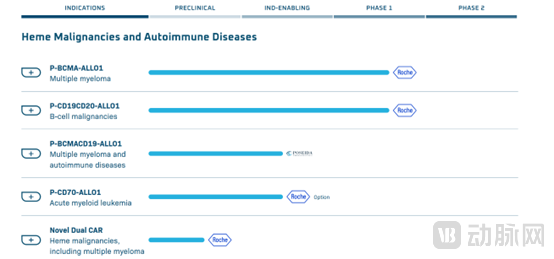
Poseida Therapeutics' CART Pipeline
Taking the pipeline P-MUC1C-ALLO1 as an example, P-MUC1C-ALLO1 is designed to be fully allogeneic, eliminating or reducing reactions between the host and the graft through gene editing. It has the potential to treat various epithelial cell-derived solid tumors, such as breast cancer, colorectal cancer, lung cancer, ovarian cancer, pancreatic cancer, and renal cancer, as well as other cancers expressing the cancer-specific form of mucin 1 protein (MUC1C). In preclinical models, P-MUC1C-ALLO1 has been shown to eliminate triple-negative breast cancer and ovarian cancer tumor cells to undetectable levels.
Previously released phase 1 clinical data of P-MUC1C-ALLO1 for the treatment of solid tumors showed that, as of November 14, 2022, seven patients had completed dosing, of which four were evaluable. One HR+, HER2- breast cancer patient, previously treated with four lines of therapy, achieved partial response, and two patients with gastrointestinal tumors (colorectal cancer and pancreatic cancer), who had undergone multiple prior treatments, reached stable disease. The cell therapy demonstrated good safety and tolerability, with no dose-limiting toxicity, immune effector cell-associated neurotoxicity syndrome, graft-versus-host disease, or cytokine release syndrome observed.
MNC Doubles Down, Further "Cutting Costs and Increasing Efficiency"
Universal CAR-T: A Game-Changing Solution for the Current Sky-High Cost of Cell and Gene Therapy
Once HvG occurs, the patient's own T cell-mediated immune response may start to work, leading to the elimination of allogeneic CAR-T cells before they can begin functioning, thereby affecting their efficacy and persistence.
Generally speaking, there are usually solutions for the first case. The reason for this situation is that the specific TCR receptors on T cells can specifically recognize the antigens of host cells, thereby triggering an immune rejection response to foreign T cells. Therefore, by simply removing their recognition weapon, the TCR, GvHD can be avoided, which is the commonly used gene editing approach.
The really tricky part is the second scenario, which is caused by the TCR on host cells recognizing HLA. Currently, it is impossible to directly knock out the HLA on the surface of allogeneic CAR-T cells. This also represents a significant challenge faced by companies developing universal CAR-T therapies. Whether the breakthrough ideas from various technology platforms can enhance the therapeutic ceiling is also a key focus for major multinational corporations (MNCs).
CAR-T Therapy Shines in the Treatment of Hematologic Tumors and Autoimmune Diseases. There is no doubt that universal CAR-T therapy will bring patients a lower-cost and more readily available "off-the-shelf" treatment, making it one of the highly sought-after focuses for multinational corporations (MNCs). In mid-November 2024, Novartis and Takeda simultaneously announced significant strategic collaborations with CAR-T therapy companies, demonstrating their high level of attention to this field. Meanwhile, Roche's direct acquisition of Poseida Therapeutics’ technology platform and pipeline not only highlights its determination to accelerate commercialization but also helps expand the research, development, and application prospects of next-generation universal CAR-T therapies.