Stereotaxis Announces NMPA Approval of Genesis RMN® Robotic Magnetic Navigation System for Cardiac Electrophysiology in China, with Strategic Backing from MicroPort EP and Neusoft Medical

MicroPort
High-end Medical Device R&D and Manufacturer

Stereotaxis
Developer and Manufacturer of Medical Robots


Pioneer in Medical Device Media Reports
Share Professional Medical Device Knowledge
Recently, Stereotaxis, a globally leading innovator in surgical robotics, announced the development ofGenesis RMN® Robotic Magnetic Navigation System for Cardiac Electrophysiology Approved by China's National Medical Products Administration (NMPA).
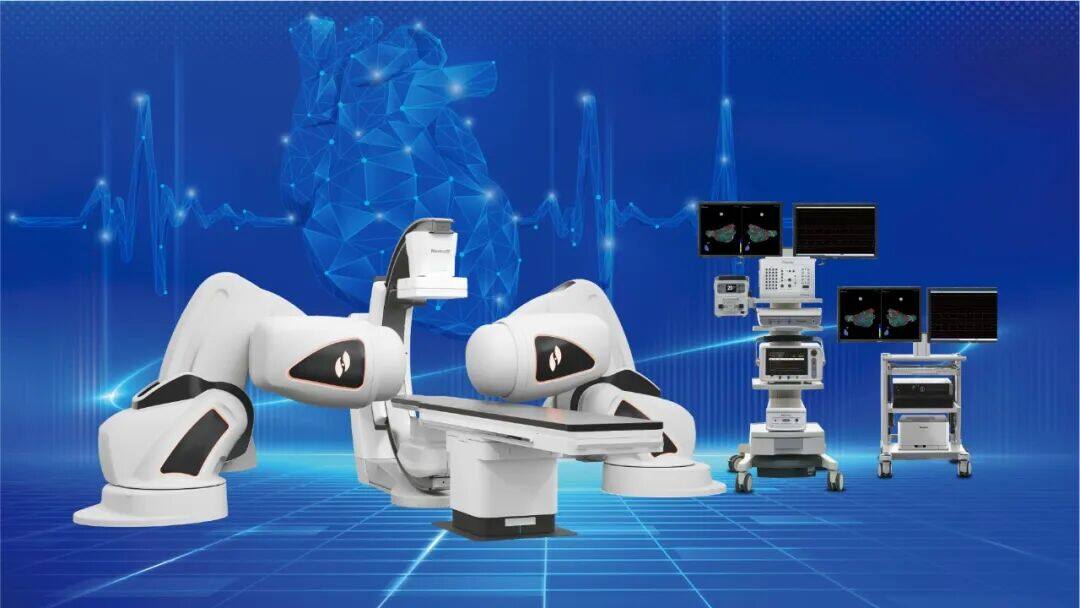
▲Genesis RMN® Cardiac Electrophysiology Robotic Magnetic Navigation System
In 2003, Stereotaxis launched the world's first magnetic navigation cardiac ablation robot, Niobe, and introduced the updated version, Genesis RMN, in 2019. The product has now received FDA and CE certification, and this NMPA approval marks it as a product with all three certifications.
It is worth noting that,The product is exclusively distributed by Shanghai MicroPort EP MedTech Co., Ltd. (referred to as "MicroPort EP"), and Stereotaxis has established a comprehensive strategic partnership with MicroPort EP since 2021.
Besides,Stereotaxis has also maintained a deep and close global strategic partnership with Neusoft Medical in recent years.
The robotic magnetic navigation system is currently the world's only cardiac interventional diagnosis and treatment tool based on magnetic navigation, completely transforming the methodology of interventional treatment for cardiovascular diseases, and hailed by cardiologists as the revolution in the field of cardiovascular intervention in the 21st century.
Radiofrequency Catheter Ablation (RFCA) is the most common and preferred treatment for atrial fibrillation to cure arrhythmias. However, traditional cardiac catheter radiofrequency ablation poses a significant radiation exposure risk to both doctors and patients. In contrast, electrophysiological radiofrequency ablation procedures guided by robotic magnetic navigation technology have higher success rates, lower complication rates, and shorter X-ray exposure times for both physicians and patients. This technology is now widely used in catheter ablation treatments for arrhythmias.
The Genesis RMN® System, as the latest generation of magnetically driven navigation electrophysiology robot, has been comprehensively upgraded in its design:
This product remains the only robotic system in the industry that uses magnetic field-driven surgical instruments.Using smaller magnets rotating around the center of mass,The response speed has increased by approximately 70% compared to the previous generation, significantly improving surgical efficiency.
The system is more compact and lighter, significantly optimizing the operating space in the operating room.
Enhanced operational flexibility provides surgeons with higher precision and safer surgical support.
Since the launch of the world's first magnetically driven navigation electrophysiology robot in 2003, Stereotaxis has iterated its products to the fifth generation through continuous technological innovation. The introduction of the Genesis RMN® system represents another significant advancement in active pan-vascular interventional application technology.
▲Genesis RMN® Cardiac Electrophysiology Robotic Magnetic Navigation System Demonstration Video
It is reported that Stereotaxis has established a comprehensive strategic partnership with MicroPort EP MedTech Co., Ltd. (hereinafter referred to as "MicroPort EP") since 2021. As an industry leader in the field of cardiac electrophysiology in China, MicroPort EP has become the exclusive distributor of the Stereotaxis magnetic navigation system in China due to its strong commercial operations and market development capabilities.
The in-depth collaboration between the two parties covers the development, integration, and promotion of the Genesis RMN® system and its配套的机器人导航导管, as well as the Columbus® 3D mapping system. Through MicroPort Electrophysiology's professional sales and service team, the Genesis RMN® system will be fully introduced into the Chinese market, providing complete solutions for local hospitals and doctors.
Dr. Sun Yi-yong, President of MicroPort EP, stated: "We are highly honored to collaborate with Stereotaxis in introducing the advanced robotic magnetic navigation system for cardiac electrophysiology to China. We look forward to further enhancing the technical standards in China’s electrophysiology field through this milestone technology, while deepening our cooperation to bring more cutting-edge innovations to the Chinese market."
"Stereotaxis CEO David Fischel stated, 'The approval and market launch of the Genesis RMN® system in China represents another significant milestone in the company's global strategy. The ongoing investment not only drives technological innovation but also underscores the company's steadfast commitment to improving the lives of patients with cardiovascular diseases worldwide.'"
Stereotaxis (NYSE: STXS), founded in 1990 and headquartered in St. Louis, Missouri, USA, is a globally leading innovative surgical robotics company specializing in minimally invasive pan-vascular interventional procedures. In 2003, Stereotaxis launched the world's first magnetic navigation electrophysiology robot. After nearly 20 years and five generations of product upgrades, it has evolved into an active pan-vascular interventional robotic system for surgical applications. According to reports, Stereotaxis technology has been used to treat more than 150,000 patients worldwide.
As of 2021 in China, 10 hospitals have utilized this device. Among them, Ruijin Hospital Affiliated with Shanghai Jiao Tong University has surpassed 700 clinical cases per year, ranking first globally.
In a notable case, on September 2, 2023, at the 16th Asia-Pacific Heart Rhythm Society Annual Meeting, experts including Wang Xianqing, Director of the Second Arrhythmia Ward at Fuwai Central China Cardiovascular Hospital, Associate Chief Physician Chen Ke, Attending Physicians Liang Erpeng and Song Weifeng, performed a "5G Remote Robotic Magnetic Navigation Ablation Surgery for Arrhythmia" to address the issue of premature ventricular contractions for a patient at Wuxi People's Hospital.This is the first time in China that a 5G remote robotic magnetic navigation system has been used to perform radiofrequency ablation for patients with arrhythmia.
Join Hands with Neusoft
In addition, Stereotaxis has maintained a deep and close global strategic partnership with Neusoft Medical in recent years. The two parties have jointly developed the NeuAngio30F angiography equipment for use with the magnetic navigation system.
The high-end floor-mounted angiography system NeuAngio 30F Han·Guangwu seamlessly matches with the magnetic navigation cardiac ablation robot (magnetic navigation system), ushering in a new era of precision treatment for radiofrequency catheter ablation (RFCA).
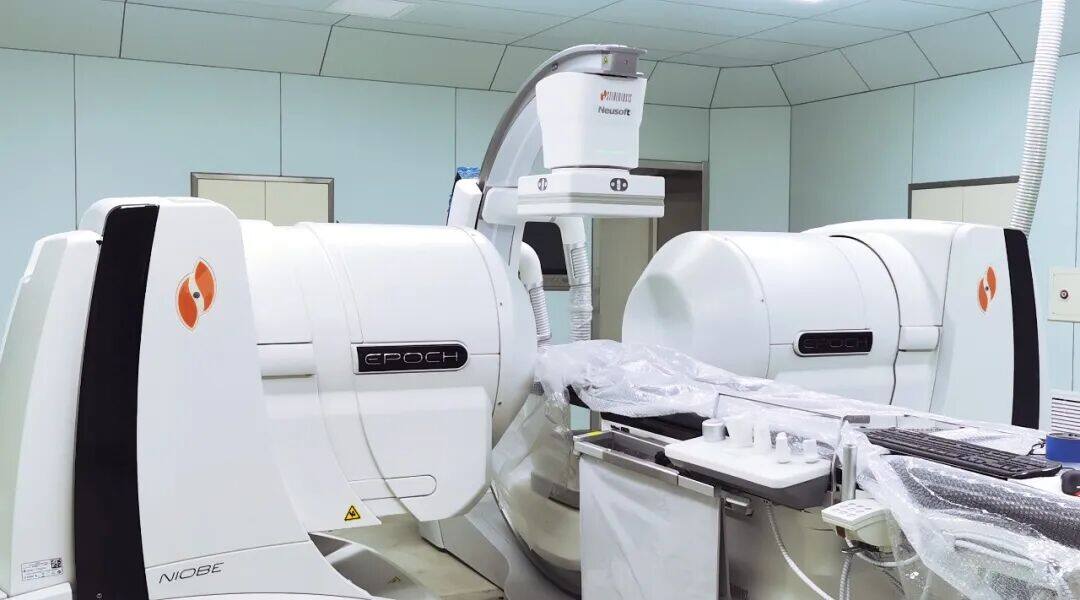
It is reported that, with exclusive technologies and superior performance, the two parties have joined hands to sell their products to dozens of countries and regions worldwide, including Europe and the United States.
Acquire Ablation Catheter Company
In May 2024, Stereotaxis also announced the acquisition of Access Point Technologies (APT). Headquartered in Minnesota, APT is dedicated to developing, manufacturing, and selling a differentiated, high-quality portfolio of diagnostic catheter products for cardiac ablation procedures. APT is expected to generate approximately $5 million in annual revenue for Stereotaxis in the first year following the acquisition.
——
Although the technology for vascular interventional surgery continues to advance, it still faces challenges such as radiation hazards, reliance on operator experience, and insufficient precision. Doctors operate under X-ray fluoroscopy, with long-term exposure to radiation increasing health risks, and wearing heavy lead aprons affects operational flexibility and health. Additionally, the accuracy and standardization of surgeries are limited by the doctor's level of experience and skill.
The emergence of vascular interventional surgical robots brings hope for solving these problems. The robotic operation precision can reach the millimeter level, with force feedback accurate to 0.01N, improving surgical accuracy and safety while reducing radiation exposure. Robot-assisted surgeries can also enhance efficiency and quality, attract patients and top doctors, and improve hospital competitiveness. In the future, 5G technology will help achieve remote surgeries, balancing medical resources.
At present, vascular interventional robots can be roughly divided into magnetic navigation type and electromechanical operation type. The magnetic navigation type still faces some limitations, such as the necessity to use special guidewires and catheters; it can only perform operations with magnetic guidewires and catheters but cannot carry out various intraluminal procedures like ordinary balloon or stent placement. Nevertheless, it still holds great application potential. How will Genesis RMN perform in the Chinese market in the future? Instrument Home will continue to follow up.
More exciting content
Welcome to follow the WeChat Video Channel


Philips, Hand in Hand with "World's First"
CGM Leader Enters the 36.2 Billion Yuan "Ring" Market
Next week, the world's largest medical imaging event is coming.
Siemens Healthineers + Dental Leader: The World's First Dental MRI is Here
Just now, the National Healthcare Security Administration announced the next key focus of the flying inspection.
Medtronic Acquires Endoscopic Giant
One Province, Single Procurement of 664 Imaging Devices
$5 Billion Investment, the World's First Factory in This Field
R&D Ultrasound! Chinese Medical Device Company Receives $2.65 Million Grant from Gates Foundation
China-Made Medical AI Leader: Multimodal Medical Large Model Debuts at CCR

BusinessBusiness cooperation email: qxzj@landianyiliao.com