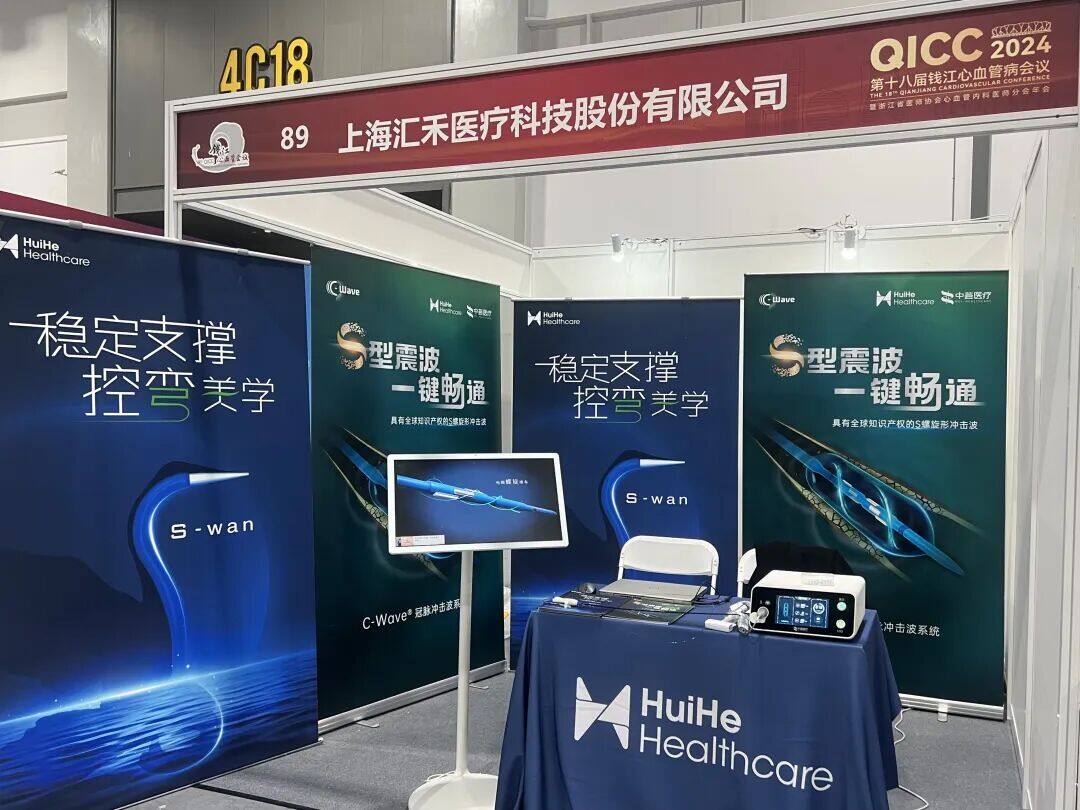
Highlights from QICC 2024: Huihe Medical Shares Clinical Experience on Innovative Cardiovascular Devices Ahead of IPO Filing

H&H Healthcare
R&D and Producer of Interventional Medical Devices for Heart Disease
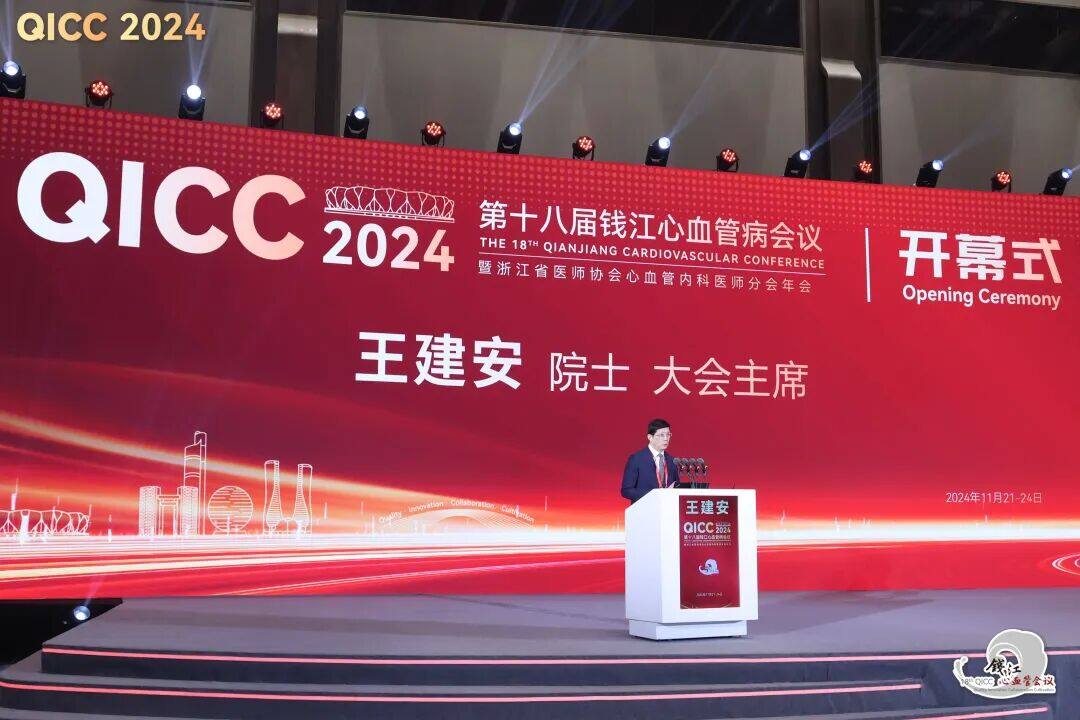
November 21-24, 2024, the 18th Qianjiang Cardiovascular Conference (QICC 2024) InHangzhouHold. This conference brings together top wisdom, providing new ideas and directions for the prevention and treatment of cardiovascular diseases through multi-perspective and multi-level exchanges, laying a solid foundation for the long-term progress of the discipline.
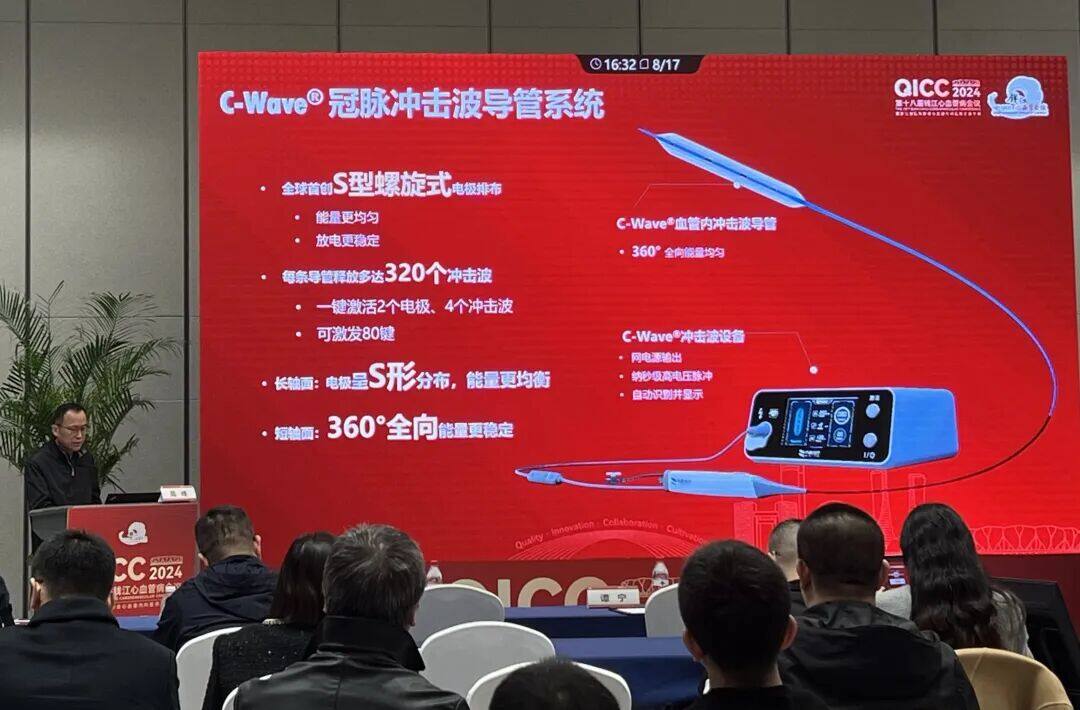
During the Calcification Forum, the Second Affiliated Hospital of Zhejiang University School of MedicineProfessor Gaofeng,Application of IVL in Complex LesionsDelivered a keynote speech and shared C-Wave.®Experience in the Application of Coronary Shockwave Systems in Complex Coronary Calcified Lesions. Currently, the treatment of calcified lesions includes balloon-based technologies and debulking techniques, mainly divided into three categories: rotational atherectomy, laser, and shockwave balloons. The first two technologies are demanding and difficult to promote in grassroots hospitals, while intravascular shockwave technology (IVL) is developed based on extracorporeal lithotripsy and traditional PTCA balloon angioplasty. Through non-focused, pulsed acoustic waves impacting the calcified plaque, it achieves remodeling by cracking but not shattering the calcification, facilitating subsequent device delivery and treatment. C-Wave®The coronary shockwave catheter, through its innovative "S-shaped spiral" electrode design, achieves shockwave superposition on the short axis, further improving energy efficiency. When treating calcified lesions per unit volume and unit area, it can fully address the lesion area while reducing the number of pulses and the quantity of catheters used, outperforming similar products. Numerous clinical studies have shown that IVL technology is a safe and effective method for managing severely calcified plaques. When dealing with complex calcified lesions, the rational use of intravascular imaging and fluoroscopic imaging to guide the treatment strategy for calcified lesions allows for accurately determining the timing of IVL usage and the effectiveness of pre-treatment, reducing the incidence of poor stent expansion during procedures. When encountering high-resistance lesions, the use of IVL needs to be combined with guiding catheters, guidewires, extension catheters, etc., to improve coaxial alignment and support, optimizing the passage of devices through the lesion area. In the real world, C-Wave®Will be more widely used, while the unique product design will bring benefits to more patients.
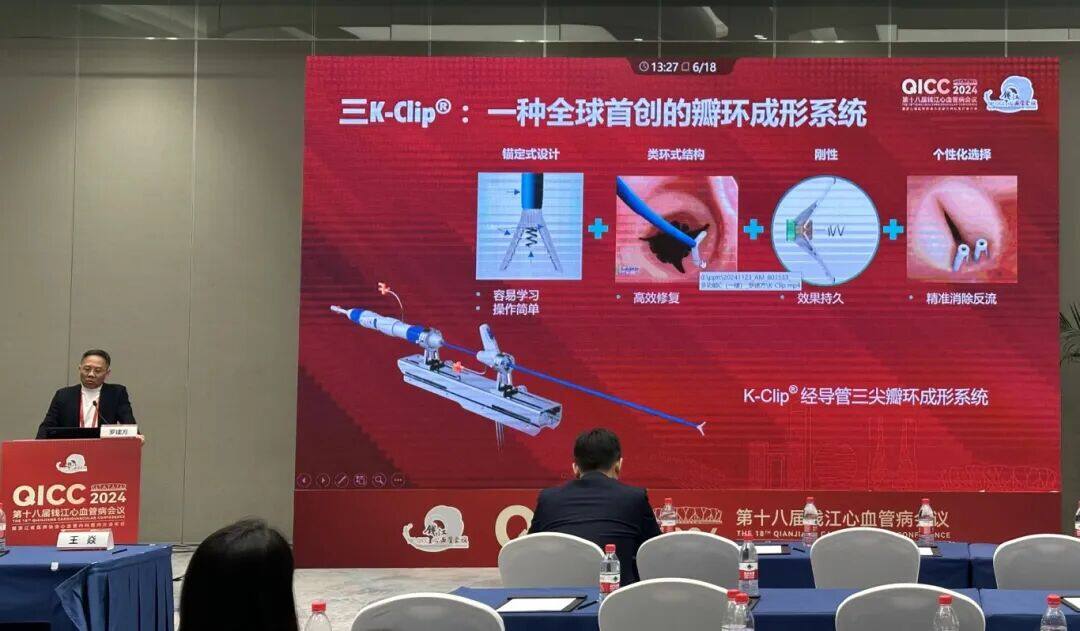
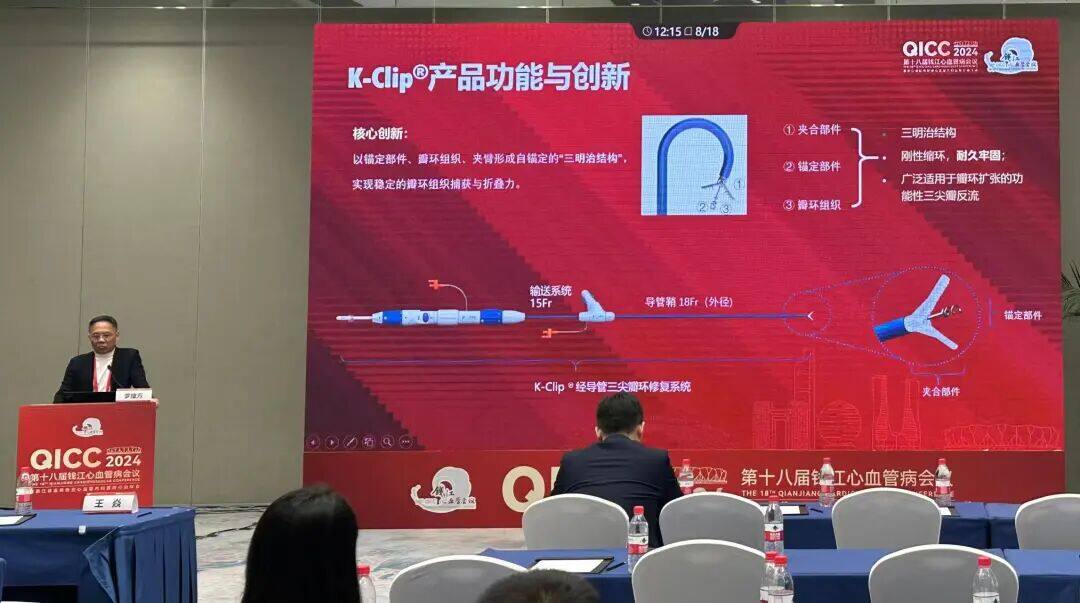
At the China-Singapore Joint Forum on Valves, Guangdong Provincial People's HospitalProfessor Luo Jianfang, forInnovations and Clinical Applications of Transcatheter Tricuspid Annuloplasty in the Treatment of TRShare and provide a detailed introduction to Singapore experts and on-site peers about the characteristics of tricuspid regurgitation and K-Clip.®The unique advantages demonstrated in practical applications. Pure tricuspid regurgitation (TR) accounts for approximately 16.5% of the valvular disease population, second only to mitral regurgitation, with functional regurgitation being dominant, mainly due to annular dilation caused by atrial/ventricular enlargement. Clinically, surgical intervention for pure tricuspid regurgitation is rare, and patients typically present with severe clinical symptoms at an advanced stage of the disease, leading to a high surgical mortality rate and complication incidence. Therefore, there is a clear clinical need for tricuspid valve intervention. Current interventional treatments mainly include leaflet coaptation repair, annuloplasty, orthotopic replacement, and heterotopic replacement, each with certain limitations. K-Clip®The transcatheter tricuspid annuloplasty system restores the classic surgical procedure through an interventional approach. With an outer diameter of only 18F, it enters from the right jugular vein and reaches the tricuspid valve, effectively reducing the annulus and improving regurgitation. K-Clip®The innovation is based on surgical improvements. The rigid constriction ring can prevent the long-term expansion of the free edge of the annulus while preserving the integrity and mobility of the valve leaflets, offering relatively flexible surgical strategies; K-Clip®High pathological adaptability, not only can achieve the effect of annuloplasty, but also reduce the expansion of the junction area and promote leaflet coaptation; K-Clip®Targeting the annulus for repair,不受瓣叶分型影响, is suitable for patients with functional tricuspid regurgitation primarily due to annular dilation, demonstrating broad prospects. Currently, more clinical experience exploration and follow-up data support are still needed for the interventional treatment of the tricuspid valve to optimize patient selection.