


On December 5, Zelixir, an AI-driven synthetic biology manufacturing company, announced the official establishment of a new factory in Changzhou, Jiangsu Province, for the production of biologically synthesized natural fragrances at a scale of hundreds of tons. Its product pipeline covers multiple fields, including natural fragrances, cosmetic ingredients, and functional food additives.
This marks that Zelixir has not only fully integrated AI computing (IT) and design into the R&D (BT) and mass production (VT) of synthetic biology, but also successfully validated its unique T³ business model on the production line, achieving everything from reaction route design to the mining, design, and modification of relevant biological components, followed by automated high-throughput intelligent R&D and production.
Notably, Zelixir has made a breakthrough by taking only one and a half years to progress from AI protein design to the natural ferulic vanillin (hereinafter referred to as "vanillin") product, with the potential for low cost and stable mass production at the hundred-ton level.
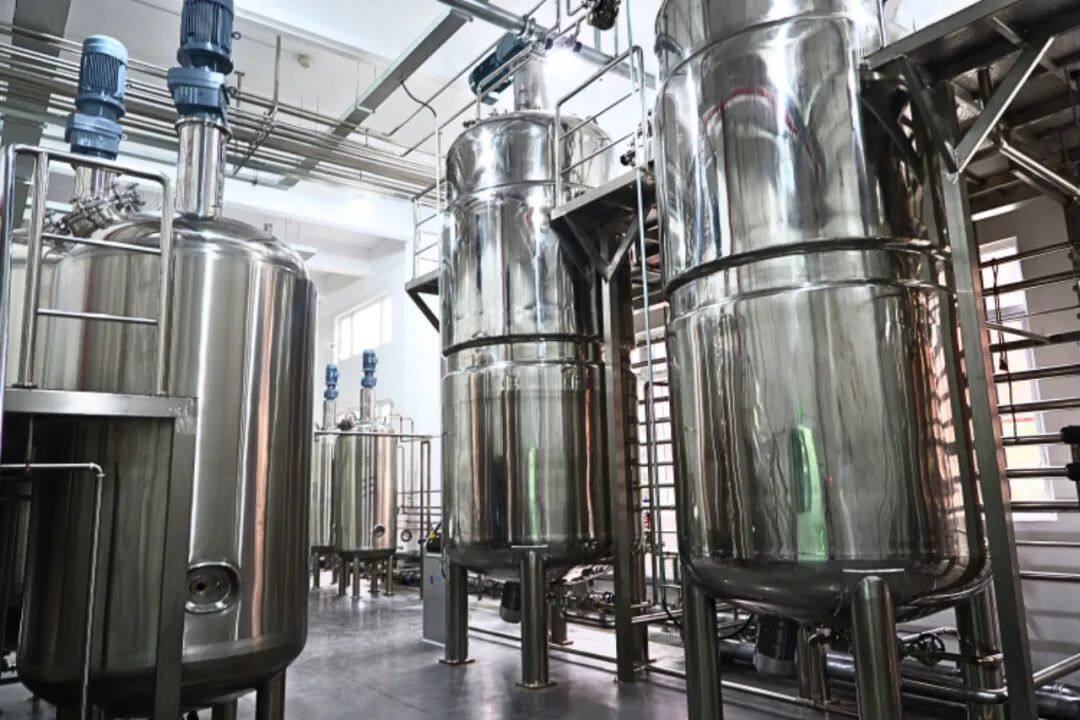 Figure丨Fermentation workshop of Zelixir (Source: Zelixir)
"We are considering not only the technology, but more importantly, the market and implementation aspects, such as market value, market potential, user purchasing intent, and whether costs can be reduced. Therefore, after exploring a series of market factors, the company works backward to deduce the technical goals that need to be achieved, such as yield per liter, conversion rate, and selectivity, gradually bringing the Changzhou hundred-ton scale biosynthesis natural fragrance production center to fruition," said Dr. Wang Sheng, founder and CEO of Zelixir.
 Figure | Wang Sheng (Source: Wang Sheng)
Wang Sheng has more than 10 years of working experience in protein structure prediction, research and development, and screening at international well-known enterprises. He holds a Ph.D. in Theoretical Physics from the Chinese Academy of Sciences, and has worked at the Toyota Technological Institute at Chicago, King Abdullah University of Science and Technology in Saudi Arabia, and Tencent AI Lab, among other research institutions and multinational companies. He was selected as one of the "Top 2% of Global Scientists" by Stanford University in 2021 and 2022, and was named an innovative figure in China's intelligent computing technology by DeepTech in 2022.
As one of the earliest scholars to use deep learning to study protein structures, Wang Sheng is not only a core developer of the protein structure prediction method RaptorX, but also led the tFold project, another protein structure prediction method. His achievements in protein structure prediction and research have provided an important foundation and inspiration for the work of John Jumper, the 2024 Nobel Prize in Chemistry laureate.

The Accumulation of Protein Structure Design and Prediction Technologies: From Academic Innovation to Industrial Application
Technological breakthroughs do not happen overnight; they are inseparable from Zelixir's unique technical solutions and industry insights.
The story begins in 2014, when Wang Sheng was visiting and exchanging ideas in the research group of Professor Tobin Roy Sosnick at the University of Chicago. At that time, Jiang Pei was pursuing his Ph.D. in the same group. Jiang Pei discovered that traditional precise atomic-level simulation methods were too costly, so he turned to coarse-grained methods to study protein folding. During that period, Wang Sheng and Jiang Pei engaged in in-depth academic exchanges, not only jointly discussing issues related to protein structure prediction but also frequently exchanging and clashing on academic ideas.
In 2014, Wang Sheng used the most advanced convolutional neural network at the time to increase the accuracy record of secondary structure prediction, which had been held for 15 years, from less than 80% to 85%. In 2015, he proposed that deep learning could not only predict one-dimensional structural features but also two-dimensional features such as distance maps and contact maps.
Together with Professor Xu Jinbo, he constructed the ultra-deep learning model RaptorX-Contact using convolutional neural networks, significantly improving the accuracy of protein structure prediction. This breakthrough completely transformed the entire field. Later, Wang Sheng demonstrated how to use one-dimensional secondary structures and two-dimensional contact maps as distance constraints and apply them to three-dimensional protein structure modeling. In 2017, this work was published in a top journal of computational biology.PLOS Computational BiologyUp.
This series of work prompted Jiang Pei to shift his research focus to deep learning. After completing his postdoctoral research, he joined Google's DeepMind and developed the first generation of AlphaFold in 2018. In 2019, Professor David Baker from the University of Washington and Chinese scholar Yang Jianyi, inspired by the technical approach of RaptorX-Contact, developed the protein structure prediction tool trRosetta, achieving an "absolute counterattack" against the first generation of AlphaFold in academia.
In 2020, Wang Sheng's team won the first place in the contact map prediction of the 14th CASP and ranked second globally in the 3D structure prediction in the industry; Since June 2020, they have won the championship in the CAMEO competition for half a year continuously; In 2022, they won the first place in RNA structure prediction and the second place in protein-small molecule complex prediction at the 15th CASP.
In the same year, AlphaFold 2 utilized large model technology based on Transformers, unifying one-dimensional sequences and three-dimensional structures to achieve end-to-end training and inference. "Jiang Po's work has a certain relationship with RaptorX-Contact, but the underlying architecture of AlphaFold 2 is completely new, which is why it was able to win the Nobel Prize," said Wang Sheng.
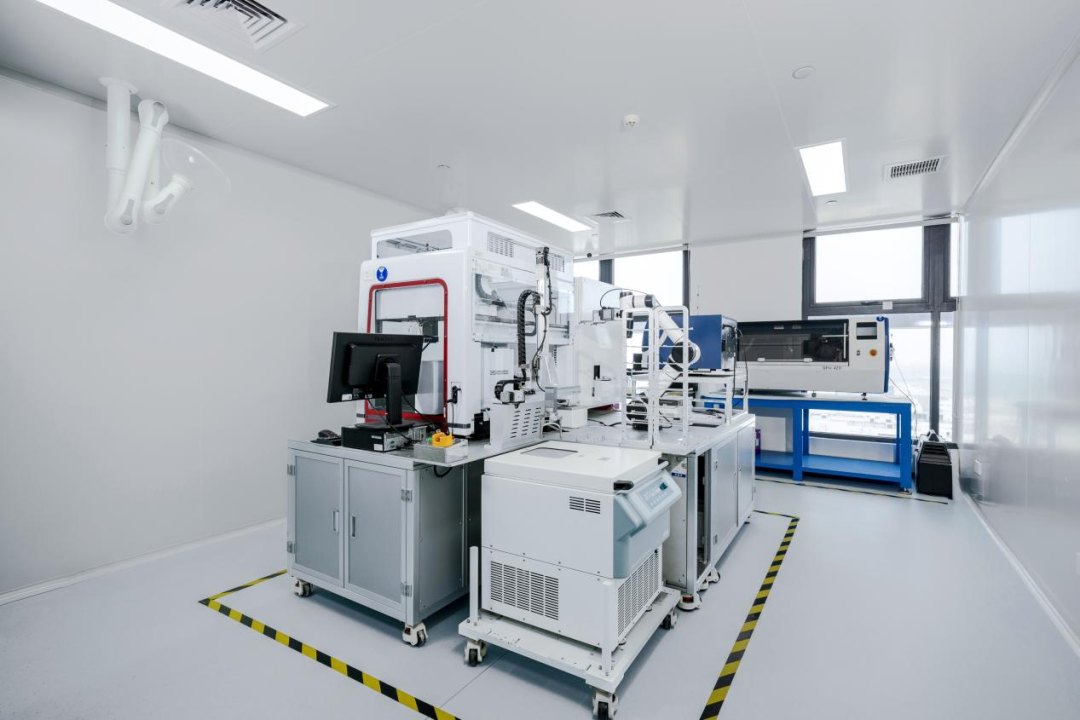 Figure | Zelixir's automated laboratory (Source: Zelixir)
Zelixir was founded in 2021. After starting his business, Wang Sheng chose not to compete head-on with international giants in the AI academic field. Instead, he applied AI technology to practical landing scenarios in synthetic biology and made progress in high-speed, large-scale structural modeling and biomanufacturing.
"With years of profound modeling understanding of protein structures and interactions between proteins and other biomolecules, as well as sharp insights into commerce, industry, and the market, we have the ability to successfully transform these scientific insights into practical industrial applications and market advantages," said Wang Sheng.
By 2022, Wang Sheng's team had achieved a hundredfold increase in speed over AlphaFold 2, enabling them to predict the structures of a large number of unknown proteins in a short time. The related paper was published inNature Biotech[2]. More importantly, their work has also helped discover new enzymes or modify known ones, not only improving efficiency but also enabling more effective production of bioproducts.
Zelixir utilizes high-speed, large-scale protein structure modeling capabilities to perform reverse virtual screening, identifying enzymes that may interact with specific substrates or products. These enzymes are then experimentally validated to determine if they can truly catalyze specific reactions. In 2023, through enzyme mining, they discovered an enzyme set capable of catalyzing a three-step synthesis pathway, which was experimentally verified to achieve the desired results.
What sets Zelixir apart from other companies is that its computing and technical team is deeply integrated with the industrial implementation team, rather than being managed separately.
For example, during the pilot stage, Zelixir discovered that the enzyme developed earlier had insufficient thermal stability, which limited its application under high-temperature production process conditions. The company's computational team closely collaborated with the experimental team to quickly and accurately identify the issue of insufficient enzyme thermal stability. Within just a few days, they computationally provided dozens of potential solutions, significantly narrowing down the screening scope. Relevant papers were published in...Protein Science[3].
The experimental team quickly selected an enzyme from these options that was equally efficient or even more so, with thermal stability improved to 70 degrees Celsius. "In the end, we significantly accelerated the resolution of production-related issues in just a few weeks," said Wang Sheng.

Streamline the "R&D, production, and sales" chain to achieve a product cycle from design to implementation in 18 months.
With the development of AI technology and the evolving demands in the field of synthetic biology, some synthetic biology companies have already started utilizing AI for innovative research and development to accelerate the R&D process and the implementation of technology. What sets Zelixir apart is that AI plays a leading role in product implementation. "We have not only achieved technological transformation but also realized industrial upgrading and product implementation," said Wang Sheng.
Compared with the original R&D paradigm based on repeated experiments, Zelixir utilizes an AI + synthetic biology R&D platform, where AI first conducts computational generation and then proceeds to experimental validation, significantly shortening R&D time and reducing experimental costs.
In areas such as enzyme design, pathway design, and bacterial design, the company constructs based on the design plan and then verifies whether the design achieves the expected goals through experimental testing. The data results generated from the experiments are used for learning and optimization, guiding subsequent design work. Based on the deep integration of information and computing technology with biotechnology, the "Design-Build-Test-Learn" (DBTL) cycle is achieved.
Zelixir Provides New Solutions for the "Competitive, Polluting, and Slow" Issues in Synthetic Biology and Biomanufacturing by Integrating the Entire "Research, Development, Production, and Sales" Chain. Specifically, "Competitive" refers to the problem of internal competition caused by the overly singular traditional chemical or biological routes; "Polluting" addresses the high pollution and energy consumption in biomanufacturing; and "Slow" indicates the long development cycle for new routes or new molecules.
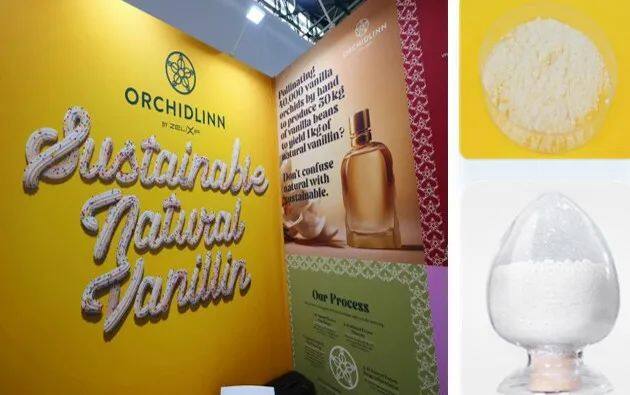
Taking vanillin as an example, it is a broad-spectrum fragrance with flavoring and fixative effects. Its main application areas include: the food industry, pharmaceutical intermediates, feed, flavoring agents, and cosmetics. Zelixir’s vanillin project, based on a small number of experiments, rapidly developed enzymes or other desired products with extremely high efficiency and an iteration speed measured in weeks, effectively overcoming the problem of internal competition.
On the other hand, the process of producing vanillin through enzymatic conversion using ferulic acid as a substrate is simple and offers significant advantages in terms of pollution and energy consumption. Compared with traditional fermentation methods, this process requires smaller equipment scale and generates almost no wastewater discharge, achieving the goals of high efficiency and environmental protection. Additionally, this process significantly reduces equipment investment and energy consumption, with pollution emissions far lower than chemical methods and even superior to traditional biomanufacturing methods.
In the development of new process routes, Zelixir has significantly accelerated this process by applying AI technology, drastically reducing the R&D cycle from several years to just a few days. "We achieved a record-breaking overall cycle of only one and a half years from project initiation to large-scale production of vanillin, which also marks the practical validation of AI's industrial capability in biomanufacturing," said Wang Sheng.
In terms of component mining, Zelixir predicts active enzymes based on AI-calculated sequences by function in less than a week, which were then experimentally validated; regarding component optimization, an improved enzyme was obtained and experimentally validated within three months through fully rational AI-based enzyme engineering.
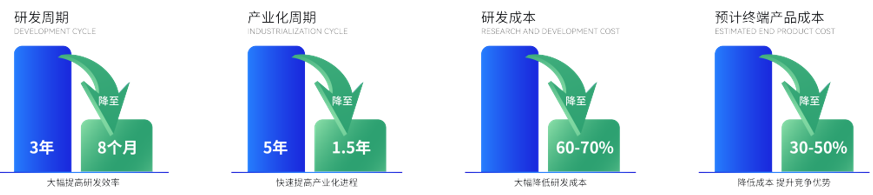
Compared with vanillin prepared by the mainstream chemical synthesis method in the market, Zelixir's ferulic acid vanillin has achieved significant improvements in multiple aspects.
Specifically, it adopts biosynthesis technology, making its flavor closer to naturally extracted vanillin and effectively solving the long-standing issue of impurity odors in chemically synthesized vanillin. Meanwhile, the product boasts high purity, no chemical residue, enhanced safety, and a price much lower than natural extracts. Additionally, its production capacity is not limited by crop yields or climate conditions, meeting the demand for flavor upgrades in high-end and food industries while ensuring stable supply.
In June this year, Zelixir's vanillin product obtained the FEMA GRAS (Flavor and Extract Manufacturers Association Generally Recognized as Safe) certification under the FDA system in the United States. According to reports, the current production capacity of this vanillin product has reached hundreds of tons, and the product can be sold to most regions around the world, meeting the demand for flavor enhancement in high-end and food industries.

Will expand business in multiple directions such as health product and cosmetic raw materials.
Currently, Zelixir, based on the deep integration of AI and synthetic biology, is preparing to expand its business through a product matrix approach. Its product pipeline covers multiple fields, including natural fragrances, cosmetic ingredients, and functional food additives.
According to the introduction, in terms of cosmetic raw materials, the company is collaborating with leading companies in China's beauty industry to promote an important derivative of vitamin E. In the field of natural fragrances, Zelixir is promoting a floral-scented product with an annual usage comparable to vanillin, which has currently entered the pilot-scale trial stage.
In addition, they have developed a food additive capable of reducing postprandial blood glucose, which can be added to pastries, gummies, or products consumed after meals to effectively lower blood sugar levels. These products not only showcase Zelixir's achievements in technology integration but also reflect the depth and breadth of its product development.
The integration of AI and biotechnology has shown great potential in the field of biomanufacturing. Although AI has already yielded results in areas such as virtual screening in biopharmaceuticals, its role in later stages like clinical trials has yet to meet expectations. In contrast, AI can provide empowerment at different levels in biomanufacturing, ranging from enzyme design and discovery to modification.
In the future, if AI can further penetrate all levels of bio-manufacturing, including enzyme catalysis, post-processing techniques, and quality inspection, achieving full-process digitization and informatization, it will be possible to create an unmanned "dark factory." Such a factory would be able to customize products on demand, reduce human resource requirements, and improve production efficiency and environmental sustainability.
"This will not only lead a revolution in the biomanufacturing industry but also has the potential to propel humanity into a new era of comprehensive green living, achieving intelligent and eco-friendly production of chemicals, materials, and energy. I believe that with the deep integration and empowerment of AI, this vision could be realized within the next 5 to 10 years," said Wang Sheng.
References:
1. Company official website: https://www.zelixir.com/
2.Hong,Liang;Hu Zhihang;Sun Siqi;Tang Xiangru;Wang Jiuming;TanQingxiong;Zheng Liangzhen;WangSheng;Xu Sheng;King Irwin;GersteinMark;Li Yu."Fast,sensitive detection of protein homologs using deep dense retrieval".Nature Biotechnology 42,(2024). https://www.nature.com/articles/s41587-024-02353-6#citeas
3.Xu,Ran;Pan,Qican;Zhu,Guoliang;Ye,Yilin;Xin,Minghui;Wang,Zechen;Wang,Sheng;Li,Weifeng;Wei,Yanjie;Guo,Jingjing.“ThermoLink:Bridging disulfide bonds and enzyme thermostability through database construction and machine learning prediction”.Protein Science 33,(2024). https://pubmed.ncbi.nlm.nih.gov/39145402/