The Biotech Lining Up to Meet: The Power Brokers Behind China's BD Deals

Aiolos Bio
Developer of Respiratory and Inflammatory Disease Treatments

GSK
Pharmaceutical R&D Manufacturer

Hengrui Pharma
Innovative and High-Quality Pharmaceutical Developer
BD has never been as important as it is today, nor as complex.
License-in deals are receding, while license-out transactions hit record highs amid controversy. The NewCo model has risen rapidly, with multinational pharmaceutical companies continuously advancing their layout to acquire early-stage assets in China, while the traditional role boundaries of financial advisors (FAs) are being redefined. Transactions are becoming increasingly frequent; however, what truly warrants attention is not merely the transaction amounts, but the underlying logic and narratives behind these deals.
"BD In-Depth Analysis" seeks to answer questions beyond official announcements: Why do Chinese innovative drug assets still struggle to shake off the "discount," despite targeting the same molecules and having comparable data? What types of deal structures are better suited to creating long-term value? How will the interplay between MNCs, biotech firms, and FAs reshape the global BD ecosystem?
We do not act as mere couriers of trading information, but as deconstructors of industrial logic, focusing on MNC China strategy, license-out deals, the NewCo model, valuation shifts, and deal structures—understanding the new dynamics of the innovative drug industry through every deal.
In this issue, we turn our attention to the person hidden behind BD deals, whom Chinese biotech firms are queuing up to meet: the "Startup Producer."
"As soon as Khurem Farooq arrived in China, everyone lined up to meet him." recently stated an investor in the healthcare sector to VCBeat.
When Khurem Farooq previously visited China, there were no photos from public appearances, and hardly anyone could pinpoint the exact date of his arrival. Nevertheless, the news spread rapidly within the biomedical BD community, with everyone hoping to connect with this top-tier "Drug Hunter."
Khurem Farooq, through Aiolos Bio, once secured a $1 billion upfront payment from GSK, generating a 40-fold return for Hengrui Pharma. This deal, which took place two years ago, remains a frequently cited case in the industry.
Such stories of "price-gouging by middlemen" have repeatedly played out in China, and behind these transactions, a group hidden from public view is gradually coming to light—"Drug Hunters" or "Venture Producers," who are not affiliated with any large MNC, often become the true initiators and operators in the wave of BD overseas expansion.
Senior investor Sheng Lijun outlines the overall profile of this group to VCBeat: they may be serial entrepreneurs, professional managers, or heads of European and American biomedical funds. What they have in common is their sharp insight, ability to integrate resources, and hands-on involvement.
Another investor in the healthcare sector told VCBeat that there are two types of "asset hunters" in the pharmaceutical BD field: one type consists of relatively pure asset hunters, whose primary role is to source assets for overseas companies or to identify buyers and facilitate matches for those assets.
"The other category is more advanced, comprising most top-tier drug hunters, commonly referred to as 'entrepreneurial producers.' Drug hunting is only part of their job; they may themselves be C-level executives and are often the core of value realization teams. They can identify high-quality assets, build strong teams, successfully advance projects, and sell them at a premium to attract investors." this investor in the healthcare sector stated.
01.
Who Is the Real Operator?
VCBeat's analysis reveals that the growth trajectories of these "drug hunters" or entrepreneurial producers are clearly discernible: starting from commercialization and BD roles at large pharmaceutical companies, they transition to become CEOs of biotech firms, successfully creating substantial value for investors in a short period by adopting a model of "acquiring pipelines at low cost, accelerating development, and divesting at high valuations."
In Sheng Lijun's view, the "entrepreneurial producer" and the "drug hunter" are complementary roles. The "drug hunter" emphasizes the ability to discover and capture promising candidates, while the "entrepreneurial producer" focuses more on integration and execution—much like a film producer who brings together scientists, clinical teams, capital, regulatory affairs professionals, and other specialized roles to collectively advance the pipeline and position it for transactions with MNCs.
Khurem Farooq is a typical representative of this type of entrepreneurial producer.
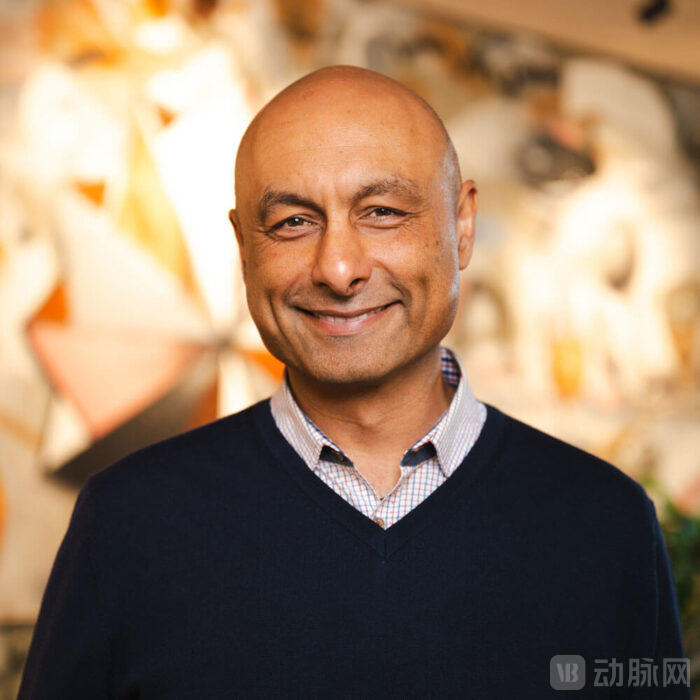
Khurem Farooq
Khurem Farooq, born in February 1967, is a British serial entrepreneur. His career began in sales and marketing at Aventis (one of the predecessors of Sanofi). He later joined Genentech, a member of the Roche Group, as Senior Vice President of the Immunology and Ophthalmology Business Unit, where he led the commercialization and launch planning of multiple drugs and actively participated in business development assessments.
After leaving Genentech, Farooq embarked on a path of serial entrepreneurship.
In 2021, ophthalmic gene therapy company Gyroscope Therapeutics was acquired by Novartis for approximately $1.5 billion, with Khurem Farooq serving as the company's CEO.
Subsequently, he founded Aiolos Bio. In August 2023, the company licensed SHR-1905, an early-stage clinical asset for asthma, from Hengrui Pharma with a $25 million upfront payment. Five months later, Aiolos Bio, along with this pipeline asset, was acquired by GSK for a $1 billion upfront payment. The spread between the inbound and outbound transactions was nearly 40-fold. Throughout this process, SHR-1905 remained the company's sole asset.
Following the acquisition of Aiolos Bio, Khurem Farooq made a splash in the Chinese and U.S. pharmaceutical circles, with industry insiders remarking, "The fund follows him."
In January 2025, Farooq co-founded Verdiva Bio with a core team largely composed of the original members from Aiolos Bio, while simultaneously acquiring the global rights to Sciwind Biosciences' GLP-1 drug, ecnoglutide, for an upfront payment of $70 million.
The career trajectory of another entrepreneur-producer, Luca Santarelli, closely mirrors that of Khurem Farooq.
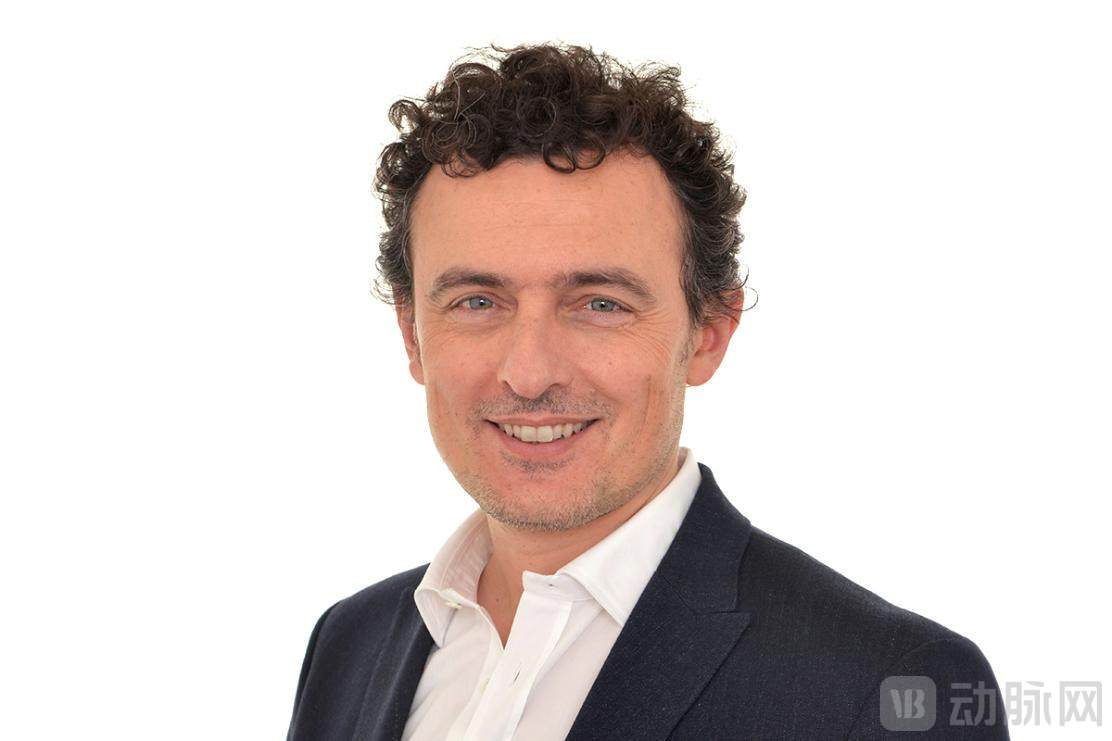
Luca Santarelli
Luca Santarelli is Italian. He spent the first 12 years of his career at Roche, driving more than 20 new molecular entities into clinical trials. However, his true legendary journey began after he left Roche, when he founded three companies in succession, with the total value of exits from the first two ventures exceeding $1.8 billion:
In 2019, Therachon, founded by Luca Santarelli, was acquired by Pfizer for up to $810 million, with its core asset being TA-46, a drug for the treatment of achondroplasia.
Following the transaction, he spun off another company asset, apraglutide, into an independent entity that later evolved into VectivBio, which was acquired by Ironwood Pharmaceuticals for approximately $1 billion in 2023.
Subsequently, Luca Santarelli continued his entrepreneurial ventures, founding Windward Bio in 2024. In 2025, he made another move by securing the license for WIN378 from Kelun Biotech and Harbour BioMed, with a total transaction value of up to $970 million. In December of the same year, he also obtained the license for WIN027 from Qyuns Therapeutics, with a total transaction value of up to $700 million.
Thierry Abribat is the French version of a startup producer. After earning his PhD in veterinary medicine, this French entrepreneur worked in the research division of Sanofi. Starting in 2007, he founded three companies in succession, all of which achieved successful exits: Alizé Pharma was acquired by Millendo Therapeutics in 2017; Alizé Pharma 2 was acquired by Jazz Pharmaceuticals in 2016; and in March 2024, Amolyt Pharma was acquired by AstraZeneca for approximately $1.05 billion.
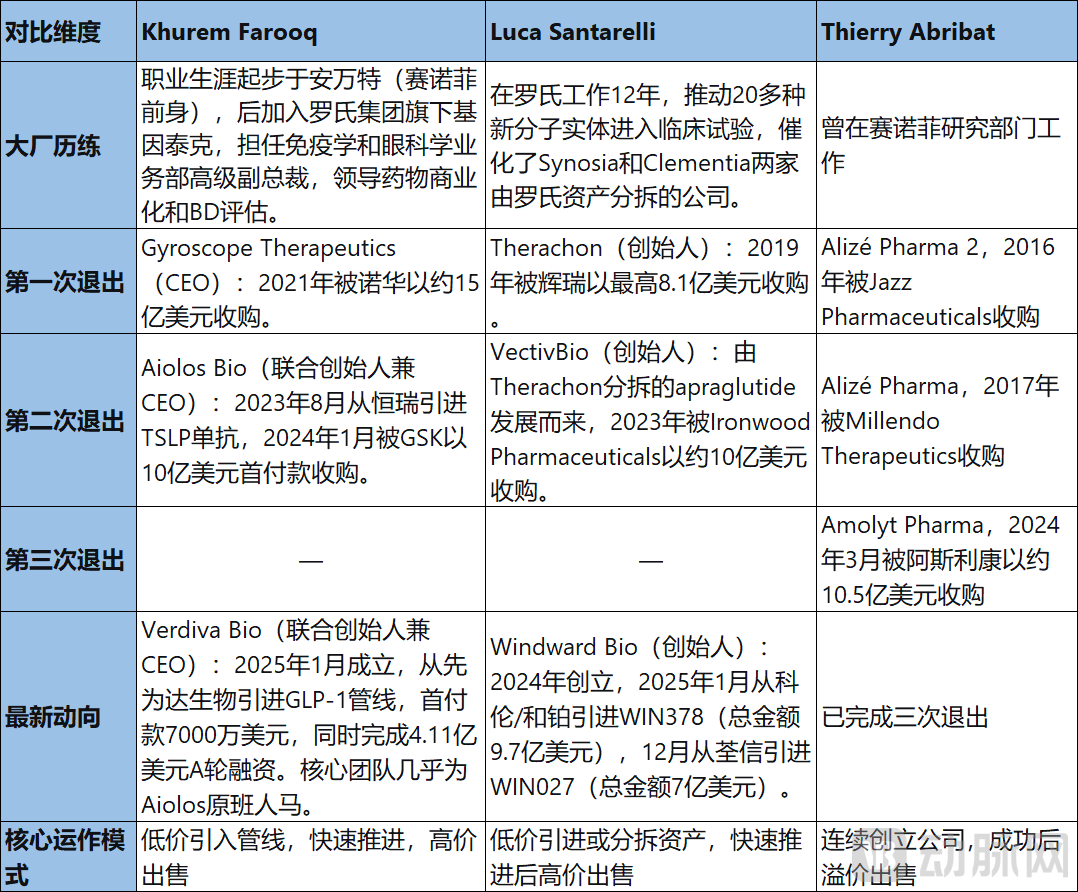
Image source: VCBeat Graphics
Christoph Lengauer represents another type within the community of drug hunters, having transitioned from a top-tier scientist.
Christoph Lengauer spent 12 years at the Vogelstein Laboratory for Molecular Genetics and Cancer at Johns Hopkins University, a world-leading institution in the field. He later served as the founding Chief Scientific Officer and Chief Drug Hunter at Blueprint Medicines. Currently, he is the co-founder of Curie.Bio, which aims to facilitate mergers, acquisitions, or collaborations between startups and large pharmaceutical companies.
02.
The Gold Standard of Entrepreneurial Producers
These entrepreneurial producers' "operational" capabilities have been repeatedly validated through real-world transactions, and the method of validation, perhaps, is precisely the price differential stories that bring both joy and concern to Chinese innovative pharmaceutical companies.
In addition to the aforementioned Hengrui Pharma case, BioNTech acquired Biotheus for approximately $1 billion and secured the license for the bispecific antibody BNT327/PM8002 between 2023 and 2024. In June 2025, it further granted BMS global co-development rights to BNT327 in a deal valued at over $9 billion, setting a benchmark for operational excellence in the biotechnology sector.
Jeyou Pharmaceutical followed a similar trajectory. In December 2024, Jeyou Pharmaceutical licensed its anti-IgE antibody to RAPT Therapeutics for an upfront payment of $35 million. Thirteen months later, GSK acquired RAPT for approximately $2.2 billion.
This price differential is, to some extent, a direct reflection of the value of "entrepreneurial producers."
Their value primarily stems from their unique niche in the pharmaceutical BD ecosystem. In an interview with VCBeat, Sheng Lijun used the metaphor of "cinema chains" to illustrate the division of roles within the BD ecosystem: MNCs are neither hunters nor producers, but rather cinema chains or distributors. After a pipeline asset has been refined through multiple rounds by drug hunters and entrepreneurial producers, and upon completion of clinical validation, it is ultimately acquired by an MNC. At this stage, the pipeline asset is akin to a finished film ready for distribution.
MNCs are not the creators of pipeline value, but rather the realizers of that value. Acting as distributors, MNCs leverage their global sales networks to distribute products worldwide, while entrepreneurial "producers" fill the high-risk, high-reward gap between academic discovery and commercial drug development.
"Top talent invariably wants to get directly involved; this is a prevailing trend. As a result, they leave MNCs to establish their own companies or serve as CEOs, build up assets, and then sell them back to MNCs to realize equity gains. MNCs are also keen on fostering such an ecosystem, as it helps lower costs and mitigate risks by dispersing them among funds and these 'entrepreneurial producers,'" further pointed out the healthcare investor.
Moreover, entrepreneurial producers may understand MNCs' needs better than MNCs themselves.
Sheng Lijun further analyzed that MNCs are typical large-scale institutions with massive size and lengthy processes. Their internal personnel are primarily salaried employees, making them essentially bureaucratic organizations. In contrast, entrepreneurial producers operate differently; their income is directly tied to transaction returns. It is this mechanism, which deeply aligns interests with quality, that drives entrepreneurial producers to go all out and strive for precision. Meanwhile, MNCs are also willing to outsource their drug-hunting functions to this group.
"Entrepreneurial producers do not passively wait for MNCs to articulate their needs; instead, leveraging a profound understanding of clinical landscapes, market dynamics, and competitive disease environments, they proactively anticipate the pipelines MNCs are likely to require in the coming years. By engaging at the pipeline initiation stage, they ensure that R&D directions align with international market demands from the outset." Sheng Lijun stated.
For example, Windward Bio, founded by Luca Santarelli, has received participation from Sanofi via Sanofi Ventures in its crossover round. Meanwhile, AstraZeneca, with its marketed TSLP monoclonal antibody Tezspire, has a need for defensive positioning in this field. Both MNCs could be potential buyers.
Verdiva Bio's core team is largely composed of the original leadership from Aiolos Bio, which previously successfully sold the company to GSK. This team's operational model and exit strategy are highly replicable, suggesting they may have long been targeting the pipeline needs of MNCs.
Besides insight, another core competency of a drug hunter is "asset appreciation" or "value packaging."
For example, in the case where Hengrui Pharma lost out on potential profits, industry media reported that after acquiring the product, Aiolos Bio conducted extensive confirmatory testing and drafted the clinical development plan for the MNC in advance—tasks that Hengrui Pharma had not pursued.
The case of Jeyou Pharmaceutical is no exception. RAPT has formulated a global market-oriented clinical development pathway for ozureprubart, initiating Phase IIb clinical studies for food allergies and advancing the establishment of its CMC system in accordance with European and U.S. regulatory requirements. It is precisely these systematic efforts that have enabled this early-stage asset originating from China to mature into a project suitable for full acquisition by MNCs.
Some industry insiders have used vivid metaphors to state that an ordinary apple, through peeling, cutting, and processing, can be transformed from bulk produce at a fruit stand into an exquisite fruit platter on the table of a five-star hotel. The price difference is the fee for craftsmanship, which is also the entire secret of this business.
03.
Bridging the Cognitive Gap
From the value logic of "entrepreneurial producers," we can clearly see a major dilemma facing Chinese innovative pharmaceutical companies in BD transactions—the cognitive gap.
Sheng Lijun pointed out to VCBeat that although numerous drug pipelines in China are technically robust, they struggle to truly integrate into the global market; the root cause lies in the cognitive gap between domestic biotech companies and overseas buyers.
"Excellent entrepreneurial producers target the needs of MNCs from the outset. However, most domestic biotech firms may have flawed logical foundations when initiating projects; scientist-founders often believe they possess technological advantages but rarely consider whether these truly hold commercial value."
"Chinese biotech companies must view the Chinese market from the perspective of international and U.S. market demands, rather than from their own standpoint." Sheng Lijun pointed out.
This cognitive gap is also reflected in transaction pricing.
Zhao Yifei, a pharmaceutical industry analyst in the Life Sciences Division of Frost & Sullivan's Greater China practice, previously analyzed that the core issue lies in the "transitional weakness" of Chinese innovative drugs within the global value chain: clinical data quality still lags behind international standards; target homogenization and marginalization of indications have eroded asset scarcity; and limited experience in overseas development has further weakened bargaining power. Meanwhile, survival pressures in the domestic market are forcing companies to prematurely monetize their core assets to secure cash flow.
Yu Qingzhen, Investment Business Partner at GTJA Investment Group, also pointed out that the frequent arbitrage of Chinese innovative drugs stems from an immature valuation system for innovative pharmaceutical companies in China and the weak international operational capabilities of Chinese pharmaceutical firms.
Can domestic biotech companies bridge this gap in a short period of time?
In Sheng Lijun's view, the core of this disparity lies not merely in information asymmetry, but in time.
On one hand, the U.S. biopharmaceutical industry has undergone centuries of evolution, forming a mature ecosystem with clearly defined tiers, numerous participants, and tightly interlinked stages of development.
On the other hand, in the United States, drug hunters and entrepreneurial biotech founders often come from established families, with some having three or four generations deeply entrenched in the pharmaceutical industry. This intergenerational inheritance brings not only depth of cognition and intuition, but also a profound accumulation of resource networks; connections, reputation, and cooperative channels are not built from scratch, but continuously layered upon the foundations laid by predecessors. In contrast, China's biopharmaceutical industry has a history of only a few decades, with entrepreneurs still in the first or second generation, making this gap difficult to bridge rapidly.
In such circumstances, one of the most direct approaches to shifting perspectives may be to engage in in-depth interactions and exchanges with entrepreneurial producers and MNCs, thereby gradually gaining insight into their cognitive frameworks and modes of thinking.
Although Chinese biotech firms are currently queuing up to meet with buyers and opportunities are scarce, VCBeat has learned from an industry insider that buyers also face information asymmetry. Amid the rush of domestic biotechs vying to push their pipelines overseas, overseas buyers' understanding of Chinese assets is far from comprehensive.
"Even with aggressive expansion, the BD teams of MNCs cannot cover the thousands of biotech companies and hundreds of niche sectors in China. The inherently non-standard nature of BD transactions ensures that information asymmetry will persist in the long term. MNCs' BD resources naturally concentrate on late-stage and high-value assets, making it difficult to cover a large number of early-stage projects that have not yet obtained clinical POC data but possess differentiated potential," pointed out an industry insider.
Therefore, this bidirectional information asymmetry precisely creates the value of communication.
For Chinese innovative pharmaceutical companies, establishing closer communication channels with startup producers and buyers is not only a way to sell their pipelines but also a process of understanding global market demands and completing cognitive iterations. Only when a company's pipeline enters the first leg of this relay race can it be said to have truly embarked on the path of globalization.
If you wish to connect and engage with buyers such as startup producers and MNCs
Welcome to contact us for further communication