

i-JOIN, a Suzhou-Based Orthopedic Digital Intelligence Company, Stands at the Tipping Point as Regulatory, Clinical, and Reimbursement Pathways Converge

i-jion
Developer, Manufacturer, and Distributor of Medical Devices
As population aging accelerates, the number of patients with degenerative joint diseases such as osteoarthritis continues to rise. Artificial joint replacement has become a critical treatment for end-stage joint disease and is one of the fastest-growing orthopedic procedures in recent years. Data from Qianzhan Industry Research Institute shows that in 2024, the volume of orthopedic joint replacement surgeries in China reached 2.44 million, a year-on-year increase of 22%, indicating sustained release of demand for joint replacements.
As the highest-level (Level 4) surgical procedure in orthopedics, the core challenges of joint replacement lie in osteotomy precision and the management of soft tissue tension balance. The precision of osteotomy directly determines the positioning of the prosthesis and the restoration of lower limb alignment; even minor deviations can lead to uneven stress distribution on the prosthesis, abnormal wear, and an increased risk of long-term revision surgery. Soft tissue tension—excessive tightness restricts range of motion, while excessive looseness predisposes to dislocation. Both aspects heavily rely on the surgeon's tactile feedback and experience, resulting in a steep learning curve and high costs for revision surgery. Consequently, high-quality outcomes are often concentrated among senior orthopedic surgeons with extensive experience.
Orthopedic navigation is regarded as a key tool for enhancing surgical precision and consistency. However, most mainstream navigation solutions currently rely on large-scale navigation equipment or surgical robot platforms. While these systems effectively improve positioning accuracy, they are generally plagued by high costs, operational complexity, and difficulties in adoption at primary-care hospitals. This challenge is directly reflected in penetration rates: according to data from Founder Securities, the current penetration rate of orthopedic robots in China remains below 1%, significantly lower than that in the U.S. market.
How to further lower the barrier to use while ensuring precision has become a new direction for industry exploration.
Internationally, the lightweight navigation pathway has been validated. Taking Gyder Surgical as an example, its hip joint navigation products have successively received approval from Australia and the U.S. FDA, entering commercial application.
However, current lightweight navigation products are primarily focused on a single surgical procedure and still face limitations in cost control, soft tissue tension measurement, and expansion to multiple procedures. This leaves room for differentiated competition for domestic companies with a complete technical system and multi-product line layout.
In China, i-JOIN has focused on intelligent sensing dynamic guidance since its establishment in 2015. This technology not only pioneered the product portfolio spanning multiple procedures, including knee and hip arthroplasty, but also integrated soft tissue tension measurement into its navigation system, thereby establishing a composite decision-making capability based on "distance + angle + tension."
Recently, the company's independently developed "Hip Joint Surgical Positioning and Measurement Instrument" has passed the special review procedure for Class II innovative medical devices administered by the Shanghai Municipal Medical Products Administration, officially entering the innovative medical device channel. This marks the ongoing validation of the clinical and industrial value of the intelligent sensing technology roadmap.
More importantly, with the in-depth implementation of the "Expert Consensus on Application of Intelligent Sensor-Based Dynamic Guidance Technology in Orthopedic Surgery" and the gradual rollout of medical insurance reimbursement pathways for "surgical path navigation-assisted procedures," intelligent sensing dynamic guidance is poised at the threshold of large-scale adoption, positioning i-JOIN to potentially lead the way into a phase of significant growth.

Chang Tao, founder of i-JOIN, is an entrepreneur who emerged from the clinical frontline.
After graduating from the Medical School of Xi'an Jiaotong University in 2009, he initially engaged in clinical work at a hospital before joining a joint implant company as a product manager, where he long accompanied orthopedic specialists in performing joint replacement surgeries. During this period, he realized that what primary and secondary hospitals lacked was not the capability to perform joint replacements, but rather digital tools capable of helping surgeons consistently improve surgical precision.
The most challenging aspects of joint replacement surgery are the precision of osteotomy and the balance of soft tissue tension, both of which rely heavily on the surgeon's experience. To address this, Chang Tao founded i-JOIN in 2015, aiming to enhance the quality of joint replacements through digital technology.
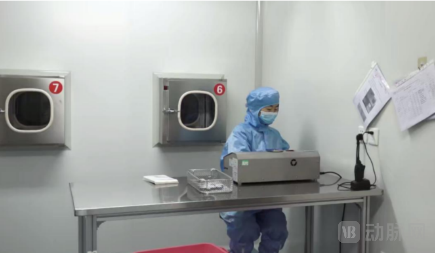
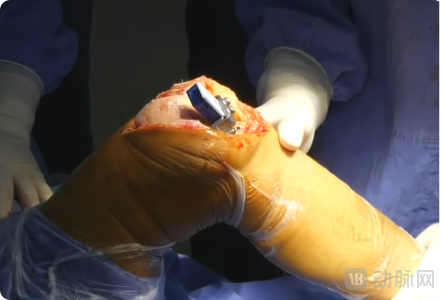
In the early stages of the startup, the team systematically evaluated three technological pathways: surgical robots, 3D-printed patient-specific instrumentation (PSI), and intelligent sensor-based navigation. While robotic systems can enhance precision, they represent "using highly complex equipment to address a relatively simple clinical problem" in the context of joint arthroplasty, entailing high capital and operational costs that impose significant financial burdens on both hospitals and patients. Although 3D-printed PSI can assist in locating bony structures, it involves a lengthy production cycle (requiring 3–5 days from imaging to guide delivery), and its accuracy is susceptible to multiple factors, including image segmentation, printing precision, and intraoperative fitting. More importantly, PSI addresses only bony alignment and fails to account for soft-tissue tension balance.
"A digital solution truly suited for the development of orthopedics in China is not necessarily the most complex one, but rather one that balances cost, efficiency, and accessibility while ensuring precision." After comprehensive comparison, the team ultimately chose an intelligent sensor-based dynamic guidance approach, positioning intelligent sensing as a low-cost, disposable, and easily adoptable navigation solution, with the aim of enabling precise joint replacement to reach more hospitals.
Currently, clinical technologies for assisted joint replacement primarily encompass three approaches: large-scale surgical robots, conventional optical navigation, and intelligent sensing. In contrast to the first two, which mainly address issues of precise execution and spatial localization, intelligent sensor-based dynamic guidance further incorporates soft tissue tension into the measurement system, enabling real-time quantification of key parameters such as distance, angle, and tension. This approach ensures precision while lowering equipment investment and usage barriers through a disposable consumable format, providing a more lightweight and inclusive technological pathway for precise navigation in orthopedic surgery.
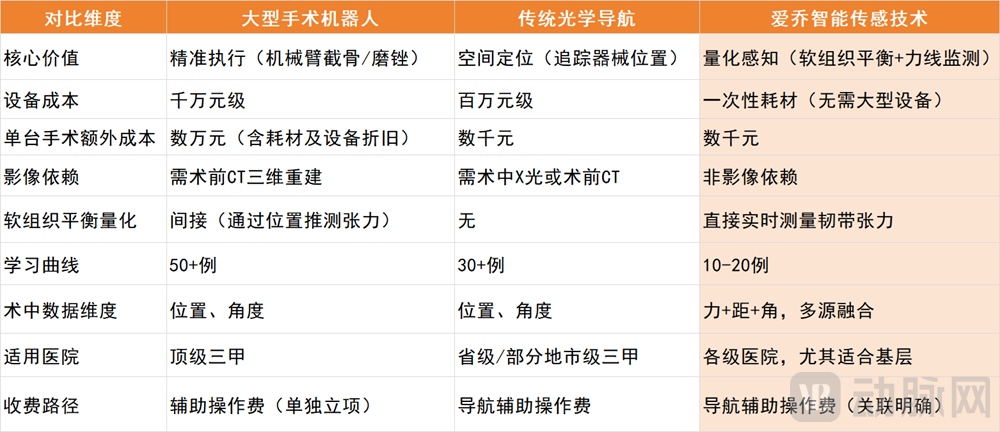
Comparison of Large-Scale Surgical Robots, Traditional Optical Navigation Devices, and Intelligent Sensing Technologies
Distance, angle, and tension are the three core parameters determining the quality of joint replacement. With precise measurements, more objective and standardized intraoperative assessments can be achieved. The essence of intelligent sensor-based dynamic guidance lies in the real-time acquisition of key intraoperative parameters—such as distance, angle, and soft tissue tension—via MEMS sensors, combined with multi-source sensory data from accelerometers, gyroscopes, and magnetometers, to enable precise measurement and digital evaluation supported by proprietary algorithms.
However, despite their apparent maturity, MEMS sensors face significant challenges in being truly applied to orthopedic surgeries. This is because consumer-grade MEMS sensors commonly suffer from zero drift, temperature drift, and noise interference, whereas joint replacement procedures demand extremely high measurement precision. Taking hip joint products as an example, the positioning error of the installation fixture must be controlled within 2°, while traditional six-axis sensors cannot accurately identify the human body's gravitational axis.
To this end, i-JOIN introduced magnetometer technology and continuously overcame magnetic interference issues in complex surgical environments, developing spatial algorithms, coordinate transformation algorithms, and anti-magnetic interference algorithms, ultimately achieving medical-grade positioning accuracy within 2°.
More importantly, intelligent sensor-based dynamic guidance does not alter the surgeon's original surgical approach. Unlike robotic systems that require physicians to adjust surgical workflows around the equipment, intelligent sensor-based dynamic guidance functions more like an assistant providing real-time digital information. Surgeons continue to perform procedures in their familiar manner, while receiving more precise measurements and decision support at critical junctures.
As Chang Tao stated, "The significance of digitalization is not to replace physicians, but to make clinical experience more quantifiable and replicable while preserving their expertise." This philosophy of "empowering, rather than changing, physicians" has been the core product principle upheld by i-JOIN for the past decade.
Guided by this philosophy and intelligent sensing technology, i-JOIN has progressively completed its product portfolio expansion from knee joints to hip joints, extending further into spine surgery, sports medicine, and foot and ankle surgery. The company continues to build a digital-intelligent product system covering precision orthopedic surgery, laying the foundation for the future development of a full-cycle digital platform for orthopedics.

For innovative medical devices, what truly determines whether a product can achieve mass adoption is not just technological leadership, but more importantly, the seamless integration of regulatory approval, clinical validation, and reimbursement.
In 2026, i-JOIN achieved significant progress in these three key areas, thereby ushering the intelligent sensor-based dynamic guidance pathway into a new phase of value realization.
Regulatory Approval: Innovative Products Enter the Special Review Procedure
In May this year, the hip joint surgical positioning and measuring instrument independently developed by i-JOIN officially entered the national special review procedure for innovative medical devices, marking a significant breakthrough in China's intelligent sensor-based dynamic guidance pathway.
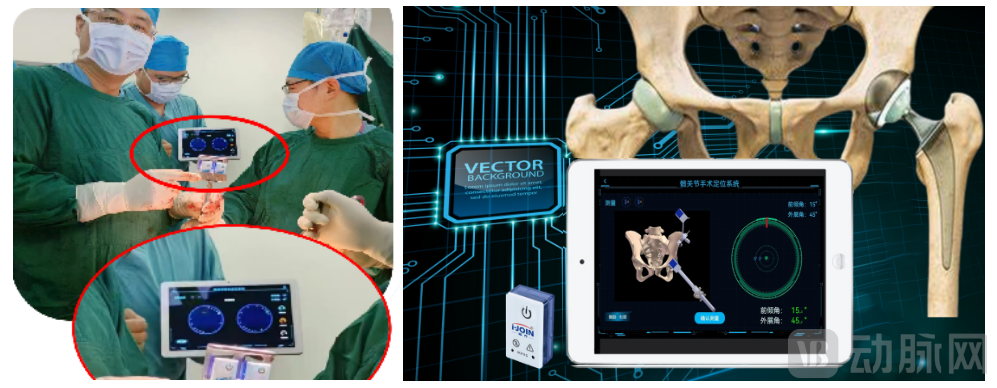
Centered on micro-sensors, this product real-time captures multidimensional data such as acetabular position and femoral motion status. By integrating proprietary fusion algorithms, it constructs an intraoperative functional safe zone based on image-free navigation, enabling real-time assessment of the patient-specific optimal implantation angle. This provides surgeons with objective, quantitative navigation guidance to facilitate precise implant placement.
Unlike traditional solutions that rely on large navigation systems or surgical robots, this product is designed as a single-use disposable, eliminating the need for hospitals to purchase expensive equipment. It significantly lowers the barrier to adopting precise joint replacement procedures while maintaining high accuracy.
Clinical Recognition: Expert Consensus Drives Standardized Application
This April, the "Expert Consensus on Application of Intelligent Sensor-Based Dynamic Guidance Technology in Orthopedic Surgery," co-authored by joint surgery experts from eight top orthopedic centers in China, including Chinese PLA General Hospital, Peking University Third Hospital, Shanghai Sixth People's Hospital, Shanghai Ninth People's Hospital Affiliated to Shanghai Jiao Tong University School of Medicine, and Nanjing Drum Tower Hospital, was officially published in the Chinese Journal of Joint Surgery.
Compared with traditional navigation and robotic technologies, intelligent sensor-based dynamic guidance remains a relatively new technological pathway that has previously lacked unified clinical application standards. As a key participant in the field of intelligent sensor-based dynamic guidance, i-JOIN, in collaboration with orthopedic experts with whom it has maintained long-term partnerships, jointly facilitated the development of this expert consensus, aiming to help more physicians perform surgeries in a standardized manner through evidence-based medicine and standardized guidelines, thereby promoting the broader clinical adoption of new technologies.
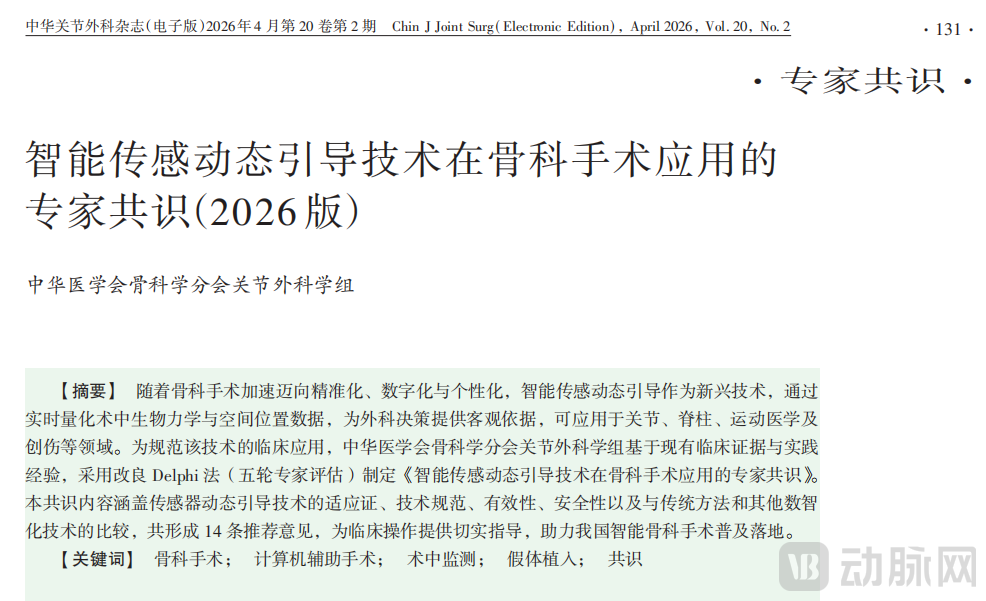
The consensus ultimately established 14 recommendations, covering multiple orthopedic subspecialties including knee arthroplasty, hip arthroplasty, knee-preserving surgeries (HTO/UKA), spinal instrumentation, and sports medicine ligament reconstruction. It explicitly states that intelligent sensor-based dynamic guidance technology can transform intraoperative empirical maneuvers reliant on "tactile feel" into real-time, quantitative data-driven decisions, thereby enhancing surgical precision and reproducibility, shortening the learning curve for junior surgeons, and reducing complications and revision risks associated with poor alignment restoration or soft-tissue imbalance.
Professor Chai Wei, Lead Expert of the Consensus from the Department of Orthopedics at Chinese PLA General Hospital, stated: "The release of this consensus marks a shift where intelligent sensing technology is no longer an 'exclusive expertise' reserved for a few pioneers, but has become a standardized, evidence-based, scalable, and replicable technology. Particularly against the backdrop of the national government's vigorous promotion of tiered diagnosis and treatment systems and the decentralization of high-quality medical resources, such low-cost and easily deployable technology holds significant social value."
Payment Recognition: Reimbursement Pathways for Medical Insurance Gradually Clarified
In early 2026, the National Healthcare Security Administration released the "Guidelines for Establishing Price Items for Medical Services in the Category of Surgical and Therapeutic Auxiliary Procedures," which, for the first time at the national level, established price items for medical services related to "surgical path navigation-assisted procedures." The guidelines explicitly stipulated that the costs of disposable consumables and auxiliary procedure fees could be billed separately, thereby providing a clear basis for the hospital admission of orthopedic navigation products from companies such as i-JOIN.
More critically, the DRG/DIP Version 3.0 grouping scheme is about to be implemented, further refining the bundled payment mechanism for health insurance reimbursement from a "fee-for-service" model to a "diagnosis-based" model. Under this mechanism, reimbursement caps for the same medical condition are relatively fixed, so long-term revision surgeries caused by insufficient surgical precision will directly translate into cost pressures for hospitals. Therefore, technologies that can enhance surgical precision and reduce the probability of long-term revisions will receive greater attention in hospital procurement decisions.
i-JOIN's intelligent sensing technology, by enabling real-time intraoperative data acquisition and long-term postoperative follow-up tracking, establishes a complete health economics evidence chain that aligns closely with the reform orientation emphasizing both medical insurance cost containment and quality improvement.
From the special review process for innovative medical devices to the publication of expert consensus, and further to the gradual clarification of reimbursement pathways, favorable developments from regulatory, clinical, and payment sectors continue to converge. This not only validates the technological maturity and clinical value of intelligent sensor-based dynamic guidance systems, but also propels this technological approach into a new phase of accelerated value realization.
With regulatory, clinical, and reimbursement systems gradually improving, i-JOIN has reached the tipping point for explosive growth.
In 2025, the company's sales revenue increased year-on-year by 100%, breaking through RMB 10 million, and was recognized as a Shanghai "Specialized, Refined, Differential, and Innovative" SME. Currently, the product has achieved rapid penetration in regions such as East China, with annual usage at some core hospitals reaching 200 to 350 units.
As medical insurance reimbursement policies are gradually implemented, the clinical adoption of navigation-assisted technologies is expected to accelerate further. With new products such as knee preservation devices and hip surgery positioning and measurement instruments being rolled out to the market, the company's business is projected to maintain rapid growth in 2026.
Meanwhile, the company has launched EU MDR certification and is actively promoting its Southeast Asia market presence. The new production base is now capable of supplying overseas markets.
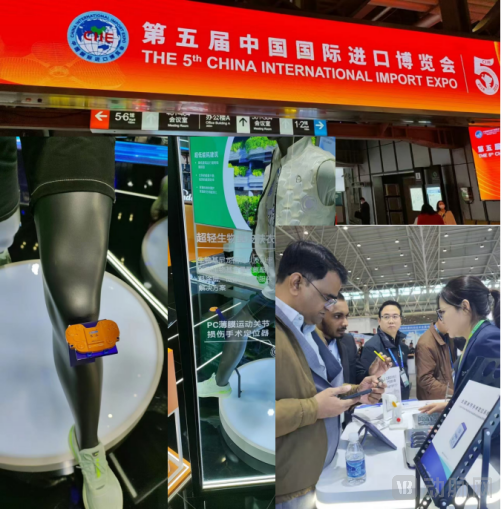
i-JOIN's ambitions do not stop here.
"We aim to become a data service provider for the entire lifecycle of orthopedic surgery," Chang Tao emphasized. The company has completed over 30,000 clinical surgical procedures, established a core measurement system for parameters such as distance, angle, and tension, and accumulated a substantial amount of real-world data. In the future, these data will continue to be used to train AI models and optimize intraoperative decision-making, thereby achieving the digital consolidation and standardized replication of surgical expertise.
Meanwhile, the company is also developing low-cost handheld robots to further extend intelligent decision-making into the automated execution phase. In the future, it will gradually expand into areas such as knee preservation and rehabilitation management, building a full-cycle orthopedic diagnosis and treatment ecosystem covering "measurement–decision–execution–rehabilitation."
Looking globally, the focus of digital and intelligent development in orthopedics is gradually shifting from a sole pursuit of surgical precision to a balanced emphasis on precision, efficiency, and accessibility. Taking the U.S. orthopedic market as an example, an increasing number of total hip arthroplasty (THA) procedures are shifting from large hospitals to ambulatory surgery centers (ASCs), which require medical devices that are easier to deploy, enable faster workflows, incur lower costs, support higher turnover, occupy less space, and entail lower maintenance complexity—this is also highly consistent with i-JOIN's decade-long commitment to the intelligent sensor-based dynamic guidance pathway.
From enabling physicians to perform precise measurements, to leveraging data to support intraoperative decision-making, and further to building a data service platform that covers the entire orthopedic workflow, i-JOIN is attempting to answer a question broader than "how to develop a high-quality navigation product"—namely, how to transform precision joint replacement from the expertise of a few specialists into a replicable competency for a wider range of surgeons.
As regulatory approval, clinical guidelines, and reimbursement systems continue to improve, intelligent sensor-based dynamic guidance is also poised to become a key direction in the digital and intelligent development of orthopedics.