Bay Imaging Completes Tens-of-Millions Financing, Joining Forces with Huichuang Medical to Co-Build the Brain Metabolic Imaging Industry

Bay Imaging
Precision Diagnostics and Treatment System Developer

Huichuang Medical
Near-Infrared Brain Function Imaging Product Developer
Collaborative integration along the brain science industry chain is accelerating. Recently, Bay Imaging, a company focused on brain metabolic imaging technology, announced the completion of a new financing round of tens of millions of RMB, with investment from Huichuang Medical. The funds will be primarily used for the research and development advancement of core products including high-performance brain-dedicated positron emission tomography and small-animal positron emission tomography, the enhancement of industrialization capabilities, and market expansion, further strengthening the independent innovation capacity of domestically produced brain metabolic imaging equipment.
In recent years, brain science has continued to gain momentum and has become a key area of development in the life sciences. As a critical enabler of brain science research and precision diagnosis and treatment of brain diseases, brain imaging technology is now facing new opportunities for growth. Huichuang Medical's investment in Bay Imaging reflects the industry trend of brain science chain enterprises strategically increasing their focus on the brain metabolic imaging sector.

As the clinical burden of brain diseases including Alzheimer's disease, Parkinson's disease, and epilepsy continues to increase globally, and the demand for diagnosis and treatment continues to grow, brain science research is advancing toward precision and molecular-level approaches. Compared with traditional structural imaging, brain metabolic imaging can capture functional and metabolic changes in brain tissue at an early stage of disease, demonstrating unique value in early disease detection, disease progression assessment, and treatment efficacy evaluation.
Positron emission tomography, as one of the core technologies in brain metabolic imaging, can reflect metabolic activity and receptor expression in brain tissue at the molecular level, and has become a critical support for brain science research, precision diagnosis and treatment of brain diseases, and related innovative drug development. As the brain science industry continues to evolve, domestically produced high-performance brain-dedicated positron emission tomography equipment is now facing new opportunities for growth.
Huichuang Medical is a national-level "Little Giant" enterprise recognized for specialization, refinement, uniqueness, and innovation in the optical brain-computer interface sector, a potential unicorn enterprise, and the lead enterprise in Jiangsu Province's brain-computer interface industry chain. The company also serves as the initiator and vice-chairman unit of the Jiangsu Brain-Computer Interface Alliance.
The company leads the national brain-computer interface special project, the 2025 high-end medical equipment demonstration and promotion project, and major science and technology projects of the Jiangsu Provincial Department of Science and Technology, while also participating in four national key research and development programs. The company's optical brain-computer interface products have been adopted by over 1,000 top-tier hospitals, universities, and research institutions across China, with a market share exceeding 50% in the segment, making it the leading brand in this field. Products have supported users in publishing over 700 SCI-indexed papers in leading international journals including Nature sub-journals.
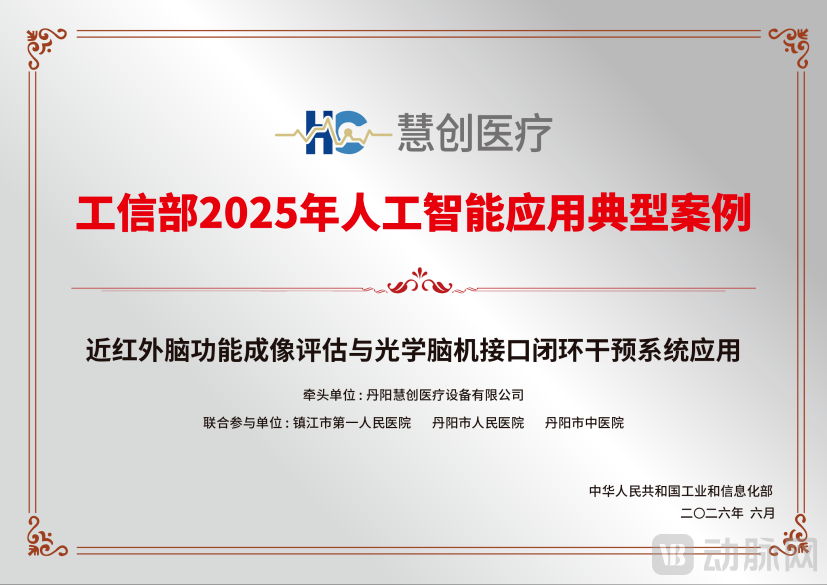
Centered on the needs for diagnosis and treatment of major brain diseases, Huichuang Medical has built its optical brain-computer interface technology as the core and has strategically developed a range of proprietary technology product pipelines across magnetic, electrical, and other modalities, forming a multi-modal integrated brain-computer interface product matrix covering multiple application scenarios. At the same time, Huichuang Medical continues to expand its presence across the brain science industry chain, covering key imaging equipment including brain-dedicated positron emission tomography and upstream core components including flexible electrodes. This investment in Bay Imaging represents a key step in further perfecting its closed-loop system for brain disease diagnosis and treatment, encompassing "diagnosis, treatment, and efficacy evaluation," as well as its brain science imaging industry ecosystem.
The founding team of Bay Imaging originates from the Nuclear Medicine Molecular Imaging Group of the School of Biomedical Engineering at Sun Yat-sen University, and has brought together expertise from research institutions including Lawrence Berkeley National Laboratory and the Shenzhen Bay Laboratory, with deep technical expertise in brain-dedicated positron emission tomography and molecular imaging.
As a Shenzhen-based brain science and brain-inspired intelligence enterprise, Bay Imaging has long focused on the research and development of high-performance brain-dedicated positron emission tomography, small-animal positron emission tomography, and core molecular imaging technologies. The company has established a complete independent research and development system covering positron emission tomography detectors, core electronics, system integration, image reconstruction, and artificial intelligence algorithms. It has published over 150 academic papers, filed more than 50 invention patents, and has been selected as one of Shenzhen's fifth batch of brain science and brain-inspired intelligence enterprises.
Currently, the company has established a product portfolio comprising two major product lines: brain-dedicated positron emission tomography, which primarily serves precision diagnosis and treatment of brain diseases and clinical research, and small-animal positron emission tomography, which primarily serves the development of novel diagnostic probes for brain diseases, research into mechanisms of neurodegenerative diseases, and evaluation of innovative therapeutic drugs.
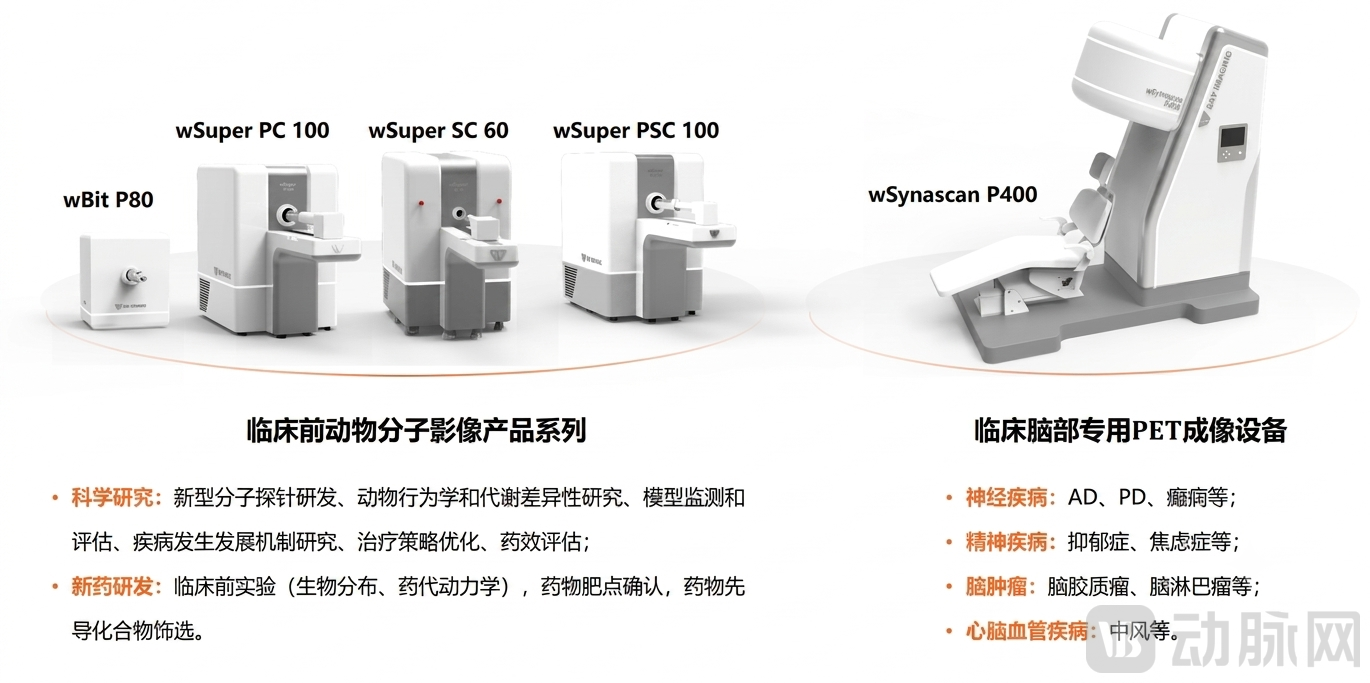
From the industry perspective, functional near-infrared spectroscopy brain imaging technology primarily reflects brain functional activity, while brain-dedicated positron emission tomography can reveal brain tissue metabolism and molecular-level information. The complementary advantages of the two technologies are highly prominent. In the future, multi-modal brain imaging fusion is expected to become a key direction for brain science research and precision diagnosis and treatment of brain diseases.
Against this backdrop, Huichuang Medical's investment in Bay Imaging represents not only a capital collaboration, but also a concrete practice of collaborative innovation within the brain science industry chain centered on brain metabolic imaging. The two parties will strengthen collaboration in technological research and development, scientific research cooperation, clinical application, and industrialization, jointly promoting the innovation and development of domestically produced brain metabolic imaging equipment.