

Conversation with PENG Lei of Gestala: AI + Brain-Computer Interfaces, Better Brain for Better Humanity

Gestala
Ultrasound Brain-Computer Interface Technology Developer
In early July, Shanghai finally saw a brief respite of clear skies after enduring multiple rounds of heavy rain. Yet, within the modest office space on the first floor of "Brain & Intelligence Hub" in Minhang District, news emerged that once again shook the brain-computer interface industry—just four months apart, Gestala completed its RMB 420 million Angel+ round of financing. From the Angel round to the Angel+ round, Gestala has raised nearly $100 million in total.
Meanwhile, Gestala's Shanghai headquarters has officially commenced operations. According to official information, the Shanghai headquarters primarily undertakes core functions such as the research and development of the AI Brain Foundation Model and international scientific research collaboration, aiming to build a globally leading NeuroAI innovation platform.

Both its fundraising and its "heavy investment" in exploring AI applications underscore the unusual nature of Gestala.
The reason lies in the fact that, from an investment and financing perspective, it was an industry "first" for Gestala to secure hundreds of millions in funding during its angel and angel+ rounds, based on medical device valuation logic and post-listing sales ceilings. Some industry insiders even bluntly stated, "Since then, if the funding amount doesn't exceed RMB 100 million, it's not even worth disclosing."
Judging by the "heavy investment" in AI, the strategic status of Gestala's Shanghai headquarters is on par with its global headquarters in Chengdu. This is indeed rare in the brain-computer interface industry.
So, why was Gestala able to secure two rounds of financing at the hundred-million-yuan level within just three months? And why has it invested so heavily in AI? These questions all point to a fundamental issue: What kind of company is Gestala, exactly?
"The Whole Is Greater Than the Sum of Its Parts": From Treating Diseases and Saving Lives to Defining Intelligence
Brain-computer interface companies? life science companies? AI companies?
Regarding the positioning of Gestala, since its official establishment was announced on January 1, PENG Lei has answered countless times: "Yes and no."
This response is highly consistent with Gestala's corporate style of "philosophical speculation." Gestala, derived from the German philosophical and psychological concept of "Gestalt," is centered on the core principle that "the whole is greater than the sum of its parts."
In his conversation with PENG Lei, VCBeat obtained a more concrete answer. Gestala's business (vision) model can be likened to a bucket: the applications of brain-computer interfaces form the base, the integrated research on brain-computer interfaces and AI constitutes the middle section, and the application of its research outcomes represents the top.
Looking further, at the base of the pyramid, Gestala selected disease treatment and patient care as its application scenario, with an initial focus on tackling serious medical devices. The underlying reason is that high-quality data and stringent requirements in serious medical scenarios are more conducive to refining and iterating models with superior efficacy, enhanced safety, and stronger generalization capabilities (particularly from serious medical care to consumer healthcare, and from patients with pre-existing conditions to healthy individuals).
As for Gestala's specific layout in serious medical scenarios, multiple reports have previously covered this topic; therefore, this article will not reiterate those details but will instead disclose the latest progress and rollout plans for its inaugural product: its first-generation product is expected to be officially released to the public by the end of the year, with plans to complete domestic registration and market launch within one to two years. Clinical trials in the United States have shown that the ultrasonic brain-computer interface can reduce pain levels by half in the management of chronic pain, with effects lasting for one to two weeks.
Next, let us examine Gestala's "middle of the bucket" and "top of the bucket." As previously mentioned, Gestala's "middle of the bucket" focuses on exploring the integration of BCI and AI, which can be understood as the "technology layer." The research outcomes from this "technology layer" in turn support the "top of the bucket," namely the exploration and practice within the "application layer."
At first glance, it appears unremarkable. However, a deeper exploration of its significance is truly inspiring. The reason lies in the fact that Gestala's exploration of the integration of BCI and AI technologies goes far beyond simply achieving faster and higher-precision decoding; it aims to define intelligence itself. A more concrete understanding is that Gestala's ultimate goal in exploring the integration of brain-computer interfaces and AI technology is to achieve a comprehensive analysis and full simulation of human brain intelligence.

Once this technological singularity is realized, its application scenarios will by no means be "confined" to the medical field. From a medical perspective alone, the application ceiling of this technology will be infinitely "raised," spanning from disease prediction to health management and even longevity medicine, as well as from drug development to precise, personalized treatment.
In addition to these technical and application-level considerations, PENG Lei also offered philosophical reflections on why Gestala is committed to understanding and defining intelligence.
Immanuel Kant once said, "Two things fill the mind with ever-increasing wonder and awe, the more often and the more intensely the mind of thought is drawn to them: the starry heavens above me and the moral law within me." In PENG Lei's view, the former reflects contemplation on "why humans are the only beings in the universe where life and consciousness coexist," while the latter pertains to the fundamental question of "what makes humans human, and why they differ from other animals." The answers to both questions ultimately point toward the exploration of human intelligence.
So, how does Gestala understand and define intelligence?
"Only When Two Models can Be Mutually Mapped and Interpreted can Humanity Truly Understand Intelligence Itself"
"Neuroscience and artificial intelligence are two sides of the same coin (understanding intelligence, defining intelligence)," is a phrase PENG Lei has been saying often recently.
A more concrete explanation is that neuroscience and artificial intelligence are two paths to understanding and defining intelligence, mutually empowering and inseparable.
From a neuroscience perspective, each major research breakthrough not only deepens our understanding of the intelligent operational mechanisms of the human brain but also drives further advancements in artificial intelligence. Furthermore, the application of AI-related technologies empowers fundamental neuroscience research to address challenges such as signal acquisition and the processing and analysis of massive, multimodal data, thereby "feeding back" into and fostering the in-depth development of neuroscience research.
From the perspective of AI development, nearly all core algorithms—from convolutional neural networks to reinforcement learning and attention mechanisms—have drawn their foundational "inspiration" from the human brain (neuroscience). Consequently, most leading AI researchers worldwide currently have backgrounds in neuroscience.
For instance, Geoffrey Hinton, the "Godfather of Deep Learning," not only holds a bachelor's degree in Experimental Psychology from the University of Cambridge but also founded the Gatsby Computational Neuroscience Unit at UCL, with his primary research objective being to explain how the brain learns. Demis Hassabis, co-founder and CEO of DeepMind, pursued a Ph.D. in Cognitive Neuroscience. The co-founders of OpenAI studied under Hinton and conducted in-depth explorations into the connection between the brain's learning rules and the backpropagation algorithm in neural networks...
In other words, carbon-based multimodal models for decoding the brain (referring to neuroscience research and practices, such as brain-computer interfaces) and silicon-based multimodal physical models (referring to AI technologies such as large language models, physical models, and biological models) are continuously leveraging each other's strengths, striving to approach the ultimate goal of "understanding intelligence and defining intelligence."
And when these two models, the singularity moment when carbon-based intelligence and silicon-based intelligence truly connect arrives as they become capable of mutual mapping and cross-validation. Thus, the era of comprehensive analysis and full-scale simulation of the human brain, as mentioned earlier, is inevitably imminent.
"This is essentially the new 'Rosetta Stone,' where AI models, human intelligence, and neuroscience models map onto and elucidate one another. Only then can humanity truly understand the nature of intelligence and create genuine artificial intelligence." PENG Lei cited as an example.
"Ultrasound Brain-Computer Interface Is the Bridge Connecting the Two"
The selection and breakthrough of the technical roadmap are the cornerstone for realizing this grand vision.
In this regard, Gestala has chosen the technological route of ultrasound brain-computer interfaces. The primary reason behind this decision is that ultrasound brain-computer interfaces can balance spatial resolution. These correspond respectively to the two "keys" to understanding human brain intelligence: "sufficiently large volume and broad scope" of neural activity data acquisition, and "sufficiently high speed."
First, consider "sufficient volume and extensive coverage." Unlike traditional electrical BCIs, which can only record neuronal activity in localized brain regions, ultrasonic BCIs offer the potential for whole-brain reading and writing. This capability is crucial for understanding higher-order brain functions such as intelligence, memory, language, and emotion. Using Neuralink as a control group, under comparable device volumes, Neuralink's signal acquisition coverage amounts to merely 1.3% of the entire cerebral cortex, whereas Gestala's imaging coverage reaches 25% of the total brain volume.
"Sufficiently Fast Speed": Compared to the temporal lag of fMRI, ultrasound BCIs offer relatively higher temporal resolution. According to PENG Lei, the imaging time for blood flow signals in ultrasound BCIs has been reduced to as low as 0.5 seconds, essentially enabling real-time reading. Furthermore, with the continued integration of AI technologies in the future, this latency is expected to be further minimized.
Overall, while traditional electrical BCIs offer high temporal resolution, they are limited to reading from and writing to localized brain regions. Although fMRI enables whole-brain read-write capabilities, it suffers from significant temporal latency.
Furthermore, PENG Lei disclosed to VCBeat that while electrical BCIs can achieve mind-controlled mouse operation using basic AI technologies, ultrasonic BCIs have a greater and more urgent demand for advanced and cutting-edge AI technologies. This has driven the active exploration of integrating ultrasonic BCIs with the most forefront AI technologies. In other words, the empowerment of neuroscience research and the urgent need for advanced AI technologies have made ultrasonic BCIs the optimal "technological bridge" connecting neuroscience and AI.
However, given that human brain activity signals encompass multiple modalities, including hemodynamic, electrical, magnetoencephalographic, and MRI data, Gestala is also exploring the development of a Foundation Model based on such multimodal data. This initiative aims to advance NeuroAI—deeply integrating AI, neuroscience, and BCI technologies to decode, understand, and modulate brain function. Reportedly, Gestala's first-generation self-developed Foundation Model will be unveiled by the end of this year.
"You can look forward to seeing what kind of model this ultimately is. But at least one thing is certain for now: it will definitely not be a large language model." said PENG Lei.
“A Commitment to Long-Term Human Well-Being Must Be the Prerequisite”
Beyond technology, the realization of grand visions often rests on certain rules or beliefs.
On Gestala's official website, the following statement is prominently displayed:
This passage encapsulates the multidimensional challenges inherent in researching human intelligence, such as the protracted time investment and reverence for human subjectivity. In response, Gestala has established its own set of values.
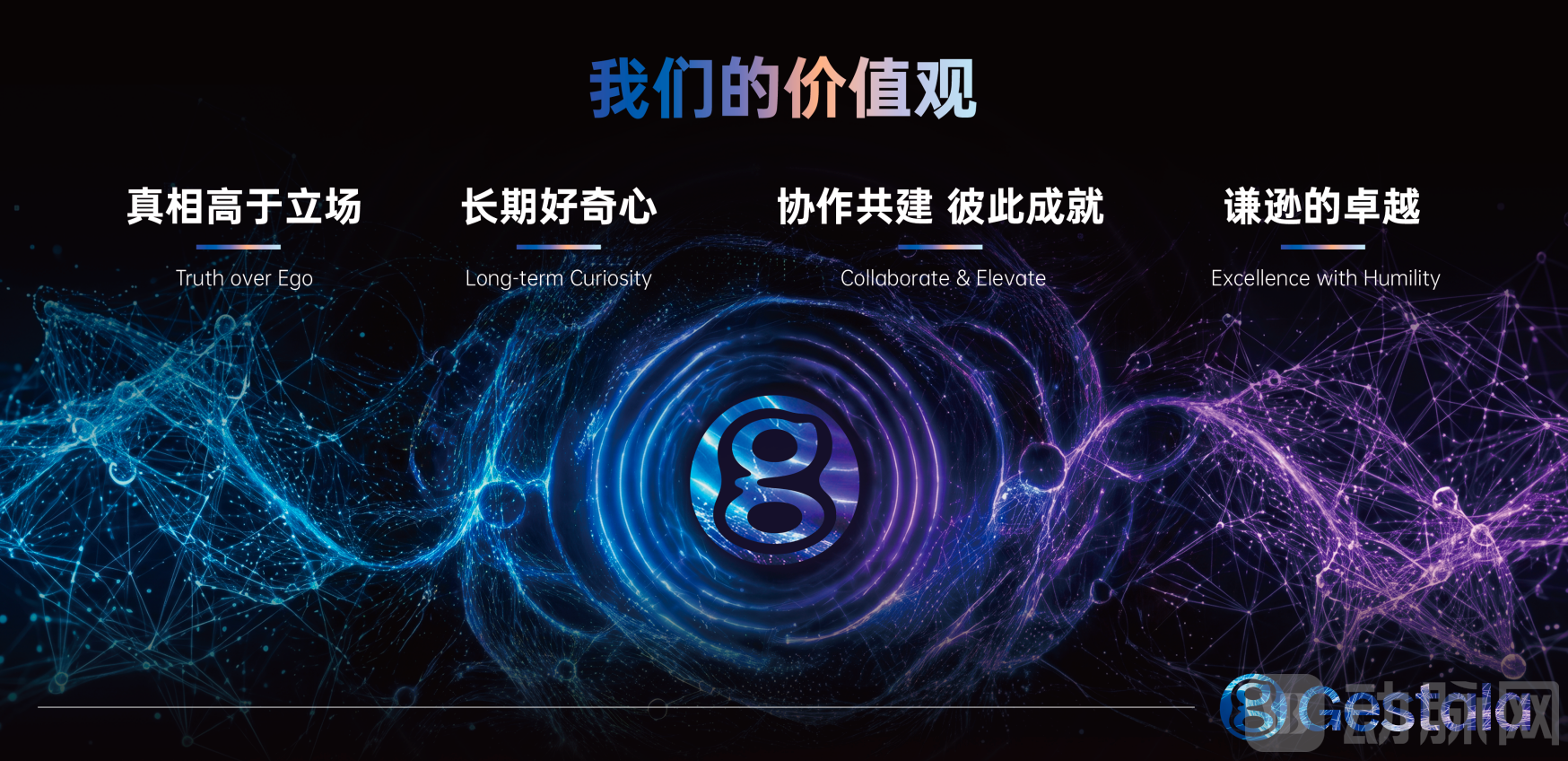
In the face of brain research that is complex and extremely challenging, measured in years or even decades, Gestala emphasizes maintaining "long-term curiosity" and believes that "sustained curiosity is our most important scientific research asset."
And in the face of the three major challenges encountered in the transition from AI to AGI—continuous learning, multi-level long-term memory, and long-horizon reasoning—PENG Lei stated that this requires interdisciplinary collaboration between neuroscience and AI, reflecting the values of "collaborative co-creation and mutual achievement."
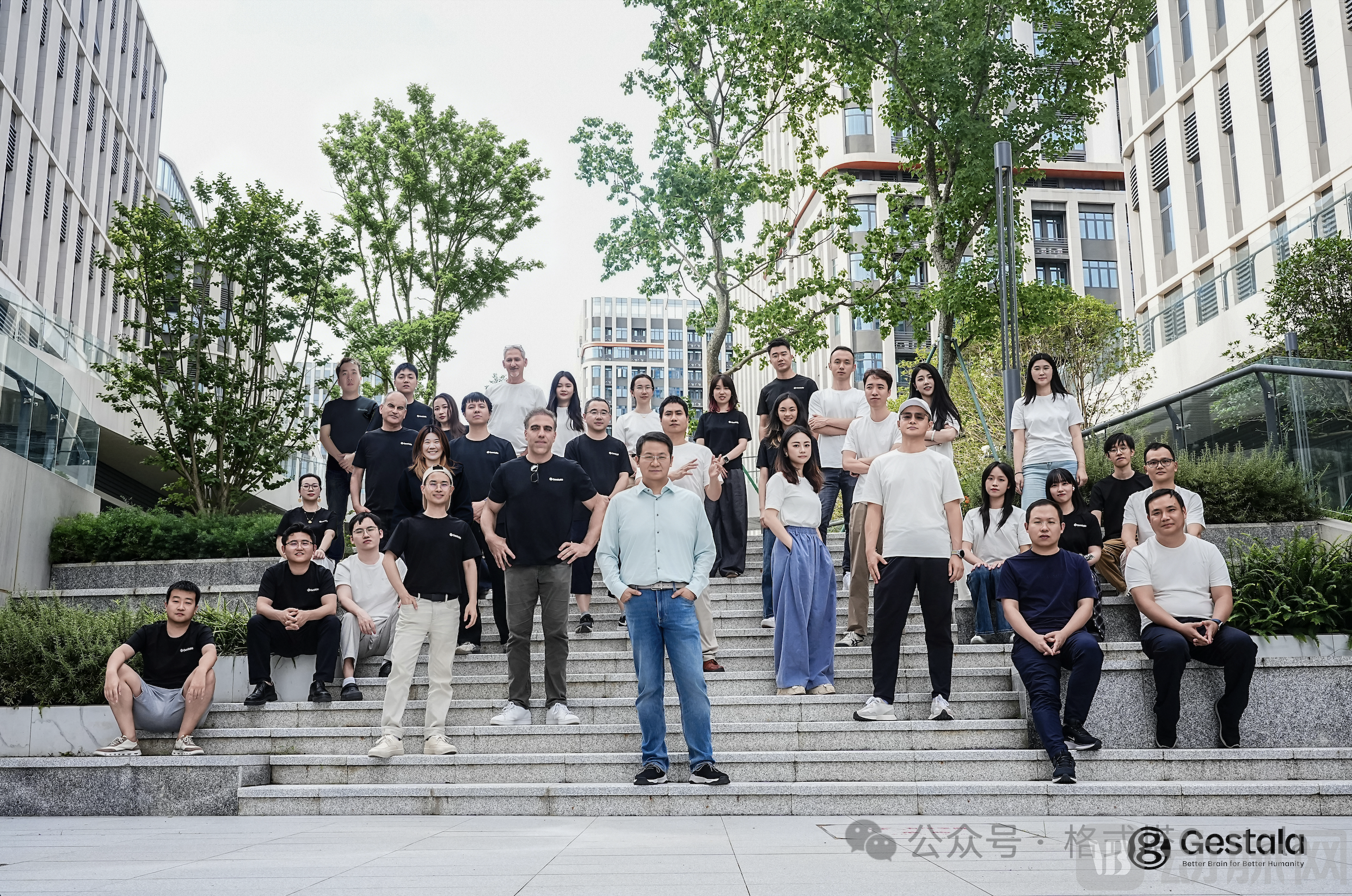
Therefore, Gestala places great emphasis on building composite teams and has attracted many top scientists and engineers from both China and abroad to join. For example, Bashar Badran, former Head of Preclinical Translation at Neuralink, joined Gestala as Vice President of Clinical and Research; Trevor Robbins, a neuroscientist ranked number one globally for multiple consecutive years, joined the Gestala Scientific Advisory Board...
PENG Lei firmly believes that the true integration of neuroscience and artificial intelligence can only be achieved when scientists and engineers work under the same roof, thereby enabling the resolution of genuinely complex problems. "Scientific research is not about individual heroism; breakthroughs often stem from collaboration, knowledge sharing, and mutual support."
Regarding ethical challenges, Gestala adheres to values such as "truth above stance," "humble excellence," and "reverence for human subjectivity." Upholding the principle that "truth stands above stance," Gestala emphasizes that "scientific truth belongs neither to authority, titles, nor narratives," and accordingly encourages the authentic recording of negative results, replication and verification, and internal questioning. In the face of the extreme complexity of the human brain, Gestala strives to pursue world-class standards in scientific research, engineering, and clinical practice, while also emphasizing the importance of not overstating technological capabilities, not promising unverifiable outcomes, and maintaining honesty in the face of uncertainty.
And perhaps more importantly, Gestala emphasizes respect for individual dignity and human agency, clarifying that its ultimate goal is not "enhancement per se," but rather serving humanity better with superior brains—"Better Brain for Better Humanity."
In January 2026, 45-year-old PENG Lei officially founded Gestala. This marks his sixth entrepreneurial venture. What drives him may have little to do with money, fame, or status, but rather stems from a simple yet grand aspiration: to truly "understand intelligence and create intelligence."
This vision has also attracted a cohort of top-tier global scientists and engineers, such as Bashar Badran and Trevor Robbins mentioned earlier, as well as garnering favor from numerous investment institutions. Whether through their expertise or capital, they are fully betting on a future of "Better Brain for Better Humanity" for the benefit of all mankind!
"This future is expected to arrive in the next 10–15 years." PENG Lei predicted.