

HesiMed AI: Diabetes LLM Trained on 3,000 Hospitals' Data Drives Integrated Care

Hesicare
Chronic Disease Auxiliary Diagnosis and Treatment Platform Developer
Large medical models are among the hottest topics in the current healthcare industry. From general-purpose large models to specialty-specific models, and from consultation assistants to clinical decision support, a wide variety of AI products are emerging continuously.
As more hospitals begin to deploy large language models (LLMs), the evaluation of medical LLMs at this stage no longer focuses solely on parameter metrics, but rather on their ability to deliver tangible value in clinical practice. The prerequisite for such value realization depends on whether the model truly understands clinical scenarios.
Recently, Chengdu Hesicare Medical Technology Co., Ltd. (hereinafter referred to as "Hesicare"), a company long deeply engaged in the field of diabetes management, officially launched HesiMed AI, a large language model specialized in diabetes, along with its accompanying products.
The uniqueness of HesiMed AI lies in the fact that it is not an isolated large-model product, but rather the core intelligent engine of Hesicare's tripartite system—comprising a chronic disease software platform, a hardware and reagent platform, and data-driven AI—built over many years. Underpinning this is the wealth of real-world data and clinical scenarios accumulated by Hesicare's DMS, which covers more than 3,000 hospitals across China. These long-term accumulations form the foundational capability of HesiMed AI.
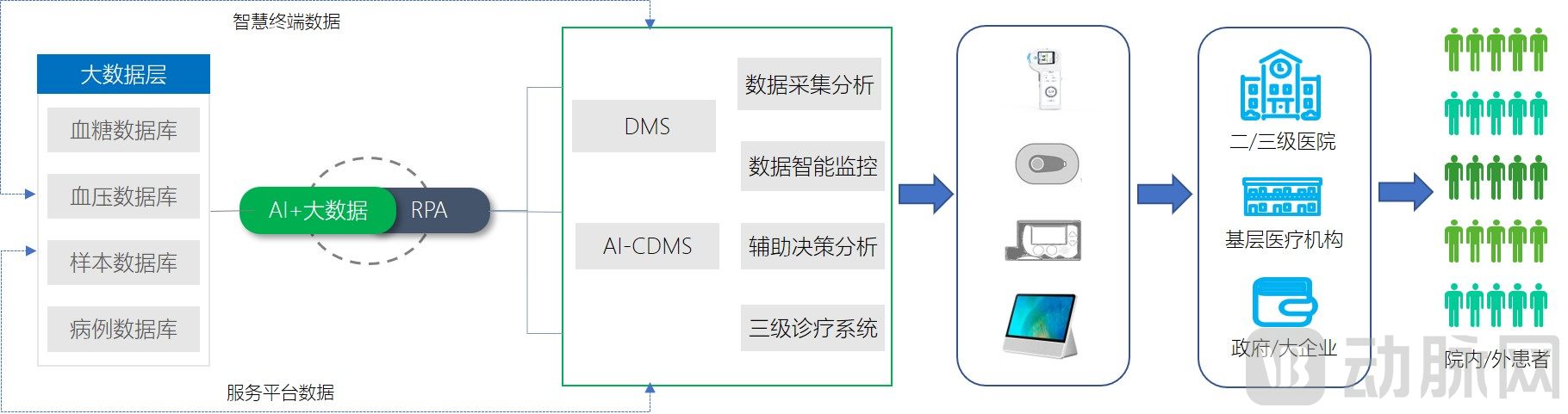
Hesicare's "Chronic Disease Software Platform + Hardware & Reagents + Data AI" Trinity System
HesiMed Chronic Disease Large Language Model, trained on tens of millions of clinical data points and developed in joint research with renowned hospitals in China, covers four core dimensions: "physiological indicators, diagnostic and treatment behaviors, lifestyle, and clinical outcomes." By integrating with Hesicare's existing DMS system and regional chronic disease management systems, it enables the rapid deployment and application of AI solutions. On the institutional side, HesiMed AI provides auxiliary diagnosis and treatment support for chronic diseases to healthcare institutions and physicians, while offering AI capability integration to industry partners such as pharmaceutical companies. On the patient side, HesiMed AI empowers hardware and reagent products by embedding AI capabilities into devices commonly used by patients, including blood glucose meters (BGM), continuous glucose monitors (CGM), and insulin pumps, thereby delivering proactive, data-driven health services to users. Driven by this dual B2B and B2C engine, HesiMed AI not only enhances and strengthens Hesicare's tripartite integrated chronic disease management system but also further builds a comprehensive, all-scenario AI ecosystem for chronic disease management.
The greatest challenge in diabetes management lies in the shortage of management resources and service capabilities. Data has long been fragmented across hospitals, homes, and various devices, making it difficult to achieve continuous utilization. Hospitals hold in-hospital diagnosis and treatment information, while patients generate vast amounts of home monitoring data daily; however, these data sources are often isolated from one another, causing management to remain stuck in a passive cycle of "identifying problems—solving problems."
To improve this situation, it is not about adding another AI tool, but rather to seamlessly embed AI capabilities into existing software platforms, hardware devices, and healthcare service workflows, transforming data into proactive services without altering current user habits. This is precisely the starting point for the R&D of HesiMed AI.
Unlike the "build models first, then seek applications" approach adopted by most companies, Hesicare has chosen to "define AI through use cases." This strategy stems not from model capabilities, but from its years of accumulated expertise in diabetes management systems.
For many years, Hesicare has centered its strategy on the Diabetes Management System (DMS), building a comprehensive product portfolio for chronic disease management that spans "in-hospital, community, and home" scenarios. This has resulted in an integrated tripartite system comprising a "chronic disease software platform, hardware and reagent platform, and AI-driven data analytics." The DMS system is now deployed across all 31 provinces in China and more than 3,000 hospitals, establishing real-world management scenarios that extend beyond hospital walls and providing a continuous source of data and application foundation for AI training and implementation.
Based on this system, HesiMed AI is not a standalone large language model, but rather the AI-powered foundation of the entire chronic disease management system. Downward, it deeply empowers hardware products such as BGM, CGM, insulin pumps, and blood lipid/blood pressure monitors, enabling these devices to upgrade from "data recording" to "proactive service"; upward, it connects the hospital diabetes management system with the regional chronic disease management platform, infusing AI capabilities into the entire chronic disease management framework without altering existing business processes, and achieving continuous coordination between in-hospital and out-of-hospital care.
To C: AI-Empowered Hardware Products, Enabling Monitoring Devices to Evolve from "Data Recording" to "Proactive Service"
Diabetes patients generate a large volume of blood glucose data daily. However, for a long time, devices such as BGM and CGM have primarily served as data collection tools. Although patients can view their blood glucose curves, they are required to interpret the data, assess risks, and determine subsequent actions on their own.
The value of HesiMed AI lies in empowering these hardware devices with continuous analysis and proactive service capabilities. Powered by AI, CGM, BGM, insulin pumps, as well as blood lipid and blood pressure monitoring devices, are no longer limited to data recording, but can proactively deliver health services based on continuously generated patient data.
For example, when the system detects significant recent fluctuations in a patient's blood glucose levels, HesiMed AI's patient-facing app, "AI Health Walk," analyzes the causes and proactively provides recommendations. If nighttime hypoglycemia is predicted, it sends advance reminders to have a bedtime snack. After patients take photos of their meals, the AI also analyzes the impact of food on blood glucose levels by combining this information with personal historical data, offering dietary advice accordingly.
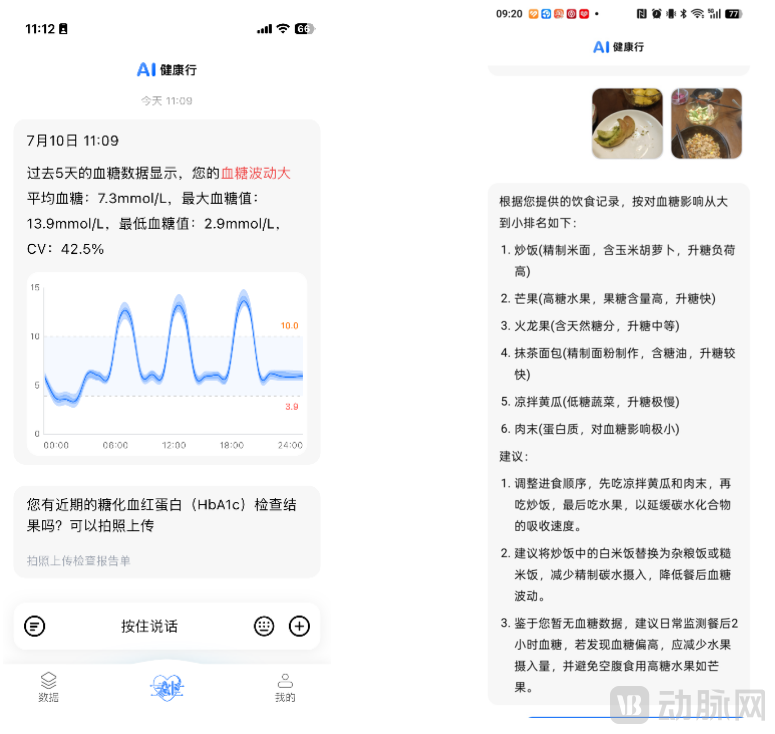
More importantly, AI has bridged the data connectivity between different devices. Patients continue to use familiar glucose meters, CGMs, or insulin pumps; however, these devices have evolved from mere data collection tools into proactive health companions that continuously support patients. They seamlessly perform risk alerts, behavioral reminders, and health interventions during nearly imperceptible daily use.
To B: Upgrade Existing Scenarios While Expanding AI Capability Output
For healthcare institutions, HesiMed AI is not a new system requiring separate deployment; rather, it is directly embedded into Hesicare's existing Diabetes Management System (DMS). Without altering established clinical workflows, it augments hospitals with capabilities such as AI-assisted analysis, risk alerts, and diagnostic and treatment recommendations, thereby achieving an intelligent upgrade in diabetes management—termed "upgrading legacy scenarios."
Meanwhile, HesiMed AI can also open up its AI capabilities to industry partners such as pharmaceutical companies and health management organizations, exporting functionalities like decision support and patient profiling analysis to more chronic disease management scenarios, thereby achieving "new scenario expansion."
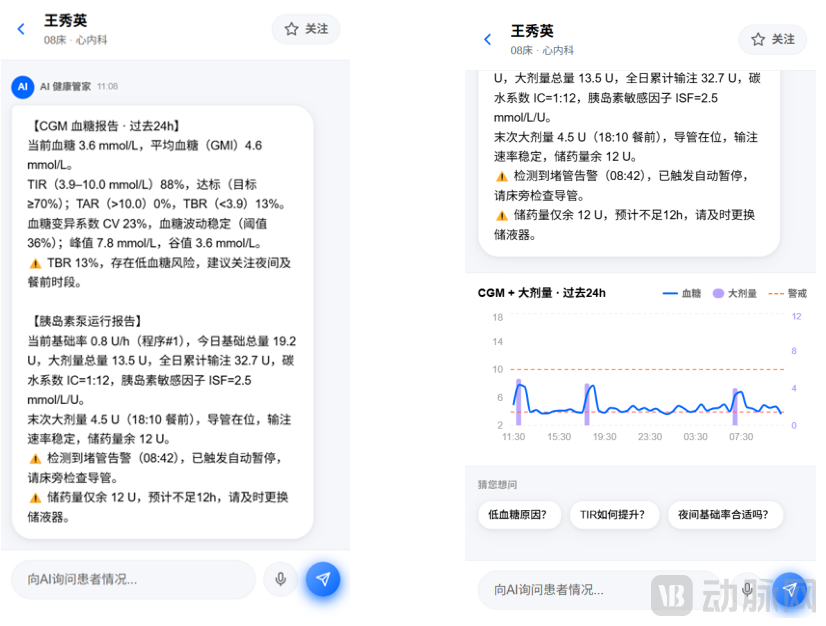
Whether it is the continuous data generated on the patient side or the clinical diagnosis and treatment data accumulated on the hospital side, both will continuously feed back into the optimization of the HesiMed AI model, forming a closed loop of "AI-empowered applications – applications generating data – data continuously optimizing AI." This is also the core logic behind Hesicare's construction of an AI ecosystem for full-scenario chronic disease management.
Building on the continuous operation of this closed-loop system, Hesicare further proposed AGS (Automatic Gluco System): A Tiered Approach to Autonomous Blood Glucose Management.
As AI continues to empower patients, healthcare providers, and the industry, diabetes management will evolve from data sensing and risk prediction toward proactive intervention, ultimately achieving a higher degree of automated management. This entire process is akin to the evolution of automobiles from assisted driving to autonomous driving. AI assumes an increasing share of analytical and managerial tasks, reducing the need for active patient involvement and ultimately achieving diabetes management that is nearly "imperceptible," akin to autonomous driving.
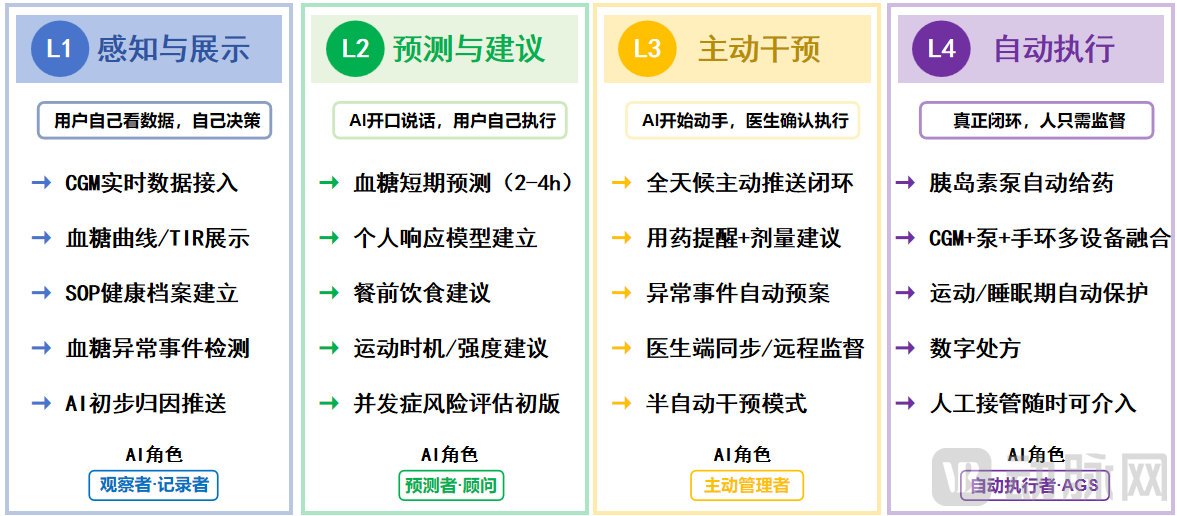 Hesicare AGS Self-Guided Blood Glucose Management Classification, Chart by VCBeat
On this basis, Hesicare's next target further points to an Artificial Pancreas (AID) System. In the future, HesiMed AI will work alongside AID hardware to form a complete closed loop of "data analysis + automated execution," enabling AI not only to understand patient data and provide recommendations but also to participate in the blood glucose control process, thereby advancing diabetes management toward a higher level of intelligence.
As the model layer gradually becomes infrastructural, merely possessing foundational models no longer constitutes a competitive barrier. What truly sets players apart is their deep understanding of clinical practice, their ability to cover real-world scenarios, and their execution capability in implementing AI across the entire healthcare service value chain.
From this perspective, the core competitiveness behind HesiMed AI lies in the capability system that Hesicare has continuously built and accumulated over the past six years.
First, there is the continuous accumulation of real-world data. Diabetes is a chronic disease requiring long-term management, and the truly valuable data consists of the continuous management records generated by patients throughout their prolonged diagnosis and treatment journey. Over the past six years, Hesicare has focused on integrated in-hospital and out-of-hospital diabetes management, accumulating comprehensive data across the entire care continuum, including diagnosis and treatment, follow-up visits, blood glucose monitoring, and medication adjustments. These data not only support the continuous learning of diabetes management patterns by AI models but also create a data flywheel that becomes increasingly accurate with use.
Secondly, there is the continuous understanding of clinical scenarios. Hesicare is not pursuing "AI for AI's sake," but rather leveraging AI to address challenges in existing clinical scenarios. Six years of clinical service have enabled the team to gain a profound understanding of the real pain points in diabetes management: physicians' limited outpatient time requires rapid identification of key issues; poor patient adherence at home necessitates low-barrier reminders; and insufficient primary care resources demand the downward transfer of expertise from higher-level institutions... These insights constitute the "clinical intuition" accumulated through day-to-day service delivery.
Finally, there are mature engineering capabilities. Hesicare's core team, with backgrounds from Huawei, boasts extensive experience in smart healthcare, medical big data, and product engineering. With the addition of AI experts from institutions such as Alibaba, the company has further strengthened its capabilities in AI algorithm and model R&D, forming a competency mix of "clinical scenario understanding + engineering implementation + AI technology." This enables HesiMed AI to not only comprehend clinical contexts but also achieve practical deployment.
HesiMed AI is not a product that emerged out of nowhere, but rather a concentrated release of Hesicare's years of expertise in diabetes management. It not only continues the company's long-accumulated clinical experience but also marks a new phase of intelligence through its "software platform + hardware reagents + data AI" trinity system.
The "marathon" of diabetes management continues, but the integration of AI may make this long-distance run less arduous. When patients no longer need to constantly monitor their blood glucose levels, when physicians no longer need to sift through massive amounts of data, and when management occurs naturally in an "imperceptible" manner—this may well be the future landscape of chronic disease management. Hesicare is turning this vision into reality, step by step, leveraging six years of accumulated scenario-based experience.