

e-BLOT Completes Tens-of-Millions Financing, Accelerating Global Development of Its Pioneering Equipment

e-BLOT Life Science
Life Science Researcher
Recently, e-BLOT Life Sciences (Shanghai) Co., Ltd. (hereinafter referred to as "e-BLOT") announced the completion of a Series A financing round of tens of millions of RMB, with exclusive investment from Ruili Synthetic Biology Fund. The proceeds will be primarily used to advance the iterative upgrading of its two core technology platforms—contact imaging and contact wet transfer—and to comprehensively accelerate overseas market expansion, aiming to enter the global western blot equipment market with original Chinese technologies. The funds will also strengthen research and development systems, production lines, and comprehensive service capabilities, while continuously improving the full-process product matrix for protein immunoblotting.

Established in 2017 and located in Shanghai Zhangjiang Science City, e-BLOT is an innovative enterprise dedicated to the research, development, manufacturing, and global operations of high-end life science research tools. The company focuses on technological innovation across the entire protein immunoblotting workflow. Leveraging the technical expertise of its interdisciplinary research and development team, e-BLOT has established a strong presence in the life science laboratory equipment sector, committed to breaking through overseas technological barriers with independently developed original technologies, and providing one-stop integrated solutions for protein research to research institutions, medical facilities, and biopharmaceutical enterprises worldwide.
Centered on the protein immunoblotting workflow, the company has pioneered the globally original contact imaging core technology, overcoming the limitations of traditional cooled charge-coupled device imaging, including signal attenuation, insufficient resolution, and significant quantitative deviations. The technology is compatible with multiple detection modes including chemiluminescence and isotope, and is adaptable to mainstream experimental applications including Western blot, nucleic acid blot, and dot blot. The company has established a full industry chain system integrating hardware research and development, software development, and consumable supply, with standardized manufacturing and quality control processes ensuring stable mass production and global supply.
Recognized for its technological innovation and practical utility, the company's achievements have received prestigious domestic and international awards including the German Red Dot Design Award and the Shanghai Magnolia Best Technological Innovation Award. Research using the company's products has been published in over 700 papers in international journals including Nature, establishing a new image for domestically produced high-end biological laboratory equipment and solidifying the company's leading position in the global protein immunoblotting equipment market.
The company's two core product series—the Touch Imager electronic imaging system and the EZ BLOT one-step wet transfer system—form a complementary product combination for protein transfer and imaging detection. Among these, the Touch Imager is the world's first commercially available contact chemiluminescence imaging device. Facing the routine demands of low-abundance protein detection and precise quantification in fields such as proteomics, tumor immunology, and drug discovery, traditional cooled charge-coupled device imaging systems often fail to meet high-precision experimental standards. The Touch Imager employs a direct contact imaging mode between the sample and the photosensitive chip, achieving near-zero signal loss acquisition, with ultra-high sensitivity, high-definition imaging, and precise quantitative capability, combined with ease of operation and strong stability, effectively addressing the numerous shortcomings of traditional systems.
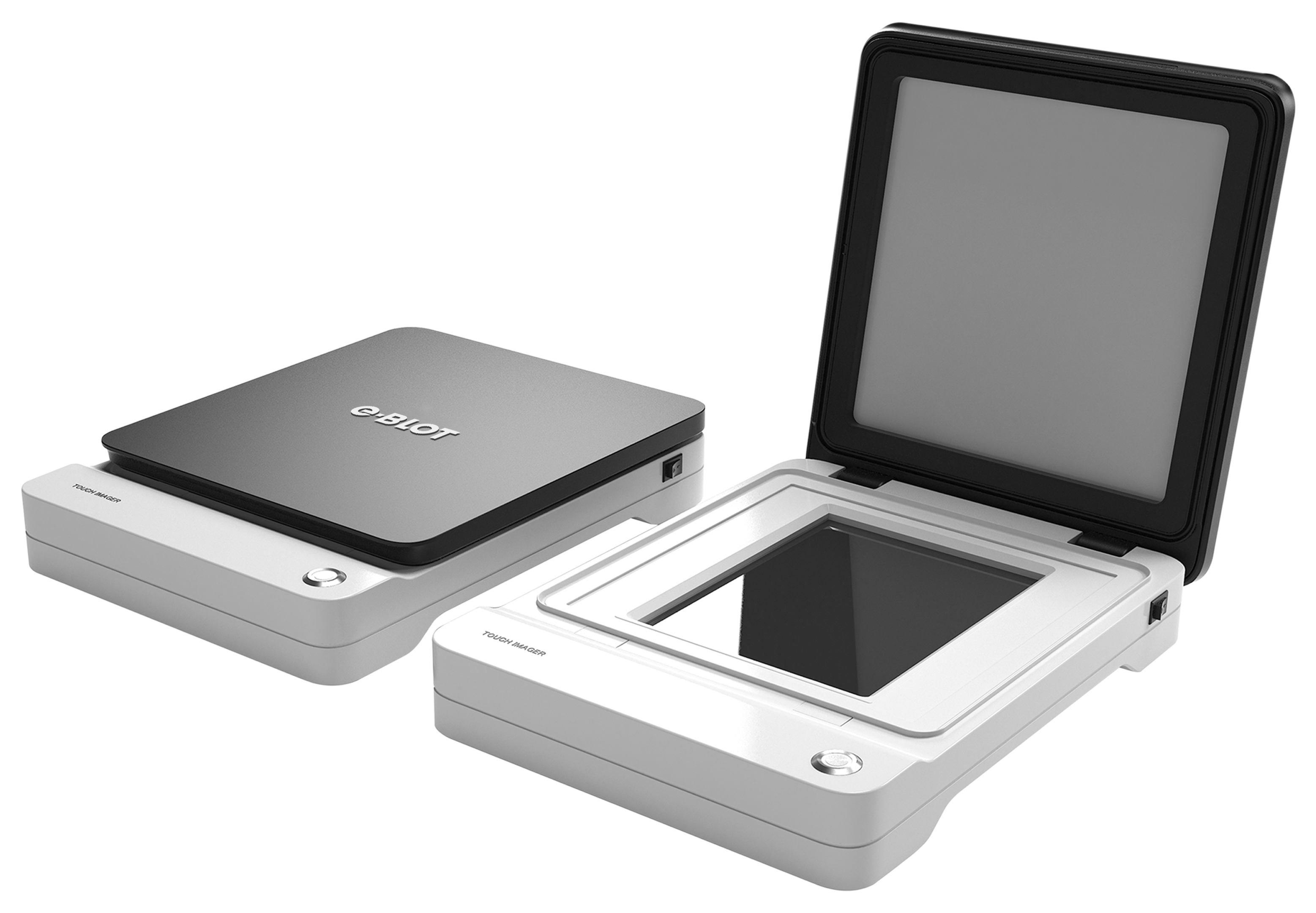
Touch Imager Electronic Tablet Imaging System
The other core product, the EZ BLOT one-step wet transfer system, has achieved technological innovation addressing the pain points of traditional protein wet transfer equipment, including cumbersome operation, low transfer efficiency, time-consuming experimental procedures, and poor reproducibility. The device employs the world's first contact wet transfer technology, with one-button operation that eliminates the need for manual parameter adjustments, significantly simplifying experimental steps and reducing overall time. Its uniform and stable electric field design ensures efficient and balanced transfer of proteins across various molecular weights, markedly improving experimental reproducibility and data reliability. When paired with the imaging system, the two form a closed-loop experimental system, broadly applicable in fundamental life science research, target validation, drug screening, and other scenarios. The two core products complement each other, addressing the shortcomings of the two critical stages in the protein immunoblotting workflow, delivering an efficient, stable, and standardized new experience for researchers.
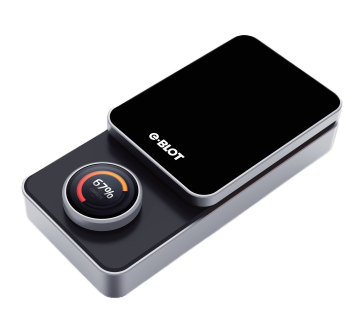
EZ BLOT One-Click Wet Transfer System
Leveraging its core technologies and flagship products, the company continues to expand its product matrix, simultaneously developing supporting reagents, specialized consumables, and intelligent data analysis software, achieving full integration across the entire workflow of transfer, imaging, and data analysis, while continuously exploring cross-disciplinary applications and further unlocking the value of its original technologies.
As a technology leader in the global protein immunoblotting equipment market, e-BLOT has adopted "global operations" as a fundamental strategy since its inception, positioning overseas markets as a key growth engine for the brand. Currently, the global life science instrumentation market offers vast opportunities, with sustained high levels of research and development investment from overseas research institutions and multinational pharmaceutical companies driving strong demand for high-precision, high-stability domestic high-end laboratory equipment. At the same time, this sector has long been dominated by overseas brands, leaving significant room for substitution and incremental growth for "original Chinese technologies" in high-end niche segments. Leveraging its world-first contact technology platform, e-BLOT is penetrating this high-value market through differentiated technological advantages, unlocking new growth potential.
To date, the company has successfully expanded its business into key core markets including Europe, North America, Japan, South Korea, Southeast Asia, and Russia, establishing a global customer network and achieving benchmark breakthroughs in leading research institutions:
In Japan, the products have been fully deployed in core laboratories across Japan's six imperial universities, including the University of Tokyo, Kyoto University, Osaka University, Tohoku University, Nagoya University, and Hokkaido University, and have been successfully installed in the laboratory of the 2016 Nobel Laureate at Tokyo University of Science.
In Europe and the United States, high-impact papers utilizing contact imaging technology have been published by a leading team from Harvard University and Massachusetts General Hospital, in collaboration with Yale University. The products have also been deployed at the University of Zurich and the University of Bern in Switzerland, Wageningen University in the Netherlands, the Max Planck Institute in Germany, Uppsala University in Sweden, as well as multinational corporations including Nestlé and Bristol-Myers Squibb.
In China, the company covers nearly all 985 and 211 universities, and serves top-tier research institutions including the Chinese Academy of Sciences system, Peking Union Medical College, West China Hospital, Ruijin Hospital, Xiangya Hospital, and leading pharmaceutical companies including Roche and BeOne Medicines.
Recognition from leading research institutions and multinational corporations serves as a global endorsement of e-BLOT's technological capabilities. Every high-impact publication generated using the company's equipment and every installation in a benchmark laboratory contributes to the steady accumulation of brand trust. Overseas markets are not only a growth frontier for e-BLOT, but also a critical arena for domestic high-end life science instruments to transition from "product globalization" to "standard globalization," and from "price competition" to "value competition." With the continued improvement of overseas channels and service systems, the company is well-positioned to establish greater influence in the global protein analysis equipment market.