

GSK Terminates $2.2B Neurodegenerative Drug Collaboration with Alector After Dual Phase Failures

GSK
Pharmaceutical R&D Manufacturer

Alector
Neurodegenerative Disease Therapeutics Developer
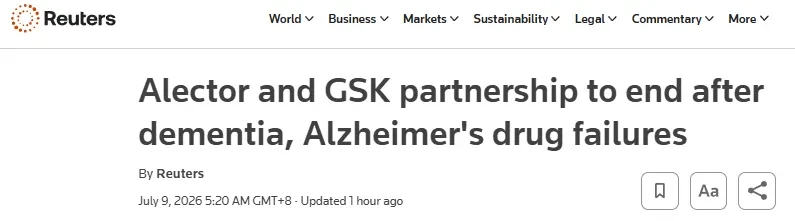
Unexpectedly, within a few years, both core candidate drugs sequentially encountered clinical failures, and the collaboration between the two parties gradually came to an end.
Among them, a collaborative drug, latozinemab(AL001)Targeting Sortilin (SORT1) to Treat Neurodegenerative Diseases Such as Frontotemporal Dementia by Regulating Progranulin LevelsIn 2025, the drug was developed for patients with frontotemporal dementia associated with GRN gene mutations.Phase III INFRONT-3 Study Fails to Meet Primary Endpoint, failing to significantly delay disease progression, dealt the first blow to the partnership between the two parties.
AnotherNew AD Drugsnivisnebartis aAnti-SIGLEC-3 (CD33) monoclonal antibody, designed to improve the progression of Alzheimer's disease by modulating microglial function. In April 2026,Alector Officially Announces Termination of Phase 2 PROGRESS-AD Clinical Trial Conducted in Collaboration with GSK—Following Completion of Interim Futility Analysis by the Independent Data Monitoring Committee,The study is no longer able to achieve the primary clinical endpoint of delaying the progression of early Alzheimer's disease.,GSK ultimately discontinued the development of this project.
Setbacks in Two Core Programs Plunge Alector into Crisis: Stock Plummets, Workforce Halved, and Strategy Overhauled to Preserve Cash; GSK’s Exit Returns Global Rights to Two Antibodies, Yet Their Development Prospects Remain Uncertain
Drug development for neurodegenerative diseases faces significant challenges, with high failure rates in pharmaceutical R&D for conditions such as Alzheimer’s disease, frontotemporal dementia, and Parkinson’s disease.Recently, Merck & Co. terminated its small-molecule candidate drug for Alzheimer’s diseaseMK-1167Phase II clinical trial,As disclosed, the failure to meet predefined efficacy endpoints was the primary issue, further underscoring the substantial challenges and long road ahead in R&D within this field.
Previous Reviews