China's Tricuspid Valve Breakthrough: Huihe Medical Files for IPO Amid Dual Product Launches in an $11.4B Global Market

H&H Healthcare
R&D and Producer of Interventional Medical Devices for Heart Disease
Source: Medical Device Business Review
Author: Jin Fan
The Forgotten Tricuspid Valve: China’s First Dedicated Device Enters Clinical Trials!
Recently (July 2026),H&H Healthcare's Self-Developed Tri-Cap Transcatheter Tricuspid Valve Leaflet Repair System, under the leadership of Academician Ge Junbo's team at Zhongshan Hospital affiliated with Fudan University,Successfully completed enrollment of the first patient in the clinical trial.
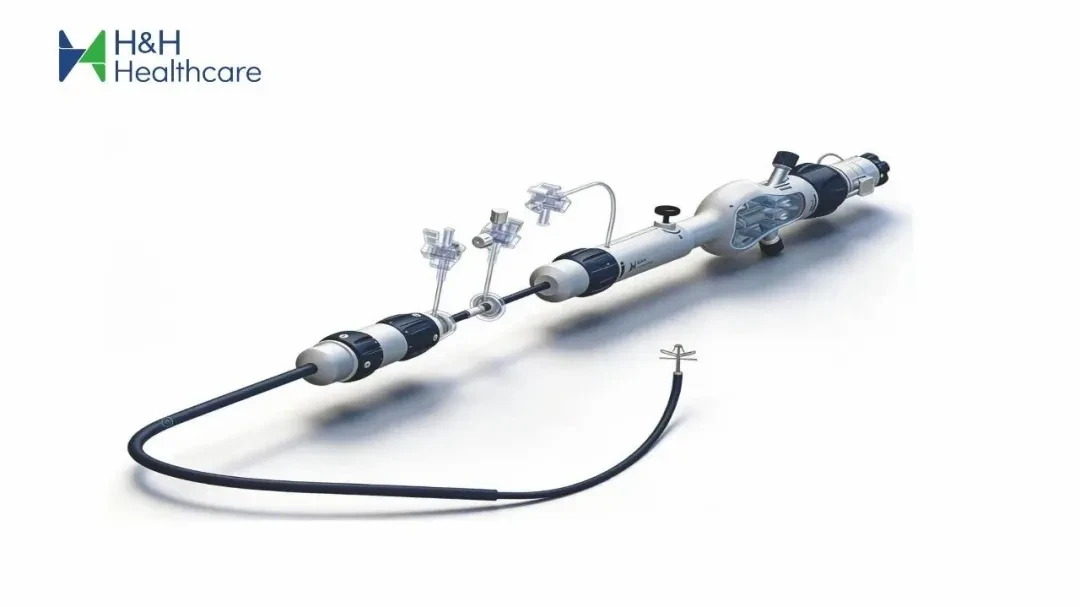
H&H Healthcare Tri-Cap
AsChina's First Tricuspid Valve Edge-to-Edge Repair (TEER) Device Featuring a Physiological Tension Clamping Mechanism, this product, driven by innovations in its foundational structure, precisely adapts to the unique anatomical features and leaflet physiological characteristics of the right heart. It not only fills the gap in differentiated technological layout for domestic tricuspid valve TEER solutions but also marks a significant milestone in the field of transcatheter tricuspid valve interventions in China.Officially entering a new cycle of standardized development for proprietary medical devices.
Recently, H&H Healthcare has received more than one piece of good news.
Just in late June,H&H Healthcare, Holding the World’s Exclusive Tricuspid Valve Registration Certificate, Officially Submits Prospectus to the STAR Market, plans to raise RMB 1.11 billion by adopting the fifth set of listing standards.
The dual convergence of clinical breakthroughs and capital milestones not only validates the industrial value of the tricuspid valve intervention sector, but also provides ample financial support for the subsequent clinical advancement, production scale-up, and commercialization of the company’s future products.

Physiological Tension Design
Developing Dedicated Devices for Tricuspid Valve Therapy
The tricuspid valve has long been referred to as the “forgotten valve.” Its annulus exhibits an irregular morphology, its leaflets are thin and fragile, and coupled with the unique pressure environment of the right ventricle, its overall anatomical complexity is significantly higher than that of the mitral valve.
Conventional Open-Tracheal Tricuspid Valve Surgeryis also accompanied by extremely high risks, according to data from the 2025 ESC/EACTS Guidelines for the Management of Valvular Heart Disease,The perioperative mortality rate for this type of surgery is as high as 8%–10%, and the one-year mortality rate exceeds 30%.
For a long period in the past, clinical practice of tricuspid valve TEER procedures in China could only be performed off-label using mitral valve repair devices.
However, the rigid clipping concept of mitral valve products, when applied to the more fragile tricuspid valve leaflets, is highly prone to causing issues such as leaflet avulsion and incomplete clipping.The risk of complications is significantly elevated, making such procedures particularly challenging in complex anatomical cases involving mechanical heart valves and pacemaker leads.
H&H Healthcare’s self-developed Tri-Cap transcatheter tricuspid valve leaflet repair system is designed precisely to address this pain point,Designed for the Unique Anatomical and Biomechanical Characteristics of the Tricuspid Valve。
The entire system consists of two components: a delivery system and a clip. The delivery system is equipped with a large sheath featuring multi-directional steerable bending capabilities, allowing flexible adjustment of its posture within complex anatomical pathways. The clip adopts a “physiological tension” design, capturing and securing valve leaflets with compliant clamping force, which is fundamentally distinct from the traditional rigid clipping mechanism.
Meanwhile, the product also offers a variety of clip sizes to accommodate patients with tricuspid regurgitation and different anatomical structures.
It is worth noting that the first enrolled case in this study involved an extremely complex patient with a mechanical valve and pacemaker leads, for whom the Model 1206 clip was used.Postoperative data showed that the patient's tricuspid regurgitation was effectively controlled., with a mean transvalvular pressure gradient of only 1 mmHg. The entire surgical procedure proceeded smoothly and uneventfully, fully validating the maneuverability and safety of this product under complex anatomical conditions.
According to H&H Healthcare,Tri-Cap is expected to be launched in 2028.

A Blue Ocean Market Exceeding RMB 80 Billion
Dual Boost from Full Pipeline and Capital for Commercialization
From the actual landscape of China’s valvular heart disease market, tricuspid regurgitation remains a largely untapped blue-ocean sector.
Public epidemiological data show that there are over 4 million patients with severe tricuspid regurgitation in China, most of whom have comorbidities such as heart failure and atrial fibrillation, and the patient population is generally older.Approximately 80% of patients are unable to undergo open-chest surgery due to excessively high surgical risks.
However, in contrast to the rapid adoption of mitral valve interventions, the penetration rate of tricuspid valve interventions in China remains extremely low due to limitations in clinical procedures, with fewer than 1,000 cases performed annually nationwide.
With the clinical advancement of domestically developed, dedicated tricuspid valve devices such as Tri-Cap, the long-suppressed clinical demand of the past decade will be directly unleashed. Tricuspid valve intervention is poised to become another billion-dollar niche "golden track," following aortic and mitral valve interventions.
According to data released by authoritative institutions,It is projected that during the period from 2020 to 2030, the global transcatheter tricuspid valve intervention market will achieve an annual growth rate of 136%, reaching $11.4 billion by 2030, equivalent to approximately RMB 82 billion.
Moreover, the commercialization advantage of H&H Healthcare lies more inIts unique full-pipeline collaborative capability.
The company’s transcatheter tricuspid annuloplasty system, K-Clip, was approved for market launch in March 2025, becoming the first approved interventional tricuspid valve repair product in China.
As disclosed in the prospectus, as of the IPO filing date,K-Clip has entered over 100 end-user hospitals across China, achieving sales revenue of RMB 43.0713 million in its first year, accounting for 42.43% of H&H Healthcare's total main business revenue for that year., with a commercialization ramp-up speed significantly faster than the industry average.
Now that Tri-Cap has successfully advanced into clinical trials,The two will form a complete product portfolio of “annuloplasty + leaflet repair.”
Patients with mild-to-moderate tricuspid regurgitation, where annular dilation is the core issue, can be treated with K-Clip; those with leaflet prolapse and poor coaptation can undergo precise repair with Tri-Cap. For highly complex cases involving mechanical valves or pacemaker leads, these two devices can be used in combined procedures to achieve superior therapeutic outcomes.
This capability for comprehensive scenario coverage will significantly expand H&H Healthcare’s patient reach, further solidifying its leading competitive advantage in the field of tricuspid valve intervention in China.
Of course, the commercialization of the current tricuspid valve intervention sector still faces practical bottlenecks.
On the one hand, clinical awareness of tricuspid valve interventions is significantly lower than that of mitral valve interventions. Most prefecture-level hospitals have not yet established standardized diagnosis and treatment pathways, resulting in a longer learning curve for physicians and requiring more time for market education. On the other hand, as current tricuspid valve intervention procedures are not yet fully covered by medical insurance reimbursement schemes, patients face high out-of-pocket costs. Consequently, short-term volume growth will remain concentrated in top-tier tertiary Grade A hospitals.

From Catching Up to Differentiated Innovation
Domestic Tricuspid Valve Intervention: “Overtaking on a Bend”
Although China’s tricuspid valve intervention sector started later than overseas markets, it has achieved a leap from technological following to independent innovation within just a few years.
In the global market, the tricuspid valve intervention sector has formed a mature product portfolio.
Abbott TriClipis the world's first TEER product specifically approved for the tricuspid valve,Rapid Commercial Penetration Leveraging Hundreds of Thousands of Clinical Cases in the Mitral Valve Field;Edwards' EVOQUEIt is the world’s first transcatheter tricuspid valve replacement (TTVR) product approved for market launch.Leading Pace in Clinical Validation and Commercialization;Medtronic IntrepidThese products are also advancing through global multi-center clinical trials, collectively forming a comprehensive product portfolio for overseas markets.
Returning to the domestic market, local enterprises have not directly replicated overseas technological pathways; instead, they have developed unique implementation rhythms tailored to address specific clinical pain points in China.
The tricuspid annuloplasty sector achieved the first commercial breakthrough,Among themH&H Healthcare K-ClipIt is currently the only approved and marketed interventional tricuspid annuloplasty product globally, highly suitable for the population with functional tricuspid regurgitation, which accounts for over 80% in China.MediPeakSimilar products from other companies are also in the clinical trial stage, with differentiated optimizations focused on access approaches and annuloplasty precision.
Tricuspid Valve TEER is the therapeutic area with the highest concentration of domestic companies in China.。Dejin Medical DragonFly-TMultiple FIM clinical enrollments have been completed to date;Shenqi Medical, Peijia MedicalCompanies deeply engaged in the heart valve sector all have corresponding pipeline layouts, forming an overall tiered R&D structure.
In addition,Transcatheter Tricuspid Valve Replacement (TTVR)This targets refractory patients with end-stage severe regurgitation and severely damaged leaflet structures, representing another key sub-sector for domestic companies to focus on.. Products such as Jian Shi Technology's LuX-Valve and Mai Pulse Medical's Mi-thosAll have entered the phase of large-scale, multicenter clinical validation, representing the core competitive arena for domestic valve manufacturers to break into high-end procedural markets.
Overall, the implementation of TriCap’s first-in-human clinical case is not merely a product development milestone for a single device, but rather a landmark moment signifying the transition of domestically produced right-heart interventional technologies from mere technology transfer to customized innovation.
Amid the broader trend toward minimally invasive interventions for structural heart disease, the tricuspid valve, long regarded as the “forgotten valve,” is entering its golden age of development, driven by the dual forces of innovative domestic medical devices and capital investment.